
Random 2 (Step 1)
Time limit: 0
Quiz Summary
0 of 23 Questions completed
Questions:
Information
You have already completed the quiz before. Hence you can not start it again.
Quiz is loading…
You must sign in or sign up to start the quiz.
You must first complete the following:
Results
Quiz complete. Results are being recorded.
Results
0 of 23 Questions answered correctly
Your time:
Time has elapsed
You have reached 0 of 0 point(s), (0)
Earned Point(s): 0 of 0, (0)
0 Essay(s) Pending (Possible Point(s): 0)
Categories
- Not categorized 0%
- 1
- 2
- 3
- 4
- 5
- 6
- 7
- 8
- 9
- 10
- 11
- 12
- 13
- 14
- 15
- 16
- 17
- 18
- 19
- 20
- 21
- 22
- 23
- Current
- Review
- Answered
- Correct
- Incorrect
-
Question 1 of 23
1. Question
A 14-year-old athlete is evaluated due to left hip and thigh pain. Three days ago, the patient felt a sudden pain in his left hip and thigh just as he crossed the finish line of a short sprint. He can ambulate, but it is very painful. He has been unable to run since the injury. On examination, active hip extension and knee flexion are limited by pain. Gait is antalgic. X-rays of the hip and pelvis reveal an avulsion fracture of the ischium. Injury to which of the following muscles is most likely responsible for this patient’s pain?
CorrectIncorrect -
Question 2 of 23
2. Question
A 28-year-old primigravida at 20 weeks gestation comes to the clinic for follow-up. It is discovered that the fetus has a genetic change that results in developmental disruption of the third pharyngeal pouch. Which of the following would most likely be observed in the child after birth?
CorrectIncorrect -
Question 3 of 23
3. Question
An 18-year-old man comes to the office due to a progressive rash. He first developed small, red spots on his feet 3 weeks ago. The rash has since spread to involve his scrotum, penis, lower abdomen, hands, and feet. The rash is extremely pruritic, and the patient is having trouble sleeping due to constant itching. He otherwise feels well. Vital signs are normal. Lesions on the feet are shown below.
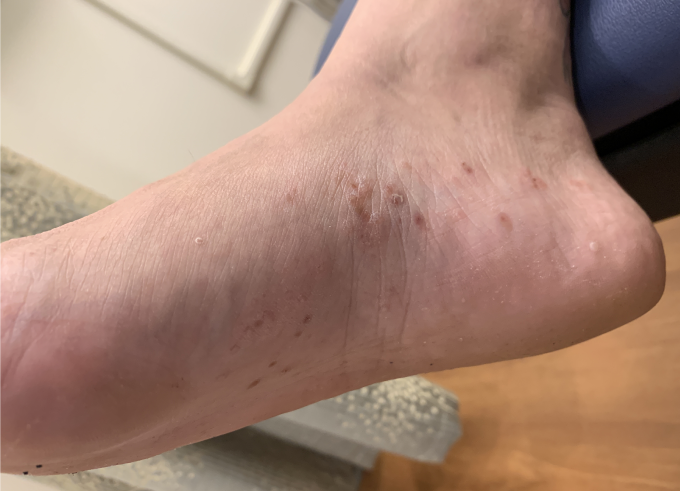
Which of the following additional information in this patient’s history would best support the most likely diagnosis?
CorrectIncorrect -
Question 4 of 23
4. Question
A 4-hour-old girl is examined in the newborn nursery. The patient was born vaginally after an uncomplicated pregnancy and delivery. She began breastfeeding after delivery. Physical examination shows a unilateral cleft lip on the left side with an intact palate. The rest of the physical examination is unremarkable. This patient’s abnormal findings most likely resulted from which of the following intrauterine processes?
CorrectIncorrect -
Question 5 of 23
5. Question
A 1-day-old girl is evaluated in the newborn nursery due to swollen hands and feet. She was born at term via cesarean delivery. The newborn’s vital signs are normal. Examination is significant for a short, webbed neck; dysplastic nails; and bilateral, nonpitting carpal and pedal edema. Ultrasound examination of the abdomen reveals a horseshoe kidney. Which of the following is the most likely cause of this infant’s edema?
CorrectIncorrect -
Question 6 of 23
6. Question
A 25-year-old man experiences severe intolerance to certain medications. On 2 occasions, his reactions to various drugs have necessitated hospital admission. His family pedigree with respect to this condition is shown below, with the red arrow indicating his position within the family.
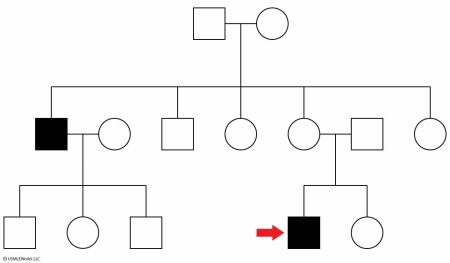
Assuming that the genetic condition demonstrates complete penetrance and is rare in the general population, which of the following inheritance patterns is most likely?
CorrectIncorrect -
Question 7 of 23
7. Question
A 38-year-old man dies suddenly at his workplace and cannot be resuscitated. He had experienced chest discomfort, shortness of breath, and fatigue in the week preceding the event. The man was overweight but otherwise had no significant medical history. He had no established primary care physician. He did not use alcohol, tobacco, or illicit drugs. Both parents are alive and healthy; a maternal uncle reportedly died of a heart attack at age 50. Autopsy was performed and myocardial findings are shown in the slide below.
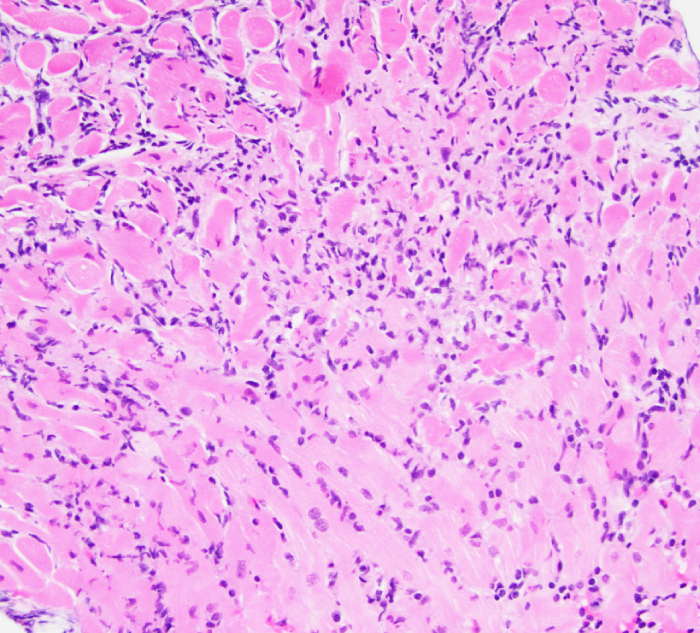
Which of the following is the most likely diagnosis?
CorrectIncorrect -
Question 8 of 23
8. Question
A 13-year-old boy comes to the office for evaluation of worsening scoliosis. He lost the ability to walk a year ago and has since been wheelchair bound. He has significant back pain and difficulty sitting in his wheelchair for extended periods. The patient also feels “too weak” to cough or take a deep breath. Review of medical records shows genetic studies confirming a mutation of the dystrophin gene on X chromosome p21. Histopathology of the patient’s calf most likely indicates which of the following findings?
CorrectIncorrect -
Question 9 of 23
9. Question
A 60-year-old woman comes to the clinic due to worsening dyspepsia and unintentional weight loss over the past 3 months. Vital signs are normal. There is no cervical or inguinal lymphadenopathy. Abdominal examination shows mild epigastric tenderness. Complete blood count and serum chemistry results are normal. CT scan of the abdomen reveals gastric mucosal thickening but no evidence of abdominal lymphadenopathy or hepatosplenomegaly. Endoscopy shows nodular gastric folds, and biopsy shows proliferation of small, clonal, mucosa-associated B cells expressing the CD20 antigen. Which of the following microbe-induced mechanisms is the most likely underlying cause of the findings seen in this patient?
CorrectIncorrect -
Question 10 of 23
10. Question
Carbamoyl phosphate synthetase I deficiency is an inherited disorder characterized by accumulation of ammonia in the blood. The most severe form occurs in the first 24-72 hours following birth, after feeding begins and milk proteins start to be broken down in the liver. If left untreated, affected neonates often die due to severe metabolic derangements; survivors often develop permanent neurologic injury. The estimated incidence of carbamoyl phosphate synthetase I deficiency is about 1 in 800,000 newborns. If a decision is made to test all newborns for this disease, then this initial test should be designed to have a high:
CorrectIncorrect -
Question 11 of 23
11. Question
A 26-year-old woman with anorexia nervosa is admitted to an eating disorder center for monitored refeeding and weight restoration. The patient reports a history of upper abdominal pain after eating and a frequent need to vomit to relieve symptoms. Blood pressure is 90/60 mm Hg and pulse is 50/min. BMI is 14.8 kg/m2. On physical examination, the patient is cachectic with a sunken, nontender abdomen. A progressively increasing oral refeeding plan is prescribed. On the fourth day, the patient experiences severe abdominal pain, nausea, and vomiting after a meal. CT scan of the abdomen with oral contrast reveals a marked lack of intraabdominal fat, a significantly dilated stomach, and an abrupt cutoff of oral contrast at the third segment of the duodenum. Compression by which of the following structures is most likely causing this patient’s gastrointestinal symptoms?
CorrectIncorrect -
Question 12 of 23
12. Question
A 65-year-old woman is evaluated for worsening urinary urgency and incontinence. The patient has had no abdominal pain, dysuria, or changes in urinary frequency. On several occasions, she has urinated involuntarily, which she attributes to an inability to walk quickly to the bathroom. The patient feels unsteady while ambulating and walks slowly with small steps. Her family also reports that she has become forgetful and has difficulty planning and executing various activities that she used to perform regularly. Medical history is notable for hypertension. The patient does not use tobacco, alcohol, or illicit drugs. Vital signs are within normal limits. Cardiopulmonary, abdominal, and genitourinary examinations show no abnormalities. Neurological examination shows impaired attention and short-term memory. MRI of the brain reveals chronic white matter changes with no infarction, hemorrhage, or mass lesions. There is diffuse ventriculomegaly with no sulcal enlargement. Which of the following is the most likely underlying cause of this patient’s urinary incontinence?
CorrectIncorrect -
Question 13 of 23
13. Question
A 60-year-old man comes to the office with a 6-month history of exertional chest pain that remits with rest. His other medical conditions include hypertension, diabetes mellitus, and hypercholesterolemia. An exercise stress test is positive for inducible ischemia. Cardiac catheterization shows 80% occlusion of the right coronary artery and 60% occlusion of the left coronary artery. The first step in the pathogenesis of this patient’s coronary artery disease most likely involved which of the following cell types?
CorrectIncorrect -
Question 14 of 23
14. Question
A 1-year-old boy is brought to the clinic for a painful mass in the neck. The parents noticed a small area of nontender swelling in the neck a month ago. Over the last few days, it has enlarged and become painful, and the patient has a fever. Examination shows a mobile, tender, fluctuant, and warm mass approximately 2 cm in diameter that is located at the right mandibular angle. There is purulent drainage from the skin surface just anterior to the right sternocleidomastoid muscle. This patient’s clinical findings are most likely due to which of the following embryologic processes?
CorrectIncorrect -
Question 15 of 23
15. Question
A 43-year-old man comes to the clinic for evaluation of a healed forehead laceration. Six weeks prior, the patient sustained the laceration when he slipped on an icy sidewalk and struck his forehead against a mailbox. The laceration was promptly irrigated and repaired in the emergency department and has since healed without complication. The patient is concerned about the appearance of the scar; he feels it “stands out” when he gives public presentations for his job. On examination, the scar is pink, firm, and mildly raised, without surrounding erythema or edema; it does not extend beyond the initial wound borders. The patient is reassured that the scar should flatten over the following months. The process by which this occurs relies mostly on enhanced cellular production of which of the following?
CorrectIncorrect -
Question 16 of 23
16. Question
Researchers working at a national foundation for prematurity and birth defects are investigating the physiologic processes that occur during embryonic kidney development. Their research focuses on the inductive signals exchanged between the metanephric diverticulum and metanephric blastema that drive their differentiation into tissues forming the mature kidney. The researchers develop a method to reproduce the inductive signal that normally comes from the metanephric diverticulum. After applying this inductive signal to the metanephric blastema, which of the following adult derivatives will most likely develop?
CorrectIncorrect -
Question 17 of 23
17. Question
A 34-year-old woman with a history of recurrent urinary tract infections comes to the physician with dysuria and increased urinary frequency. Her urine culture grows colonies of Gram-negative bacteria. The bacteria are isolated and placed in a growth-enhancing nutrient solution, where they undergo rapid cellular division. As they are actively dividing, the bacterial cells are lysed and their DNA is extracted and purified. Analysis of the partially replicated DNA fragments shows the presence of uracil. This finding is most likely mediated by which of the following enzymes?
CorrectIncorrect -
Question 18 of 23
18. Question
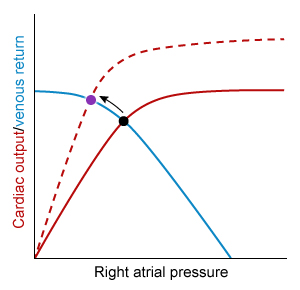
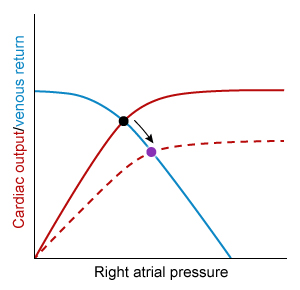
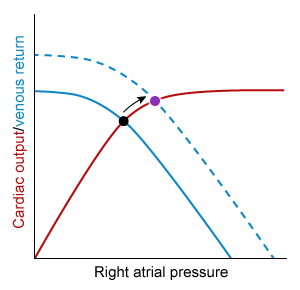
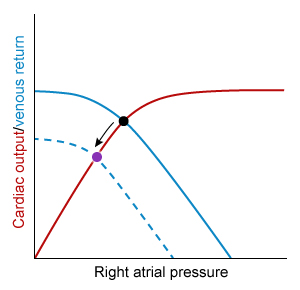
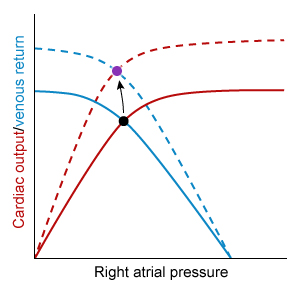
A 24-year-old healthy woman participates in a pharmacologic clinical study. Various cardiovascular parameters are measured while she is resting in an upright position. These baseline values are plotted on the cardiac and vascular function graph shown below.
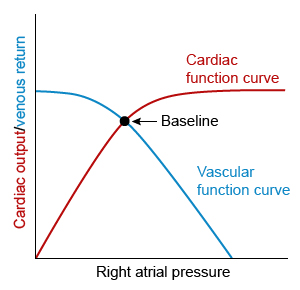
She receives a moderate dose of intravenous nitroglycerin by continuous infusion, and the measurements are repeated. Which of the following changes will most likely be observed?
A.
B.
C.
D.
E.
 CorrectIncorrect
 -
Question 19 of 23
19. Question
A group of geneticists plans to conduct a study on the distribution of allelic variants for a particular gene in a rat population. In the sample population of 15 rats, the genotype distribution is 5 AA, 5 Aa, and 5 aa. The phenotypes represented by the various allele combinations do not provide any specific benefit for survival. During the study, rats will be allowed to mate randomly, but no new rats will be introduced to the population. Based on the information provided, are the current allele and genotype frequencies in this population in Hardy-Weinberg equilibrium?
CorrectIncorrect -
Question 20 of 23
20. Question
A 14-year-old girl is brought to the clinic for evaluation of primary amenorrhea. The patient takes no medications. Examination establishes breast development consistent with Tanner stage 1 and pubic hair consistent with Tanner stage 3. There is a blind vaginal pouch. Imaging reveals absence of a uterus and fallopian tubes. Epididymides and vasa deferentia are present bilaterally, and testes are visualized bilaterally within the inguinal canal. Karyotype analysis shows 46,XY. Which of the following underlying mechanisms is most likely responsible for this patient’s condition?
CorrectIncorrect -
Question 21 of 23
21. Question
Researchers conduct a study to identify an effective chemotherapy regimen to treat ovarian cancer. They enroll patients with and without germline mutations predisposing to the malignancy. A group of patients with a known germline mutation was found to have increased antitumor effect of carboplatin compared to patients without the mutation. However, the response to paclitaxel was similar in both groups. A mutation causing which of the following best explains the higher drug response observed in this study?
CorrectIncorrect -
Question 22 of 23
22. Question
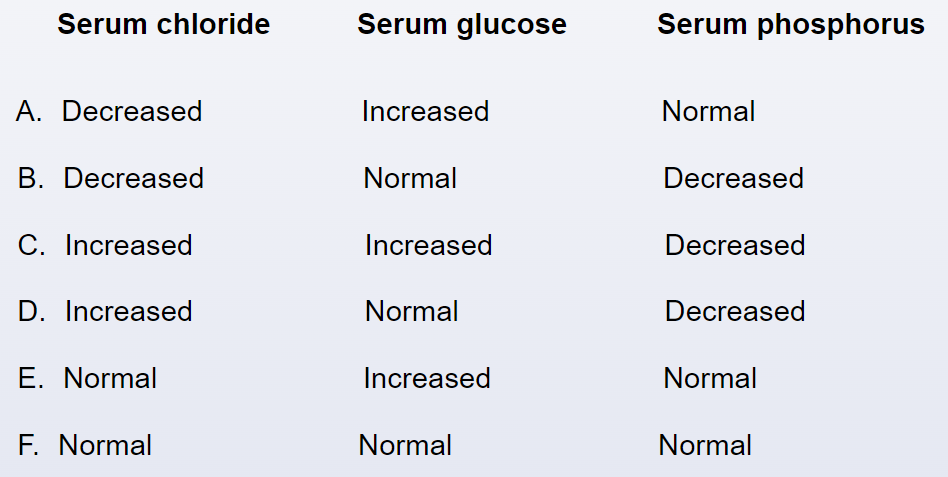
A 7-month-old girl is brought to the office due to poor weight gain over the past several months. Her mother says that her day care has noticed she has many more wet diapers than other infants in her class. The patient’s weight has decreased from the 50th percentile at age 2 months to the 3rd percentile today, and physical examination shows widening of her wrist joints. Following serum and urine laboratory studies, she is diagnosed with a condition characterized by defective reabsorption of bicarbonate (HCO3−) in the proximal convoluted tubule. In addition to decreased serum HCO3−, which of the following sets of laboratory results are most likely present in this patient?
 CorrectIncorrect
 -
Question 23 of 23
23. Question
A couple comes to the clinic for preconception counseling. The woman has alpha thalassemia minor with deletion of 2 alpha globin genes, one on each chromosome (α−/α−), as revealed by previous genetic testing. The man has not had genetic testing but has a family history of alpha thalassemia; both of his parents have the (αα/−−) genotype. Recent laboratory evaluation in the man revealed mild microcytic anemia with normal iron studies. What is the probability that this couple’s offspring will have alpha thalassemia minor, (α−/α−) or (αα/−−)?
CorrectIncorrect