
NBME 32 – Block 3 (Duplicate 2)
Time limit: 0
Quiz Summary
0 of 20 Questions completed
Questions:
Information
You have already completed the quiz before. Hence you can not start it again.
Quiz is loading…
You must sign in or sign up to start the quiz.
You must first complete the following:
Results
Quiz complete. Results are being recorded.
Results
0 of 20 Questions answered correctly
Your time:
Time has elapsed
You have reached 0 of 0 point(s), (0)
Earned Point(s): 0 of 0, (0)
0 Essay(s) Pending (Possible Point(s): 0)
Categories
- Not categorized 0%
- 1
- 2
- 3
- 4
- 5
- 6
- 7
- 8
- 9
- 10
- 11
- 12
- 13
- 14
- 15
- 16
- 17
- 18
- 19
- 20
- Current
- Review
- Answered
- Correct
- Incorrect
-
Question 1 of 20
1. Question
A 60-year-old man comes to the physician because of a 6-month history of light-headedness, numbness and paresthesias of his hands and feet, and fatigue. Physical examination shows pallor and decreased positional and vibration senses. Laboratory studies show:
Hemoglobin
9 g/dL
Hematocrit
27%
Mean corpuscular volume
102 μm3
Serum
Gastrin
markedly increased
Intraluminal stomach acid
markedly decreased
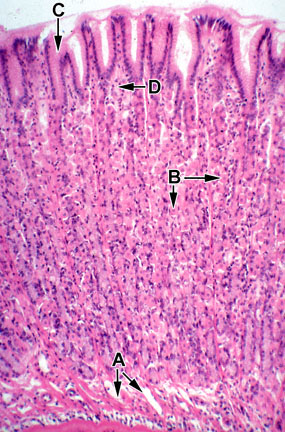
The most likely cause of this patient’s symptoms is destruction of which of the following labeled areas in the photomicrograph of normal stomach mucosa?
 CorrectIncorrect
 -
Question 2 of 20
2. Question
A 25-year-old woman is brought to the emergency department because of a 2-hour history of delirium. Three days ago, the patient developed acute back pain following heavy lifting and has been receiving tramadol therapy. She has major depressive disorder, restless legs syndrome, and myasthenia gravis. Current medications also include fluoxetine, carbidopa-levodopa, and physostigmine. On arrival, physical examination shows confusion, agitation, muscle rigidity, myoclonus, tachycardia, and diarrhea. Which of the following is the most likely explanation for this patient’s symptoms?
CorrectIncorrect -
Question 3 of 20
3. Question
A 60-year-old man with peripheral vascular disease comes to the physician because of a 6-month history of the inability to achieve an erection. Physical examination shows no abnormalities except for decreased distal pulses in the lower extremities. Decreased blood flow through which of the following arteries would most likely explain the erectile dysfunction in this patient?
CorrectIncorrect -
Question 4 of 20
4. Question
A 20-year-old man has colicky back pain caused by renal calculi. He passes one of the calculi in his urine; analysis shows that it is composed almost entirely of a single amino acid. This patient most likely has a genetic defect leading to alterations in which of the following processes involving this amino acid?
CorrectIncorrect -
Question 5 of 20
5. Question
A 33-year-old woman comes to the physician because of a 2-month history of fatigue, shortness of breath with exertion, difficulty sleeping, and eye soreness. She also has had urinary frequency, constant thirst, and irregular menses during this time. Physical examination shows loss of skin turgor, generalized weakness, and galactorrhea. Laboratory studies show an erythrocyte count of 3 million/mm3 and increased serum angiotensin-converting enzyme activity and serum prolactin concentration. A chest x-ray shows bilateral hilar lymphadenopathy. A CT scan of the head shows a contrast-enhancing lesion in the skull base involving the suprasellar region. Which of the following is the most likely cause of this patient’s symptoms?
CorrectIncorrect -
Question 6 of 20
6. Question
A 9-year-old boy with type 1 diabetes mellitus is brought to the physician by his father for a follow-up examination. The father is concerned because his son does not routinely test his blood glucose concentration and will occasionally skip doses of insulin. Physical examination shows no abnormalities. His serum glucose concentration is increased. Which of the following is the most appropriate initial action by the physician to encourage this patient to adhere to his medication regimen?
CorrectIncorrect -
Question 7 of 20
7. Question
A 62-year-old woman comes to the physician because of a 3-month history of progressive shortness of breath and increasingly severe chest pain with exertion. Her pulse is 90/min, respirations are 18/min, and blood pressure is 110/70 mm Hg. A grade 4/6, systolic ejection murmur is heard best over the upper right sternal border. The murmur has been present for the past 12 years, but it has increased in intensity in recent years. This patient most likely has which of the following conditions?
CorrectIncorrect -
Question 8 of 20
8. Question
A 62-year-old man comes to the office because of an 8-month history of fatigue and progressive shortness of breath with exertion; he also has had an unintentional 5.4-kg (12-lb) weight loss during this period. He has hypertension and right ventricular failure. He served as a shipbuilder for 12 years and currently works as a painter. He smoked 1 pack of cigarettes daily for 10 years until he quit 30 years ago. He drinks two 4-oz martinis nightly. He takes no medications. His temperature is 37.3°C (99.2°F), pulse is 104/min, respirations are 23/min, and blood pressure is 160/80 mm Hg. Crackles are heard at the left lung base. There is clubbing of the extremities. Which of the following historical factors most likely contributed to this patient’s underlying condition?
CorrectIncorrect -
Question 9 of 20
9. Question
An 11-month-old girl is brought to the physician by her parents for an initial examination. They adopted her from Russia 3 months ago. The parents know little about her history except that her 19-year-old biological mother was not married, and the girl was raised in an orphanage from birth until she was brought to the USA at the age of 8 months. She is at the 50th percentile for length, 25th percentile for weight, and 10th percentile for head circumference. Physical examination shows facial dysmorphisms, including hypertelorism, short palpebral fissures, inner epicanthal folds, and a hypoplastic philtrum. Further testing shows mild intellectual developmental disorder. Which of the following is the most likely cause of these findings?
CorrectIncorrect -
Question 10 of 20
10. Question
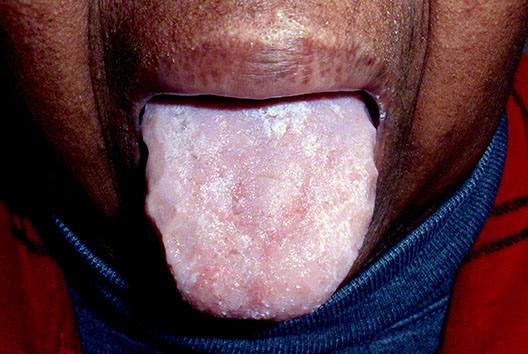
A 31-year-old primigravid woman at 28 weeks’ gestation comes to the office because of a 1-week history of discomfort with swallowing. She has HIV infection, for which she began antiretroviral therapy 2 weeks ago. One month ago, her CD4+ T-lymphocyte count was 190/mm3 (N≥500), and plasma HIV viral load was 5000 copies/mL. Current medications also include a daily prenatal vitamin. Vital signs are within normal limits. Physical examination shows the findings in the photograph; there are no neck masses or lymphadenopathy. Which of the following best describes the most likely causal infectious agent in this patient?
CorrectIncorrect -
Question 11 of 20
11. Question
A 37-year-old woman develops acute fever, a severe headache, photophobia, and a stiff neck. Examination of cerebrospinal fluid shows:
Cell count
40 leukocytes/mm3; no erythrocytes
Differential
40% neutrophils; 60% lymphocytes
Protein
35 mg/dL
Glucose
60 mg/dL
Bacterial cultures
negative
Which of the following is the most likely causal virus?
CorrectIncorrect -
Question 12 of 20
12. Question
An 18-year-old man is brought to the emergency department because of a 1-hour history of severe pain in the ankle after a basketball injury. He is unable to evert his foot. If the injury were a forcible inversion of his foot, which of the following would most likely be injured?
CorrectIncorrect -
Question 13 of 20
13. Question
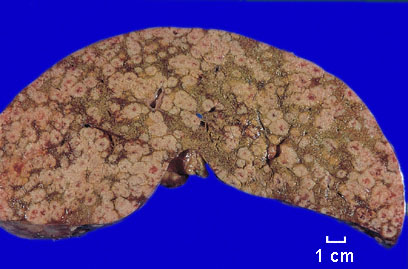
A 32-year-old man dies after an episode of massive upper gastrointestinal bleeding. He has had paroxysmal purple facial flushing and diarrhea for the past year. A yellow submucosal nodule measuring 2 cm is identified at the terminal ileum. The liver as seen at autopsy is shown. Elaboration of which of the following substances by the tumor cells best explains this patient’s facial flushing and diarrhea?
CorrectIncorrect -
Question 14 of 20
14. Question
A 59-year-old man with hypertension comes to the physician for a follow-up examination. During the interview, he says he has had some urinary urgency and frequency. Current medications include hydrochlorothiazide and enalapril. His blood pressure is 145/95 mm Hg. Digital rectal examination shows an enlarged prostate but no palpable nodules. A follow-up examination shows consistent hypertension and no evidence of prostate carcinoma. The drug that is most likely to decrease this patient’s blood pressure and relieve his urinary symptoms is an antagonist at which of the following receptors?
CorrectIncorrect -
Question 15 of 20
15. Question
A 28-year-old man with a history of herpes simplex has a positive rapid HIV antibody test result. When telling the patient he has HIV infection, it is most appropriate for the physician to initially state which of the following?
CorrectIncorrect -
Question 16 of 20
16. Question
A 70-year-old man develops agitation, tremulousness, and change in mental status 1 day after undergoing an uncomplicated transurethral resection of the prostate. His hemoglobin concentration was 15 g/dL preoperatively and 11 g/dL postoperatively. He has mild hypertension treated with lisinopril. When the physician enters his room, the patient asks if he is the exterminator “because the place is crawling with bugs.” He appears dysphoric. His pulse is 144/min, and blood pressure is 170/120 mm Hg. Physical examination shows a mild intention tremor. Deep tendon reflexes are brisk and muscle strength is 5/5 throughout; coordination is normal. He is oriented to person, but not to place or time. Which of the following is the most likely cause of this patient’s condition?
CorrectIncorrect -
Question 17 of 20
17. Question
A 47-year-old man has a 3-year history of hypertension, gastritis, and peripheral neuropathy. He is taking atenolol, famotidine, and amitriptyline. While giving his history, he mentions that his greatest concern is an erectile disorder, which he has had for 1 year. Which of the following is the most appropriate next step in patient care?
CorrectIncorrect -
Question 18 of 20
18. Question
A 45-year-old woman is admitted to the hospital to undergo total abdominal hysterectomy 2 weeks after she was diagnosed with endometrial cancer. She has no other history of serious illness and takes no medications. The patient’s brother was diagnosed with transitional cell carcinoma of the renal pelvis at the age of 46 years. Her mother was diagnosed with colon cancer at the age of 40 years, and her maternal grandmother was diagnosed with colon cancer at the age of 52 years. Physical examination of the patient shows no abnormalities. Screening of this patient’s family members is most likely to identify which of the following genetic mutations?
CorrectIncorrect -
Question 19 of 20
19. Question
A 10-year-old girl is brought to the office by her mother because of a 1-year history of excessive facial hair growth and acne. She has not yet had a menstrual period. She is at the 50th percentile for height and weight. Physical examination shows facial hair and acne vulgaris over the cheeks and chin. Breast and pubic hair development are sexual maturity rating stage 2. Serum studies show a markedly increased concentration of 17-hydroxyprogesterone. Further testing shows a deficiency in 21-hydroxylase activity. The most likely underlying cause of this patient’s symptoms is an increase in which of the following?
CorrectIncorrect -
Question 20 of 20
20. Question
A 39-year-old man comes to the physician because of a 2-day history of fever and cough productive of yellow-green sputum. His temperature is 38.9°C (102°F), pulse is 115/min, respirations are 18/min, and blood pressure is 140/90 mm Hg. Breath sounds are decreased, and crackles are heard in the left lower lobe. A chest x-ray shows an infiltrate of the left lower lobe. The fever in this patient is most likely mediated by which of the following molecules?
CorrectIncorrect