
NBME 16 – Block 4
Time limit: 0
Quiz Summary
0 of 20 Questions completed
Questions:
Information
You have already completed the quiz before. Hence you can not start it again.
Quiz is loading…
You must sign in or sign up to start the quiz.
You must first complete the following:
Results
Quiz complete. Results are being recorded.
Results
0 of 20 Questions answered correctly
Your time:
Time has elapsed
You have reached 0 of 0 point(s), (0)
Earned Point(s): 0 of 0, (0)
0 Essay(s) Pending (Possible Point(s): 0)
Categories
- Not categorized 0%
- 1
- 2
- 3
- 4
- 5
- 6
- 7
- 8
- 9
- 10
- 11
- 12
- 13
- 14
- 15
- 16
- 17
- 18
- 19
- 20
- Current
- Review
- Answered
- Correct
- Incorrect
-
Question 1 of 20
1. Question
A 30-year-old man comes to the office for evaluation. He was assigned female at birth and has a vagina. He has a 2-week history of pelvic fullness and increasingly frequent episodes of urinary frequency. He has not had vaginal bleeding. He has no history of serious illness or surgical procedures. His only medication is testosterone. He does not smoke cigarettes, drink alcoholic beverages, or use other substances. Temperature is 37.0°C (98.6°F), pulse is 80/min, respirations are 20/min, and blood pressure is 140/85 mm Hg. Pulse oximetry on room air shows an oxygen saturation of 100%. Pelvic examination shows a firm, mobile, nontender central pelvic mass. Which of the following is the most appropriate next step in diagnosis?
CorrectIncorrect -
Question 2 of 20
2. Question
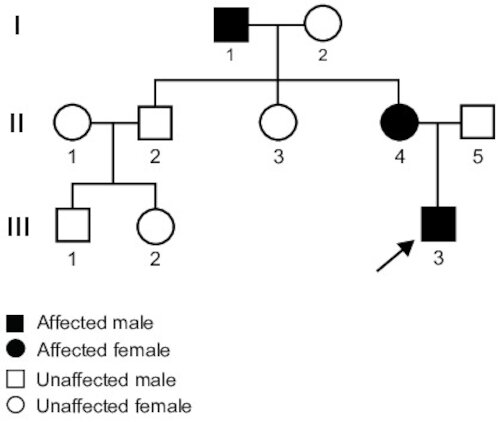
A 2-month-old boy is brought to the physician by his mother for a well-child examination. Physical examination shows melanotic macules on the lips and over the oral mucosa. Several other family members have similar symptoms and rectal bleeding. A pedigree is shown; the patient is III-3. This patient should be monitored for which of the following?
CorrectIncorrect -
Question 3 of 20
3. Question
A 5-year-old boy is brought to the physician by his mother for removal of a tick from his right arm. She says he was playing outside with his dog this morning; she noticed the tick when he came inside for lunch. He has no history of serious illness and receives no medications. Vital signs are within normal limits. Examination shows a small, nonengorged deer tick attached to the skin over the right upper extremity. There is no rash. The remainder of the examination shows no abnormalities. In addition to removal of the tick, which of the following is the most appropriate next step in management?
CorrectIncorrect -
Question 4 of 20
4. Question
A 56-year-old woman comes to the office because of a 3-month history of vaginal pain during sexual intercourse with her husband. She also has post-void dribbling that requires the use of absorbent pads, and she occasionally has the urge to urinate without warning. She has had three urinary tract infections treated with antibiotics during the past 4 months. Last menses occurred 2 years ago. She has no history of serious illness and takes no other medications. Vital signs are within normal limits. Pelvic examination shows an anterior vaginal wall mass; palpation of the mass produces pain. Which of the following is the most likely diagnosis?
CorrectIncorrect -
Question 5 of 20
5. Question
A 46-year-old woman comes to the emergency department 1 hour after she had a 15-minute episode of chest pain during a routine examination at her primary care physician’s office. ECG performed during the episode showed 4 mm of ST-segment elevation in leads II, III, and aVF. She has a 6-month history of intermittent, mild substernal chest pain. The episodes occur twice monthly, usually while at rest and during the night, and last 15 minutes before resolving spontaneously. Exercise stress test and coronary angiography performed during the past year showed no abnormalities. She also has migraines and intermittent heartburn. She has no history of diabetes mellitus, hypertension, or hyperlipidemia. Medications are omeprazole and ibuprofen. There is no family history of premature coronary artery disease. The patient has smoked one pack of cigarettes daily for 25 years. Vital signs are within normal limits. Cardiac examination shows no abnormalities. Serum troponin I concentration is within the reference range. ECG shows no abnormalities. Which of the following is the most likely diagnosis?
CorrectIncorrect -
Question 6 of 20
6. Question
A 35-year-old woman, gravida 1, para 1, comes to the office for a health maintenance examination. Ten years ago, she had uncomplicated spontaneous vaginal delivery of healthy female newborn, whom she breast-fed for 15 months. The patient’s vaccinations are up-to-date. Family history is remarkable for postmenopausal breast cancer in her maternal aunt, heart disease in her paternal grandfather, and stroke in her maternal grandmother. The patient’s mother has hypertension, and her father was recently diagnosed with coronary artery disease. The patient drinks two glasses of wine once monthly. She does not smoke cigarettes or use other substances. She is sexually active with a new male partner. She exercises regularly. Vital signs are within normal limits. Physical examination discloses no abnormalities; specimen for cervical cancer screening is collected today. After providing her with information about how to obtain the cervical cancer screening results, which of the following is the most appropriate screening recommendation for this patient?
CorrectIncorrect -
Question 7 of 20
7. Question
A 25-year-old man comes to the office because of a 1-month history of shortness of breath; he has had a 6.8-kg (15-lb) weight loss during this period. Respirations are 22/min. A 1-cm, raised, irregular lesion is noted on the upper back. The lesion is black with gray areas. The remainder of the examination discloses no abnormalities. The physician suspects metastatic disease. A chest x-ray is most likely to show which of the following bilaterally in this patient?
CorrectIncorrect -
Question 8 of 20
8. Question
A 14-year-old boy is brought to the ambulatory surgical center by his parents for elective surgical repair of an anterior cruciate ligament injury. Medical history is remarkable for reactive airway disease. His only medication is albuterol as needed. After his parents leave the examination room, the patient informs the physician that he uses electronic cigarettes containing nicotine and marijuana daily. The patient is at the 50th percentile for height and weight; BMI is at the 48th percentile. Vital signs are within normal limits. Physical examination discloses no unexpected abnormalities. Which of the following is the most appropriate next step in management?
CorrectIncorrect -
Question 9 of 20
9. Question
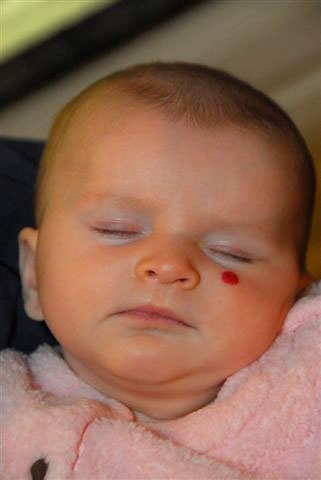
A 6-week-old male infant is brought to the office by his mother 5 days after she noticed a spot on his cheek that is increasing in size. The spot was not present at the patient’s last well-child examination 2 weeks ago. He was born at term following an uncomplicated pregnancy and spontaneous vaginal delivery. Apgar scores were 9 and 10 at 1 and 5 minutes, respectively. Growth and development are appropriate for age. He is exclusively breast-fed. A photograph of the lesion is shown. The lesion is easily compressed and is not ulcerated. No other abnormalities are noted. Which of the following is the most likely diagnosis?
CorrectIncorrect -
Question 10 of 20
10. Question
The physician in charge at a skilled nursing care facility instructs a nurse to administer intramuscular influenza vaccine to specific older residents. The vaccine comes in multiple-dose vials that are capped with a rubber stopper. In describing the protocol, the physician tells the nurse to obtain consent, check for allergies, and swab the rubber stopper of the vial and each skin injection site with alcohol before administering the vaccine. Which of the following additional aseptic procedures is most appropriate in this situation?
CorrectIncorrect -
Question 11 of 20
11. Question
Patient Information
Age: 78 years
Gender: M, self-identified
Race/Ethnicity: Native American, self-identified
Site of Care: hospital
History
Reason for Admission/Chief Concern: day 4 of hospitalization following aortobifemoral bypass grafting
History of Present Illness:
• 10-year history of aortoiliac occlusive disease
• received antibiotic therapy prior to aortobifemoral bypass grafting
• received heparin and 2 units of packed red blood cells intraoperatively
• uncomplicated postoperative course
• scheduled for discharge tomorrow to rehabilitation facility
• now reports 3-hour history of pain and discoloration in right great toe
Additional Past Medical History:
• chronic obstructive pulmonary disease
• type 2 diabetes mellitus
• hypertension
• gout
• coronary artery disease
• coronary artery bypass grafting 3 years ago
• right hip fracture and replacement 2 years ago; developed postoperative deep venous thrombosis treated with heparin and 3 months of warfarin
Medications:
• aspirin
home, continued on admission
• atorvastatin
home, continued on admission
• metformin
home, continued on admission
• lisinopril
home, continued on admission
• albuterol inhaler prn for dyspnea
home, continued on admission
• heparin
initiated intraoperatively, continued postoperatively
• oxycodone
initiated postoperatively
• allopurinol
home, temporarily discontinued on admission
Allergies:
• no known drug allergies
Psychosocial History:
• smoked one pack of cigarettes daily for 60 years
• does not drink alcoholic beverages or use other substances
Physical Examination
Temp
Pulse
Resp
BP
O2 Sat
Ht
Wt
BMI
37.1°C
64/min
16/min
138/86 mm Hg
98%
174 cm
80 kg
26 kg/m2
(98.8°F)
on 1L NC
(5 ft 9 in)
(176 lb)
• Appearance: alert; minimal distress
• Skin: incisions clean, dry, and intact with staples; ecchymosis over trunk and all extremities
• Pulmonary: clear to auscultation; expiratory wheezes
• Cardiac: regular rhythm; no murmurs, rubs, or gallops
• Abdominal: nondistended; soft, nontender to palpation
• Extremities: Doppler ultrasonography discloses strong signals in left posterior tibial artery and dorsalis pedis artery and weak signals in right posterior tibial artery and dorsalis pedis artery; bluish coloration of right great toe; toe is tender to palpation
• Neurologic: fully oriented
Diagnostic Studies
Serum
Na+
139 mEq/L
K+
4.2 mEq/L
Cl–
100 mEq/L
HCO3–
24 mEq/L
Urea nitrogen
15 mg/dL
Creatinine
1.2 mg/dL
Glucose, nonfasting
192 mg/dL
Blood
Hematocrit
36%
Hemoglobin
12.2 g/dL
WBC
7500/mm3
Platelet count
35,000/mm3
Question: Which of the following is the most appropriate next step in pharmacotherapy?
Option
Discontinue
Initiate
A
Heparin
Argatroban
B
Heparin
Enoxaparin
C
Heparin
Warfarin
D
Oxycodone
Allopurinol
E
Oxycodone
Gabapentin
F
Oxycodone
Morphine
CorrectIncorrect -
Question 12 of 20
12. Question
A 9-month-old boy is brought to the physician for a well-child examination. His mother reports that he has had a slightly decreased appetite and activity level during the past month but has been otherwise well. His temperature is 37.5°C (99.5°F), pulse is 155/min, and blood pressure is 109/60 mm Hg. Examination shows a firm, irregular, nontender mass in the right side of the abdomen. An abdominal CT scan shows an 8-cm retroperitoneal mass displacing the right kidney inferiorly. Which of the following is the most likely diagnosis?
CorrectIncorrect -
Question 13 of 20
13. Question
A 41-year-old man comes to the office for a follow-up examination. He has schizophrenia, and his symptoms have been well managed since he began taking haloperidol 2 years ago. Recently, auditory hallucinations have been mild; he hears “an occasional whisper,” but it does not cause distress. He “self-medicated” with cocaine in the past but has not used it during the past 2 years. He recently married. He plans to complete a masters program in computer science this year. Vital signs are within normal limits. Physical examination discloses no abnormalities. On mental status examination, he has a euthymic mood and congruent affect. Thoughts are linear and well organized. Which of the following studies is most appropriate to obtain periodically to monitor this patient’s long-term care?
CorrectIncorrect -
Question 14 of 20
14. Question
A 3-year-old boy is brought to the physician because his mother is concerned about his short stature. He has reached all developmental milestones. She reports that the patient’s 7-year-old brother was at the 40th percentile for height at this age. The older brother wears a hearing aid. On examination, the patient is at the 3rd percentile for height and weight. The remainder of the examination shows no abnormalities. Laboratory studies show:
Serum
Na+
138 mEq/L
K+
2.8 mEq/L
Cl−
112 mEq/L
HCO3−
16 mEq/L
Ca2+
9.2 mg/dL
Urea nitrogen
6 mg/dL
Glucose
98 mg/dL
Creatinine
0.4 mg/dL
Phosphorus
2.6 mg/dL
Uric acid
6.1 mg/dL
Urine
pH
7.2
Specific gravity
1.012
Protein
none
Glucose
none
RBC
0/hpf
WBC
0/hpf
Which of the following is the most likely diagnosis?
CorrectIncorrect -
Question 15 of 20
15. Question
A 32-year-old woman is admitted to the intensive care unit after she was involved in a motor vehicle collision. She was intubated and mechanically ventilated at the scene by emergency services personnel when they determined that she was not breathing. CT scan of the head shows a large subdural hematoma and two areas of intracerebral bleeding. The subdural hematoma is evacuated. On postoperative day 2, the patient remains comatose and ventilator dependent. Blood pressure is 110/60 mm Hg. There are no spontaneous respirations. The surgical site is clean and intact. On neurologic examination, the pupils are fixed at the midposition and not reactive to light; there are no corneal reflexes. Doll’s eye (oculocephalic) reflex is absent. There is no gag reflex with suctioning. The patient does not respond to painful stimuli. The remainder of the examination discloses no abnormalities. Which of the following is the most appropriate next step when considering whether to withdraw life support from this patient?
CorrectIncorrect -
Question 16 of 20
16. Question
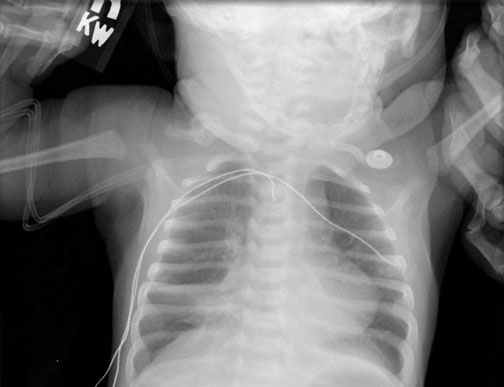
A 2-month-old boy is brought to the emergency department by his parents 30 minutes after he stopped breathing and turned blue while the parents were laying him down for a nap. They say he resumed breathing after 25 seconds when they rubbed his chest. He has a 1-day history of cough, nasal congestion, and decreased feeding and activity. He has not had fever. He has no history of serious illness and receives no medications. Vaccinations are up-to-date. Temperature is 37.9°C (100.3°F), pulse is 140/min, respirations are 65/min, and blood pressure is 100/70 mm Hg. Pulse oximetry on room air shows an oxygen saturation of 90%. Examination shows nasal congestion and rhinorrhea. Diffuse wheezes are heard bilaterally, and there are subcostal retractions. The remainder of the examination discloses no abnormalities. Chest x-ray is shown. Which of the following is most likely to confirm the etiology of this patient’s episode?
CorrectIncorrect -
Question 17 of 20
17. Question
A 46-year-old woman comes to the clinic because of a 6-month history of poor sleep and night sweats. Previously her sleep pattern was normal. She falls asleep easily but frequently wakes perspiring and feeling overheated. The night sweats typically occur several times nightly, and happen most frequently after drinking two glasses of red wine before bed, which she does 3 to 4 nights weekly. The patient reports no changes in appetite or mood. She has no history of serious illness, and her only medication is a multivitamin. Menses occur at regular 30- to 32-day intervals. She does not smoke cigarettes or use any other substances. She is sexually active with one female partner and has no pain with intercourse. The patient drinks three cups of coffee daily and exercises for 30 minutes daily. She is 162 cm (5 ft 4 in) tall and weighs 61 kg (134 lb); BMI is 23 kg/m2. Vital signs are within normal limits. She appears fatigued. Physical examination discloses no abnormalities. Results of complete blood count and serum TSH concentration are within the reference ranges. Which of the following is the most appropriate next step in management?
CorrectIncorrect -
Question 18 of 20
18. Question
Patient Information
Age: 6 years
Sex Assigned at Birth: F
Race/Ethnicity: unspecified
Site of Care: clinic
History
Reason for Visit/Chief Concern: “My daughter has had trouble hearing for the past 24 hours.”
History of Present Illness:
• decreased hearing in left ear
• slight itching and pain “inside the ear hole”
• pain rated as 3/10
• no drainage noted
• has not inserted anything into the ear
Past Medical History:
• mild, intermittent asthma
• no history of ear infections
Medications:
• albuterol prn for wheezing
Vaccinations:
• up-to-date
Allergies:
• no known drug allergies
Family History:
• mother and father: alive with no chronic conditions or hearing difficulties
Physical Examination
Temp
Pulse
Resp
BP
O2 Sat
Ht
Wt
BMI
37.0°C
88/min
22/min
92/56 mm Hg
100%
115 cm
20 kg
15 kg/m2
(98.6°F)
on RA
(3 ft 9 in)
(44 lb)
47th %ile
50th %ile
50th %ile
• Appearance: alert, cooperative
• Skin: no rash
• HEENT: moist mucous membranes; left ear has white discharge in the canal with an erythematous tympanic membrane and canal; left tympanic membrane mobile with insufflation, no fluid level; pain on traction of pinna; no mastoid tenderness; right ear shows no abnormalities
• Neck: supple; no cervical lymphadenopathy
Question: Which of the following is the most likely diagnosis?
CorrectIncorrect -
Question 19 of 20
19. Question
A 76-year-old man comes to the emergency department because of a 1-day history of severe right-sided facial pain and swelling, fever, and difficulty swallowing. Two weeks ago, he underwent uncomplicated laparoscopic cholecystectomy. He has hypertension treated with hydrochlorothiazide. He does not smoke cigarettes or use illicit drugs. He drinks two glasses of wine daily. He has been in a monogamous relationship with his male partner for 40 years. The patient’s temperature is 39.3°C (102.7°F), pulse is 92/min, respirations are 20/min, and blood pressure is 110/54 mm Hg. Pulse oximetry on room air shows an oxygen saturation of 99%. Examination shows erythema and severe tenderness to palpation of the right pre- and postauricular areas extending to the mandible. Purulent material is expressed from the parotid duct. The lymph nodes in the submandibular region are small and tender to palpation. The abdominal incision is clean and dry. The remainder of the examination shows no abnormalities. Which of the following is the most likely causal agent?
CorrectIncorrect -
Question 20 of 20
20. Question
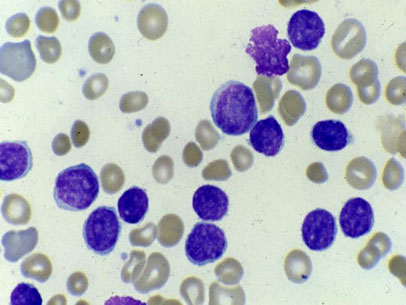
A 6-year-old girl is brought to the office because of a 2-week history of diffuse aches in her arms, legs, and back and decreased energy. She has not had changes in appetite during this period. She has no history of serious illness. She is at the 10th percentile for height and weight. Vital signs are within normal limits. The patient appears pale but is not in acute distress. Examination shows no rash or petechiae. Shotty lymph nodes are palpated over the cervical and axillary areas. Cardiopulmonary examination shows no abnormalities. The abdomen is soft; there is no organomegaly. There is diffuse, nonspecific tenderness to palpation over the bones of the upper and lower extremities and back. Examination of the joints shows no swelling, erythema, or warmth. Hemoglobin concentration is 9.4 g/dL (N=11.5–14.5), leukocyte count is 5600/mm3, and platelet count is 106,000/mm3. X-rays of the long bones show osteolytic lesions. Blood smear is shown. Which of the following is the most likely diagnosis?
CorrectIncorrect