
NBME 16 – Block 4 (Duplicate 1)
Time limit: 0
Quiz Summary
0 of 20 Questions completed
Questions:
Information
You have already completed the quiz before. Hence you can not start it again.
Quiz is loading…
You must sign in or sign up to start the quiz.
You must first complete the following:
Results
Quiz complete. Results are being recorded.
Results
0 of 20 Questions answered correctly
Your time:
Time has elapsed
You have reached 0 of 0 point(s), (0)
Earned Point(s): 0 of 0, (0)
0 Essay(s) Pending (Possible Point(s): 0)
Categories
- Not categorized 0%
- 1
- 2
- 3
- 4
- 5
- 6
- 7
- 8
- 9
- 10
- 11
- 12
- 13
- 14
- 15
- 16
- 17
- 18
- 19
- 20
- Current
- Review
- Answered
- Correct
- Incorrect
-
Question 1 of 20
1. Question
Patient Information
Age: 70 years
Gender: M, self-identified
Race/Ethnicity: unspecified
Site of Care: office
History
Reason for Visit/Chief Concern: “I have dizzy spells”
History of Present Illness:
• 3-month history of progressively frequent episodes of dizziness
• episodes occur when patient gets out of bed in the morning and when he stands up quickly from seated position
• episodes last from approximately 30 seconds to between 2 and 5 minutes
• dizziness subsides with sitting or resting
• no fever, chills, or chest pain
• no syncope
• has been adherent to current medication regimen
Past Medical History:
• type 2 diabetes mellitus; home blood glucose monitoring once daily shows glucose concentrations ranging from 180 to 200 mg/dL
• hypertension
• major depressive disorder
Medications:
• glipizide
• metformin
• hydrochlorothiazide
• sertraline
Allergies:
• ACE inhibitors (cough)
Psychosocial History:
• drinks two alcoholic beverages two to three times weekly
• does not smoke cigarettes
Physical Examination
Temp
Pulse
Resp
BP
O2 Sat
Ht
Wt
BMI
37.0°C
75/min supine
14/min
135/84 mm Hg supine
97%
180 cm
85 kg
26 kg/m2
(98.6°F)
80/min standing
105/65 mm Hg standing
on RA
(5 ft 11 in)
(187 lb)
• Appearance: well; no acute distress
• Skin: no rashes or lesions
• HEENT: PERRL; ocular movements full; moist oral mucosa
• Pulmonary: clear to auscultation; symmetric chest expansion
• Cardiac: regular rhythm; no murmurs, rubs, or gallops
• Abdominal: soft; nondistended; nontender to palpation
• Extremities: no edema
• Neurologic: decreased sensation to pinprick in stocking distribution over feet
Diagnostic Studies
Serum
Na+
140 mEq/L
K+
4.0 mEq/L
Cl–
100 mEq/L
HCO3–
24 mEq/L
Urea nitrogen
14 mg/dL
Creatinine
0.8 mg/dL
Glucose, nonfasting
180 mg/dL
Blood
Hematocrit
42%
Hemoglobin
14.0 g/dL
WBC
6000/mm3
Neutrophils, segmented
62%
Neutrophils, bands
3%
Lymphocytes
33%
Monocytes
2%
Platelet count
250,000/mm3
Hemoglobin A1c
9.0%
Question: Which of the following is the most likely underlying cause of this patient’s condition?
CorrectIncorrect -
Question 2 of 20
2. Question
A prospective study is conducted to assess the effectiveness of tamoxifen as an adjuvant therapy for premenopausal patients with stage I breast cancer who have undergone lumpectomy. A total of 1000 patients from hospitals around the USA are enrolled. The results of this study are compared with those of a previous study of 400 patients with stage I breast cancer treated with lumpectomy who did not receive tamoxifen. Results of the current study show reduced local recurrence of breast cancer in patients treated with tamoxifen. Which of the following raises the most concern about this study?
CorrectIncorrect -
Question 3 of 20
3. Question
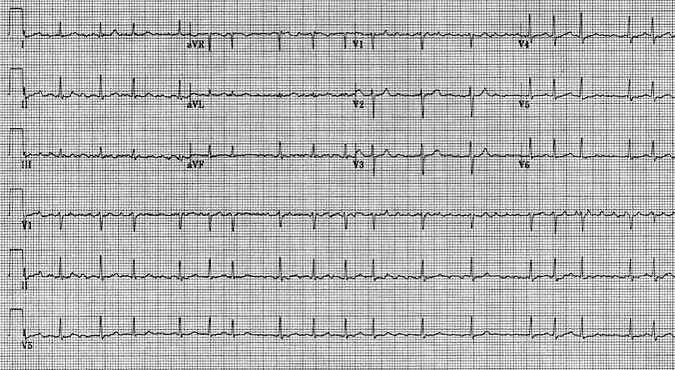
A 59-year-old man is brought to the emergency department 40 minutes after the sudden onset of left-sided weakness. The weakness has not changed in severity during this time. He has a 5-year history of hypertension and a 10-year history of hypercholesterolemia. His medications are lisinopril and atorvastatin. Pulse is 82/min and irregular, respirations are 12/min, and blood pressure is 142/84 mm Hg. Pulse oximetry on room air shows an oxygen saturation of 96%. On examination, a grade 2/6, right carotid bruit is heard. There is severe weakness of the lower left side of the face. Muscle strength is 3/5 in the left upper extremity and 3/5 in the proximal aspect of the left lower extremity. Muscle tone is decreased and deep tendon reflexes are 1+ in the left upper extremity. Sensation to light touch is severely decreased over the left side of the face, left upper extremity, and left side of the trunk. Proprioception is absent in the left upper extremity. Finger-stick blood glucose concentration is 138 mg/dL. ECG is shown. CT scan of the head without contrast shows no abnormalities. Which of the following is the most appropriate next step in management of this patient’s weakness?
CorrectIncorrect -
Question 4 of 20
4. Question
A 21-year-old woman, gravida 2, para 2, comes to the office because of moderate pain, redness, and swelling of her left nipple while breast-feeding. She delivered a healthy male newborn 2 weeks ago. Application of hot compresses and ibuprofen have not provided relief. She has no history of serious illness. Her only other medication is a prenatal vitamin. Temperature is 37.3°C (99.1°F), pulse is 72/min, respirations are 12/min, and blood pressure is 95/55 mm Hg. Examination of the left breast shows an area of tenderness, induration, and erythema around the nipple; there is no nipple retraction or underlying fluctuance. Which of the following is the most appropriate next step in diagnosis?
CorrectIncorrect -
Question 5 of 20
5. Question
A clinician would like to evaluate the efficacy of a new asthma medication for preventing asthma exacerbations requiring hospitalization among adult patients. Two hundred patients, aged 18 to 65 years with asthma diagnosed via spirometry, are enrolled from general internal medicine clinics. The patients are randomized to receive either the new medication plus standard therapy or placebo plus standard therapy. Patients are observed for 2 years and undergo spirometry every 6 months. At the end of the study, FEV1 increased by 14% from baseline in patients who received the new medication and decreased by 2% from baseline in patients who received placebo (P=.01). The clinician concludes that the new medication decreases the risk for hospitalization in adults with asthma. Which of the following most limits confidence in the clinician’s conclusion?
CorrectIncorrect -
Question 6 of 20
6. Question
A 5-month-old girl is brought to the office by her parents to establish care. Her parents are concerned that she seems less active than their friend’s infant of the same age. The parents say she does not try to roll over and seems content just lying down for long periods of time. They report that she is interactive, smiles and coos, and is a “very happy baby.” The infant was born at 38 weeks’ gestation to a 28-year-old primigravid woman via uncomplicated spontaneous vaginal delivery at home. Her parents declined routine perinatal medical care. Medical history is unremarkable and she receives no medications. The infant is breast-feeding well and the parents have started introducing solid foods to her diet. She sleeps through the night and takes two naps daily. Family history is unremarkable. She is 65.5 cm (25.8 in; 75th percentile) long and weighs 7.4 kg (16.3 lb; 75th percentile); head circumference is 42.4 cm (16.7 in; 75th percentile). Vital signs are within normal limits. The infant is smiling and interactive. Physical examination shows a tremor of the tongue. When held upright, she seems to slip through the physician’s hands and when held in a prone position, she does not hold her head up. She holds a plastic toy but does not bring it to her mouth. The remainder of the physical examination discloses no abnormalities. Which of the following is the most likely diagnosis?
CorrectIncorrect -
Question 7 of 20
7. Question
A previously healthy 50-year-old man comes to the physician because of a 2-month history of abdominal pain that is more severe after eating. His uncle died of gastric cancer at the age of 40 years. His vital signs are within normal limits. Physical examination shows epigastric tenderness. Laboratory studies show a hemoglobin concentration of 11 g/dL, hematocrit of 33%, and mean corpuscular volume of 70 μm3. Test of the stool for occult blood is positive. An upper endoscopy shows a gastric ulcer. An ulcer biopsy specimen is positive for urease. In addition to amoxicillin and omeprazole, which of the following is the most appropriate pharmacotherapy?
CorrectIncorrect -
Question 8 of 20
8. Question
A 3-month-old boy is brought to the clinic by his parents because of a 1-week history of rash. His mother initially noticed the rash on his face, but it has now spread to both arms. He has not had fever, vomiting, or diarrhea. Medical history is unremarkable and he receives no medications. He was born at 37 weeks’ gestation to a 23-year-old woman, gravida 2, para 1, via uncomplicated repeat caesarean delivery. At birth he was 49.5 cm (19.5 in; 40th percentile) long and weighed 3200 g (7 lb 1 oz; 35th percentile); head circumference was 34.3 cm (13.5 in; 40th percentile). Vaccinations are up-to-date. He has no known drug allergies. He lives at home with his parents and 3-year-old sister. Today he is 60.4 cm (23.8 in; 30th percentile) long and weighs 5.7 kg (12.5 lb; 40th percentile); head circumference is 40.6 cm (16 in; 45th percentile). Rectal temperature is 37.5°C (99.5°F), pulse is 140/min, respirations are 24/min, and blood pressure is 85/50 mm Hg. Skin examination shows erythematous papules and vesicles with some scaling on the face and the extensor surfaces of both upper extremities. There are petechiae on the trunk and all four extremities and two small bruises on the lower extremities. The remainder of the physical examination discloses no abnormalities. Results of laboratory studies are shown:
Blood
Hematocrit
37% (N=32%–42%)
Hemoglobin
13.1 g/dL (N=10.5–14)
WBC
7200/mm3 (N=6000–14,000)
Neutrophils, segmented
59%
Lymphocytes
32%
Monocytes
7%
Eosinophils
2%
Platelet count
30,000/mm3
Which of the following is the most likely diagnosis?
CorrectIncorrect -
Question 9 of 20
9. Question
A 62-year-old man comes to the office because of a 2-week history of intermittent temperatures to 37.9°C (100.2°F) and fatigue. He otherwise feels well. Medical history is remarkable for hypertension, hyperlipidemia, and benign prostatic hyperplasia. Medications are lisinopril, atorvastatin, and 81-mg aspirin. He does not smoke cigarettes, drink alcohol, or use other substances. Temperature is 37.6°C (99.7°F), pulse is 62/min, respirations are 14/min, and blood pressure is 130/80 mm Hg. Pulse oximetry on room air shows an oxygen saturation of 97%. Lungs are clear to auscultation. Cardiac examination discloses a grade 2/6, systolic, crescendo-decrescendo murmur that is heard best at the upper right sternal border and radiates to the neck; a grade 2/6 holosystolic murmur is heard best at the apex and radiates to the axilla. The remainder of the examination shows no abnormalities. Results of laboratory studies are shown:
Hemoglobin
11.2 g/dL
Hematocrit
34%
Leukocyte count
7000/mm3
Platelet count
300,000/mm3
Two blood cultures grow Streptococcus bovis. Transthoracic echocardiography shows a mobile vegetation on the mitral valve. In addition to beginning antibiotic therapy, which of the following is the most appropriate next step in management?
CorrectIncorrect -
Question 10 of 20
10. Question
A 33-year-old woman returns to the office for follow-up of chronic malnutrition secondary to Crohn disease. At her last visit 6 months ago, she reported diarrhea and weight loss of 5 pounds. Loperamide was recommended at that time. Today, she reports continued diarrhea after meals and fatigue. Surgical history is remarkable for ileocecectomy 10 years ago for management of Crohn disease and exploratory laparotomy 10 months ago for management of a small bowel obstruction. During the most recent procedure, the patient underwent extensive lysis of adhesions and resection of 10 cm of her small bowel. During the past 2 weeks, she has developed green drainage from her midline incision that is worse after meals. Additional medications are infliximab and prednisone. She is 160 cm (5 ft 3 in) tall and weighs 47.5 kg (105 lb); BMI is 19 kg/m2. Temperature is 37.3°C (99.2°F), pulse is 101/min, respirations are 18/min, and blood pressure is 102/76 mm Hg. Abdominal examination shows a midline incision with a 0.5-cm area at the lower aspect that is open. A bandage that was removed from the open area prior to examination is stained with bilious drainage. Which of the following factors in this patient’s history is the strongest indication for total parenteral nutrition?
CorrectIncorrect -
Question 11 of 20
11. Question
A 6-year-old boy is brought to the office by his adoptive parents because of an 18-month history of disruptive behaviors. The patient had been placed with his current family 18 months ago and was adopted 6 months ago. The patient was removed from the care of his biological parents because of neglect with subsequent termination of parental rights. Since placement with his current adoptive parents, the patient has often appeared irritable and sad every day. His parents say he often screams, rarely smiles, and pushes them away when they attempt to comfort him. They say, “We were hoping that he would change his behavior after the adoption, but that has not happened.” He sometimes is able to interact appropriately with his parents and peers but often withdraws into himself. Medical history is unremarkable and he receives no medications. The patient is at the 25th percentile for height and 15th percentile for weight; BMI is at the 17th percentile. Vital signs are within normal limits. During the examination, the patient sits alone in the corner, stares at the physician with a blank expression, has limited spontaneous movements, and refuses to answer questions. Physical examination discloses no abnormalities. Which of the following is the most likely diagnosis?
CorrectIncorrect -
Question 12 of 20
12. Question
A 42-year-old woman, gravida 3, para 2, at 10 weeks’ gestation comes to the office for her first prenatal visit. Previous pregnancies were uncomplicated and ended in uncomplicated spontaneous vaginal deliveries at term. She has no history of serious illness, and her only medication is a prenatal vitamin. Vital signs are within normal limits. Examination shows a uterus consistent in size with a 10-week gestation. The patient says she is worried about the risk for fetal genetic abnormalities because of her advanced age. She wishes to pursue as soon as possible a genetic screening test that would have a high likelihood of detecting Down syndrome. Which of the following is the most appropriate screening test for this patient?
CorrectIncorrect -
Question 13 of 20
13. Question
A 21-year-old man comes to the office for a routine examination. He is due for the tetanus toxoid, diphtheria toxoid, and acellular pertussis (Tdap) vaccine. The physician orders the vaccine, and one of the nurses administers it. After the patient leaves, it is noted that the patient received the tetanus and diphtheria toxoid (Td) vaccine instead. A root cause analysis performed by the clinic team determines that the vials for the two vaccines have similar-colored caps, which contributed to the error. Which of the following is most likely to decrease the likelihood of recurrence of this error?
CorrectIncorrect -
Question 14 of 20
14. Question
A 67-year-old woman comes to the physician because of a 1-year history of moderate shortness of breath with minimal exertion. She becomes short of breath when she does laundry and cannot go shopping without her husband’s assistance. During the past 5 months, she has had several colds and a chronic nonproductive cough. She is worried she might have pneumonia. She takes no medications. She does not smoke. She worked in a bakery for 25 years. Her temperature is 37°C (98.6°F), pulse is 82/min, respirations are 18/min, and blood pressure is 130/84 mm Hg. Crackles are heard over the lower third of the lung fields bilaterally. Pulmonary function tests show a decreased diffusion capacity. An x-ray of the chest shows increased interstitial markings and a normal cardiac silhouette. Which of the following is the most likely underlying mechanism?
CorrectIncorrect -
Question 15 of 20
15. Question
A 42-year-old man comes to the emergency department because of a 1-month history of progressive chronic diarrhea, abdominal bloating, nausea, vomiting, muscle weakness, and palpitations. He also has had an unintentional 6-kg (13-lb) weight loss during this period. He now has 9 to 10 watery bowel movements daily. There is no blood, fat, or mucus in the stool. Fasting and over-the-counter loperamide therapy have not resolved his symptoms. He has not traveled to the tropics recently. He appears ill and lethargic. Temperature is 37.0°C (98.6°F), pulse is 121/min, respirations are 23/min, and blood pressure is 84/55 mm Hg. Pulse oximetry on room air shows an oxygen saturation of 95%. Physical examination shows dry skin with decreased turgor and delayed capillary refill time. Results of serum studies are shown:
Na+
130 mEq/L
K+
2.6 mEq/L
HCO3–
17 mEq/L
Ca2+
11.0 mg/dL
Urea nitrogen
45 mg/dL
Creatinine
1.4 mg/dL
Glucose
172 mg/dL
CT scan of the abdomen and pelvis shows a 4.7-cm, well-defined, partially cystic mass in the tail of the pancreas and a single 6.8-cm partially cystic mass in the left lobe of the liver. An increased serum concentration of which of the following is most likely to confirm the suspected diagnosis in this patient?
CorrectIncorrect -
Question 16 of 20
16. Question
A 53-year-old man comes to the physician because of right heel pain for 3 weeks. He has had similar episodes during the past 2 years that resolved without treatment. He participates in marathons and usually runs 6 miles daily. He has been unable to run lately because of the pain. Physical examination shows tenderness and swelling of the right Achilles tendon. The patient asks the physician if there is anything he can do to prevent future recurrences of the pain. It is most appropriate for the physician to recommend which of the following?
CorrectIncorrect -
Question 17 of 20
17. Question
An 8-week-old boy is brought to the office by his parents because of a 4-day history of increased vomiting after feeding. His mother describes the vomit as white in appearance and says the infant is still hungry and eager to feed after vomiting. He is exclusively bottle-fed with formula. The infant was delivered via spontaneous vaginal delivery at 38 weeks’ gestation. Pregnancy and delivery were unremarkable. Length is 55 cm (21.7 in; 5th percentile), weight is 4.9 kg (10.8 lb; 27th percentile), and head circumference is 39 cm (15.4 in; 53rd percentile). Temperature is 37.0°C (98.6°F), pulse is 170/min, respirations are 50/min, and blood pressure is 80/50 mm Hg. The patient appears lethargic. Physical examination discloses an abdominal mass that is intermittently palpable in the right upper quadrant and wavelike peristaltic contractions. Results of laboratory studies are shown:
Serum
Na+
129 mEq/L
K+
2.7 mEq/L
Cl–
72 mEq/L
HCO3–
37 mEq/L
Urea nitrogen
24 mg/dL
Creatinine
0.5 mg/dL (N=0.03–0.5)
Blood
Hematocrit
41.4% (N=32%–42%)
Hemoglobin
14 g/dL (N=10.5–14)
WBC
12,400/mm3 (N=6000–14,000)
Platelet count
685,000/mm3
Which of the following is the most appropriate next step in evaluation?
CorrectIncorrect -
Question 18 of 20
18. Question
A cardiothoracic surgeon has performed a variety of operations using electrosurgical units during the past 22 years without causing an intraoperative burn. Two weeks ago, his community hospital began using a new model of electrocautery machine. Volume on this machine is controlled by a spin dial. Since that time, two different patients have experienced intraoperative burns. A root cause analysis is conducted and shows that the volume dial on the machine was unintentionally manipulated by the surgical team during the course of surgery. Therefore, the surgical team did not hear the electrocautery machine firing when it was left on the surgical field for too long. Based on these findings, which of the following is the most appropriate immediate action for this hospital to take?
CorrectIncorrect -
Question 19 of 20
19. Question
A 24-year-old man comes to the office for a follow-up examination. Four months ago, he was evaluated because of a painful left deep thigh mass that was noticed 2 weeks after he hit a tree while skiing. At the time of injury, he did not sustain any fractures but had numerous bruises over his chest, left upper extremity, and upper part of the left lower extremity, all of which have resolved. Examination at that time showed a 6-cm mass in the deep muscles of the lateral left thigh. X-ray of the left thigh showed soft tissue swelling but no fracture. He has no personal or family history of major medical illness and takes no medications. Today, vital signs are within normal limits. Examination shows mild decrease in size of the mass to 5 cm in the deep muscles of the left lateral thigh. X-ray of the left thigh shows a rounded mass with smooth peripheral calcification. Which of the following is the most likely diagnosis?
CorrectIncorrect -
Question 20 of 20
20. Question
A 32-year-old woman comes to the physician because of generalized swelling for 2 weeks. During the past year, she also has had progressive shortness of breath with extreme exertion. She has a 2-year history of frequent colds and bronchitis. She is comfortable at rest. Examination shows jugular venous distention to 10 cm above the sternal angle when the patient is sitting at a 45-degree angle. The lungs are clear to auscultation. Cardiac examination shows an increased S1 and a fixed, wide, split S2 with increased P2. A grade 2/6, systolic ejection murmur is heard best in the pulmonic area. There is moderate clubbing and cyanosis of the extremities. Which of the following is the most likely location of this patient’s primary lesion?
CorrectIncorrect