
NBME 16 – Block 1 (Duplicate 1)
Time limit: 0
Quiz Summary
0 of 20 Questions completed
Questions:
Information
You have already completed the quiz before. Hence you can not start it again.
Quiz is loading…
You must sign in or sign up to start the quiz.
You must first complete the following:
Results
Quiz complete. Results are being recorded.
Results
0 of 20 Questions answered correctly
Your time:
Time has elapsed
You have reached 0 of 0 point(s), (0)
Earned Point(s): 0 of 0, (0)
0 Essay(s) Pending (Possible Point(s): 0)
Categories
- Not categorized 0%
- 1
- 2
- 3
- 4
- 5
- 6
- 7
- 8
- 9
- 10
- 11
- 12
- 13
- 14
- 15
- 16
- 17
- 18
- 19
- 20
- Current
- Review
- Answered
- Correct
- Incorrect
-
Question 1 of 20
1. Question
A 33-year-old resident is undergoing his last year of training. Recently, some of his co-residents have become concerned about the frequency of the resident’s partying and drinking excessive amounts of alcohol outside of work. These residents have never noticed him impaired at work. When questioned by one of the co-residents, the resident states he is having stressful life issues. Which of the following is the most appropriate next step by the co-residents?
CorrectIncorrect -
Question 2 of 20
2. Question
A 62-year-old man comes to the office because of a 4-month history of generalized, dull morning headaches. The pain gradually improves within 1 hour of awakening. He also has a 5-year history of fatigue and daytime sleepiness that causes him embarrassment. He lives alone and says he sleeps 9 hours nightly and only awakens once to urinate. He adds that he began exercising less and gaining weight after retiring from his job 2 years ago. He has major depressive disorder treated with sertraline. He is 173 cm (5 ft 8 in) tall and weighs 102 kg (225 lb); BMI is 34 kg/m2. Temperature is 37.0°C (98.6°F), pulse is 76/min, respirations are 16/min, and blood pressure is 126/72 mm Hg. Physical examination shows no papilledema or scalp tenderness. Cardiopulmonary examination discloses no abnormalities. Which of the following is the most appropriate next step in management?
CorrectIncorrect -
Question 3 of 20
3. Question
A 59-year-old man comes to the office 3 months after undergoing placement of a stent following a myocardial infarction. During this time, the patient has been asymptomatic. Medical history also is remarkable for type 2 diabetes mellitus diagnosed 10 years ago. Medications are clopidogrel, metformin, metoprolol, empagliflozin, atorvastatin, and daily aspirin. His most recent hemoglobin A1c obtained 1 week ago was 8.5%. The patient has been adherent to his medication regimen. He has been following a low-fat diet and walks for 45 minutes, three to four times weekly. He is 165 cm (5 ft 5 in) tall and weighs 100 kg (220 lb); BMI is 37 kg/m2. Vital signs are within normal limits. Physical examination discloses no abnormalities. Which of the following is the most appropriate pharmacotherapy to add to this patient’s medication regimen?
CorrectIncorrect -
Question 4 of 20
4. Question
Patient Information
Age: 14 years
Gender: M, self-identified
Race/Ethnicity: unspecified
Site of Care: office
History
Reason for Visit/Chief Concern: “My right ear is swollen and painful.”
History of Present Illness:
• developed pain and swelling of his right ear 3 hours ago after it was hit by his opponent’s elbow in a wrestling match
• no headache or blurry vision
• no hearing loss or ringing in his right ear
Past Medical History:
• no serious illnesses
Medications:
• none
Allergies:
• no known drug allergies
Family History:
• mother and father: alive with no chronic conditions
Psychosocial History:
• uses cannabis socially with his friends
• drinks one to two beers at parties with friends on the weekends
Physical Examination
Temp
Pulse
Resp
BP
Ht
Wt
BMI
36.7°C
80/min
16/min
120/80 mm Hg
165 cm
51 kg
18.7 kg/m2
(98.0°F)
(5 ft 5 in)
(112 lb)
43rd %ile
55th %ile
50th %ile
• Appearance: not in acute distress
• Skin: no bruising or swelling other than of the right ear, no rash
• HEENT: PERRLA, extraocular muscles intact; swelling, erythema, and bruising of the right pinna; normal left pinna
• Pulmonary: clear to auscultation
• Cardiac: regular rhythm, normal S1 and S2 with no murmurs
• Abdominal: nondistended; normoactive bowel sounds; nontender to palpation
• Extremities: full range of motion in all four extremities
• Neurologic: fully oriented with no focal motor or sensory deficits
Question: Which of the following is the most appropriate next step in management?
CorrectIncorrect -
Question 5 of 20
5. Question
A 25-year-old woman comes to the office because of a 2-day history of increased urinary frequency and a burning sensation with urination. She just returned from the Cayman Islands. She has not had fever, nausea, vomiting, or back pain. She has been avoiding drinking fluids, but this has not decreased her urinary frequency. The patient has recently been married and has only had two sexual partners in her lifetime. She is otherwise healthy and her only medication is ibuprofen. She appears uncomfortable. Vital signs are within normal limits. Physical examination shows no abnormalities. Urine culture grows a citrate-negative, indole-positive, gram-negative rod. Analysis of a clean catch urine sample is most likely to show a decrease of which of the following in this patient?
CorrectIncorrect -
Question 6 of 20
6. Question
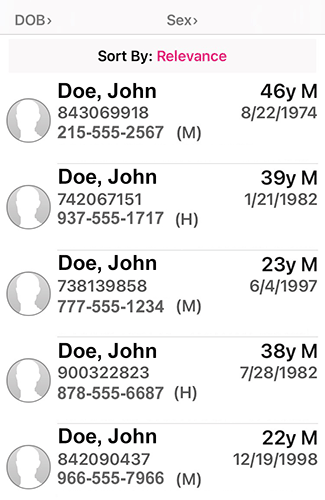
The electronic health record (EHR) system at a primary care practice was recently upgraded so that physicians can update patient charts from their mobile devices. Prior to the EHR upgrade, a physician would receive after-hour calls from clinic patients and make notes on paper by hand. The notes would then be transcribed the next day by an administrative assistant and added to the patient’s chart. Following the EHR upgrade, physicians can search for the patient in the EHR on their mobile device and add notes directly to the EHR. Typically, a clinic physician receives approximately 40 phone calls nightly between 5:00 pm and 7:30 am. A patient named John Doe (date of birth, 7/28/1982) calls multiple times one evening to refill his albuterol prescription. The physician on call orders the medication and documents it in the EHR from her mobile device. The next day, it is discovered that the order has been placed in the EHR of another patient, who has a similar name, as shown. Which of the following interventions is most likely to prevent this type of error from recurring?
CorrectIncorrect -
Question 7 of 20
7. Question
Patient Information
Age: 22 years
Gender: F, self-identified
Race/Ethnicity: White, self-identified
Site of Care: emergency department
History
Reason for Visit/Chief Concern: “I woke up coughing bright red blood.”
History of Present Illness:
• underwent outpatient tonsillectomy 10 days ago
• admitted to hospital for observation after procedure because of excessive bleeding
• returned to operating room on postoperative day 1 to achieve hemostasis
• hematology consultation was obtained prior to discharge; hematologic study results available today
• discharged home on postoperative day 2
Past Medical History:
• recurrent tonsillitis
• menorrhagia managed with hormonal contraception
Medications:
• acetaminophen prn for headaches
• ibuprofen prn for dysmenorrhea
• oral contraceptive
Allergies:
• no known drug allergies
Psychosocial History:
• college student
• does not smoke cigarettes or drink alcoholic beverages
Physical Examination
Temp
Pulse
Resp
BP
O2 Sat
Ht
Wt
BMI
36.8°C
92/min
18/min
102/64 mm Hg
97%
175 cm
90 kg
29 kg/m2
(98.2°F)
on RA
(5 ft 9 in)
(198 lb)
• Appearance: alert; anxious; cooperative; spitting blood and clots into basin
• Skin: no rashes
• HEENT: blood in oropharynx; active bleeding noted from right tonsillar bed; well-healed left tonsillar bed with no active bleeding
• Pulmonary: clear breath sounds
• Cardiac: regular rhythm; no murmurs, rubs, or gallops
• Extremities: warm; dry; well-perfused
Diagnostic Studies
Obtained 9 days ago by hematologist:
Blood
Hematocrit
31%
Hemoglobin
10.9 g/dL
MCV
82 µm3
WBC
12,300/mm3
Neutrophils, segmented
65%
Neutrophils, bands
5%
Lymphocytes
25%
Monocytes
4%
Eosinophils
1%
Platelet count
135,000/mm3
PT
14 seconds
PTT
52 seconds
INR
1.1
Plasma
Fibrinogen
335 mg/dL (N=200–393)
Factor VIII activity
38%
von Willebrand factor antigen
28%
von Willebrand factor:ristocetin cofactor (RCo) assay
24%
von Willebrand factor activity:antigen
0.85
Question: In addition to surgical consultation, which of the following is the most appropriate next step in management?
CorrectIncorrect -
Question 8 of 20
8. Question
A 5-year-old girl is admitted to the hospital for evaluation and treatment of a mediastinal mass that was noted on chest x-ray following a 2-week history of increasing shortness of breath. She has no history of serious illness and receives no medications. She appears anxious and is in moderate respiratory distress. Temperature is 38.0°C (100.4°F), pulse is 110/min, respirations are 28/min, and blood pressure is 120/70 mm Hg. Pulse oximetry on room air shows an oxygen saturation of 95%. Examination shows subcostal and suprasternal retractions. There are multiple, 3 × 3-cm, firm, nontender, anterior cervical lymph nodes bilaterally. Liver span is 10 cm, and the spleen tip is palpated 3 cm below the left costal margin. The remainder of the examination shows no abnormalities. Results of laboratory studies are shown:
Serum
Na+
140 mEq/L
K+
4.5 mEq/L
Cl−
109 mEq/L
HCO3−
22 mEq/L
Urea nitrogen
15 mg/dL (N=5–18)
Creatinine
0.4 mg/dL (N=0.3–0.7)
Blood
Hemoglobin
5.5 g/dL (N=9–15.5)
WBC
1000/mm3 (N=5500–15,500)
Platelet count
90,000/mm3
In addition to appropriate evaluation and treatment of the mass, which of the following is the most appropriate next step to prevent acute renal failure in this patient?
CorrectIncorrect -
Question 9 of 20
9. Question
A 17-year-old boy comes to the surgery clinic with his mother for tonsillectomy evaluation. Medical history is remarkable for recurrent tonsillitis. He does not smoke cigarettes, drink alcoholic beverages, or use other substances. He has no other history of serious illness and takes no medications. The patient is a US Marine. History and physical examination are performed by a surgeon. After a discussion about the benefits and risks of the procedure, the patient agrees to sign the informed consent form. The mother says that under no circumstances would she allow the surgeon to remove her son’s tonsils. Which of the following is the most appropriate next step in management?
CorrectIncorrect -
Question 10 of 20
10. Question
A 59-year-old man comes to the office because of a 3-day history of progressive fever, shortness of breath, nausea, diarrhea, and cough productive of minimal sputum. His symptoms began 4 days after he returned home from a 7-day vacation at a spa resort. He has a history of chronic bronchitis and currently takes no medications. He has smoked one pack of cigarettes daily for 40 years. Temperature is 39.4°C (102.9°F), pulse is 90/min and regular, respirations are 22/min, and blood pressure is 155/85 mm Hg. Pulse oximetry on room air shows an oxygen saturation of 94%. Cardiopulmonary examination discloses diffuse crackles best heard at the lung bases and no murmurs, rubs, or gallops. The abdomen is soft and nontender. Gram stain of sputum shows multiple neutrophils but no bacteria. Result of a rapid polymerase chain reaction test for coronavirus is negative. Which of the following is the most appropriate pharmacotherapy for this patient at this time?
CorrectIncorrect -
Question 11 of 20
11. Question
A 16-year-old girl is brought to the office by her mother because of a 6-month history of increasingly severe lower abdominal cramps that begin 2 days before the start of her menstrual period and last for 4 days. She has missed a total of 10 days of school because of the pain. She otherwise is asymptomatic. Menarche was at the age of 15 years. Menses occur at regular 28-day intervals, last 5 days, and initially occurred without pain. She is not sexually active. She has no history of serious illness and takes no medications. Examination of the abdomen and external genitalia shows no abnormalities. Which of the following is the most appropriate next step in management?
CorrectIncorrect -
Question 12 of 20
12. Question
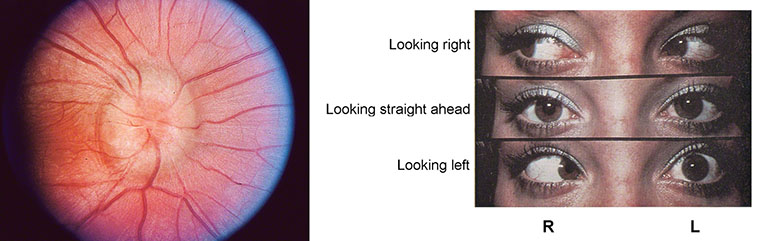
A 28-year-old African American woman comes to the Veterans Affairs urgent treatment center because of a history of migraines that began after she sustained a blast injury from an improvised explosive device in Afghanistan 7 years ago. Until 1 month ago, her migraines had been well controlled for 2 years with nightly prophylactic amitriptyline, and they had occurred no more than twice monthly. When they occurred, they resolved quickly with sumatriptan. Today, the patient reports a 1-month history of daily moderate headaches on awakening that are not relieved by sumatriptan or naproxen. She says these new types of headaches have not been accompanied by sensitivity to light or sound or by the unilateral “pounding” sensation typical of her previous migraines. During the past week, she has had several episodes of momentary blindness and has heard a “whooshing” sound occurring in synchrony with her pulse. During the past 2 days, she has had constant double vision that resolves when she covers one eye. She also reports occasional nausea and vertigo that occur only after she has taken minocycline, which her dermatologist prescribed 2 months ago for acne. She does not smoke cigarettes, drink alcohol, or use other substances. She appears to be in moderate distress. She is 165 cm (5 ft 5 in) tall and weighs 72 kg (158 lb); BMI is 26 kg/m2. Vital signs are within normal limits. Ocular and funduscopic examinations show the findings depicted in the photographs. The remainder of the examination discloses no abnormalities. CT scan of the head was performed prior to performing the lumbar puncture; the findings confirmed no contraindication for lumbar puncture. Cerebrospinal fluid analysis is most likely to show which of the following sets of findings?
Option
Opening Pressure (mm H₂O)
WBC (/mm³)
Differential
RBC (/mm³)
Protein (mg/dL)
A
120
2
100% lymphocytes
0
27
B
120
80
97% lymphocytes, 3% monocytes
0
90
C
310
2
100% lymphocytes
0
27
D
310
80
3% lymphocytes, 97% neutrophils
0
90
E
310
80
97% lymphocytes, 3% monocytes
0
90
CorrectIncorrect -
Question 13 of 20
13. Question
Thirty minutes after undergoing CT scan of the abdomen with intravenous contrast, a 57-year-old woman has the onset of generalized pruritus. She was admitted to the hospital for diverticulitis 2 days ago and has been receiving intravenous ampicillin-sulbactam therapy since then. Her temperature is 37.2°C (99.0°F), pulse is 100/min, respirations are 24/min, and blood pressure is 80/50 mm Hg while supine. Examination shows multiple, 2-cm, erythematous, raised lesions over the trunk and all extremities. Expiratory wheezes are heard bilaterally. Which of the following is the most appropriate initial pharmacotherapy?
CorrectIncorrect -
Question 14 of 20
14. Question
A 47-year-old woman comes to the office for a follow-up evaluation of blood pressure control. At two previous visits during the past 3 months, her blood pressure was 154/94 mm Hg and 160/96 mm Hg, respectively. During the past 3 months, she has been following a low-sodium diet and a regimen of exercise and has limited her alcohol intake. She is 165 cm (5 ft 5 in) tall and weighs 60 kg (132 lb); BMI is 22 kg/m2. Today, her blood pressure is 152/96 mm Hg. Physical examination shows no other abnormalities. ECG and laboratory studies show no abnormalities. In addition to advising the patient to continue her diet and exercise program and monitor her blood pressure at home, which of the following is the most appropriate next step in management?
CorrectIncorrect -
Question 15 of 20
15. Question
A 24-year-old woman comes to the clinic because of a 2-day history of right lower abdominal pain that was sudden in onset. She has not had fever, nausea, vomiting, diarrhea, or constipation. Medical history is remarkable for asthma and occasional headaches. Medications are an oral contraceptive, inhaled albuterol as needed, and ibuprofen as needed for headaches. She lives with her boyfriend of 2 years and works as a research analyst. Menses occur regularly at 28-day intervals; her last menstrual period was 1 week ago. Temperature is 36.7°C (98.0°F), pulse is 80/min, respirations are 20/min, and blood pressure is 120/66 mm Hg. The patient appears anxious. There is a fading ecchymosis over the right cheek. Cardiopulmonary examination discloses no abnormalities. Abdominal examination shows an ecchymosis over the right lower quadrant. Bowel sounds are normoactive. Abdomen is soft with tenderness to palpation in the right lower quadrant; a hematoma is palpated in the area of tenderness. There is bruising of the patient’s inner thighs. Pelvic examination discloses cervical motion tenderness. The patient reluctantly confirms that her injuries were inflicted by her boyfriend and that nonconsensual intercourse occurred. In addition to discussing reporting requirements and safety with the patient and ordering a urine pregnancy test and forensic rape examination, which of the following is most appropriate to offer this patient at this time?
CorrectIncorrect -
Question 16 of 20
16. Question
A 35-year-old woman, gravida 2, para 2, is brought to the emergency department because of a 1-day history of severe headache and photosensitivity, low-grade fever, and neck stiffness. She has not had sore throat, rash, chest or joint pain, shortness of breath, or diarrhea. She has not had any sick contacts. She has no history of serious illness or known allergies. Her only medication is ibuprofen as needed. She does not smoke cigarettes, drink alcoholic beverages, or use tobacco. She lives in a rural area of North Carolina. Two weeks ago, she spent the weekend camping and received multiple tick bites. She does not believe that any of the ticks were attached for more than 24 hours. Temperature is 38.4°C (101.1°F), pulse is 104/min and regular, respirations are 18/min, and blood pressure is 104/74 mm Hg. She appears well nourished and in moderate distress. She is shielding her eyes from light. Examination of the skin shows no rash. There is evidence of tick bites over the right shoulder. Examination of the head shows no evidence of trauma. There is no papilledema. There is mild nuchal rigidity. The remainder of neurologic examination discloses no abnormalities. Cardiopulmonary examination discloses no abnormalities. Results of laboratory studies are shown:
Serum
Na+
131 mEq/L
Creatinine
1.0 mg/dL
Blood
Hematocrit
34%
Hemoglobin
11.2 g/dL
WBC
2300/mm3
Platelet count
100,000/mm3
Which of the following is the most appropriate next step in management?
CorrectIncorrect -
Question 17 of 20
17. Question
A 63-year-old woman comes to the physician for a follow-up examination. Five years ago, she underwent a left mastectomy with adjunctive radiation therapy and chemotherapy for carcinoma of the breast. She is currently asymptomatic. Physical examination shows a well-healed mastectomy scar on the left. The most likely site of metastasis in this patient would be shown by a radionuclide scan of which of the following?
CorrectIncorrect -
Question 18 of 20
18. Question
A 4-year-old boy is brought to the office by his mother for a well-child examination. She is concerned that he is a picky eater because he refuses to eat any green vegetables. He has been toilet-trained during the day for 14 months but continues to wet the bed nightly; his mother uses behavior charts to reward nighttime dryness. The patient awakens from nightmares once or twice weekly. He is able to count to five and use four-word sentences. He has no history of serious illness and receives no medications. Vaccinations are up-to-date. He is at the 50th percentile for height and 40th percentile for weight. Examination discloses no abnormalities. Which of the following is the most likely diagnosis?
CorrectIncorrect -
Question 19 of 20
19. Question
An 18-year-old primigravid woman comes to the emergency department (ED) because of a 1-day history of heavy vaginal bleeding. Her last menstrual period was 15 weeks ago. Menses previously occurred at regular 28-day intervals. Urine pregnancy test result in the ED is positive. She has no history of serious illness and takes no medications. Her father has a history of colon cancer. The patient’s vital signs are within normal limits. Cardiopulmonary examination discloses no abnormalities. Pelvic examination shows normal external female genitalia and a closed cervix; there is no blood in the vaginal vault. Bimanual examination discloses a uterus consistent in size with a 20-week gestation. Pelvic ultrasonography shows a heterogeneous-appearing mass within the cavity with cystic spaces and no fetal parts. Quantitative serum β-hCG concentration is 320,000 mIU/mL. Which of the following is the most appropriate next step in management?
CorrectIncorrect -
Question 20 of 20
20. Question
A 30-year-old man comes to the office because of a 6-month history of chronic thirst and urinary frequency. He has bipolar disorder. Current medications are lithium carbonate and a daily multivitamin. Vital signs are within normal limits. Physical and neurologic examinations show no abnormalities. Laboratory studies are most likely to show which of the following sets of findings in this patient?
Option
Serum Na⁺
Urine Osmolality
A
Increased
Increased
B
Increased
Decreased
C
Decreased
Increased
D
Decreased
Decreased
CorrectIncorrect