
NBME 15- Block 3
Time limit: 0
Quiz Summary
0 of 20 Questions completed
Questions:
Information
You have already completed the quiz before. Hence you can not start it again.
Quiz is loading…
You must sign in or sign up to start the quiz.
You must first complete the following:
Results
Quiz complete. Results are being recorded.
Results
0 of 20 Questions answered correctly
Your time:
Time has elapsed
You have reached 0 of 0 point(s), (0)
Earned Point(s): 0 of 0, (0)
0 Essay(s) Pending (Possible Point(s): 0)
Categories
- Not categorized 0%
- 1
- 2
- 3
- 4
- 5
- 6
- 7
- 8
- 9
- 10
- 11
- 12
- 13
- 14
- 15
- 16
- 17
- 18
- 19
- 20
- Current
- Review
- Answered
- Correct
- Incorrect
-
Question 1 of 20
1. Question
A 2½-year-old girl is brought to the physician for a well-child examination. She was born at term following an uncomplicated pregnancy and has no history of serious illness. She can climb steps, throw a ball overhand, and build a tower of six blocks. She is beginning to dress herself. She uses two-word sentences. She is shy around strangers. She participates in interactive play in day care. Examination shows no abnormalities. Which of the following is the most accurate assessment of this child’s development?
Option
Fine Motor Development
Gross Motor Development
Language Development
Social Development
A
Delayed
Delayed
Delayed
Delayed
B
Delayed
Delayed
Normal
Normal
C
Delayed
Normal
Delayed
Delayed
D
Delayed
Normal
Normal
Normal
E
Normal
Delayed
Normal
Normal
F
Normal
Normal
Delayed
Normal
G
Normal
Normal
Normal
Delayed
H
Normal
Normal
Normal
Normal
CorrectIncorrect -
Question 2 of 20
2. Question
A 57-year-old woman comes to the physician because of a 3-month history of intermittent nonproductive cough and shortness of breath with exertion and at night. She has not had fever or weight loss. She immigrated to the USA from Kenya 10 years ago. She has a 5-year history of hypertension controlled with losartan and hydrochlorothiazide. The patient is 168 cm (5 ft 6 in) tall and weighs 82 kg (180 lb); BMI is 29 kg/m2. Her temperature is 37.2°C (99°F), pulse is 72/min and regular, respirations are 12/min, and blood pressure is 138/88 mm Hg. Jugular venous pulsations are present 3 cm above the sternal angle. Low-pitched expiratory wheezes are heard over the lungs posteriorly. A grade 2/6 systolic murmur is heard at the left sternal border and second intercostal space. A chest x-ray shows no abnormalities. Which of the following is the most likely diagnosis?
CorrectIncorrect -
Question 3 of 20
3. Question
An asymptomatic 57-year-old man who is HIV positive comes to the physician as a new patient with his medical records. He currently takes no medications. He has a history of sexual activity with male and female partners but has been in a monogamous relationship with a woman for the past 2 years. His partner uses an oral contraceptive, and they do not use condoms. On questioning, he says his partner does not know about his HIV status, but that his previous physician “knew all about this and said it was not a big deal.” Examination today shows no abnormalities. Which of the following is the most appropriate next step?
CorrectIncorrect -
Question 4 of 20
4. Question
A 37-year-old woman, gravida 3, para 2, at 24 weeks’ gestation comes to the physician 4 weeks after noticing a lump in her left breast during self-examination. There is no family history of cancer. She currently takes no medications. Examination shows a 1 × 2-cm, unilateral, dominant mass in the left breast. Examination of the right breast shows tissue changes of pregnancy and no evidence of a mass. Which of the following is the most appropriate next step in management?
CorrectIncorrect -
Question 5 of 20
5. Question
A previously healthy 47-year-old man is brought to the emergency department by his wife because of a 2-day history of increasing confusion. He thinks it is 1992 and often makes statements that do not make sense. He has not had recent weight loss or other symptoms. He has smoked two packs of cigarettes daily for 30 years. He is oriented to person and place but not to time. His temperature is 37°C (98.6°F), pulse is 80/min, respirations are 20/min, and blood pressure is 110/70 mm Hg. The remainder of the examination shows no abnormalities. Laboratory studies show a serum sodium concentration of 115 mEq/L, urine sodium concentration of 80 mEq/L, and urine osmolality of 600 mOsmol/kg H2O. Which of the following is the most likely underlying cause of this patient’s confusion?
CorrectIncorrect -
Question 6 of 20
6. Question
A 32-year-old nulligravid woman comes to the physician with her husband because she has been unable to conceive for 2 years. The couple has sexual intercourse without contraception approximately three times weekly. Menses occur at irregular 25- to 35-day intervals. Her last menstrual period was 3 weeks ago. She is otherwise healthy and takes no medications. Physical examination, including pelvic examination, shows no abnormalities. Serum studies show:
Thyroid-stimulating hormone
1.2 μU/mL
Prolactin
14 ng/mL
Progesterone
0.5 ng/mL (menstrual cycle day 21: follicular N<3; luteal N>3–5)
Semen analysis shows:
Count
36 million/mL (N>20)
Motility
65% (N>60%)
Hysterosalpingography shows bilateral tubal patency. Which of the following is the most likely cause of this patient’s infertility?
CorrectIncorrect -
Question 7 of 20
7. Question
A previously healthy 4-month-old boy is brought to the physician because of a 2-day history of fever and episodes of vomiting and crying. He is fussy but consolable. His temperature is 39.1°C (102.4°F), pulse is 142/min, respirations are 28/min, and blood pressure is 88/54 mm Hg. On examination, the left testicle is not palpable in the scrotal sac. Laboratory studies show:
Hematocrit
35%
Leukocyte count
19,500/mm3
Platelet count
250,000/mm3
Urine
RBC
10/hpf
WBC
30/hpf
A Gram stain of a catheterized urine sample shows gram-negative rods. Urine and blood cultures are pending. Which of the following is the most likely underlying cause of these abnormal laboratory findings?
CorrectIncorrect -
Question 8 of 20
8. Question
A previously healthy 57-year-old man comes to the physician because of a 2-month history of increasing left foot pain at rest. He has smoked two packs of cigarettes daily for 30 years. Left popliteal and pedal pulses cannot be palpated. The foot is cool, and dependent rubor is noted. Arteriography shows occlusion of the left superficial femoral artery and stenosis of the left profunda femoris artery. Arterial bypass graft is scheduled. The patient is at greatest risk for development of which of the following postoperative complications?
CorrectIncorrect -
Question 9 of 20
9. Question
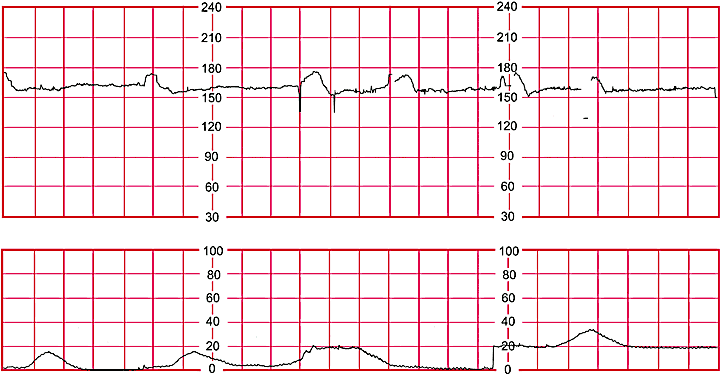
A 17-year-old primigravid patient at 38 weeks’ gestation is admitted to the hospital in labor. Contractions have occurred for 2 hours every 2 to 3 minutes. Her pregnancy has been uncomplicated. A fetal heart tracing is shown. The cervix is 4 cm dilated and 90% effaced; the vertex is at 0 station. In addition to continued fetal monitoring, which of the following is the most appropriate next step in management?
 CorrectIncorrect
 -
Question 10 of 20
10. Question
A 77-year-old man comes to the physician 24 hours after the gradual onset of mild shortness of breath. He has alcohol-induced cirrhosis treated with furosemide, spironolactone, and a potassium supplement, but he says that he ran out of his medications last week. Since then, he has noticed progressive swelling of his feet and increased abdominal girth. There is no other history of serious illness. He is uncomfortable and in mild respiratory distress. He appears cachectic. His pulse is 82/min, respirations are 14/min, and blood pressure is 102/74 mm Hg. Cardiopulmonary examination shows no abnormalities. Abdominal examination shows severe distention. The liver is not palpated. There is 2+ pedal edema bilaterally. Serum studies show:
Na+
126 mEq/L
K+
3.9 mEq/L
Cl−
96 mEq/L
HCO3−
26 mEq/L
Urea nitrogen
18 mg/dL
Creatinine
1.3 mg/dL
Albumin
1.6 g/dL
Which of the following is most likely to be decreased in this patient?
CorrectIncorrect -
Question 11 of 20
11. Question
An 18-year-old man is brought to the emergency department 10 minutes after sustaining a gunshot wound to the abdomen. On arrival, his pulse is 120/min, respirations are 16/min, and blood pressure is 90/60 mm Hg. Examination shows an entrance wound in the right lower quadrant of the abdomen; no exit wound is identified. The abdomen is diffusely tender with voluntary guarding. Bowel sounds are hypoactive. After fluid resuscitation, which of the following is the most appropriate next step in diagnosis?
CorrectIncorrect -
Question 12 of 20
12. Question
A 5-year-old boy is brought to the physician for a well-child examination. His mother says that he plays outside frequently, and she has been having trouble keeping him away from the poison ivy in their backyard. Examination shows no abnormalities. His mother asks what can be done to prevent a rash after exposure to poison ivy. Which of the following is the most appropriate recommendation after exposure?
CorrectIncorrect -
Question 13 of 20
13. Question
Six hours after beginning dicloxacillin therapy for cellulitis of the right lower extremity, a 37-year-old woman comes to the emergency department because of a 3-hour history of pruritic rash, dyspnea, and mild cough. She has a history of childhood asthma but no history of adverse reactions to medication. Six months ago, she had streptococcal pharyngitis treated with penicillin. She has been otherwise healthy. Her temperature is 37.1°C (98.8°F), pulse is 110/min, respirations are 22/min, and blood pressure is 86/64 mm Hg. Pulse oximetry on room air shows an oxygen saturation of 92%. Examination of the skin shows 1- to 2-cm areas of pink urticaria over the trunk and upper and lower extremities and a 3-cm, erythematous, mildly tender area over the distal right lower extremity. Air movement is poor, and inspiratory and expiratory wheezes are heard on auscultation. Her hemoglobin concentration is 13.1 g/dL, and leukocyte count is 9500/mm3. A chest x-ray shows no abnormalities. Which of the following is most likely to prevent recurrence of this patient’s symptoms?
CorrectIncorrect -
Question 14 of 20
14. Question
A 27-year-old woman is brought to the emergency department by her parents because of a 3-day history of auditory hallucinations. One week ago, her husband was convicted of a drug-dealing charge. At that time, she learned that she and her 16-month-old son may be at risk for violence from former associates of her husband. After leaving the courthouse, she remembers hearing a voice telling her to jump in front of a red car. Since that time, she has heard other voices; they appear more often when she is under stress. She says the voices are telling her that she is in danger and that she should hide. She has no history of psychiatric illness. She does not drink alcohol or use illicit drugs. Physical examination shows no abnormalities. On mental status examination, she is calm and cooperative but seems mildly suspicious of the physician. Her thought process is organized. She becomes tearful when questioned about her husband. She says she does not want to be hospitalized because her baby needs her. She is worried that the hospital may try to take him away. She says that she hears frightening voices but that they have not told her to harm herself again since the first day she experienced them. Her parents are also worried about the patient being separated from her son and say they can plan for someone to be with her at all times. Which of the following is the most appropriate next step in management?
CorrectIncorrect -
Question 15 of 20
15. Question
A 62-year-old woman with pancreatic cancer metastatic to the liver comes to the physician because of mild to moderate abdominal pain for 2 days. She currently takes no pain medications. She says that her pain has increased from 0 to 2 on a 10-point scale. Which of the following is the most appropriate initial pharmacotherapy for her pain?
CorrectIncorrect -
Question 16 of 20
16. Question
Forty-eight hours after spontaneous rupture of membranes, a 425-g (1-lb) newborn is delivered at 21 weeks’ gestation to a 42-year-old primigravid woman. Her pregnancy had been uncomplicated, and her estimated date of delivery was confirmed by ultrasonography at 12 weeks’ gestation. Chorionic villus sampling at 12 weeks’ gestation showed a karyotype of 46,XY. The newborn’s heart rate is 40/min, and a gasp is noted. On examination, the eyelids are fused, and the skin is transparent. Which of the following is the most appropriate next step in management of the newborn?
CorrectIncorrect -
Question 17 of 20
17. Question
A 37-year-old man comes to the physician for a routine examination. He has no history of serious illness, has no known allergies, and takes no medications. His mother died of a brain neoplasm at the age of 60 years. His father is 86 years old and healthy. During the past 4 years, the patient has volunteered at a homeless shelter and has donated blood once every 2 months. He appears healthy. He is 178 cm (5 ft 10 in) tall and weighs 75 kg (165 lb); BMI is 24 kg/m2. Vital signs are within normal limits. Examination shows no abnormalities. Laboratory studies show:
Hemoglobin
14.5 g/dL
Hematocrit
44%
Mean corpuscular hemoglobin
30% Hb/cell
concentration
Mean corpuscular volume
90 μm3
Leukocyte count
2600/mm3
Segmented neutrophils
60%
Eosinophils
1%
Lymphocytes
35%
Monocytes
4%
Platelet count
250,000/mm3
Results of fasting serum lipid studies are within the reference ranges. Which of the following is the most appropriate next step in management?
CorrectIncorrect -
Question 18 of 20
18. Question
A 62-year-old man is brought to the emergency department 30 minutes after falling while putting away groceries. The patient reports that he became dizzy before he fell. He has had increasing episodes of dizziness during the past 3 months. He has Parkinson disease. His only medication is carbidopa-levodopa. He appears frail but is not in acute distress. His pulse is 74/min, and blood pressure is 122/70 mm Hg while seated; his pulse is 88/min, and blood pressure is 96/60 mm Hg while standing. When asked to stand, the patient becomes dizzy. Examination shows no other abnormalities. Volume repletion with 0.9% saline is begun. Two hours later, the patient’s blood pressure is 128/80 mm Hg while seated; he continues to have dizziness upon standing. Oral fludrocortisone therapy is begun. Repeat laboratory studies 3 days later are most likely to show which of the following findings?
CorrectIncorrect -
Question 19 of 20
19. Question
A 27-year-old woman comes to the physician because of a 2-year history of irregular menstrual periods, acne, and increased facial hair growth. Previously, menses occurred at regular 28- to 35-day intervals and lasted 4 days. Menses now occur at 45- to 90-day intervals and last up to 10 days. She is otherwise asymptomatic. She is 162 cm (5 ft 4 in) tall and weighs 55 kg (122 lb); BMI is 21 kg/m2. Physical examination shows acne vulgaris and mild hirsutism over the upper lip, chin, breasts, and upper back. Pelvic examination shows no abnormalities. Measurement of which of the following is the most appropriate next step in diagnosis?
CorrectIncorrect -
Question 20 of 20
20. Question
A 32-year-old woman comes to the emergency department because of a 30-minute history of chest tightness, shortness of breath, and tremulousness that began after she heard of a coworker’s unexpected death. She has no history of serious illness and takes no medications. She does not drink alcohol or use illicit drugs. Her pulse is 110/min, respirations are 24/min, and blood pressure is 132/78 mm Hg. Pulse oximetry on room air shows an oxygen saturation of 99%. Examination shows no abnormalities. An ECG shows sinus tachycardia. The physician orders intravenous administration of lorazepam, but the nurse administers intravenous diazepam. Twenty minutes later, the patient’s symptoms have not improved. The physician notes that diazepam rather than lorazepam was administered. This incident should be reported to the hospital’s quality assurance committee as which of the following?
CorrectIncorrect