
NBME 15- Block 2
Quiz Summary
0 of 50 Questions completed
Questions:
Information
You have already completed the quiz before. Hence you can not start it again.
Quiz is loading…
You must sign in or sign up to start the quiz.
You must first complete the following:
Results
Results
0 of 50 Questions answered correctly
Your time:
Time has elapsed
You have reached 0 of 0 point(s), (0)
Earned Point(s): 0 of 0, (0)
0 Essay(s) Pending (Possible Point(s): 0)
Categories
- Not categorized 0%
- 1
- 2
- 3
- 4
- 5
- 6
- 7
- 8
- 9
- 10
- 11
- 12
- 13
- 14
- 15
- 16
- 17
- 18
- 19
- 20
- 21
- 22
- 23
- 24
- 25
- 26
- 27
- 28
- 29
- 30
- 31
- 32
- 33
- 34
- 35
- 36
- 37
- 38
- 39
- 40
- 41
- 42
- 43
- 44
- 45
- 46
- 47
- 48
- 49
- 50
- Current
- Review
- Answered
- Correct
- Incorrect
-
Question 1 of 50
1. Question
A 27-year-old man who recently received the diagnosis of HIV infection comes to the physician for a routine follow-up examination. He feels well and has had no HIV-related complications. Highly active antiretroviral therapy has not yet been initiated. His childhood immunizations are up-to-date, and he has had no vaccinations during the past 10 years. He has no history of chickenpox during childhood and tested negative for varicella-zoster virus antibodies at his last visit. Examination today shows no abnormalities. His CD4+ T-lymphocyte count is 180/mm3 (Normal≥500), and plasma HIV viral load is 50,000 copies/mL. In addition to avoiding exposure to chickenpox or shingles, which of the following is the most appropriate next step regarding prevention of varicella-zoster infection in this patient?
CorrectIncorrect -
Question 2 of 50
2. Question
A 32-year-old woman is scheduled for elective surgical correction of bladder prolapse. A recent echocardiogram showed mitral valve prolapse but no mitral valve insufficiency. She has no history of serious illness, and she takes no medications on a regular basis. Her temperature is 36.8°C (98.2°F), pulse is 84/min, respirations are 12/min, and blood pressure is 90/58 mm Hg. The lungs are clear to auscultation. A grade 2/6, systolic ejection murmur is heard at the cardiac base, and two early systolic clicks are heard at the left sternal border. Which of the following is the most appropriate antibiotic prophylaxis for this patient?
CorrectIncorrect -
Question 3 of 50
3. Question
A 27-year-old woman, gravida 1, para 1, comes to the physician 1 day after an episode of light-headedness while she was jogging. She has a long-standing history of heavy menses treated with a prescription iron supplement until 8 months ago. She has had hemorrhoids since the birth of her son 2½ years ago. She is otherwise healthy. Vital signs are within normal limits with no orthostatic changes. Examination shows no abnormalities except a mild flow murmur. Laboratory studies show:
Hemoglobin
8.2 g/dL
Hematocrit
24%
Mean corpuscular volume
76/μm3
Leukocyte count
5300/mm3
Which of the following is the most appropriate next step in management?
CorrectIncorrect -
Question 4 of 50
4. Question
A 14-year-old girl is brought to the physician for a well-child examination. She appears well nourished. Menarche has not occurred. She is at the 35th percentile for height and weight. She has grown 8 cm during the past year. On examination, breast and pubic hair development are sexual maturity rating stage 3. The patient is concerned because all of her friends have begun menstruating and appear more developed than she does. Which of the following is the most appropriate next step in management?
CorrectIncorrect -
Question 5 of 50
5. Question
An 18-year-old woman comes to the physician because of a 5-year history of recurrent, painful sores in her mouth and vagina. Multiple over-the-counter topical preparations have provided only temporary resolution of the sores. She is unable to identify any predisposing factors. One year ago, she had an episode of “walking pneumonia” treated with azithromycin. She has been otherwise healthy. Her mother has type 2 diabetes mellitus but is otherwise well. The patient has never been sexually active. Her temperature is 37°C (98.6°F), pulse is 84/min, respirations are 16/min, and blood pressure is 132/72 mm Hg. Examination shows scattered white plaques over the buccal mucosa and palate that are friable and bleed when scraped with a cotton swab. The toenails are yellow and thickened. Pelvic examination shows thick, white vaginal discharge and erythematous vaginal mucosa. There is mild cervical motion tenderness and no adnexal tenderness or masses. Which of the following is the most likely cause of this patient’s condition?
CorrectIncorrect -
Question 6 of 50
6. Question
A previously healthy 4-year-old girl is brought to the physician because of a 1-week history of abdominal pain and diarrhea. Her stools have been streaked with blood. She has not had fever. She has received all recommended immunizations except for hepatitis B vaccine (HBV). She is pale and irritable. Her temperature is 37.5°C (99.5°F), pulse is 160/min, respirations are 26/min, and blood pressure is 128/84 mm Hg. Examination shows generalized moderate edema. Laboratory studies show:
Hematocrit
24%
Reticulocyte count
10%
Platelet count
40,000/mm3
Serum
Urea nitrogen
90 mg/dL
Creatinine
7.8 mg/dL
Which of the following is most likely to have prevented this patient’s condition?
CorrectIncorrect -
Question 7 of 50
7. Question
A 47-year-old Russian man comes to the physician because of a 3-week history of chest pain after walking three blocks. He describes the pain as a tightness in the left side of his chest. He has hypertension and type 2 diabetes mellitus. Current medications include omeprazole and paroxetine. His pulse is 90/min, and blood pressure is 150/90 mm Hg. Examination shows no abnormalities. Serum studies show a total cholesterol concentration of 230 mg/dL, HDL-cholesterol concentration of 40 mg/dL, and LDL-cholesterol concentration of 170 mg/dL. An ECG shows no abnormalities. Which of the following is the most appropriate next step in diagnosis?
CorrectIncorrect -
Question 8 of 50
8. Question
A hospitalized 57-year-old woman with type 2 diabetes mellitus has had an increase in her serum creatinine concentration from 1.0 to 2.4 mg/dL during the past 3 days. She was admitted to the hospital 7 days ago for treatment of pneumonia. She had severe shortness of breath and hypotension on admission; she was intubated and mechanically ventilated for 2 days. Six days ago, a CT scan of the chest with contrast showed pneumonia at both lung bases. She is now breathing 3 L/min of oxygen via nasal cannula and has mild shortness of breath. Her blood pressure has been stable for 6 days. Her urine output has been 1 L/d during the past 2 days. Current medications include ceftriaxone, azithromycin, albuterol, insulin, and lisinopril. Pulse oximetry while breathing 3 L/min of oxygen via nasal cannula shows an oxygen saturation of 94%. Crackles are heard at both lung bases. Urinalysis shows:
Protein
1+
RBC
10/hpf
WBC
9/hpf
Casts
none
A Wright stain of urine shows eosinophils. Which of the following is the most likely diagnosis?
CorrectIncorrect -
Question 9 of 50
9. Question
A 6-year-old boy who has cerebral palsy is brought to the office for a routine health maintenance examination. His parents are concerned that he has never been able to walk. The parents report that the child has been healthy and has not had weight loss, developmental regression, change in appetite or activity level, or pain in his joints. The child’s mental development seems normal to his parents. The mother says that her son undergoes weekly physical therapy. Today, head circumference is at the 25th percentile for age; height and weight are at the 5th percentile for age. Vital signs are temperature 36.8°C (98.4°F), pulse 90/min, respirations 22/min, and blood pressure 100/60 mm Hg. Examination of the upper extremities shows no abnormalities. Hips are adducted. There is moderate lower extremity spasticity and three beats of clonus at both ankles and knees. The parents are considering educational options for the following year for their son and his twin sister, who is not affected with cerebral palsy. The father asks, “What is the public school’s obligation to my children?” Which of the following is the most appropriate response to the parents?
CorrectIncorrect -
Question 10 of 50
10. Question
A previously healthy 22-year-old man comes to the physician because he has had watery, nonbloody diarrhea five times daily for 3 days. He also has had nausea, decreased appetite, and abdominal cramps during this period. He returned yesterday from a trip to Mexico. His temperature is 37.5°C (99.5°F), pulse is 80/min, respirations are 14/min, and blood pressure is 128/80 mm Hg. There are no orthostatic blood pressure or pulse changes. The mucous membranes are moist. Abdominal examination shows diffuse mild tenderness to palpation without masses or rebound. Which of the following is the most likely causal organism?
CorrectIncorrect -
Question 11 of 50
11. Question
A 42-year-old woman has had progressive shortness of breath with exertion over the past 2 months. Cardiac examination shows a prominent cardiac impulse along the left sternal border and a fixed split S2. A grade 1/6, low-pitched diastolic murmur is heard along the left sternal border. Which of the following is the most likely cause of these findings?
CorrectIncorrect -
Question 12 of 50
12. Question
Fifteen minutes ago, a 19-year-old man sustained a gunshot wound to the right temporal region with an exit wound at the left temporal region. He was intubated at the scene and received supplemental oxygen and intravenous fluids. On arrival, his pulse is 60/min, and blood pressure is 170/100 mm Hg. His pupils are fixed and dilated, and he does not respond to stimuli. Which of the following is the most appropriate next step to determine brain death?
CorrectIncorrect -
Question 13 of 50
13. Question
A randomized, double-blind, controlled trial is conducted to assess the effectiveness of a new drug to treat duodenal ulcer disease. The study requires that patients are symptomatic and have evidence of duodenal ulcer disease on upper endoscopy. After informed consent is obtained, patients are randomly assigned to receive the new drug or a placebo via a random numbers table. Upper endoscopy will be performed on each patient at the end of the study. The end points are patient-reported symptoms and results of the upper endoscopy. Which of the following raises the most concern about this trial?
CorrectIncorrect -
Question 14 of 50
14. Question
A 27-year-old woman, gravida 2, para 1, at 34 weeks’ gestation comes to the physician because she is concerned about her baby’s growth. Her friends comment regularly about the small size of her abdomen. Her first child was delivered at 39 weeks’ gestation and weighed 3000 g (6 lb 10 oz); he now is at the age of 16 months and has had normal growth and development. Her last menstrual period and ultrasound measurements are compatible with a current estimated gestational age of 34 weeks. Her husband is 168 cm (5 ft 6 in) tall. She is 140 cm (4 ft 7 in) tall and currently weighs 46 kg (102 lb). Abdominal examination shows a uterus consistent in size with a 32-week gestation and a well-engaged vertex. Ultrasonography shows a fetus consistent in size with a 32-week gestation. Which of the following is the most appropriate next step in management?
CorrectIncorrect -
Question 15 of 50
15. Question
A previously healthy 37-year-old woman is brought to the emergency department 2 hours after the sudden onset of severe pain and light intolerance of the right eye. She has no history of trauma, foreign bodies, or irritating substances in the right eye. She takes no medications and has no known allergies. Her temperature is 37°C (98.6°F). Examination shows mild injection of the right conjunctiva and mild clouding of the anterior chamber. Direct light into the right eye produces severe pain. The pupils are asymmetric. Visual acuity and intraocular pressures are normal bilaterally. Which of the following is the most likely diagnosis?
CorrectIncorrect -
Question 16 of 50
16. Question
A previously healthy 23-year-old woman comes to the physician because of a 3-week history of seeing images after she looks at the television. She occasionally sees colored streaks out of the corners of her eyes. She experimented with a variety of illicit drugs from the ages of 15 to 22 years but has not used any since then. Her temperature is 37°C (98.6°F), pulse is 74/min, respirations are 16/min, and blood pressure is 110/70 mm Hg. On mental status examination, there is no evidence of auditory hallucinations, delusions, or paranoid thinking. Her serum thyroid-stimulating hormone concentration is 3.4 μU/mL. Urine toxicology screening is negative. Which of the following substances is the most likely cause of this patient’s symptoms?
CorrectIncorrect -
Question 17 of 50
17. Question
A 42-year-old man comes to the physician because of intermittent lower abdominal pain, diarrhea, and a 6.8-kg (15-lb) weight loss during the past year. He says that he tires easily. During the past 2 years, he has had a recurrent perirectal abscess treated with antibiotic therapy. Currently, his only medication is a daily multivitamin. He does not appear to be in acute distress. He is 180 cm (5 ft 11 in) tall and weighs 79 kg (175 lb); BMI is 24 kg/m2. His temperature is 37.2°C (99°F), pulse is 84/min, respirations are 16/min, and blood pressure is 145/75 mm Hg. Cardiopulmonary examination shows no abnormalities. A mildly tender abdominal mass is palpated in the right lower quadrant. Results of a barium enema are shown. Which of the following is the most likely diagnosis?
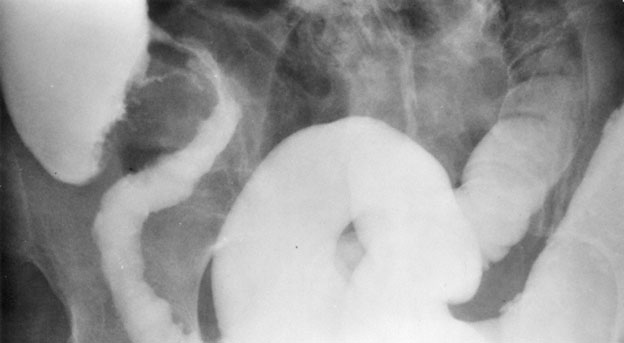 CorrectIncorrect
 -
Question 18 of 50
18. Question
A 72-year-old man is brought to the physician by his wife because of a 5-year history of progressive, waxy, dry, scaly lesions over his back. He has no history of serious illness or known allergies. His only medication is 81-mg aspirin. Examination shows approximately 20 nonpruritic lesions scattered over the back; the lesions range from 1 to 4 cm in diameter. A photograph of one of the lesions is shown. Which of the following is the most appropriate next step in management?
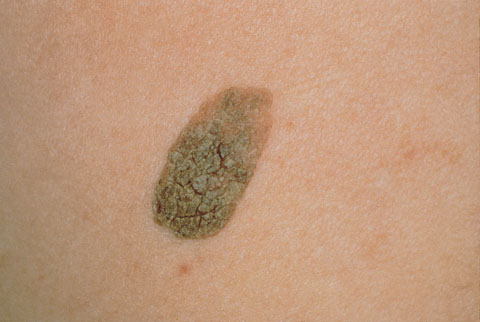 CorrectIncorrect
 -
Question 19 of 50
19. Question
A 6-week-old boy is brought to the emergency department by paramedics after his father found the patient with his eyes rolled back and gasping for air 15 minutes after being put down for a nap. When paramedics arrived, the patient was limp and not breathing. They performed cardiopulmonary resuscitation and intubated him at the scene. Ten minutes later, his pulse was 166/min. The father reports that earlier the child had been fussy and had nasal congestion. The patient was born at term following a forceps-assisted vaginal delivery. On arrival, the patient remains intubated and ventilated by hand-valve mask; there is occasional spontaneous respiratory effort. His temperature is 35.4°C (95.7°F), pulse is 184/min, respirations are 30/min, and blood pressure is 56/34 mm Hg. Examination of the head shows a tense anterior fontanel that is slightly bulging with sutures separated by 3 mm. The pupils are 5 mm and react sluggishly to light. Funduscopic examination shows retinal hemorrhages bilaterally. There is no gag reflex. Deep tendon reflexes are absent throughout; there are no spontaneous movements. The patient does not open his eyes in response to verbal or noxious stimuli; there is minimal movement of the hands and feet in response to noxious stimuli. Which of the following is the most likely diagnosis?
CorrectIncorrect -
Question 20 of 50
20. Question
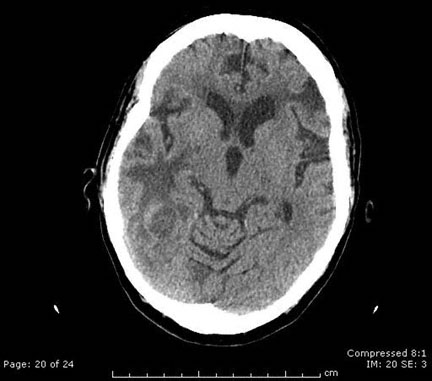
A 72-year-old woman is brought to the emergency department by paramedics 40 minutes after she had a generalized tonic-clonic seizure. On arrival, she is mildly lethargic but able to answer questions. She says she had been feeling well prior to the seizure. She has hypertension and type 2 diabetes mellitus. She had breast cancer treated with lumpectomy and radiation therapy 12 years ago. Medications are lisinopril, atenolol, and glyburide. Her temperature is 36.3°C (97.4°F), pulse is 72/min, respirations are 22/min, and blood pressure is 130/70 mm Hg. Pupils are equal and reactive to light. The lungs are clear to auscultation. Cardiac examination shows no abnormalities. Examination of the left upper and lower extremities shows clonus. On the left, muscle strength is 4/5, deep tendon reflexes are 3+, and Babinski sign is present. Examination of the right upper and lower extremities shows no abnormalities. A CT scan of the head is shown. Intravenous phenytoin is administered. Which of the following is the most appropriate next step in management?
CorrectIncorrect -
Question 21 of 50
21. Question
A 32-year-old woman comes to the physician because of severely chapped skin and bleeding of her hands. Since she and her husband divorced 6 months ago, she has had an increasing preoccupation with cleanliness and hygiene. She repeatedly washes her hands after touching anything she believes may be contaminated. She acknowledges that the hand washing is excessive, but when she tries to stop she becomes anxious and feels compelled to wash even more to make up for the omission. Vital signs are within normal limits. Physical examination shows chapped and erythematous hands. No other abnormalities are noted. Mental status examination shows an anxious and depressed mood and dysphoric affect. On further questioning, the patient says she prefers not to go to counseling but is willing to try a medication. Which of the following is the most appropriate pharmacotherapy?
CorrectIncorrect -
Question 22 of 50
22. Question
Researchers plan to conduct a meta-analysis to compare the efficacy of two treatments (A and B) on the incidence of hip fractures in women with osteoporosis over the age of 75 years. Informed consent is not obtained for the meta-analysis. Researchers collect data from published studies of randomized trials. The researchers conclude that Treatment A decreases the incidence of hip fractures compared with Treatment B (results are statistically significant). Which of the following study features raises the most concern about this conclusion?
CorrectIncorrect -
Question 23 of 50
23. Question
Six hours after admission to the hospital for treatment of a pelvic fracture sustained in a motor vehicle collision, a 22-year-old man has bleeding from all intravenous and arterial catheter sites. On arrival, he had hypotension; he has required transfusion of 15 units of packed red blood cells and administration of 8 L of crystalloid solution since admission. His pulse is 100/min, respirations are 16/min, and blood pressure is 100/60 mm Hg. Examination shows a mildly distended abdomen. Which of the following is the most likely cause of this patient’s coagulopathy?
CorrectIncorrect -
Question 24 of 50
24. Question
An 87-year-old man with mild dementia is brought to the emergency department by his daughter after he fell down a flight of stairs. He has been seen in the emergency department because of three similar incidents during the past year. On arrival, he is oriented to person and place but not to time. His daughter remains at the bedside during the entire examination and answers most of the physician’s questions. Examination shows multiple ecchymoses over the trunk and upper extremities. Results of laboratory studies are within the reference ranges. X-rays of the chest and spine show no abnormalities. Prior to discharge, the physician asks the patient about home safety, and the daughter becomes belligerent. She says she will never return to this emergency department again, saying “You do not know how to care for elderly patients.” Which of the following is the most appropriate next step to ensure the safety of this patient?
CorrectIncorrect -
Question 25 of 50
25. Question
A 54-year-old woman with primary biliary cholangitis comes to the emergency department because of a 1-hour history of vomiting blood. Her medications are ursodiol, furosemide, spironolactone, and propranolol. She is awake and fully oriented. Her pulse is 80/min, and blood pressure is 100/60 mm Hg. Cardiopulmonary examination shows no abnormalities. The abdomen is soft and distended with ascites. There is mild edema of the lower extremities. Laboratory studies show:
Hemoglobin
6 g/dL
Platelet count
45,000/mm3
Prothrombin time
22 sec (INR=2.3)
Serum total bilirubin
4 mg/dL
In addition to administration of intravenous fluids, which of the following is the most appropriate next step in management?
CorrectIncorrect -
Question 26 of 50
26. Question
An 84-year-old woman is brought to the physician because of a 6-week history of severely painful, nonhealing ulcers on both legs. During this time, the ulcers have progressively increased in size and number. She has rheumatoid arthritis treated with methotrexate. Her temperature is 37°C (98.6°F), pulse is 72/min and regular, and blood pressure is 120/80 mm Hg. Examination shows mild erythema and pale, full-thickness, punctate ulcers over the lower extremities. Cardiopulmonary examination shows no abnormalities. Which of the following is the most appropriate next step in management?
CorrectIncorrect -
Question 27 of 50
27. Question
An 84-year-old woman comes to the physician for a routine examination. She says she feels well. She has type 2 diabetes mellitus well controlled with metformin. Vital signs are within normal limits. Physical examination, including examination of the neck, shows no masses or abnormalities. Her serum calcium concentration is 11.4 mg/dL; repeat measurement 2 weeks later is 11.3 mg/dL. Which of the following is the most appropriate next step in diagnosis?
CorrectIncorrect -
Question 28 of 50
28. Question
A 68-year-old man with chronic obstructive pulmonary disease is brought to the emergency department by his wife because of a 1-day history of severe shortness of breath and nonproductive cough. His wife reports that her husband has had increasing confusion and lethargy during this time. She says he also has had a 3-day history of fever and cough and a 1-day history of chills. On arrival, the patient is somnolent and difficult to arouse. He appears acutely ill. His temperature is 38.1°C (100.6°F), pulse is 110/min, respirations are 18/min, and blood pressure is 95/50 mm Hg. Pulse oximetry on 2 L/min of oxygen shows an oxygen saturation of 91%. He is using accessory muscles of respiration. Crackles are heard at the right lung base; there are scattered wheezes bilaterally. On cardiac examination, S1 and S2 are normal. The abdomen is soft. On mental status examination, he is drowsy and oriented to person but not to place or time. Laboratory studies show:
Leukocyte count
16,400/mm3
Serum
Na+
143 mEq/L
K+
3.6 mEq/L
Cl−
105 mEq/L
HCO3−
12 mEq/L
Urea nitrogen
37 mg/dL
Creatinine
1.4 mg/dL
Arterial blood gas analysis on 2 L/min of oxygen by nasal cannula shows:
pH
7.04
Pco2
36 mm Hg
Po2
59 mm Hg
The patient is intubated and mechanically ventilated, and intravenous administration of fluids is begun. Which of the following is the most likely cause of the arterial blood gas findings?
CorrectIncorrect -
Question 29 of 50
29. Question
A 21-year-old man comes to the emergency department because of a 3-day history of moderate, diffuse abdominal pain and constipation. During this time, he also has had episodes of nausea and bilious vomiting. He has not had fever, chills, cold intolerance, or skin or hair changes. One year ago, he sustained a pelvic fracture during a motor vehicle collision. His only medication is daily oxycodone; he says he had to double his dose 1 week ago because of worsening pain. He appears uncomfortable. Vital signs are within normal limits. Abdominal examination shows diffuse tenderness to palpation with no rebound or guarding; bowel sounds are decreased. Rectal examination shows normal sphincter tone and brown stool in the vault. Which of the following is the most likely diagnosis?
CorrectIncorrect -
Question 30 of 50
30. Question
A 5-month-old male infant is brought to the physician because of chronic respiratory congestion since birth. Perinatal history showed no abnormalities. Since birth, he has had two episodes of pneumonia, one requiring hospitalization. He has a tendency to cough and choke during feedings with liquids. He is at the 50th percentile for length and the 5th percentile for weight. Examination shows mild persistent intercostal retractions. Scattered wheezes and some crackles are heard on auscultation. Which of the following imaging studies is most likely to confirm the diagnosis?
CorrectIncorrect -
Question 31 of 50
31. Question
A 72-year-old man comes to the emergency department because of a 4-month history of leg swelling and increasing abdominal girth. He also has a 2-year history of progressive shortness of breath. During the past 3 months, he has needed two pillows to breathe while sleeping. He has no history of serious illness and takes no medications. He has never smoked cigarettes. He worked as a sandblaster in a foundry for 40 years. His pulse is 110/min, respirations are 20/min, and blood pressure is 120/80 mm Hg. Pulse oximetry on room air shows an oxygen saturation of 88%. Jugular venous pressure is 12 cm H2O (N=5–9). Dry crackles are heard diffusely. Cardiac examination shows a normal S1 and a split S2 with a pronounced P2; no murmurs are heard. Abdominal examination shows distention with bulging flanks. The liver is mildly tender; the span is 16 cm. There is 2+ pitting edema to the knee. A chest x-ray is shown. Which of the following is the most appropriate immediate step in management?
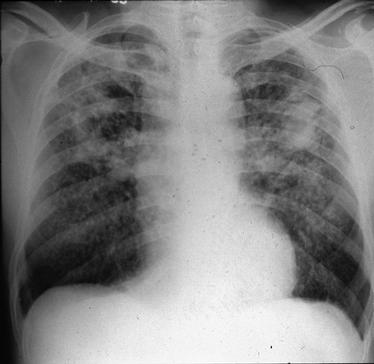 CorrectIncorrect
 -
Question 32 of 50
32. Question
A 3-year-old girl is brought to the physician by her mother because of a 5-day history of blood-tinged, foul smelling vaginal discharge. The patient reports moderate discomfort with wiping after urination. She does not have abdominal or pelvic pain or fever. She has no history of serious illness and receives no medications. Development is appropriate for age. The patient is at the 10th percentile for height and 50th percentile for weight. Her temperature is 37°C (98.6°F), pulse is 62/min, and blood pressure is 100/60 mm Hg. There is no inguinal lymphadenopathy. Abdominal examination shows no tenderness. Pelvic examination shows pink, crusty discharge over the vulva, and pink discharge at the vaginal introitus. There are no lesions or tears. The hymenal ring is annular without clefts. Which of the following is the most appropriate next step in management?
CorrectIncorrect -
Question 33 of 50
33. Question
A 6-week-old boy is brought to the physician for a well-child examination. He was born at term following an uncomplicated pregnancy and spontaneous vaginal delivery. He weighed 3175 g (7 lb) at birth. Apgar scores were 8 and 10 at 1 and 5 minutes, respectively. He is exclusively breast-fed. He is at the 90th percentile for length, 50th percentile for weight, and 60th percentile for head circumference. Examination shows diffuse jaundice. His serum total bilirubin concentration is 8.1 mg/dL, with a direct component of 5.2 mg/dL. Which of the following is the most appropriate next step in management?
CorrectIncorrect -
Question 34 of 50
34. Question
An 8-year-old boy is brought to the physician for a well-child examination. At the age of 3 months, he underwent surgical repair of posterior urethral valves. Since that time, he has been treated for chronic kidney disease. He receives no medications. His pulse is 100/min, and blood pressure is 120/80 mm Hg. Examination shows no other abnormalities. Which of the following serum concentrations is most likely to be increased in this patient?
CorrectIncorrect -
Question 35 of 50
35. Question
A 38-year-old man comes to the physician because of a 10-month history of progressive shortness of breath, wheezing, and cough productive of clear sputum. He has not had fever, weight loss, or cough productive of bloody sputum. He has no history of serious illness and takes no medications. The patient has smoked one-half pack of cigarettes daily for 10 years. He does not appear to be in acute distress. His respirations are 16/min. Pulse oximetry on room air shows an oxygen saturation of 96%. Examination shows a barrel-shaped chest. Diffuse inspiratory crackles and expiratory wheezes are heard. Spirometry shows an FEV1 of 50% of predicted and an FVC of 70% of predicted. A chest x-ray shows hyperlucency of the lung fields, a flattened diaphragm, and a large retrosternal air space. During his lifetime, this patient is at increased risk for which of the following?
CorrectIncorrect -
Question 36 of 50
36. Question
A 73-year-old woman, who resides in a skilled nursing care facility, is brought to the emergency department by staff because of a 6-hour history of confusion. She has schizoaffective disorder treated with risperidone. The staff members say that she usually is alert and fully oriented. Her temperature is 39.4°C (103°F), pulse is 84/min, respirations are 16/min, and blood pressure is 116/78 mm Hg. Physical examination shows muscle rigidity in all the extremities. On mental status examination, she is minimally cooperative and moans incoherently. She is oriented to person but not to place or time. Serum studies show a creatine kinase concentration of 2000 U/L. Which of the following is the most appropriate next step in management?
CorrectIncorrect -
Question 37 of 50
37. Question
A 33-year-old primigravid woman at 19 weeks’ gestation comes to the office for a routine prenatal visit. She feels well, and pregnancy has been uncomplicated. Ultrasonography 1 week ago showed a dichorionic-diamniotic intrauterine twin gestation. She has smoked one to two cigarettes weekly during pregnancy. Her pulse is 90/min, and blood pressure is 105/65 mm Hg. Fundal height is 22 cm. Twin A has a heart rate of 130/min, and twin B has a heart rate of 140/min. There is no lower extremity edema. Urine dipstick shows trace protein. This patient is at greatest risk for which of the following pregnancy complications?
CorrectIncorrect -
Question 38 of 50
38. Question
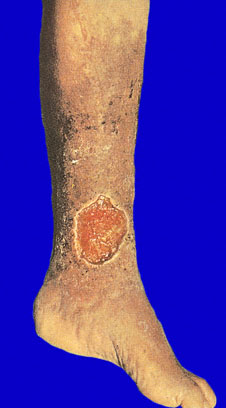
A 56-year-old man comes to the office because of a 3-month history of an enlarging painful ulcer on his left ankle. The ulcer occasionally exudes a clear, yellow fluid. He has cleaned the ulcer daily with soap and lukewarm water and applied an over-the-counter topical antibiotic to the area, with minimal relief. He has not had fever or chills or sustained any recent trauma. He has type 2 diabetes mellitus, coronary artery disease, hypertension, and hyperlipidemia. His medications are metformin, glipizide, atorvastatin, enalapril, hydrochlorothiazide, metoprolol, isosorbide mononitrate, and aspirin. He has no known drug allergies. He smoked one and one-half packs of cigarettes daily for 33 years but quit 5 years ago. He is 180 cm (5 ft 11 in) tall and weighs 90 kg (198 lb); BMI is 28 kg/m2. Vital signs are within normal limits. He does not appear to be in acute distress. A photograph of the left lower extremity is shown. Dorsalis pedis pulses are 2+ bilaterally; posterior tibial pulses cannot be palpated. Monofilament testing shows decreased sensation over the feet; proprioception is intact. Which of the following is the most likely diagnosis?
 CorrectIncorrect
 -
Question 39 of 50
39. Question
A 15-year-old girl is brought to the office for a well-child examination. Menarche has not occurred. She has no history of serious illness and takes no medications. Immunizations are up-to-date. Vital signs are within normal limits. She is below the 3rd percentile for height and at the 25th percentile for weight. Breast development is sexual maturity rating stage 2; there is no axillary or pubic hair. The remainder of the examination shows no abnormalities. Which of the following is most appropriate to determine if this patient is a candidate for growth hormone therapy?
CorrectIncorrect -
Question 40 of 50
40. Question
A 31-year-old woman, gravida 2, para 2, comes to the office for a health maintenance examination. She says she has not eaten or drunk anything during the past 8 hours. Two years ago, she underwent bilateral tubal ligation. She has no known drug allergies. Her only medication is a daily multivitamin. She has smoked one pack of cigarettes daily for 16 years. She drinks two glasses of wine monthly. Her children are aged 5 and 11 years. She works at a doughnut shop. She is 157 cm (5 ft 2 in) tall and weighs 91 kg (200 lb); BMI is 37 kg/m2. Her pulse is 76/min, and blood pressure is 165/100 mm Hg. Examination shows facial hair and truncal obesity. Her fingerstick blood glucose concentration is 130 mg/dL. Which of the following is the most likely diagnosis?
CorrectIncorrect -
Question 41 of 50
41. Question
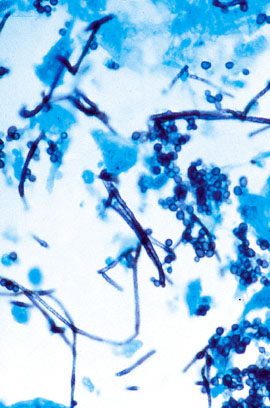
A 32-year-old woman comes to the office because of a 3-day history of vaginal itching and white vaginal discharge. During this time, she also has had a burning sensation with urination. She has type 2 diabetes mellitus treated with insulin. She is sexually active with one male partner; they use condoms inconsistently. Physical examination shows no abnormalities. Pelvic examination shows an erythematous vagina with thick, white discharge. The uterus is nontender and normal in size and shape. There is no adnexal tenderness. Microscopy of the vaginal discharge is shown. Which of the following is the most appropriate next step in management?
 CorrectIncorrect
 -
Question 42 of 50
42. Question
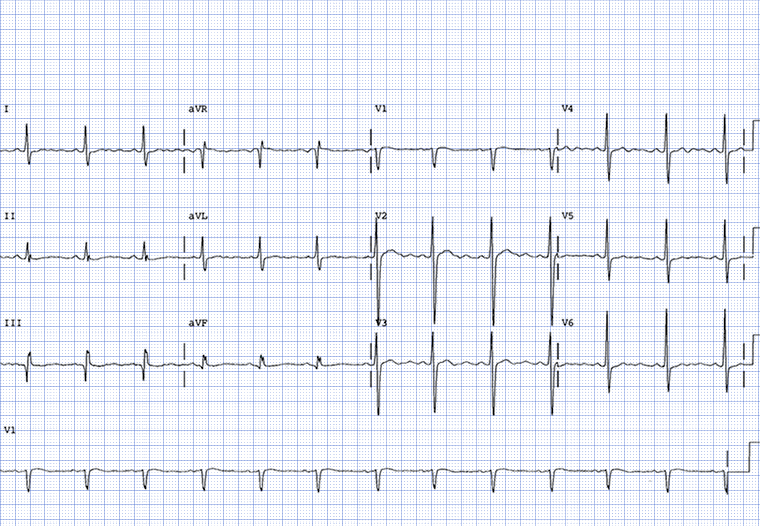
A 16-year-old girl is brought to the emergency department immediately after she collapsed on her way to the bathroom at home. She has a history of anorexia nervosa and has had an 18-kg (40-lb) weight loss during the past 16 months. Menarche was at the age of 11 years, but her last menstrual period was 14 months ago. She does not drink alcohol or use illicit drugs. On arrival, she appears cachectic. She is 165 cm (5 ft 5 in) tall and weighs 36 kg (80 lb); BMI is 13 kg/m2. Her pulse is 65/min, respirations are 12/min, and blood pressure is 85/55 mm Hg. Physical examination shows fine hair over the skin. An ECG is shown. This patient is most likely to have which of the following sets of serum electrolyte findings?
Option
Na⁺ (mEq/L)
K⁺ (mEq/L)
Cl⁻ (mEq/L)
HCO₃⁻ (mEq/L)
A
125
3.2
102
25
B
125
6.8
102
27
C
140
2.3
94
28
D
140
6.8
94
28
E
155
3.2
102
26
CorrectIncorrect -
Question 43 of 50
43. Question
An 8-year-old boy with osteosarcoma of the left proximal tibia that is now metastatic to the lungs is transferred to the care of home hospice services for management of his symptoms. At the time of diagnosis 2 years ago, the patient was treated with surgical resection of the tumor with an above-knee amputation and chemotherapy. However, during the past 2 months, he has developed multiple metastatic pulmonary lesions that have not responded to chemotherapy. Today, he reports chest pain and difficulty breathing. He appears weak and cachetic. Vital signs are temperature 36.9°C (98.4°F), pulse 112/min, and respirations 28/min and shallow. Pulse oximetry on room air shows an oxygen saturation of 95%. Lungs are clear to auscultation. Cardiac examination discloses a grade 2/6 systolic murmur with a normal S1 and S2. Abdominal examination discloses no abnormalities. The parents say they want to focus care on management of their son’s pain and symptoms. Which of the following is the most appropriate statement to the family regarding their wishes for the patient?
CorrectIncorrect -
Question 44 of 50
44. Question
A 17-year-old girl is brought to the office by her parents because of a 3-week history of changes in her behavior. She previously received grades of A’s in school; during the past month, she has received grades of C’s. She runs on the cross-country team at school. The patient’s mother also is concerned about her daughter’s diet, noting that she follows a high-carbohydrate diet before races and otherwise eats only vegetables. When interviewed alone, the patient says that she has had difficulty concentrating in school during the past 2 weeks because she is “tired all of the time” and is not interested in the classes like she used to be. During this time, she also has had difficulty sleeping. She says she sometimes eats a large amount of junk food and then feels guilty about it. She refuses to answer questions about purging. She has no other history of serious illness. Her only medication is a daily multivitamin. She is 170 cm (5 ft 7 in) tall and weighs 54 kg (120 lb); BMI is 19 kg/m2. Vital signs are within normal limits. Physical examination shows no abnormalities. On mental status examination, she has a dysphoric affect and describes her mood as “irritable.” She has thought about death but has no suicidal intent. Which of the following medications is contraindicated in this patient?
CorrectIncorrect -
Question 45 of 50
45. Question
A previously healthy 77-year-old woman comes to the office because of a 4-month history of hoarseness. She has not had difficulty breathing or swallowing. She has had a chronic cough and gastroesophageal reflux disease for 5 years. Her only medication is omeprazole. She has smoked two packs of cigarettes daily for 60 years. Her temperature is 37.2°C (99.0°F), pulse is 76/min, respirations are 20/min, and blood pressure is 102/66 mm Hg. On examination, there is no cervical or supraclavicular lymphadenopathy. Oropharyngeal examination shows no abnormalities. The thyroid gland is not enlarged and moves with swallowing; no masses are palpated. Cardiopulmonary examination shows no abnormalities. Which of the following is the most appropriate next step in diagnosis?
CorrectIncorrect -
Question 46 of 50
46. Question
A 77-year-old man is brought to the clinic by his sister for a follow-up examination. The sister reports he was well until sustaining a head injury in a motor vehicle collision 7 months ago. She notes, “This changed him.” During the past 3 months, he has been “slowing down” and having “urinary accidents.” He has no other history of serious illness. His only medications are a multivitamin and ibuprofen as needed. He is a retired accountant. On neurologic examination, he has difficulty starting to walk from a sitting or standing position, a shuffling gait, and no arm swing bilaterally. Glabellar and palmomental reflex testing is positive. On mental status examination, he has a flat affect and monotonous speech. Brain imaging is most likely to show which of the following in this patient?
CorrectIncorrect -
Question 47 of 50
47. Question
A 25-year-old woman comes to a military outpatient clinic for an examination prior to a deployment to South Asia. She is in good health and feels well. She has had three urinary tract infections during the past year and is concerned about another one occurring during her deployment. Her only medication is an oral contraceptive. Vital signs are within normal limits. Examination shows no abnormalities. Which of the following is the most appropriate response to this patient’s concern?
CorrectIncorrect -
Question 48 of 50
48. Question
A 52-year-old man with HIV infection comes to the office because of a 3-month history of increasingly severe pain of his knees. He says he has 20 minutes of stiffness and increased pain after he awakens in the morning or sits for long periods. He has not had redness, swelling, or warmth. He has no history of trauma to the knees. Acetaminophen provides moderate relief. Other medications are antiretroviral therapy and vitamin D supplementation. He says he does not want to take any more pills. He is 180 cm (5 ft 11 in) tall and weighs 100 kg (220 lb); BMI is 31 kg/m2. Vital signs are within normal limits. Cardiopulmonary examination shows no abnormalities. Examination of the knees shows crepitus and small effusions; there is no erythema, warmth, or decreased range of motion. Lachman and McMurray tests show no abnormalities. X-rays of the knees show decreased joint space and osteophyte formation. The patient begins a low-impact exercise regimen. Two months later, he returns to the office for follow-up examination. He has had no progression of his symptoms and a 4.5-kg (10-lb) weight loss. He continues to take acetaminophen and has had no adverse effects. The patient asks if he will eventually develop severe osteoarthritis and wants to discuss potential treatment options. Which of the following is the most appropriate recommendation for this patient?
CorrectIncorrect -
Question 49 of 50
49. Question
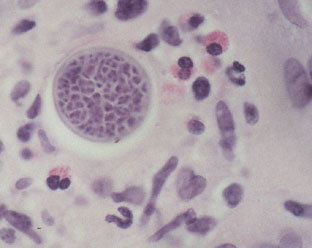
A 30-year-old man with a 7-year history of Crohn disease is admitted to the hospital because of a 2-month history of intermittent temperatures to 38.9°C (102.0°F), nonproductive cough, night sweats, and fatigue. He has not had diarrhea, or blood or mucus in his stools. His Crohn disease symptoms have been well controlled with subcutaneous adalimumab for the past year. Chest x-ray 2 weeks ago showed lingular and right lower lobe infiltrates, and he was treated with successive courses of levofloxacin and azithromycin for presumed community-acquired pneumonia without improvement of his symptoms. Medical history otherwise is unremarkable, and his only other routine medication is a daily multivitamin. He does not smoke cigarettes or drink alcoholic beverages. He has no pets. Three months ago, he spent 1 week racing dune buggies in the Southwestern USA, but he has not traveled outside of the country. He is 178 cm (5 ft 10 in) tall and weighs 72 kg (160 lb); BMI is 23 kg/m2. Temperature is 38.5°C (101.3°F), pulse is 105/min and regular, respirations are 20/min, and blood pressure is 112/68 mm Hg. Crackles are heard in both lower lung fields. Results of fiberoptic bronchoscopy with bronchoalveolar lavage are shown. Which of the following is the most appropriate pharmacotherapy?
 CorrectIncorrect
 -
Question 50 of 50
50. Question
An orthopaedic surgeon has completed his first surgical procedure of the day in an operating room (OR) where he has booked five cases in sequence for the day. After the first patient is taken to the recovery room, the surgeon visits the next patient in the OR holding area at 9:25 am in anticipation of the start of the operation before 10 am. The patient is a 25-year-old woman with a closed comminuted fracture of the humerus that will be repaired with open reduction and internal fixation using metal plates and screws. She is 168 cm (5 ft 6 in) tall and weighs 64 kg (142 lb); BMI is 23 kg/m2. The surgeon orders prophylactic intravenous administration of 1 g of cefazolin, which is completed at 9:30 am. The OR is suddenly commandeered for an emergency case. No other OR is open, so the humeral operation is postponed. The patient eventually enters the OR at 11:30 am. The Surgical Care Improvement Project guidelines, which are a core measure by the Centers for Medicare and Medicaid Services, recommend that intravenous antibiotic therapy be administered within 1 hour prior to the first surgical incision. Which of the following is the most appropriate management of this patient prior to proceeding with the operation?
CorrectIncorrect