
NBME 15- Block 1 (Duplicate 2)
Time limit: 0
Quiz Summary
0 of 20 Questions completed
Questions:
Information
You have already completed the quiz before. Hence you can not start it again.
Quiz is loading…
You must sign in or sign up to start the quiz.
You must first complete the following:
Results
Quiz complete. Results are being recorded.
Results
0 of 20 Questions answered correctly
Your time:
Time has elapsed
You have reached 0 of 0 point(s), (0)
Earned Point(s): 0 of 0, (0)
0 Essay(s) Pending (Possible Point(s): 0)
Categories
- Not categorized 0%
- 1
- 2
- 3
- 4
- 5
- 6
- 7
- 8
- 9
- 10
- 11
- 12
- 13
- 14
- 15
- 16
- 17
- 18
- 19
- 20
- Current
- Review
- Answered
- Correct
- Incorrect
-
Question 1 of 20
1. Question
A 25-year-old woman comes to the office for a follow-up examination 4 weeks after being diagnosed with HIV infection. She feels well. She used intravenous drugs for 5 years but stopped 2 years ago. She has been sexually active with one male partner during the past year; they use condoms consistently. Results of PPD skin testing 6 months ago were negative. She has no other history of serious illness and takes no medications. Her pulse is 68/min, respirations are 14/min, and blood pressure is 105/60 mm Hg. Pulse oximetry on room air shows an oxygen saturation of 98%. Examination shows no abnormalities. Laboratory studies show:
Hemoglobin
14 g/dL
Hematocrit
42%
Leukocyte count
9000/mm3
Platelet count
350,000/mm3
Serum
Glucose
90 mg/dL
Creatinine
0.8 mg/dL
Total bilirubin
0.5 mg/dL
Alkaline phosphatase
50 U/L
AST
35 U/L
ALT
35 U/L
Which of the following is the most appropriate next step in diagnosis?
CorrectIncorrect -
Question 2 of 20
2. Question
An 82-year-old woman with hypertension comes to the office because of a 2-month history of easy fatigability and shortness of breath with mild exertion. She says she has to use two pillows to sleep and breathe comfortably. She had a myocardial infarction at the age of 75 years. Her medications are hydrochlorothiazide, fosinopril, and potassium supplementation. She has never smoked cigarettes. Her pulse is 100/min, and blood pressure is 150/100 mm Hg. Crackles are heard at the lung bases bilaterally. There is pitting edema of the lower extremities. No other abnormalities are noted. Which of the following is the most likely set of findings in this patient?
Option
Sympathetic Tone
Renal Blood Flow
Urine Sodium Concentration
A
Decreased
Decreased
Increased
B
Decreased
Increased
Increased
C
Increased
Decreased
Decreased
D
Increased
Decreased
Increased
E
Increased
Increased
Decreased
CorrectIncorrect -
Question 3 of 20
3. Question
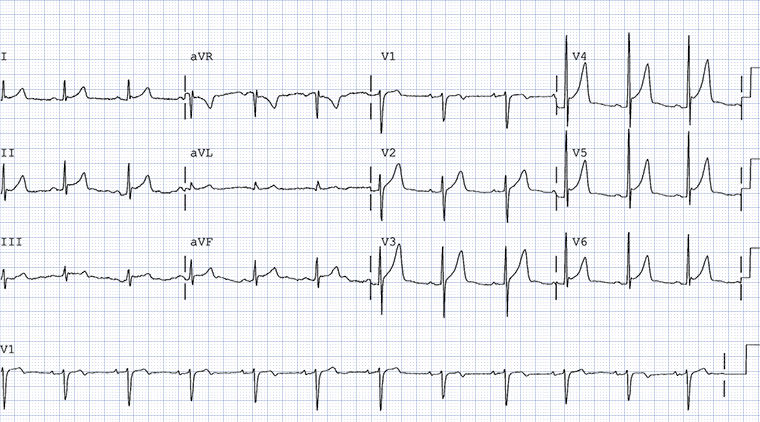
A 19-year-old man comes to the office because of a 10-hour history of shortness of breath and sharp, retrosternal chest pain radiating to his neck and left shoulder. The pain is worse with movement or swallowing. He also has a 1-week history of fever, malaise, myalgia, diarrhea, cough, and a scratchy sore throat. He has been unable to work as a summer lifeguard during this period. He smokes two packs of cigarettes daily. His temperature is 38°C (100.4°F), pulse is 70/min, respirations are 16/min, and blood pressure is 110/60 mm Hg. Examination and x-rays of the chest show normal findings. An ECG is shown. Which of the following is the most appropriate next step in diagnosis?
 CorrectIncorrect
 -
Question 4 of 20
4. Question
A 62-year-old woman with metastatic adenocarcinoma of the breast is brought to the emergency department because of a 1-week history of weakness and a tingling sensation that has progressed from her lower legs to her chest. During the past 3 weeks, she has had mild to moderate interscapular pain, which is worse at night. Her only medication is tamoxifen. She does not appear to be in distress. Vital signs are within normal limits. Muscle strength is 4/5 in the lower extremities and 5/5 in the upper extremities. Deep tendon reflexes are 3+ in the lower extremities and 2+ in the upper extremities. Babinski sign is absent. Sensation to pinprick is decreased to the level of the mid chest. An MRI of the spine confirms the diagnosis. Administration of which of the following is the most appropriate next step in management?
CorrectIncorrect -
Question 5 of 20
5. Question
A case-control study is planned to determine the association between retinal detachment and occupations that require lifting heavy objects. A total of 200 patients of a large ophthalmologic clinic aged 40 to 80 years will be recruited for the study. Patients will be asked about their histories of lifting objects weighing more than 25 kg (55 lb). Which of the following is the best strategy in study design to decrease confounding by age for history of heavy lifting?
CorrectIncorrect -
Question 6 of 20
6. Question
A 21-year-old man comes to the office for a follow-up visit 1 week after urine dipstick analysis, performed for a sports physical examination, showed an increased protein concentration. He is asymptomatic. There is no personal or family history of serious illness. The patient does not smoke cigarettes, drink alcohol, or use illicit drugs. He trains for college basketball most of the year. He is 191 cm (6 ft 3 in) tall and weighs 84 kg (185 lb); BMI is 23 kg/m2. His temperature is 36.7°C (98.0°F), pulse is 58/min, respirations are 10/min, and blood pressure is 126/76 mm Hg. Examination shows no abnormalities. Results of laboratory studies are within the reference ranges. Urinalysis shows 1+ protein. Spot urine protein:creatinine ratio was <0.2 at 8 am and 0.7 at 4 pm. Which of the following is the most appropriate next step in diagnosis?
CorrectIncorrect -
Question 7 of 20
7. Question
A 63-year-old man comes to the office because of chronic intermittent mild chest pain that usually occurs when he walks up two flights of stairs. He is otherwise asymptomatic. He has hypertension and coronary artery disease. He is adherent to his medication regimen of atorvastatin, clopidogrel, carvedilol, and aspirin. He has a sedentary lifestyle. He smoked two packs of cigarettes daily for 25 years but now smokes five cigarettes daily. He is 173 cm (5 ft 8 in) tall and weighs 91 kg (200 lb); BMI is 30 kg/m2. Blood pressure is 130/65 mm Hg. Examination shows no other abnormalities. The patient asks about undergoing revascularization. The physician is aware of a randomized controlled trial in which aggressive lifestyle management is comparable to percutaneous coronary intervention (PCI) in terms of meaningful cardiovascular outcomes. Which of the following statistical features of the study is most supportive of a recommendation for lifestyle management in this patient?
Option
α Level
β Level (%)
A
0.20
5
B
0.20
10
C
0.25
10
D
0.25
20
E
0.50
50
CorrectIncorrect -
Question 8 of 20
8. Question
An 82-year-old man is admitted to the hospital 4 hours after he fell at home. His wife, who witnessed the fall, says his legs “gave out” when he stood up from his armchair. He was initially unresponsive but regained consciousness after 20 seconds. He did not have bowel or bladder incontinence during the episode. Medical history is remarkable for hypertension, type 2 diabetes mellitus, and benign prostatic hyperplasia. Medications are amlodipine, metformin, atorvastatin, and tamsulosin. On arrival at the hospital, pulse is 78/min, respirations are 18/min, and blood pressure is 98/72 mm Hg. Pulse oximetry on room air shows an oxygen saturation of 97%. Cardiac examination discloses a late-peaking, barking systolic murmur heard at the upper right sternal border without an appreciable S2. Carotid upstrokes are diminished, and peripheral pulses are symmetrically weak. The remainder of the physical examination discloses no abnormalities. Laboratory studies show a serum glucose concentration of 117 mg/dL. Which of the following is the most likely underlying cause of this patient’s fall?
CorrectIncorrect -
Question 9 of 20
9. Question
A 7-year-old girl is brought to the clinic by her mother for a well-child examination. The mother is single, and the patient is the third of five children. The family comes late to the appointment because they missed the first bus on the route to the clinic. The patient’s medical record shows that she missed her last two appointments and was last seen for a physical examination 2 years ago. The mother reports her daughter has frequent illnesses. She receives no medications. The patient is clean and appropriately dressed but appears tired and sluggish. She is at the 50th percentile for height, 10th percentile for weight, and below the 5th percentile for BMI. Two years ago, she was at the 50th percentile for height, 25th percentile for weight, and 15th percentile for BMI. Vital signs are within normal limits. Examination shows dry, flaky skin and brittle hair. No other abnormalities are noted. Which of the following is the most appropriate next step in management?
CorrectIncorrect -
Question 10 of 20
10. Question
A 44-year-old woman comes to the clinic because of a 6-month history of persistent skin lesions over her scalp and neck despite topical clobetasol therapy. She has hypertension and discoid lupus erythematosus. Her only other medication is hydrochlorothiazide. Temperature is 37.2°C (99.0°F), pulse is 82/min, respirations are 14/min, and blood pressure is 126/74 mm Hg. Pulse oximetry on room air shows an oxygen saturation of 99%. Physical examination shows several erythematous indurated plaques with overlying scales over the scalp and lateral aspects of the neck. Oropharynx is moist and pink without lesions. There is no joint swelling, tenderness, or erythema. Cardiopulmonary, abdominal, and neurologic examinations disclose no abnormalities. The physician prescribes hydroxychloroquine once daily to be increased to twice daily during the next 2 weeks. Which of the following screening studies is most appropriate at this time?
CorrectIncorrect -
Question 11 of 20
11. Question
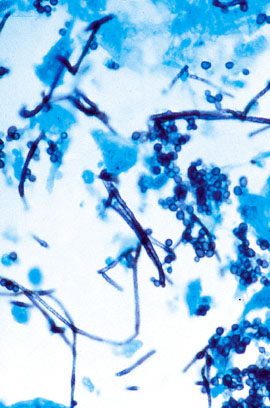
A 32-year-old woman comes to the office because of a 3-day history of vaginal itching and white vaginal discharge. During this time, she also has had a burning sensation with urination. She has type 2 diabetes mellitus treated with insulin. She is sexually active with one male partner; they use condoms inconsistently. Physical examination shows no abnormalities. Pelvic examination shows an erythematous vagina with thick, white discharge. The uterus is nontender and normal in size and shape. There is no adnexal tenderness. Microscopy of the vaginal discharge is shown. Which of the following is the most appropriate next step in management?
 CorrectIncorrect
 -
Question 12 of 20
12. Question
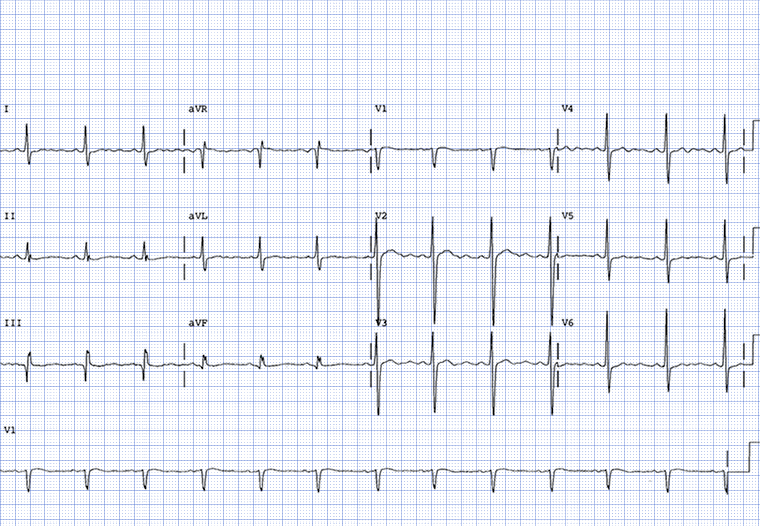
A 16-year-old girl is brought to the emergency department immediately after she collapsed on her way to the bathroom at home. She has a history of anorexia nervosa and has had an 18-kg (40-lb) weight loss during the past 16 months. Menarche was at the age of 11 years, but her last menstrual period was 14 months ago. She does not drink alcohol or use illicit drugs. On arrival, she appears cachectic. She is 165 cm (5 ft 5 in) tall and weighs 36 kg (80 lb); BMI is 13 kg/m2. Her pulse is 65/min, respirations are 12/min, and blood pressure is 85/55 mm Hg. Physical examination shows fine hair over the skin. An ECG is shown. This patient is most likely to have which of the following sets of serum electrolyte findings?
Option
Na⁺ (mEq/L)
K⁺ (mEq/L)
Cl⁻ (mEq/L)
HCO₃⁻ (mEq/L)
A
125
3.2
102
25
B
125
6.8
102
27
C
140
2.3
94
28
D
140
6.8
94
28
E
155
3.2
102
26
CorrectIncorrect -
Question 13 of 20
13. Question
An 8-year-old boy with osteosarcoma of the left proximal tibia that is now metastatic to the lungs is transferred to the care of home hospice services for management of his symptoms. At the time of diagnosis 2 years ago, the patient was treated with surgical resection of the tumor with an above-knee amputation and chemotherapy. However, during the past 2 months, he has developed multiple metastatic pulmonary lesions that have not responded to chemotherapy. Today, he reports chest pain and difficulty breathing. He appears weak and cachetic. Vital signs are temperature 36.9°C (98.4°F), pulse 112/min, and respirations 28/min and shallow. Pulse oximetry on room air shows an oxygen saturation of 95%. Lungs are clear to auscultation. Cardiac examination discloses a grade 2/6 systolic murmur with a normal S1 and S2. Abdominal examination discloses no abnormalities. The parents say they want to focus care on management of their son’s pain and symptoms. Which of the following is the most appropriate statement to the family regarding their wishes for the patient?
CorrectIncorrect -
Question 14 of 20
14. Question
A 17-year-old girl is brought to the office by her parents because of a 3-week history of changes in her behavior. She previously received grades of A’s in school; during the past month, she has received grades of C’s. She runs on the cross-country team at school. The patient’s mother also is concerned about her daughter’s diet, noting that she follows a high-carbohydrate diet before races and otherwise eats only vegetables. When interviewed alone, the patient says that she has had difficulty concentrating in school during the past 2 weeks because she is “tired all of the time” and is not interested in the classes like she used to be. During this time, she also has had difficulty sleeping. She says she sometimes eats a large amount of junk food and then feels guilty about it. She refuses to answer questions about purging. She has no other history of serious illness. Her only medication is a daily multivitamin. She is 170 cm (5 ft 7 in) tall and weighs 54 kg (120 lb); BMI is 19 kg/m2. Vital signs are within normal limits. Physical examination shows no abnormalities. On mental status examination, she has a dysphoric affect and describes her mood as “irritable.” She has thought about death but has no suicidal intent. Which of the following medications is contraindicated in this patient?
CorrectIncorrect -
Question 15 of 20
15. Question
A previously healthy 77-year-old woman comes to the office because of a 4-month history of hoarseness. She has not had difficulty breathing or swallowing. She has had a chronic cough and gastroesophageal reflux disease for 5 years. Her only medication is omeprazole. She has smoked two packs of cigarettes daily for 60 years. Her temperature is 37.2°C (99.0°F), pulse is 76/min, respirations are 20/min, and blood pressure is 102/66 mm Hg. On examination, there is no cervical or supraclavicular lymphadenopathy. Oropharyngeal examination shows no abnormalities. The thyroid gland is not enlarged and moves with swallowing; no masses are palpated. Cardiopulmonary examination shows no abnormalities. Which of the following is the most appropriate next step in diagnosis?
CorrectIncorrect -
Question 16 of 20
16. Question
A 77-year-old man is brought to the clinic by his sister for a follow-up examination. The sister reports he was well until sustaining a head injury in a motor vehicle collision 7 months ago. She notes, “This changed him.” During the past 3 months, he has been “slowing down” and having “urinary accidents.” He has no other history of serious illness. His only medications are a multivitamin and ibuprofen as needed. He is a retired accountant. On neurologic examination, he has difficulty starting to walk from a sitting or standing position, a shuffling gait, and no arm swing bilaterally. Glabellar and palmomental reflex testing is positive. On mental status examination, he has a flat affect and monotonous speech. Brain imaging is most likely to show which of the following in this patient?
CorrectIncorrect -
Question 17 of 20
17. Question
A 25-year-old woman comes to a military outpatient clinic for an examination prior to a deployment to South Asia. She is in good health and feels well. She has had three urinary tract infections during the past year and is concerned about another one occurring during her deployment. Her only medication is an oral contraceptive. Vital signs are within normal limits. Examination shows no abnormalities. Which of the following is the most appropriate response to this patient’s concern?
CorrectIncorrect -
Question 18 of 20
18. Question
A 52-year-old man with HIV infection comes to the office because of a 3-month history of increasingly severe pain of his knees. He says he has 20 minutes of stiffness and increased pain after he awakens in the morning or sits for long periods. He has not had redness, swelling, or warmth. He has no history of trauma to the knees. Acetaminophen provides moderate relief. Other medications are antiretroviral therapy and vitamin D supplementation. He says he does not want to take any more pills. He is 180 cm (5 ft 11 in) tall and weighs 100 kg (220 lb); BMI is 31 kg/m2. Vital signs are within normal limits. Cardiopulmonary examination shows no abnormalities. Examination of the knees shows crepitus and small effusions; there is no erythema, warmth, or decreased range of motion. Lachman and McMurray tests show no abnormalities. X-rays of the knees show decreased joint space and osteophyte formation. The patient begins a low-impact exercise regimen. Two months later, he returns to the office for follow-up examination. He has had no progression of his symptoms and a 4.5-kg (10-lb) weight loss. He continues to take acetaminophen and has had no adverse effects. The patient asks if he will eventually develop severe osteoarthritis and wants to discuss potential treatment options. Which of the following is the most appropriate recommendation for this patient?
CorrectIncorrect -
Question 19 of 20
19. Question
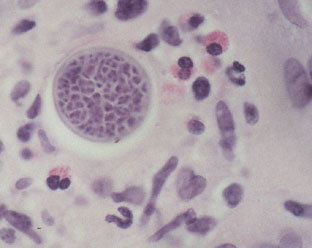
A 30-year-old man with a 7-year history of Crohn disease is admitted to the hospital because of a 2-month history of intermittent temperatures to 38.9°C (102.0°F), nonproductive cough, night sweats, and fatigue. He has not had diarrhea, or blood or mucus in his stools. His Crohn disease symptoms have been well controlled with subcutaneous adalimumab for the past year. Chest x-ray 2 weeks ago showed lingular and right lower lobe infiltrates, and he was treated with successive courses of levofloxacin and azithromycin for presumed community-acquired pneumonia without improvement of his symptoms. Medical history otherwise is unremarkable, and his only other routine medication is a daily multivitamin. He does not smoke cigarettes or drink alcoholic beverages. He has no pets. Three months ago, he spent 1 week racing dune buggies in the Southwestern USA, but he has not traveled outside of the country. He is 178 cm (5 ft 10 in) tall and weighs 72 kg (160 lb); BMI is 23 kg/m2. Temperature is 38.5°C (101.3°F), pulse is 105/min and regular, respirations are 20/min, and blood pressure is 112/68 mm Hg. Crackles are heard in both lower lung fields. Results of fiberoptic bronchoscopy with bronchoalveolar lavage are shown. Which of the following is the most appropriate pharmacotherapy?
 CorrectIncorrect
 -
Question 20 of 20
20. Question
An orthopaedic surgeon has completed his first surgical procedure of the day in an operating room (OR) where he has booked five cases in sequence for the day. After the first patient is taken to the recovery room, the surgeon visits the next patient in the OR holding area at 9:25 am in anticipation of the start of the operation before 10 am. The patient is a 25-year-old woman with a closed comminuted fracture of the humerus that will be repaired with open reduction and internal fixation using metal plates and screws. She is 168 cm (5 ft 6 in) tall and weighs 64 kg (142 lb); BMI is 23 kg/m2. The surgeon orders prophylactic intravenous administration of 1 g of cefazolin, which is completed at 9:30 am. The OR is suddenly commandeered for an emergency case. No other OR is open, so the humeral operation is postponed. The patient eventually enters the OR at 11:30 am. The Surgical Care Improvement Project guidelines, which are a core measure by the Centers for Medicare and Medicaid Services, recommend that intravenous antibiotic therapy be administered within 1 hour prior to the first surgical incision. Which of the following is the most appropriate management of this patient prior to proceeding with the operation?
CorrectIncorrect