
NBME 14 – Block 3 (Duplicate 1)
Time limit: 0
Quiz Summary
0 of 20 Questions completed
Questions:
Information
You have already completed the quiz before. Hence you can not start it again.
Quiz is loading…
You must sign in or sign up to start the quiz.
You must first complete the following:
Results
Quiz complete. Results are being recorded.
Results
0 of 20 Questions answered correctly
Your time:
Time has elapsed
You have reached 0 of 0 point(s), (0)
Earned Point(s): 0 of 0, (0)
0 Essay(s) Pending (Possible Point(s): 0)
Categories
- Not categorized 0%
- 1
- 2
- 3
- 4
- 5
- 6
- 7
- 8
- 9
- 10
- 11
- 12
- 13
- 14
- 15
- 16
- 17
- 18
- 19
- 20
- Current
- Review
- Answered
- Correct
- Incorrect
-
Question 1 of 20
1. Question
A 62-year-old man with large cell non-Hodgkin lymphoma is brought to the emergency department because of a 3-day history of fatigue, headache, dizziness, and facial flushing that is exacerbated by bending forward. His only medication is omeprazole. On arrival, he appears slightly cyanotic. His temperature is 37°C (98.6°F), pulse is 96/min, respirations are 20/min, and blood pressure is 140/90 mm Hg. Examination shows brawny edema of the neck and face. The veins over the anterior chest and shoulders are dilated. Breath sounds are normal. Heart sounds are distant. A CT scan of the chest shows clear progression in the size and distribution of mediastinal and abdominal lymphadenopathy; the inferior vena cava is posteriorly displaced. Intravenous hydrocortisone therapy is started. Which of the following is the most appropriate next step in management?
CorrectIncorrect -
Question 2 of 20
2. Question
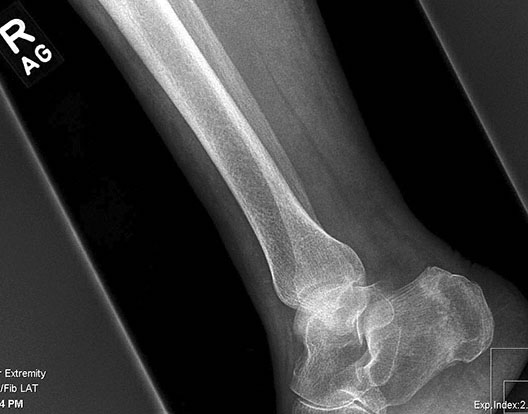
A 42-year-old woman comes to the physician because of increasingly severe right heel pain and swelling since she stepped off balance onto the foot 4 weeks ago; the pain increases with weight-bearing and decreases with rest. She has systemic lupus erythematosus and chronic renal failure. She receives hemodialysis. Her only medication is hydroxychloroquine. Vital signs are within normal limits. The skin over the lower extremities is intact. Dorsalis pedis pulses are 1+ bilaterally. The posterior tuberosity of the right calcaneus is tender to palpation. Motor examination shows no abnormalities. There is pes planus bilaterally. Sensation to light touch is intact over the lower extremities. An x-ray of the right ankle is shown. Serum studies are most likely to show an increased concentration of which of the following in this patient?
CorrectIncorrect -
Question 3 of 20
3. Question
A 72-year-old woman comes to the physician for a routine follow-up examination. She has type 2 diabetes mellitus, hypertension, chronic kidney disease, and osteoarthritis of the knees. She says that she feels well except for mild swelling of her feet, which has made her shoes feel tighter. Her medications are lisinopril, naproxen, acetaminophen, and metformin. She is 170 cm (5 ft 7 in) tall and weighs 81 kg (178 lb); BMI is 28 kg/m2. She has gained 2.3 kg (5 lb) since her last examination 1 month ago. Her temperature is 36.8°C (98.2°F), pulse is 72/min, respirations are 16/min, and blood pressure is 112/62 mm Hg. Cardiopulmonary examination shows no abnormalities. There is 1+ pitting edema of the ankles. Her hemoglobin A1c is 6.1%, and serum creatinine concentration is 2.1 mg/dL, unchanged from last year. Metformin therapy is discontinued. Which of the following is the most effective measure to improve this patient’s renal function?
CorrectIncorrect -
Question 4 of 20
4. Question
A 52-year-old woman who has a 20-year history of type 2 diabetes mellitus comes to the physician because of a 1-day history of double vision that resolves when she closes either eye. She has no other symptoms. Her only medication is metformin. Vital signs are within normal limits. She is unable to abduct her left eye. Visual acuity is 20/20 in both eyes. The remainder of the examination shows no abnormalities. Which of the following is the most likely diagnosis?
CorrectIncorrect -
Question 5 of 20
5. Question
A 57-year-old woman comes to the physician for evaluation 2 weeks prior to an operation for varicose veins. Two months ago, she received the diagnosis of Graves disease, and propylthiouracil therapy was begun at that time. She has hypertension controlled with hydrochlorothiazide. She also has seasonal rhinitis and takes over-the-counter decongestants as needed. She occasionally takes acetaminophen for headache. Her temperature is 37°C (98.6°F), pulse is 76/min, respirations are 20/min, and blood pressure is 134/82 mm Hg. Examination of the lower extremities shows extensive varicose veins along the inner aspect of the left calf. Laboratory studies show:
Hematocrit
41%
Leukocyte count
1000/mm3
Segmented neutrophils
25%
Bands
2%
Eosinophils
6%
Lymphocytes
59%
Monocytes
8%
Serum
Na+
138 mEq/L
K+
3.7 mEq/L
Cl−
103 mEq/L
HCO3−
24 mEq/L
Urea nitrogen
16 mg/dL
Creatinine
1 mg/dL
Which of the following is the most appropriate next step in management?
CorrectIncorrect -
Question 6 of 20
6. Question
Four days after admission to the hospital because of abdominal pain and dehydration, a 52-year-old man with metastatic colon cancer is demanding additional medication to relieve his pain. On admission, treatment with intravenous crystalloid and acetaminophen was begun. On hospital day 2, his pain increased in severity, and he was switched to intravenous hydromorphone, which provided adequate analgesia. This morning, in preparation for discharge, he was switched to oral hydromorphone at the same dose. Eight hours later, he said the pain relief was inadequate, but the oral medication was maintained. Since then, he anxiously has been anticipating each dose of oral hydromorphone by watching the clock. He has no history of substance use disorder. On mental status examination, he has an anxious mood and is preoccupied with receiving pain medication. Which of the following is the most likely explanation for this patient’s inadequate pain relief?
CorrectIncorrect -
Question 7 of 20
7. Question
Ten days after undergoing vagotomy, pyloroplasty, and oversewing for a bleeding duodenal ulcer, a 67-year-old man is brought to the emergency department because of fever, difficulty breathing, and left shoulder pain. He was previously feeling well and tolerating a normal diet. His only medication is oxycodone with acetaminophen. His temperature is 38.5°C (101.3°F), respirations are 34/min, and blood pressure is 140/85 mm Hg. Breath sounds are decreased over the left lung base. Abdominal examination shows tenderness over the left upper quadrant; the incision site is healing well. The remainder of the examination shows no abnormalities. An x-ray of the chest shows a raised left hemidiaphragm. Which of the following is the most likely cause of these current findings?
CorrectIncorrect -
Question 8 of 20
8. Question
A 65-year-old man comes to the office for a routine examination. He sustained an ST-elevation myocardial infarction 1 year ago with subsequent revascularization and stent placement. The patient says he has felt well since his coronary procedure, and he reports no exercise intolerance, chest pain, shortness of breath, or other symptoms. He also has coronary artery disease, hypertension, and hyperlipidemia. Medications are clopidogrel, lisinopril, metoprolol, and atorvastatin. The patient smoked one pack of cigarettes daily for 45 years but quit after his myocardial infarction. He drinks one glass of wine nightly and does not use illicit drugs. He does yard work and walks for 20 minutes three times weekly. He is 180 cm (5 ft 11 in) tall and weighs 104 kg (229 lb); BMI is 32 kg/m2. Vital signs are normal. Physical examination discloses no abnormalities. Repeat ECG is unchanged from his last ECG. Which of the following is the most appropriate study for disease surveillance?
CorrectIncorrect -
Question 9 of 20
9. Question

A 57-year-old woman with unresectable pancreatic cancer is admitted to the hospital because of a 3-month history of constant severe abdominal pain that radiates to her back. The pain has not decreased despite an 8-week course of palliative chemotherapy and radiation therapy and treatment with transdermal fentanyl and oral oxycodone every 6 hours for breakthrough pain. She rates the pain as an 8 on a 10-point scale. She says that the pain limits her daily activities and forces her to remain bedridden for 10 to 12 hours daily. She is able to eat but has occasional nausea. Her temperature is 37°C (98.6°F), pulse is 98/min, respirations are 16/min, and blood pressure is 112/65 mm Hg. Examination shows mild scleral icterus. A 6-cm tender mass is palpated in the epigastrium. A CT scan of the abdomen is shown. Which of the following is the most appropriate next step in management?
CorrectIncorrect -
Question 10 of 20
10. Question
A 67-year-old man comes to the physician for a routine examination. He has chronic lymphocytic leukemia and currently takes no medications. He feels well. His temperature is 37°C (98.6°F), pulse is 84/min, respirations are 16/min, and blood pressure is 136/72 mm Hg. Examination shows several small, firm, nontender lymph nodes in the neck and axilla. Abdominal examination shows mild splenomegaly. Laboratory studies show:
Hemoglobin
13 g/dL
Leukocyte count
84,000/mm3
Segmented neutrophils
30%
Eosinophils
3%
Basophils
2%
Lymphocytes
60%
Monocytes
5%
Platelet count
149,000/mm3
This patient is at greatest risk for which of the following?
CorrectIncorrect -
Question 11 of 20
11. Question
A 22-year-old man comes to the physician because of a 3-day history of a sore throat and difficulty opening his jaw. He has no history of serious illness, and he takes no medications. He is allergic to penicillin. His temperature is 38.4°C (101°F), pulse is 120/min, respirations are 20/min, and blood pressure is 100/70 mm Hg. There is cervical lymphadenopathy bilaterally. Examination of the throat shows deviation of the uvula to the right, edema of the soft palate on the left and bilateral pharyngeal erythema with exudates. After drainage of the abscess, which of the following is the most appropriate pharmacotherapy?
CorrectIncorrect -
Question 12 of 20
12. Question
A 42-year-old woman, gravida 2, para 1, at 12 weeks’ gestation comes to the physician for her first prenatal visit. She conceived a dichorionic-diamniotic twin gestation after in vitro fertilization. She has no history of serious illness, and her only medication is a prenatal vitamin. Two years ago, her first pregnancy ended in cesarean delivery at 39 weeks’ gestation because of breech presentation. She is 165 cm (5 ft 5 in) tall. She weighed 68 kg (150 lb) prior to her pregnancy; BMI was 25 kg/m2. She has had a 2-kg (4-lb) weight gain during her pregnancy. Her blood pressure is 110/70 mm Hg. Examination shows a uterus consistent in size with a 12-week gestation. This patient is at greatest risk for which of the following pregnancy complications?
CorrectIncorrect -
Question 13 of 20
13. Question
On arrival to the postanesthesia care unit 15 minutes after undergoing fourth and fifth metacarpophalangeal arthroplasty, a 32-year-old woman with rheumatoid arthritis has a fingerstick blood glucose concentration of 350 mg/dL. During induction of general anesthesia, endotracheal intubation was complicated by arthritic changes to the cervical spine, and dexamethasone was administered to decrease airway edema. She received lactated Ringer solution during the 60-minute procedure; intraoperative blood loss was minimal. Medications are prednisone and methotrexate. She is awake. Vital signs are within normal limits. Cardiopulmonary examination shows no abnormalities. Neurologic examination shows no focal findings. Which of the following is the most likely cause of this patient’s hyperglycemia?
CorrectIncorrect -
Question 14 of 20
14. Question
Three days after an operation for aortic stenosis, a 67-year-old white man is being evaluated by the surgical team. A medical student takes one of the two patient information charts hanging outside the room. While reading the chart, the student realizes that the ethnicity listed on the chart does not match the ethnicity of the patient. Verification of the name on the chart shows that the student has taken the chart for the other patient in the double room. Both charts are labeled “room 456-1,” instead of the chart for the window bed being labeled “456-2.” Individual members of the team laugh at the mix-up, and a resident states that the charts are often misnumbered due to patients shifting room position. Which of the following is the most appropriate next step by the senior member of the team?
CorrectIncorrect -
Question 15 of 20
15. Question
A 42-year-old woman comes to the physician because of a 1-month history of intermittent mild pain in her right lower abdomen. She has not had fever, chills, changes in bowel habits, or urinary symptoms. Three years ago, she underwent bilateral prophylactic mastectomy because her maternal grandmother, mother, and two older sisters have a history of breast cancer. The patient has no history of serious illness, and her only medication is a calcium supplement containing vitamin D. Her temperature is 37°C (98.6°F), pulse is 80/min, respirations are 18/min, and blood pressure is 116/68 mm Hg. Cardiopulmonary examination shows no abnormalities. The abdomen is soft and nondistended, and the liver is not enlarged. Examination of the right lower quadrant shows tenderness to deep palpation; there are no signs of peritonitis. On pelvic examination, a mass is palpated in the right adnexal region; no other abnormalities are noted. Pelvic ultrasonography shows an 8 × 6-cm complex, multiseptate, right ovarian mass; there is no ascites. Which of the following is the most appropriate next step in diagnosis?
CorrectIncorrect -
Question 16 of 20
16. Question
A 28-year-old man comes to the emergency department because of a 1-week history of increasingly severe right lower abdominal pain. During this time, he also has had fever, nausea, and vomiting. He has not had chills. He has no history of serious illness or operative procedures and takes no medications. Temperature is 38.3°C (101.0°F), pulse is 100/min, and blood pressure is 120/60 mm Hg. Cardiopulmonary examination shows no abnormalities. On abdominal examination, a 6 × 8-cm, tender mass is palpated in the right lower quadrant. There is no overlying erythema or induration. CT scan of the abdomen and pelvis shows a 6 × 8-cm fluid collection with an enhancing rim in the right lower quadrant. In addition to intravenous broad-spectrum antibiotic therapy, which of the following is the most appropriate next step in management?
CorrectIncorrect -
Question 17 of 20
17. Question
A 77-year-old woman comes to the emergency department 1 hour after the sudden onset of pain, numbness, and stiffness of her right forearm and hand. She has hypertension and atrial fibrillation. She had a myocardial infarction 2 years ago. Her medications are metoprolol, lisinopril, and warfarin. Her temperature is 36.8°C (98.2°F), pulse is 60/min and irregularly irregular, respirations are 14/min, and blood pressure is 140/90 mm Hg. Cardiopulmonary examination shows no abnormalities. The right forearm and hand are pale and cool with a capillary refill time of 8 seconds. Pulses are absent in the distal aspect of the right upper extremity. The right axillary pulse and pulses in the left upper extremity are within normal limits. An ECG shows atrial fibrillation with a ventricular rate of 72/min. There are no acute changes. Laboratory studies show:
Hemoglobin
12.3 g/dL
Hematocrit
37%
Leukocyte count
10,500/mm3
Platelet count
354,000/mm3
Prothrombin time
14 sec (INR=1.5)
Partial thromboplastin time
27 sec
She is scheduled for embolectomy in 90 minutes. Which of the following is the most appropriate next step in management?
CorrectIncorrect -
Question 18 of 20
18. Question
A 45-year-old woman comes to the physician requesting a second opinion of a recent diagnosis of multiple sclerosis (MS). She has smoked one pack of cigarettes daily for 25 years and asks if cigarette smoking contributed to her current condition. The physician finds a recently published study evaluating the relationship between cigarette smoking and MS. A total of 100,000 women between the ages of 18 and 40 years were polled about their medical and social histories over a 10-year period. Data show that 205 participants reported developing MS. The rates of cigarette smoking in participants with MS were compared with those of 615 age- and location-matched participants without MS. Which of the following best describes this study design?
CorrectIncorrect -
Question 19 of 20
19. Question
A 16-year-old boy who was diagnosed with HIV infection 1 year ago comes for a follow-up examination. He has had no opportunistic infections. Immunizations are up-to-date. His CD4+ T-lymphocyte count is 550/mm3 (Normal≥500), and plasma HIV viral load is less than 1000 copies/mL, a hundredfold decrease since he began triple antiretroviral therapy 1 year ago. He and his girlfriend are sexually active and use condoms consistently. His plans for the summer include traveling to Africa for 2 weeks on a medical missionary trip, buying a cat, joining a swim team, and obtaining a part-time job in a day-care center which involves caring for toilet-trained toddlers. Avoidance of which of the following activities is most likely to minimize his chances of opportunistic infection?
CorrectIncorrect -
Question 20 of 20
20. Question
A previously healthy 57-year-old man is admitted to the hospital for evaluation of a 7-hour history of palpitations. He takes no medications. He drinks six beers daily. He does not smoke. He is 168 cm (5 ft 6 in) tall and weighs 70 kg (155 lb); BMI is 25 kg/m2. His temperature is 37°C (98.6°F), pulse is 110/min and irregularly irregular, respirations are 16/min, and blood pressure is 126/70 mm Hg. Pulse oximetry on room air shows an oxygen saturation of 97%. Examination shows no jugular venous distention. Cardiac examination shows no murmurs, rubs, or gallops. There is no pedal edema. Test of the stool for occult blood is negative. An ECG shows atrial fibrillation at a ventricular rate of 114/min with no ischemic changes. The physician decides to administer oral digoxin. Which of the following is the most appropriate way to record an order on this patient’s chart?
CorrectIncorrect