
NBME 13 – Block 4 (Duplicate 1)
Time limit: 0
Quiz Summary
0 of 20 Questions completed
Questions:
Information
You have already completed the quiz before. Hence you can not start it again.
Quiz is loading…
You must sign in or sign up to start the quiz.
You must first complete the following:
Results
Quiz complete. Results are being recorded.
Results
0 of 20 Questions answered correctly
Your time:
Time has elapsed
You have reached 0 of 0 point(s), (0)
Earned Point(s): 0 of 0, (0)
0 Essay(s) Pending (Possible Point(s): 0)
Categories
- Not categorized 0%
- 1
- 2
- 3
- 4
- 5
- 6
- 7
- 8
- 9
- 10
- 11
- 12
- 13
- 14
- 15
- 16
- 17
- 18
- 19
- 20
- Current
- Review
- Answered
- Correct
- Incorrect
-
Question 1 of 20
1. Question
A 1-month-old newborn is brought to the physician for his first well-child examination. He is exclusively breast-fed. Growth and development are appropriate for age. Examination shows no abnormalities. Routine newborn screening is positive for sickle cell disease. Which of the following is the most appropriate recommendation to prevent morbidity from this condition?
CorrectIncorrect -
Question 2 of 20
2. Question
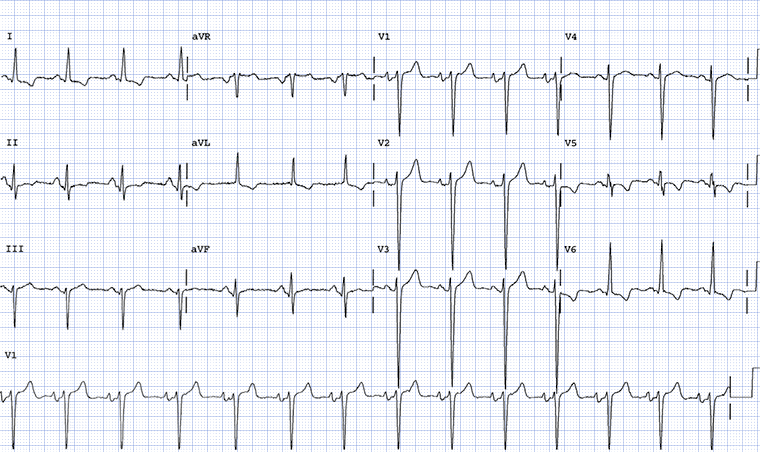
A 25-year-old man comes to the office for a routine health maintenance examination. He has no history of serious illness and takes no medications. He has smoked one pack of cigarettes daily for 7 years. His blood pressure is 150/88 mm Hg. A grade 3/6, harsh, midsystolic, crescendo-decrescendo murmur is heard best at the upper left sternal border with radiation to the neck. The murmur is louder with Valsalva maneuver. The point of maximal impulse is at the anterior axillary line in the fifth intercostal space. An ECG is shown. Which of the following is the most likely cause of this patient’s murmur?
CorrectIncorrect -
Question 3 of 20
3. Question
A 29-year-old primigravid Vietnamese woman at 6 weeks’ gestation comes to the office for her first prenatal visit. She has no history of serious illness, and her only medication is a prenatal vitamin. The uterus is consistent in size with a 6-week gestation. Laboratory studies show a hemoglobin concentration of 9.8 g/dL and mean corpuscular volume of 72 μm3. Her serum ferritin concentration is 42 ng/mL. Which of the following is the most appropriate next step in management?
CorrectIncorrect -
Question 4 of 20
4. Question
52-year-old woman is brought to the office by her husband for evaluation of mild aphasia and change in her personality. CT scan of the head discloses a 3-cm mass in the left temporal lobe and a 5-cm mass in the right frontal lobe. She has smoked one pack of cigarettes for 30 years. Chest x-ray is reported as showing a “2-cm spiculated mass in the left subapical region.” The radiologist calls the physician and says that the lesion was present on her prior chest x-rays done 10 months ago. Which of the following is the most appropriate next step in management?
CorrectIncorrect -
Question 5 of 20
5. Question
A 24-year-old African American woman comes to the office because of a 2-week history of progressive bilateral hearing loss. She says that during the past 3 months, she also has had ringing in her ears. She has asthma, hypothyroidism, and a history of recurrent ear infections during childhood. Current medications include inhaled albuterol as necessary and levothyroxine. Her mother and one of her five siblings are deaf. The patient works as a bartender. She is 165 cm (5 ft 5 in) tall and weighs 68 kg (150 lb); BMI is 25 kg/m2. Temperature is 36.8°C (98.2°F), pulse is 88/min, respirations are 20/min, and blood pressure is 144/87 mm Hg. On physical examination, the tympanic membranes cannot be observed because of impacted cerumen. The remainder of the physical examination shows no abnormalities. Which of the following factors in this patient’s history most strongly indicates a poor prognosis?
CorrectIncorrect -
Question 6 of 20
6. Question
A 52-year-old Chinese American woman returns to the office because of a 3-month history of heartburn. The patient has type 2 diabetes mellitus and pernicious anemia. She also has cholelithiasis, for which she has refused surgical treatment. Medications are metformin, atorvastatin, and monthly injections of vitamin B12 (cyanocobalamin). Hemoglobin A1c obtained 30 days ago was 7.2%. Family history is significant for colon cancer in two first-degree relatives. The patient is 160 cm (5 ft 3 in) tall and weighs 86 kg (190 lb); BMI is 34 kg/m2. Which of the following historical findings is the strongest risk factor for gastric carcinoma in this patient?
CorrectIncorrect -
Question 7 of 20
7. Question
97-year-old woman who resides in a skilled nursing care facility has had confusion for 12 hours. She did not recognize her family members when they came to visit her. She was admitted to the facility 3 weeks ago because of progressive difficulty rising from a chair to stand and unsteadiness while using her walker. She has hypertension, heart failure, and rheumatoid arthritis. Current medications include lisinopril, furosemide, and ibuprofen as needed for joint pain. Her temperature is 36.3°C (97.3°F), pulse is 92/min, respirations are 14/min, and blood pressure is 100/65 mm Hg. Mucous membranes are dry. Cardiopulmonary examination shows no abnormalities. Neurologic examination shows no focal findings. On mental status examination, she is not oriented to place or time. Serum studies show:
Na+
154 mEq/L
K+
5.2 mEq/L
Cl−
111 mEq/L
HCO3−
34 mEq/L
Urea nitrogen
85 mg/dL
Creatinine
1.7 mg/dL
Urinalysis and a chest x-ray show no abnormalities. Which of the following is the most appropriate next step in management?
CorrectIncorrect -
Question 8 of 20
8. Question
A 28-year-old woman comes to the physician for a follow-up examination 6 months after discharge from the inpatient psychiatric unit, where she was diagnosed with bipolar disorder. During hospitalization, lithium carbonate and quetiapine therapy was begun. Since discharge, she has been in regular outpatient psychotherapy and has been compliant with her medications. Today, she reports a 1-month history of frequent urination and mild sedation. She says her mood has been stable since discharge. She has no other history of serious illness. She appears alert. Physical examination shows an intention tremor of the upper extremities. Mental status examination shows a euthymic mood and reactive affect. Speech, language, and thought processes are normal. In addition to measurement of the patient’s serum lithium concentration, which of the following is the most appropriate next step in managemen
CorrectIncorrect -
Question 9 of 20
9. Question
A 62-year-old woman comes to the physician for a follow-up examination. She was discharged from the hospital 7 days ago after treatment for left iliofemoral venous thrombosis. Pain and swelling of the left lower extremity were successfully controlled with heparin and warfarin; the heparin was discontinued on discharge. Her only medication is warfarin. Examination of the left breast shows a 3 x 4-cm erythematous area with patches of purple-to-black skin. Which of the following is the most appropriate next step in management?
CorrectIncorrect -
Question 10 of 20
10. Question
A previously healthy 22-year-old woman comes to the physician because of a 3-week history of intermittent episodes of stabbing pain in her right lower abdomen. Each episode lasts up to 2 hours; the most recent episode awakened her from sleep. She is currently in no pain. Menses occur at regular 28-day intervals. Her last menstrual period was 2 weeks ago and lasted 5 days. She is sexually active with one male partner and uses condoms consistently. Her temperature is 37.2°C (99°F), pulse is 68/min, respirations are 18/min, and blood pressure is 110/70 mm Hg. Examination of the abdomen shows no tenderness or distention. There is a 6-cm, mobile, right adnexal mass anterior to the uterus. Test of the stool for occult blood is negative. Her hemoglobin concentration is 11.2 g/dL, leukocyte count is 7000/mm3, and platelet count is 298,000/mm3. A urine pregnancy test is negative. Pelvic ultrasonography shows a partially cystic mass in the right ovary with a single echogenic nodule and decreased blood flow. Which of the following is the most appropriate next step in management?
CorrectIncorrect -
Question 11 of 20
11. Question
A 37-year-old woman, gravida 2, para 2, comes to the physician for a routine health maintenance examination. Menses occur at regular 28-day intervals. Routine Pap smears have shown no abnormalities. She has no history of serious illness. Her mother had breast cancer at the age of 63 years, her maternal aunt had endometrial cancer at the age of 54 years, and her paternal grandmother had colon cancer at the age of 72 years. The patient is sexually active and monogamous with her husband and has been using an oral contraceptive for 8 years. She does not smoke cigarettes or drink alcohol. Her children are 9 and 11 years of age. She works as a nurse. Physical examination, including breast and pelvic examinations, shows no abnormalities. She is concerned about the history of cancer in her family and asks about a screening test for cancer. Which of the following is the most appropriate recommendation at this visit?
CorrectIncorrect -
Question 12 of 20
12. Question
A 58-year-old man returns to the clinic for follow-up 2 weeks after an initial acute episode of severe pain in his right great toe that prevented him from bearing weight on the toe or wearing shoes. He had not had similar pain prior to that episode. At his initial visit 2 weeks ago, naproxen therapy was initiated. Today, he reports resolution of his symptoms. Medical history is significant for hypertension and hypertriglyceridemia. Medications are lisinopril, lovastatin, and aspirin. The patient works as a fisherman harvesting shrimp, and he frequently eats some of the shrimp he has caught. He drinks two to three 12-oz beers nightly. He does not smoke cigarettes. He is 175 cm (5 ft 9 in) tall and weighs 102 kg (225 lb); BMI is 33 kg/m2. Vital signs are temperature 37.0°C (98.6°F), pulse 95/min, respirations 18/min, and blood pressure 150/80 mm Hg. Physical examination shows slight erythema of the right great toe with no swelling or pain. Results of serum laboratory studies obtained 3 months ago during a routine health maintenance examination are shown:
Creatinine
1.1 mg/dL
Glucose
104 mg/dL
Cholesterol
Total
180 mg/dL
HDL
45 mg/dL
LDL
71 mg/dL
Triglycerides
400 mg/dL
In addition to recommending decreased alcohol consumption, which of the following is the most appropriate next step in management?
CorrectIncorrect -
Question 13 of 20
13. Question
A clinical trial is conducted of a new drug-eluting coronary artery stent that does not require antiplatelet therapy for patency in animal models. Twenty patients who had non–ST elevation acute myocardial infarction are recruited to participate in this study; all patients have absolute contraindications for chronic anticoagulation and are not surgical candidates. This study design is most appropriate for evaluating which of the following?
CorrectIncorrect -
Question 14 of 20
14. Question
32-year-old woman who works as a nurse comes to the office because of a 4-month history of increasing pain and swelling of her ankles. Her ankles are stiff in the morning and become progressively painful and swollen by the end of her work shifts. She runs on a treadmill and lifts weights three times weekly, but her symptoms have prevented her from running during the past month. There is no history of trauma, and she has no other joint pain. She has hypothyroidism treated with levothyroxine. Examination of the ankles shows warmth and moderate effusions. There is no erythema. Active and passive range of motion of the ankles elicits mild pain. The remainder of the examination shows no abnormalities. X-rays of the ankles show no fractures or degenerative changes. Which of the following is the most appropriate next step in diagnosis?
CorrectIncorrect -
Question 15 of 20
15. Question
A 57-year-old woman comes to the physician for a routine gynecologic examination. Two years ago, results of a complete blood count were within the reference ranges, and her total cholesterol concentration was 180 mg/dL. She feels well. She has had a 4.5-kg (10-lb) weight gain during the past 6 months. She takes no medications. Her last menstrual period was 4 years ago. She does not smoke cigarettes. She drinks two glasses of wine daily. Her temperature is 37.2°C (99°F), pulse is 68/min, respirations are 12/min, and blood pressure is 130/85 mm Hg. She is 168 cm (5 ft 6 in) tall and weighs 77 kg (170 lb); BMI is 27 kg/m2. Pelvic examination shows mild atrophy of the vaginal mucosa. Serum studies show:
Cholesterol, total
240 mg/dL
HDL-cholesterol
45 mg/dL
LDL-cholesterol
165 mg/dL
Triglycerides
200 mg/dL
Total bilirubin
0.9 mg/dL
Alkaline phosphatase
60 U/L
AST
20 U/L
ALT
28 U/L
Which of the following is the most appropriate next step to determine the cause of this patient’s increased cholesterol concentration?
CorrectIncorrect -
Question 16 of 20
16. Question
A 2-year-old boy who is in the hospital has apnea 12 hours after undergoing surgical drainage of the left hip because of sepsis. His medications are intravenous vancomycin, cefotaxime, and morphine. After application of bag-valve-mask ventilation and administration of naloxone, the patient’s apnea resolves. Review of the hospital database shows that the patient’s morphine dose was too high. Which of the following is most likely to prevent recurrence of this type of error?
CorrectIncorrect -
Question 17 of 20
17. Question

A 57-year-old man comes to the physician because he has coughed up blood once weekly for the past month. He has had an intermittent mild cough for 10 years. He has a history of hypertension well controlled with lisinopril and hyperlipidemia well controlled with pravastatin. He was treated for pneumonia six times during his 20s and 30s. He says he had “all of the usual childhood diseases.” There is no family history of serious illness. He does not smoke. He works as a teacher’s aide. His temperature is 37.3°C (99.1°F), pulse is 80/min, respirations are 14/min, and blood pressure is 138/84 mm Hg. Pulse oximetry on room air shows an oxygen saturation of 99%. A few crackles are heard at the lung bases. A grade 1/6 systolic murmur is heard best at the upper right sternal border. A CT scan of the chest is shown. Which of the following is the most likely diagnosis?
CorrectIncorrect -
Question 18 of 20
18. Question
A previously healthy 8-year-old boy is brought to the emergency department because of a 1-day history of increasingly severe abdominal pain. He has no history of serious illness and receives no medications. He appears well developed and well nourished. His temperature is 38.1°C (100.5°F), pulse is 100/min, and blood pressure is 90/70 mm Hg. Cardiopulmonary examination shows no abnormalities. Abdominal examination shows localized tenderness over the right lower quadrant; there is guarding at the McBurney point. Bowel sounds are decreased. Laboratory studies show a hemoglobin concentration of 12.5 g/dL (N=11.5–15.5) and leukocyte count of 14,500/mm3 (N=4500–13,500). Urinalysis shows no abnormalities. Which of the following is the most appropriate next step in management?
CorrectIncorrect -
Question 19 of 20
19. Question
A previously healthy 47-year-old woman comes to the physician because of a 5-day history of an itchy rash. The rash initially began on her trunk but now has spread to her face, arms, and legs. She has not had fever, shortness of breath, fatigue, loss of appetite, or weight loss. She returned from a trip to Jamaica 2 days ago. She takes no medications and has no known drug allergies. She has had a peanut allergy since childhood and typically has shortness of breath and swelling of the lips when she eats peanuts. She does not recall ingesting peanuts on her trip but says that she ate food at the hotel. Her temperature is 36.9°C (98.4°F), pulse is 78/min, respirations are 14/min, and blood pressure is 110/80 mm Hg. Examination shows no abnormalities except for 1- to 2-cm, circular, blanched, raised urticarial lesions over the face, trunk, and upper and lower extremities; the rash is most prominent over the face, hands, and feet. Which of the following is the most appropriate next step in management?
CorrectIncorrect -
Question 20 of 20
20. Question
A 7-year-old boy is brought to the office by his mother because she is concerned about his behavior at school since he began second grade 3 months ago. His teacher says he often fidgets and talks to his classmates when he has been told to be quiet. He misbehaves in language arts and spelling class but is well behaved during math and science classes. He has been sent to the principal’s office three times during the past month because of disruptive behavior. He says recess is his favorite part of school; he dislikes reading. His mother has no concerns about her son’s behavior at home. She says he has many friends in the neighborhood and enjoys sports activities. He has no history of serious illness and receives no medications. His paternal cousin has attention-deficit/hyperactivity disorder. The patient’s father dropped out of high school in 10th grade because of difficulty reading. During the examination, the patient is talkative and tells the physician about his new bicycle. Vital signs are within normal limits. Examination shows a mild eye-blink motor tic. His mother says the tic has occurred intermittently during the past 2 weeks. No other abnormalities are noted. Which of the following is the most likely diagnosis?
CorrectIncorrect