
NBME 13 – Block 3 (Duplicate 1)
Time limit: 0
Quiz Summary
0 of 20 Questions completed
Questions:
Information
You have already completed the quiz before. Hence you can not start it again.
Quiz is loading…
You must sign in or sign up to start the quiz.
You must first complete the following:
Results
Quiz complete. Results are being recorded.
Results
0 of 20 Questions answered correctly
Your time:
Time has elapsed
You have reached 0 of 0 point(s), (0)
Earned Point(s): 0 of 0, (0)
0 Essay(s) Pending (Possible Point(s): 0)
Categories
- Not categorized 0%
- 1
- 2
- 3
- 4
- 5
- 6
- 7
- 8
- 9
- 10
- 11
- 12
- 13
- 14
- 15
- 16
- 17
- 18
- 19
- 20
- Current
- Review
- Answered
- Correct
- Incorrect
-
Question 1 of 20
1. Question
A 67-year-old man comes to the emergency department 20 minutes after the sudden onset of substernal chest pain. He has not had shortness of breath. He has hypertension and hyperlipidemia. His medications are enalapril and simvastatin. On arrival, he appears pale and anxious. His pulse is 104/min, respirations are 16/min, and blood pressure is 88/64 mm Hg. Central venous pressure is estimated to be 6 cm H2O (N=5–8). The point of maximal impulse is laterally displaced. The lungs are clear to auscultation. With the patient in the supine position, a grade 2/6 holosystolic murmur is heard best at the apex and radiates to the axilla. S1 and S2 are normal. The remainder of the examination shows no abnormalities. Serum studies show an increased troponin T concentration. An ECG shows ST-segment elevation in leads II, III, and aVF and in leads V4R to V6R. Which of the following is the most appropriate initial step in management?
CorrectIncorrect -
Question 2 of 20
2. Question
A 22-year-old woman, gravida 2, para 0, aborta 1, at 9 weeks’ gestation comes to the physician because of mild vaginal bleeding for 2 days. Her first pregnancy ended in spontaneous abortion at 6 weeks’ gestation. She received Rho(D) immune globulin at that time. Three years ago, she underwent multiple operative repairs of injuries sustained in a motor vehicle collision and received transfusion of packed red blood cells perioperatively. She has no other history of serious illness. Her only medication is a prenatal vitamin. Examination shows a uterus consistent in size with a 9-week gestation. There is scant blood coming from the closed cervical os. Transvaginal ultrasonography shows a viable singleton intrauterine pregnancy. Routine prenatal laboratory studies are performed and Rho(D) immune globulin is administered. Her blood group is B, Rh-negative. She is positive for the Kell antibody with a titer of 1:16. Which of the following is the strongest predisposing risk factor for isoimmunization to the Kell erythrocyte antibody in this patient?
CorrectIncorrect -
Question 3 of 20
3. Question
A 92-year-old man is admitted to the hospital after a neighbor found him lethargic in his home. The neighbor reports that the patient has no living relatives, so she visits him regularly. On admission, he is agitated, belligerent, and confused and says that he sees angels and demons. His temperature is 37°C (98.6°F), pulse is 114/min, respirations are 32/min, and blood pressure is 140/90 mm Hg. On pulmonary examination, crackles are heard over the lung bases. Serum studies show a urea nitrogen concentration of 20 mg/dL and creatinine concentration of 1.3 mg/dL. Treatment with antibiotic therapy is begun for pneumonia and a urinary tract infection. Four hours later, he pulls out his nasogastric tube and intravenous and urinary catheters. Three days later, mental status examination shows no evidence of visual hallucinations. He recalls zero of three items after 5 minutes. The most appropriate next step in discharge planning is to contact which of the following within the hospital?
CorrectIncorrect -
Question 4 of 20
4. Question
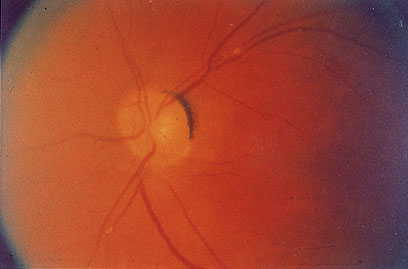
A 67-year-old woman comes to the physician because of a 1-week history of episodes of vision loss in her left eye. She has had three episodes during this time; each episode lasted 5 minutes and resolved spontaneously. She has a 10-year history of hypertension, a 2-year history of worsening arthritis, and mitral valve prolapse. Her medications are lisinopril and ibuprofen. Her blood pressure is 140/85 mm Hg. A photograph of the left fundus is shown. On cardiac examination, a midsystolic click and a grade 2/6, late systolic murmur are heard best over the apex. The remainder of the examination, including neurologic examination, shows no abnormalities. Which of the following is the most appropriate next step in diagnosis?
CorrectIncorrect -
Question 5 of 20
5. Question
A 47-year-old man comes to the clinic because of a 3-month history of worsening dull pain “in my stomach” and generalized itching. He has had a decreased appetite resulting in an 11.3-kg (25-lb) weight loss; eating does not affect the pain. He has not had fever, chills, vomiting, or diarrhea. His last visit to a physician was more than 30 years ago. He takes no medications. He has smoked one pack of cigarettes daily for 30 years. He does not drink alcohol or use illicit drugs. He is 178 cm (5 ft 10 in) tall and weighs 70 kg (154 lb); BMI is 22 kg/m2. Vital signs are within normal limits. Abdominal examination shows fullness and mild tenderness to palpation over the epigastric region. Rectal examination shows no abnormalities; test of the stool for occult blood is negative. Neurologic examination shows no focal findings. Serum studies show:
Total bilirubin
6 mg/dL
Alkaline phosphatase
140 U/L
AST
160 U/L
ALT
175 U/L
Which of the following is the most appropriate next step in diagnosis?
CorrectIncorrect -
Question 6 of 20
6. Question
A 72-year-old woman is brought to the emergency department 30 minutes after her son found her confused in her apartment. She lives alone. The outside temperature is 105.8°F, and she does not have air conditioning. En route, she was combative and oriented to person but not to place or time. On arrival, she is unresponsive and diaphoretic. Her temperature is 40.4°C (104.7°F), pulse is 90/min, respirations are 28/min, and blood pressure is 90/60 mm Hg. Pulse oximetry on 10 L/min of oxygen by nasal cannula shows an oxygen saturation of 98%. Examination shows decorticate posturing. The skin is warm. The pupils are equal and reactive. No signs of injury are noted. Which of the following is the most appropriate next step in management?
CorrectIncorrect -
Question 7 of 20
7. Question
A 15-year-old girl is brought to the emergency department 2 hours after ingesting a handful of nonprescription diet pills. She has a severe pounding headache and chest pain. Her temperature is 37°C (98.6°F), pulse is 55/min, respirations are 18/min, and blood pressure is 220/125 mm Hg. Examination shows generalized hyperreflexia. Which of the following is the most appropriate next step in management?
CorrectIncorrect -
Question 8 of 20
8. Question
A 22-year-old woman comes to the physician for a routine health maintenance examination. She has had a cardiac murmur since early childhood. She drinks alcohol socially once weekly and smokes cigarettes only when she drinks. She is sexually active and uses an oral contraceptive; she has had one lifetime sexual partner. Her temperature is 36.7°C (98°F), pulse is 72/min, respirations are 12/min, and blood pressure is 100/70 mm Hg. An S2 is widely split. A grade 3/6 midsystolic murmur is heard best at the second left intercostal space. The remainder of the examination shows no abnormalities. Over the next 10 years, this patient is at greatest risk for which of the following conditions?
CorrectIncorrect -
Question 9 of 20
9. Question
A 14-year-old girl is brought to the physician because of a 1-week history of a malodorous vaginal discharge. The discharge is grayish white and causes mild itching. She has not had burning with urination, urinary frequency or urgency, or abdominal pain. Menarche was at the age of 12 years; her last menstrual period was 2 weeks ago and lasted 5 days. Two weeks ago, she completed a 10-day course of antibiotics for streptococcal pharyngitis. On questioning, she states that she usually takes showers but occasionally takes bubble baths. When interviewed alone, she reports that she had sexual intercourse once 2 weeks ago, and her partner used a condom. Pelvic examination shows a small amount of grayish white discharge in the vagina. The cervix appears normal. There are no rashes or excoriations on the perineum. Pubic hair development is sexual maturity rating stage 5. A wet mount preparation of the vaginal discharge shows few leukocytes, numerous epithelial cells with a granular appearance and irregular margins, and many coccobacilli. Which of the following is the most likely explanation for this patient’s symptoms?
CorrectIncorrect -
Question 10 of 20
10. Question
A 14-year-old boy is brought to the physician because of a 1-month history of painful swelling beneath his left nipple. He has had no drainage from the nipple. He has no history of recent injury. He has major depressive disorder treated with a selective serotonin reuptake inhibitor (SSRI) for the past 3 months. He takes no other medications. He has smoked three to four cigarettes daily for 1 year and smoked marijuana once. He is at the 75th percentile for height and weight. Vital signs are within normal limits. Physical examination shows a 1-cm, tender, firm, mobile mass beneath the left areola. Pubic hair and genital development are sexual maturity rating stage 3. There is no axillary hair. Which of the following is the most likely explanation for the swelling in this patient’s breast?
CorrectIncorrect -
Question 11 of 20
11. Question
A 47-year-old woman comes to the physician because of a 6-month history of increasingly severe low back pain. She reports that she has had episodes of low back pain during the past 2 years but that the episodes have recently become more severe. The pain is worst when she sits for long periods of time, rises from a sitting-to-standing position, or bends toward the floor. She has not had leg pain or any prior treatment. Nonsteroidal anti-inflammatory drugs provide minimal relief, and she asks if she could benefit from operative treatment. Examination shows moderate tenderness to palpation of the midline to the level of L4-5. Straight-leg raise testing is negative. Peripheral pulses are normal. Neurologic examination shows no focal findings. Which of the following is the most appropriate next step in diagnosis?
CorrectIncorrect -
Question 12 of 20
12. Question
A 32-year-old man comes for a follow-up examination. He has membranous glomerulonephritis that is in remission. Examination shows no abnormalities. His serum creatinine concentration is 1.2 mg/dL. Urinalysis shows 2+ protein. Which of the following is most likely to delay progression of this patient’s renal disease?
CorrectIncorrect -
Question 13 of 20
13. Question
An 81-year-old woman comes to the physician for a follow-up examination. She has osteoporosis treated with calcium and vitamin D supplementation. Previous trials of two medications were not well tolerated. Her mother and sister had a history of hip fractures. The patient says she would like to try another medication for prevention of hip fracture. The physician finds a recently published study evaluating the efficacy of a new drug for osteoporosis. A total of 19,916 women between the ages of 60 and 80 years were enrolled in the study; all participants had osteoporosis treated with calcium and vitamin D supplementation, and were observed for 3 years. Participants were randomized to receive either the new drug or placebo. Results showed:
Total Number
Fracture
Discontinued Therapy
of Patients
(Number of Patients)
Fracture Rate
(Number of Patients)
Study drug
9951
401
0.042 (p=0.047)
1548
Placebo
9965
442
0.044
1195
Which of the following conclusions is the most appropriate to draw from these data?
CorrectIncorrect -
Question 14 of 20
14. Question
A 2-year-old boy from Long Island, New York, is admitted to the hospital because of a 2-day history of decreased ability to bear weight on his left leg. He has refused to walk for the past 12 hours. His mother reports that he has felt warm during the past 24 hours, but she has not taken his temperature. He has a 1-year history of eczema treated with an emollient lotion. Immunizations are up-to-date. His mother has a history of recurrent skin “boils.” The patient is crying but is consolable. He is holding his left leg flexed at the knee. He is at the 50th percentile for height and weight. His temperature is 38.5°C (101.3°F), pulse is 135/min, respirations are 28/min, and blood pressure is 98/58 mm Hg. Examination shows no swelling or erythema of the left knee. He cries on passive movement of the left lower extremity. There are areas of lichenification of the antecubital and popliteal fossae. Laboratory studies show:
Hemoglobin
13.1 g/dL
Hematocrit
37%
Leukocyte count
16,500/mm3
Segmented neutrophils
68%
Bands
6%
Lymphocytes
18%
Monocytes
8%
Platelet count
440,000/mm3
C-reactive protein
48 mg/L (N<8 mg/L)
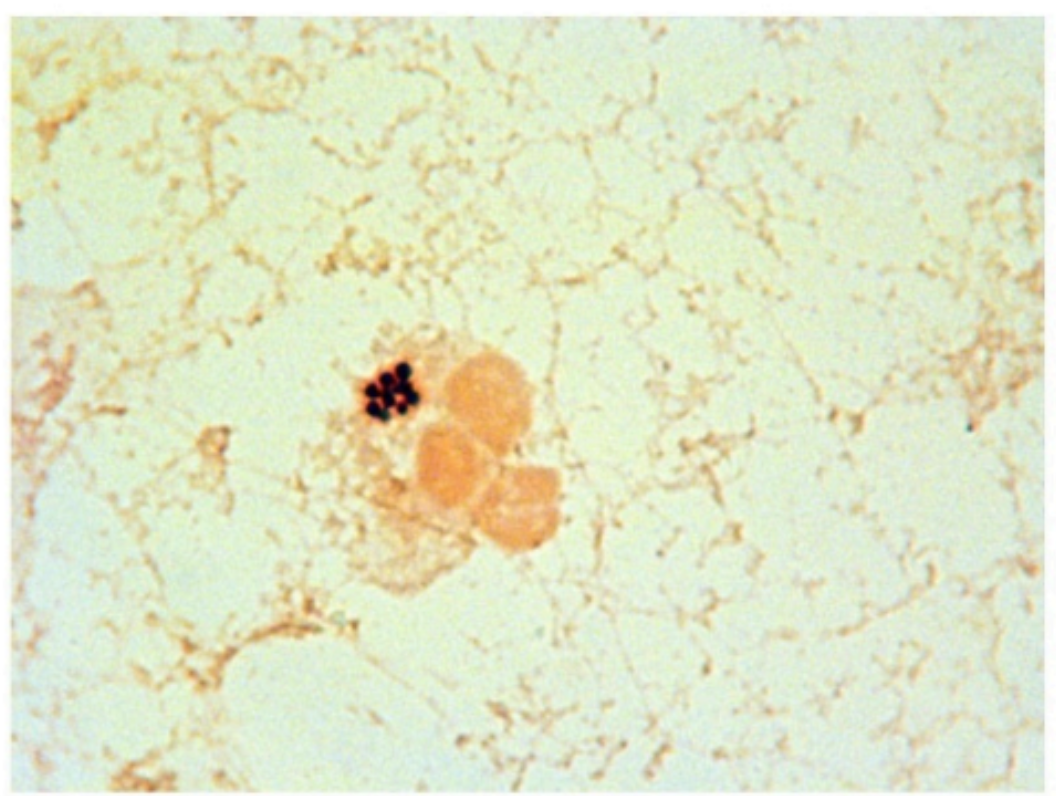
An x-ray of the left knee and hip shows no abnormality. An MRI of the left lower extremity shows marrow edema of the distal femur. A blood culture is positive for microbial growth. A Gram stain of the blood culture is shown. Administration of which of the following is the most appropriate initial step in pharmacotherapy?
CorrectIncorrect -
Question 15 of 20
15. Question
A 32-year-old man comes to the physician because of a 6-month history of shortness of breath with exertion, palpitations, and generalized swelling. His pulse is 105/min and irregular, and blood pressure is 118/70 mm Hg. A grade 3/6 holosystolic murmur and a diastolic rumble are heard at the apex. An ECG shows atrial fibrillation and right ventricular hypertrophy. Which of the following is the most likely cause of these findings?
CorrectIncorrect -
Question 16 of 20
16. Question
A randomized study is conducted to compare the efficacy of an experimental operative procedure with that of conventional nonoperative treatment in patients with knee injuries. A total of 1000 patients are enrolled. Five hundred patients are assigned by a chance process to undergo the operative procedure and 400 undergo the procedure. Five hundred patients are assigned by a chance process to the conventional treatment and 50 undergo the procedure. All patients are observed for 5 years. Analysis of patient outcomes is conducted based on the treatment received by the patients. Which of the following features of this study is of greatest potential concern?
CorrectIncorrect -
Question 17 of 20
17. Question
A hospital’s adverse drug reaction review committee has been asked to review a series of adverse medication events in the oncology unit. On four occasions, patients inadvertently received an antibiotic instead of a chemotherapeutic agent. Interviews with nurses in the unit show that the two medication vials are similar in color, distributed in the same-sized container, and are placed next to each other on the distribution cart sent by the hospital’s central pharmacy. Which of the following measures is most appropriate to prevent this error in the future?
CorrectIncorrect -
Question 18 of 20
18. Question
A 67-year-old woman comes to the physician because of a 1-month history of cough productive of blood-tinged sputum. During this time, she has had one episode of coughing up blood and a decreased appetite resulting in a 2.3-kg (5-lb) weight loss. She has smoked one pack of cigarettes daily for 50 years. Five years ago, she was treated for breast cancer with no metastasis to the lymph nodes. Examination shows no abnormalities. Her serum calcium concentration is 12 mg/dL. A chest x-ray shows a 3-cm left upper lobe mass. A CT scan of the liver and a bone scan show no abnormalities. A biopsy specimen of the lung mass is most likely to show which of the following?
CorrectIncorrect -
Question 19 of 20
19. Question

A previously healthy 62-year-old woman comes to the emergency department because of a 2-day history of nausea and increasingly severe abdominal pain. She vomited once 6 hours ago but has not had constipation or diarrhea. She had a partial gastrectomy for peptic ulcer disease 20 years ago. Current medications are a multivitamin, calcium and iron supplements, and occasional intramuscular injections of vitamin B12 (cyanocobalamin). Physical examination shows abdominal distention and diffuse tenderness. Laboratory studies show:
Hemoglobin
14.1 g/dL
Hematocrit
43%
Serum
Na+
135 mEq/L
K+
3.6 mEq/L
Cl−
99 mEq/L
HCO3−
24 mEq/L
A CT scan of the abdomen is shown. Which of the following is the most likely diagnosis?
CorrectIncorrect -
Question 20 of 20
20. Question
A 5-year-old girl is brought to the emergency department 20 minutes after the onset of difficulty breathing that began while she was eating a granola bar. Her pulse is 120/min, respirations are 28/min, and blood pressure is 70/50 mm Hg. Examination shows stridor. There are erythematous wheals over the top half of her body. Which of the following is the most appropriate initial step in management?
CorrectIncorrect