
NBME 13 – Block 3
Quiz Summary
0 of 50 Questions completed
Questions:
Information
You have already completed the quiz before. Hence you can not start it again.
Quiz is loading…
You must sign in or sign up to start the quiz.
You must first complete the following:
Results
Results
0 of 50 Questions answered correctly
Your time:
Time has elapsed
You have reached 0 of 0 point(s), (0)
Earned Point(s): 0 of 0, (0)
0 Essay(s) Pending (Possible Point(s): 0)
Categories
- Not categorized 0%
- 1
- 2
- 3
- 4
- 5
- 6
- 7
- 8
- 9
- 10
- 11
- 12
- 13
- 14
- 15
- 16
- 17
- 18
- 19
- 20
- 21
- 22
- 23
- 24
- 25
- 26
- 27
- 28
- 29
- 30
- 31
- 32
- 33
- 34
- 35
- 36
- 37
- 38
- 39
- 40
- 41
- 42
- 43
- 44
- 45
- 46
- 47
- 48
- 49
- 50
- Current
- Review
- Answered
- Correct
- Incorrect
-
Question 1 of 50
1. Question
A previously healthy 15-year-old boy is brought to the emergency department because of a 3-hour history of severe abdominal pain, nausea, and vomiting. He was kicked in the abdomen while competing in a karate tournament. He initially reported only mild pain but now rates it as an 8 on a 10-point scale. Abdominal examination shows diffuse tenderness to palpation that is most severe in the epigastric region. Which of the following is the most likely diagnosis?
CorrectIncorrect -
Question 2 of 50
2. Question
A 27-year-old woman, gravida 2, para 2, delivers a healthy 3345-g (7-lb 6-oz) newborn by cesarean delivery because of arrest of descent. Thirty-six hours later, she has chills, loss of appetite, and foul-smelling lochia. Temperature is 38.4°C (101.1°F), pulse is 112/min, respirations are 20/min, and blood pressure is 90/60 mm Hg. Examination shows a clean, dry incision without erythema. There is no breast tenderness or erythema. The lungs are clear to auscultation. There is no costovertebral angle tenderness. The uterine fundus is tender to palpation. Leukocyte count is 14,000/mm3. Urinalysis shows no abnormalities. Which of the following is the most appropriate next step in management?
CorrectIncorrect -
Question 3 of 50
3. Question
A 37-year-old man comes to the physician for an examination required by his employer. He feels well. He has no known allergies or history of serious illness. He takes no medications. He has smoked one and one-half packs of cigarettes daily for 20 years and drinks six beers weekly. He has a sedentary lifestyle. He is 178 cm (5 ft 10 in) tall and weighs 82 kg (180 lb); BMI is 26 kg/m2. His pulse is 68/min and regular, and blood pressure is 128/84 mm Hg. The lungs are clear to auscultation; there is a prolonged expiratory phase. Cardiac examination shows no abnormalities. During the examination, the patient asks what he can expect if he quits smoking now. Which of the following is the most appropriate physician response?
CorrectIncorrect -
Question 4 of 50
4. Question
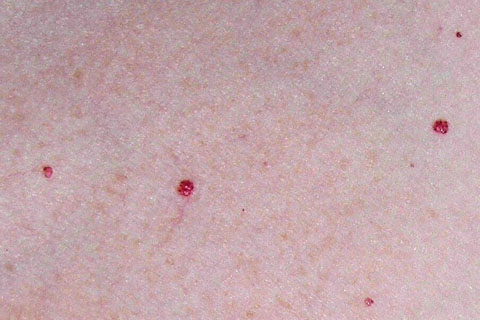
A 38-year-old woman comes to the office for evaluation of several red, painless lesions on her chest and abdomen that she first noticed 4 months ago. Medical history is remarkable only for occasional headaches, which she describes as generally right sided and throbbing, with associated nausea and photophobia. Ibuprofen partially relieves the pain. She also takes an oral contraceptive. Her last menstrual period was 3 weeks ago. She is sexually active with one male partner and they do not use condoms. She has smoked one-half pack of cigarettes daily for the past 15 years and she drinks one beer daily. Vital signs are normal. Physical examination discloses several small (3 to 5-mm), slightly raised, erythematous lesions on her chest and abdomen as shown. Which of the following is the most appropriate diagnostic study?
CorrectIncorrect -
Question 5 of 50
5. Question
A 64-year-old man comes to the office because of a 4-month history of moderately painful ejaculation during sexual intercourse. Occasionally, he says the ejaculate is dark and foul smelling. He also has had low back pain and mild lower pelvic pain for 8 weeks. During the past 6 months, he has been sexually active with four women; they use condoms inconsistently. He says he has paid for sex and has had unprotected anal sex during this time. The patient’s vital signs are within normal limits. Examination shows a circumcised penis with no lesions. The testes and epididymis are normal. The prostate is mildly tender to palpation and minimally enlarged. Which of the following is the most appropriate next step in diagnosis?
CorrectIncorrect -
Question 6 of 50
6. Question
A 76-year-old man is admitted to the intensive care unit because of a 12-hour history of moderate chest pain and progressive shortness of breath. He has no history of serious illness and takes no medications. His temperature is 37°C (98.6°F), pulse is 98/min and regular, respirations are 22/min, and blood pressure is 84/56 mm Hg. Pulse oximetry on 10 L/min of oxygen by nasal cannula shows an oxygen saturation of 88%. Examination shows jugular venous distention to the angle of the jaw bilaterally. On pulmonary examination, diffuse crackles are heard bilaterally. Administration of 100% oxygen by face mask is begun. His blood pressure is 78/42 mm Hg. Echocardiography shows an ejection fraction of 10%. ECG shows evidence of an anterior myocardial infarction. Administration of which of the following is most likely to improve this patient’s condition?
CorrectIncorrect -
Question 7 of 50
7. Question
A previously healthy 22-year-old woman comes to the physician 12 hours after the onset of swelling of her left arm. She lifts weights five times weekly and has been focusing on strengthening her upper body during the past 2 weeks. Examination shows prominent superficial veins over the anterior left shoulder and chest. The left upper extremity is edematous from the shoulder to the hand. There is a bluish discoloration of the left forearm and hand. Muscle strength and sensation are intact in all extremities. Which of the following is the most likely cause of the edema?
CorrectIncorrect -
Question 8 of 50
8. Question
A previously healthy 4-year-old girl is brought to the physician because of a 3-day history of noisy breathing, runny nose, and cough. Her mother says the patient has had decreased oral intake during the past 4 hours with increasingly severe cough and noisy breathing. She has not had drooling or change in the pitch or intensity of her cry. She does not appear to be cyanotic. Her temperature is 40°C (104°F), pulse is 150/min, respirations are 20/min, and blood pressure is 90/55 mm Hg. She can fully open her mouth. The uvula is midline, and the tonsils are mildly erythematous, symmetric, and moderately enlarged bilaterally. Examination shows intercostal and suprasternal retractions, inspiratory stridor, and nasal flaring. There are no crackles or expiratory wheezing. A chest x-ray shows a “shaggy” tracheal air column and peribronchial cuffing with no parenchymal densities; there is no cardiomegaly. Her symptoms show no improvement after two administrations of nebulized racemic epinephrine or with sitting upright. Which of the following is the most likely diagnosis?
CorrectIncorrect -
Question 9 of 50
9. Question
A 37-year-old woman with cystic fibrosis is admitted to the critical care unit because of hemoptysis and pulmonary failure. During the past 4 years, she has been hospitalized nine times for treatment of pulmonary failure and intestinal obstructions caused by meconium ileus equivalent; 1 month ago, she was in the critical care unit for 2 weeks because of worsening lung function. She repeatedly has refused to be considered for lung transplant. She has a living will that states her wish for no cardiopulmonary resuscitation if she undergoes cardiac arrest while hospitalized. Psychologic testing during the past year has confirmed that she is mentally competent. She is heavily sedated, intubated, and mechanically ventilated. Her pulmonary failure worsens, and her family asks whether extracorporeal membrane oxygenation (ECMO) treatment could be used to improve her condition. Which of the following is the most appropriate physician response?
CorrectIncorrect -
Question 10 of 50
10. Question
A 42-year-old woman comes to the physician because of a 3-month history of fatigue, decreased appetite, and mild swelling of her arms and legs. Twenty years ago, she underwent transplantation of a donor kidney from her sister for treatment of polycystic kidney disease. She has been compliant with her immunosuppressive therapy. Medications include prednisone and azathioprine. Her temperature is 37.3°C (99.1°F), pulse is 86/min, respirations are 28/min, and blood pressure is 170/98 mm Hg. Examination shows pallor. Abdominal examination shows no tenderness or enlargement of the transplanted kidney. Her hemoglobin concentration is 8 g/dL, serum urea nitrogen concentration is 50 mg/dL, and serum creatinine concentration is 5.3 mg/dL. Which of the following is the most likely mechanism of this patient’s impending renal failure?
CorrectIncorrect -
Question 11 of 50
11. Question
A previously healthy 27-year-old man comes to the physician because of nausea and vomiting for the past 36 hours. His temperature is 38°C (100.4°F). Examination shows scleral icterus and jaundice. There is tenderness to palpation of the right upper quadrant of the abdomen. Laboratory studies show:
Hemoglobin
14.2 g/dL
Leukocyte count
5800/mm3
Serum
Bilirubin
Total
11 mg/dL
Direct
2.2 mg/dL
AST
1095 U/L
ALT
1300 U/L
Which of the following is the most likely diagnosis?
CorrectIncorrect -
Question 12 of 50
12. Question
A 9-year-old girl is brought to the physician for a follow-up examination. She has a 5-month history of intermittent moderate right flank pain that radiates to the back. The pain occurs two to three times monthly and lasts 2 to 3 days before resolving spontaneously. She has not had fever, vomiting, diarrhea, pain with urination, or urinary frequency. She has no history of serious illness and takes no medications. Multiple urine cultures during the past 5 months have been negative. Vital signs are within normal limits. The abdomen is soft and nondistended. There is right costovertebral angle tenderness. Laboratory studies show:
Serum creatinine
1.3 mg/dL
Urine
pH
6.0
Specific gravity
1.010
Blood
trace
Protein
none
WBC
0/hpf
Nitrites
none
Abdominal ultrasonography shows absence of the left kidney and severe dilation of the right renal pelvis. Which of the following is the most appropriate next step to prevent progression of this patient’s renal failure?
CorrectIncorrect -
Question 13 of 50
13. Question
A 21-year-old man comes to the office for a routine examination. He was diagnosed with type 2 diabetes mellitus 2 years ago. His most recent hemoglobin A1c 1 month ago was 9%. His medications are metformin and glipizide. He says he does not check his blood glucose concentration regularly because “I just want to be like everyone else.” He is 165 cm (5 ft 5 in) tall and weighs 77 kg (170 lb); BMI is 28 kg/m2. Vital signs are within normal limits. Examination shows no other abnormalities. In addition to expressing empathy, which of the following is the most appropriate physician approach to encourage better management of this patient’s condition?
CorrectIncorrect -
Question 14 of 50
14. Question
A 62-year-old man comes to the physician because of a 4-week history of tingling in his left hand radiating to the ring and small fingers. He has not had any recent trauma or weakness in his hand. He has end-stage renal disease secondary to hypertension. He has been receiving hemodialysis for the past 3 months. He also has coronary artery disease, type 2 diabetes mellitus, congestive heart failure, and gout. Current medications are metoprolol, lisinopril, clonidine, insulin glargine, allopurinol, and 81-mg aspirin. His temperature is 36.7°C (98°F), pulse is 70/min, and blood pressure is 140/90 mm Hg. The lungs are clear to auscultation. A grade 2/6 systolic murmur is heard at the left sternal border. There is a dialysis fistula in place in the left upper arm; there is no inflammation, but a thrill is palpated. Physical examination shows no edema of the upper and lower extremities. Neurologic examination shows decreased sensation to light touch over the medial aspect of the left hand, ring and small fingers, and the medial aspect of the left arm to the elbow. Which of the following is the most likely diagnosis?
CorrectIncorrect -
Question 15 of 50
15. Question
A 37-year-old primigravid woman at 18 weeks’ gestation comes to the physician for a follow-up examination. Yesterday, her blood pressure was 150/100 mm Hg. She also has a 10-day history of moderate daily headache. She has not had any changes in vision. She has no history of serious illness, and her only medication is a prenatal vitamin. She is not in distress. She is 163 cm (5 ft 4 in) tall. She weighed 86 kg (190 lb) prior to her pregnancy; BMI was 33 kg/m2. She has had a 4.5-kg (10-lb) weight gain during her pregnancy. Today, her blood pressure is 150/98 mm Hg. On examination, the uterus is nontender and consistent in size with an 18-week gestation. The fetal heart rate is 155/min. Urinalysis shows trace protein. Which of the following is the most likely diagnosis?
CorrectIncorrect -
Question 16 of 50
16. Question
A 42-year-old man with hypertension and end-stage renal disease secondary to autosomal dominant polycystic kidney disease comes to the office for a routine examination. He feels well. Six months ago, he received a kidney transplant from his brother. The patient’s medications are tacrolimus, mycophenolate mofetil, trimethoprim-sulfamethoxazole, amlodipine, cholecalciferol, and a multivitamin. Examination shows a functioning arteriovenous fistula in the left forearm and a firm, nontender, renal allograft in the right lower quadrant of the abdomen. Laboratory studies show:
Hemoglobin
13.5 g/dL
Serum
Ca2+
11.7 mg/dL
Urea nitrogen
25 mg/dL
Creatinine
1.5 mg/dL
Parathyroid hormone, intact
425 pg/mL (N=10–60)
Which of the following is the most likely diagnosis?
CorrectIncorrect -
Question 17 of 50
17. Question
A 42-year-old man is brought to the emergency department because of a 2-day history of shortness of breath and cough, which have progressed to severe respiratory distress. He has a history of intravenous illicit drug use. He lives in a homeless shelter. On arrival, he is intubated and mechanically ventilated. Examination shows coarse breath sounds bilaterally. Respiratory therapy is begun. Two days later, cultures of blood and sputum grow Neisseria meningitidis. Which of the following is the most appropriate measure to prevent the spread of this patient’s disease to hospital personnel?
CorrectIncorrect -
Question 18 of 50
18. Question
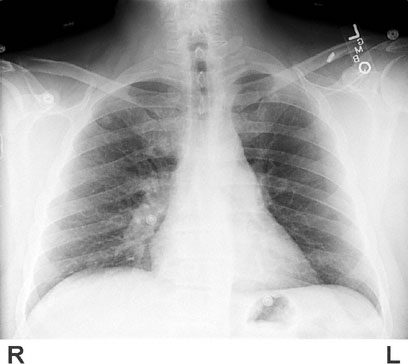
A 57-year-old man comes to the emergency department 2 hours after the onset of severe shortness of breath. He has not had any other symptoms. He has long-standing hypertension and type 2 diabetes mellitus. Current medications include lisinopril, metformin, and hydrochlorothiazide. He has never smoked. He is employed as a truck driver. His temperature is 37.4°C (99.4°F), pulse is 108/min, respirations are 24/min, and blood pressure is 126/82 mm Hg. Pulse oximetry on room air shows an oxygen saturation of 88%. Faint wheezes are heard on the left. There is an S4. Examination of the lower extremities shows 1+ edema bilaterally. An ECG shows sinus tachycardia. Arterial blood gas analysis on room air shows:
pH
7.44
Pco2
33 mm Hg
Po2
62 mm Hg
A chest x-ray is shown. Which of the following is the most appropriate next step in management?
CorrectIncorrect -
Question 19 of 50
19. Question
An 82-year-old man is brought to the emergency department because of a 2-day history of progressive abdominal distention and lethargy. His family reports that he has not been awake or fully alert for 4 hours. The patient has hyperlipidemia, hypertension, and benign prostatic hyperplasia. His medications are atorvastatin, metoprolol, finasteride, and a daily aspirin. His temperature is 36.4°C (97.5°F), pulse is 90/min, respirations are 20/min, and blood pressure is 80/55 mm Hg. Pulse oximetry on 100% oxygen by nonrebreather face mask shows an oxygen saturation of 99%. The patient opens his eyes and moves his extremities in response to painful stimuli. Abdominal examination shows distention over the lower quadrants, dullness to percussion to the level of the umbilicus, and an enlarged multinodular prostate. Bladder catheterization yields 1700 mL of turbid urine. Piperacillin-tazobactam, large-volume crystalloid, and norepinephrine therapy are begun. Two hours later, the patient produces 75 mL/h of clear urine but remains lethargic. His blood pressure is 90/65 mm Hg. Laboratory studies show:
Hemoglobin
12 g/dL
Hematocrit
36%
Leukocyte count
22,000/mm3
Serum
Na+
125 mEq/L
K+
5 mEq/L
Cl−
93 mEq/L
HCO3−
22 mEq/L
Urea nitrogen
35 mg/dL
Glucose
75 mg/dL
Creatinine
1.5 mg/dL
Which of the following is the most appropriate next step in management of this patient’s persistent hypotension?
CorrectIncorrect -
Question 20 of 50
20. Question
A 22-year-old male college student comes to the clinic because of a 3-month history of fatigue, persistent cough, chronic malaise, occasional night sweats, and a 7-kg (15-lb) weight loss despite no change in appetite. He says he has felt stressed at school and that his grades have been declining. He had infectious mononucleosis 5 years ago. He takes no medications. He appears tired. He is 178 cm (5 ft 10 in) tall and weighs 67 kg (148 lb); BMI is 21 kg/m2. Pulse is 98/min and regular, respirations are 24/min, and blood pressure is 110/60 mm Hg. Cardiopulmonary examination discloses wheezing at both bases and distant heart sounds. Abdomen is soft with no tenderness; liver edge is palpated 2 cm below the right costal margin. Large, matted lymph nodes are palpated bilaterally in the supraclavicular area, axilla, and groin. Examination of a biopsy specimen of a superficial inguinal lymph node confirms the presence of Reed-Sternberg cells. Which of the following is the most appropriate next step in evaluation?
CorrectIncorrect -
Question 21 of 50
21. Question
A 67-year-old man comes to the emergency department 20 minutes after the sudden onset of substernal chest pain. He has not had shortness of breath. He has hypertension and hyperlipidemia. His medications are enalapril and simvastatin. On arrival, he appears pale and anxious. His pulse is 104/min, respirations are 16/min, and blood pressure is 88/64 mm Hg. Central venous pressure is estimated to be 6 cm H2O (N=5–8). The point of maximal impulse is laterally displaced. The lungs are clear to auscultation. With the patient in the supine position, a grade 2/6 holosystolic murmur is heard best at the apex and radiates to the axilla. S1 and S2 are normal. The remainder of the examination shows no abnormalities. Serum studies show an increased troponin T concentration. An ECG shows ST-segment elevation in leads II, III, and aVF and in leads V4R to V6R. Which of the following is the most appropriate initial step in management?
CorrectIncorrect -
Question 22 of 50
22. Question
A 22-year-old woman, gravida 2, para 0, aborta 1, at 9 weeks’ gestation comes to the physician because of mild vaginal bleeding for 2 days. Her first pregnancy ended in spontaneous abortion at 6 weeks’ gestation. She received Rho(D) immune globulin at that time. Three years ago, she underwent multiple operative repairs of injuries sustained in a motor vehicle collision and received transfusion of packed red blood cells perioperatively. She has no other history of serious illness. Her only medication is a prenatal vitamin. Examination shows a uterus consistent in size with a 9-week gestation. There is scant blood coming from the closed cervical os. Transvaginal ultrasonography shows a viable singleton intrauterine pregnancy. Routine prenatal laboratory studies are performed and Rho(D) immune globulin is administered. Her blood group is B, Rh-negative. She is positive for the Kell antibody with a titer of 1:16. Which of the following is the strongest predisposing risk factor for isoimmunization to the Kell erythrocyte antibody in this patient?
CorrectIncorrect -
Question 23 of 50
23. Question
A 92-year-old man is admitted to the hospital after a neighbor found him lethargic in his home. The neighbor reports that the patient has no living relatives, so she visits him regularly. On admission, he is agitated, belligerent, and confused and says that he sees angels and demons. His temperature is 37°C (98.6°F), pulse is 114/min, respirations are 32/min, and blood pressure is 140/90 mm Hg. On pulmonary examination, crackles are heard over the lung bases. Serum studies show a urea nitrogen concentration of 20 mg/dL and creatinine concentration of 1.3 mg/dL. Treatment with antibiotic therapy is begun for pneumonia and a urinary tract infection. Four hours later, he pulls out his nasogastric tube and intravenous and urinary catheters. Three days later, mental status examination shows no evidence of visual hallucinations. He recalls zero of three items after 5 minutes. The most appropriate next step in discharge planning is to contact which of the following within the hospital?
CorrectIncorrect -
Question 24 of 50
24. Question
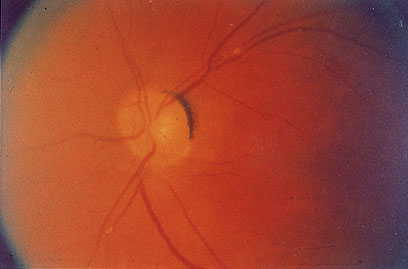
A 67-year-old woman comes to the physician because of a 1-week history of episodes of vision loss in her left eye. She has had three episodes during this time; each episode lasted 5 minutes and resolved spontaneously. She has a 10-year history of hypertension, a 2-year history of worsening arthritis, and mitral valve prolapse. Her medications are lisinopril and ibuprofen. Her blood pressure is 140/85 mm Hg. A photograph of the left fundus is shown. On cardiac examination, a midsystolic click and a grade 2/6, late systolic murmur are heard best over the apex. The remainder of the examination, including neurologic examination, shows no abnormalities. Which of the following is the most appropriate next step in diagnosis?
CorrectIncorrect -
Question 25 of 50
25. Question
A 47-year-old man comes to the clinic because of a 3-month history of worsening dull pain “in my stomach” and generalized itching. He has had a decreased appetite resulting in an 11.3-kg (25-lb) weight loss; eating does not affect the pain. He has not had fever, chills, vomiting, or diarrhea. His last visit to a physician was more than 30 years ago. He takes no medications. He has smoked one pack of cigarettes daily for 30 years. He does not drink alcohol or use illicit drugs. He is 178 cm (5 ft 10 in) tall and weighs 70 kg (154 lb); BMI is 22 kg/m2. Vital signs are within normal limits. Abdominal examination shows fullness and mild tenderness to palpation over the epigastric region. Rectal examination shows no abnormalities; test of the stool for occult blood is negative. Neurologic examination shows no focal findings. Serum studies show:
Total bilirubin
6 mg/dL
Alkaline phosphatase
140 U/L
AST
160 U/L
ALT
175 U/L
Which of the following is the most appropriate next step in diagnosis?
CorrectIncorrect -
Question 26 of 50
26. Question
A 72-year-old woman is brought to the emergency department 30 minutes after her son found her confused in her apartment. She lives alone. The outside temperature is 105.8°F, and she does not have air conditioning. En route, she was combative and oriented to person but not to place or time. On arrival, she is unresponsive and diaphoretic. Her temperature is 40.4°C (104.7°F), pulse is 90/min, respirations are 28/min, and blood pressure is 90/60 mm Hg. Pulse oximetry on 10 L/min of oxygen by nasal cannula shows an oxygen saturation of 98%. Examination shows decorticate posturing. The skin is warm. The pupils are equal and reactive. No signs of injury are noted. Which of the following is the most appropriate next step in management?
CorrectIncorrect -
Question 27 of 50
27. Question
A 15-year-old girl is brought to the emergency department 2 hours after ingesting a handful of nonprescription diet pills. She has a severe pounding headache and chest pain. Her temperature is 37°C (98.6°F), pulse is 55/min, respirations are 18/min, and blood pressure is 220/125 mm Hg. Examination shows generalized hyperreflexia. Which of the following is the most appropriate next step in management?
CorrectIncorrect -
Question 28 of 50
28. Question
A 22-year-old woman comes to the physician for a routine health maintenance examination. She has had a cardiac murmur since early childhood. She drinks alcohol socially once weekly and smokes cigarettes only when she drinks. She is sexually active and uses an oral contraceptive; she has had one lifetime sexual partner. Her temperature is 36.7°C (98°F), pulse is 72/min, respirations are 12/min, and blood pressure is 100/70 mm Hg. An S2 is widely split. A grade 3/6 midsystolic murmur is heard best at the second left intercostal space. The remainder of the examination shows no abnormalities. Over the next 10 years, this patient is at greatest risk for which of the following conditions?
CorrectIncorrect -
Question 29 of 50
29. Question
A 14-year-old girl is brought to the physician because of a 1-week history of a malodorous vaginal discharge. The discharge is grayish white and causes mild itching. She has not had burning with urination, urinary frequency or urgency, or abdominal pain. Menarche was at the age of 12 years; her last menstrual period was 2 weeks ago and lasted 5 days. Two weeks ago, she completed a 10-day course of antibiotics for streptococcal pharyngitis. On questioning, she states that she usually takes showers but occasionally takes bubble baths. When interviewed alone, she reports that she had sexual intercourse once 2 weeks ago, and her partner used a condom. Pelvic examination shows a small amount of grayish white discharge in the vagina. The cervix appears normal. There are no rashes or excoriations on the perineum. Pubic hair development is sexual maturity rating stage 5. A wet mount preparation of the vaginal discharge shows few leukocytes, numerous epithelial cells with a granular appearance and irregular margins, and many coccobacilli. Which of the following is the most likely explanation for this patient’s symptoms?
CorrectIncorrect -
Question 30 of 50
30. Question
A 14-year-old boy is brought to the physician because of a 1-month history of painful swelling beneath his left nipple. He has had no drainage from the nipple. He has no history of recent injury. He has major depressive disorder treated with a selective serotonin reuptake inhibitor (SSRI) for the past 3 months. He takes no other medications. He has smoked three to four cigarettes daily for 1 year and smoked marijuana once. He is at the 75th percentile for height and weight. Vital signs are within normal limits. Physical examination shows a 1-cm, tender, firm, mobile mass beneath the left areola. Pubic hair and genital development are sexual maturity rating stage 3. There is no axillary hair. Which of the following is the most likely explanation for the swelling in this patient’s breast?
CorrectIncorrect -
Question 31 of 50
31. Question
A 47-year-old woman comes to the physician because of a 6-month history of increasingly severe low back pain. She reports that she has had episodes of low back pain during the past 2 years but that the episodes have recently become more severe. The pain is worst when she sits for long periods of time, rises from a sitting-to-standing position, or bends toward the floor. She has not had leg pain or any prior treatment. Nonsteroidal anti-inflammatory drugs provide minimal relief, and she asks if she could benefit from operative treatment. Examination shows moderate tenderness to palpation of the midline to the level of L4-5. Straight-leg raise testing is negative. Peripheral pulses are normal. Neurologic examination shows no focal findings. Which of the following is the most appropriate next step in diagnosis?
CorrectIncorrect -
Question 32 of 50
32. Question
A 32-year-old man comes for a follow-up examination. He has membranous glomerulonephritis that is in remission. Examination shows no abnormalities. His serum creatinine concentration is 1.2 mg/dL. Urinalysis shows 2+ protein. Which of the following is most likely to delay progression of this patient’s renal disease?
CorrectIncorrect -
Question 33 of 50
33. Question
An 81-year-old woman comes to the physician for a follow-up examination. She has osteoporosis treated with calcium and vitamin D supplementation. Previous trials of two medications were not well tolerated. Her mother and sister had a history of hip fractures. The patient says she would like to try another medication for prevention of hip fracture. The physician finds a recently published study evaluating the efficacy of a new drug for osteoporosis. A total of 19,916 women between the ages of 60 and 80 years were enrolled in the study; all participants had osteoporosis treated with calcium and vitamin D supplementation, and were observed for 3 years. Participants were randomized to receive either the new drug or placebo. Results showed:
Total Number
Fracture
Discontinued Therapy
of Patients
(Number of Patients)
Fracture Rate
(Number of Patients)
Study drug
9951
401
0.042 (p=0.047)
1548
Placebo
9965
442
0.044
1195
Which of the following conclusions is the most appropriate to draw from these data?
CorrectIncorrect -
Question 34 of 50
34. Question
A 2-year-old boy from Long Island, New York, is admitted to the hospital because of a 2-day history of decreased ability to bear weight on his left leg. He has refused to walk for the past 12 hours. His mother reports that he has felt warm during the past 24 hours, but she has not taken his temperature. He has a 1-year history of eczema treated with an emollient lotion. Immunizations are up-to-date. His mother has a history of recurrent skin “boils.” The patient is crying but is consolable. He is holding his left leg flexed at the knee. He is at the 50th percentile for height and weight. His temperature is 38.5°C (101.3°F), pulse is 135/min, respirations are 28/min, and blood pressure is 98/58 mm Hg. Examination shows no swelling or erythema of the left knee. He cries on passive movement of the left lower extremity. There are areas of lichenification of the antecubital and popliteal fossae. Laboratory studies show:
Hemoglobin
13.1 g/dL
Hematocrit
37%
Leukocyte count
16,500/mm3
Segmented neutrophils
68%
Bands
6%
Lymphocytes
18%
Monocytes
8%
Platelet count
440,000/mm3
C-reactive protein
48 mg/L (N<8 mg/L)
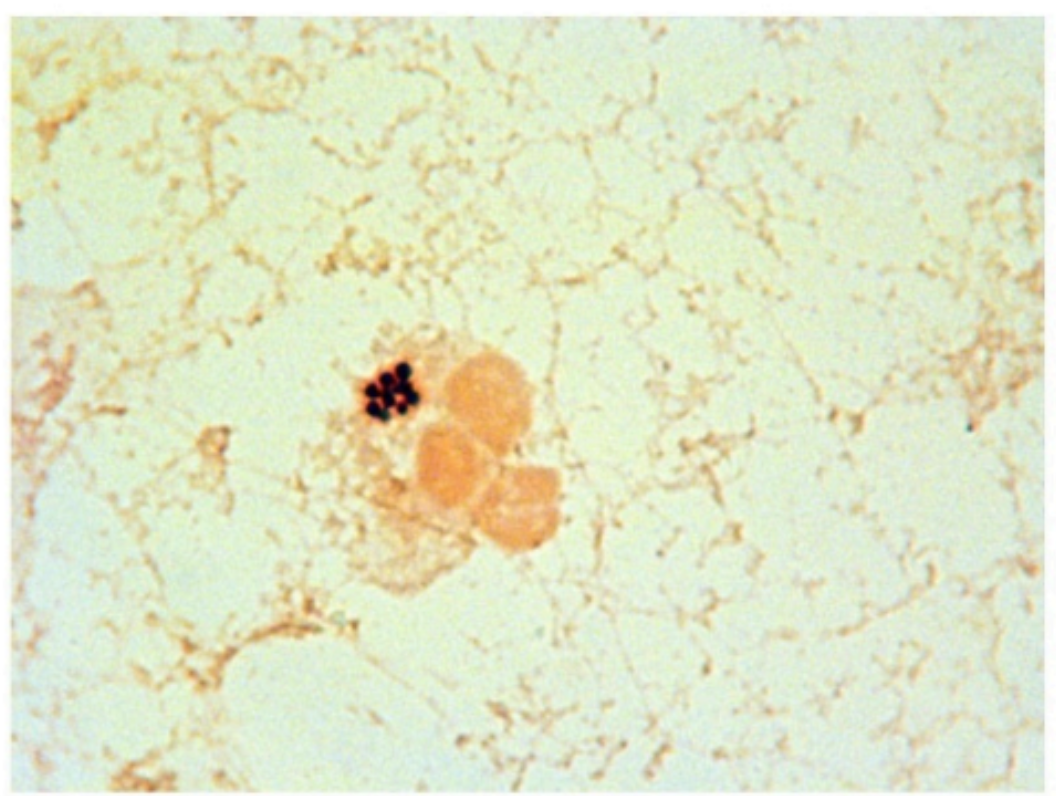
An x-ray of the left knee and hip shows no abnormality. An MRI of the left lower extremity shows marrow edema of the distal femur. A blood culture is positive for microbial growth. A Gram stain of the blood culture is shown. Administration of which of the following is the most appropriate initial step in pharmacotherapy?
CorrectIncorrect -
Question 35 of 50
35. Question
A 32-year-old man comes to the physician because of a 6-month history of shortness of breath with exertion, palpitations, and generalized swelling. His pulse is 105/min and irregular, and blood pressure is 118/70 mm Hg. A grade 3/6 holosystolic murmur and a diastolic rumble are heard at the apex. An ECG shows atrial fibrillation and right ventricular hypertrophy. Which of the following is the most likely cause of these findings?
CorrectIncorrect -
Question 36 of 50
36. Question
A randomized study is conducted to compare the efficacy of an experimental operative procedure with that of conventional nonoperative treatment in patients with knee injuries. A total of 1000 patients are enrolled. Five hundred patients are assigned by a chance process to undergo the operative procedure and 400 undergo the procedure. Five hundred patients are assigned by a chance process to the conventional treatment and 50 undergo the procedure. All patients are observed for 5 years. Analysis of patient outcomes is conducted based on the treatment received by the patients. Which of the following features of this study is of greatest potential concern?
CorrectIncorrect -
Question 37 of 50
37. Question
A hospital’s adverse drug reaction review committee has been asked to review a series of adverse medication events in the oncology unit. On four occasions, patients inadvertently received an antibiotic instead of a chemotherapeutic agent. Interviews with nurses in the unit show that the two medication vials are similar in color, distributed in the same-sized container, and are placed next to each other on the distribution cart sent by the hospital’s central pharmacy. Which of the following measures is most appropriate to prevent this error in the future?
CorrectIncorrect -
Question 38 of 50
38. Question
A 67-year-old woman comes to the physician because of a 1-month history of cough productive of blood-tinged sputum. During this time, she has had one episode of coughing up blood and a decreased appetite resulting in a 2.3-kg (5-lb) weight loss. She has smoked one pack of cigarettes daily for 50 years. Five years ago, she was treated for breast cancer with no metastasis to the lymph nodes. Examination shows no abnormalities. Her serum calcium concentration is 12 mg/dL. A chest x-ray shows a 3-cm left upper lobe mass. A CT scan of the liver and a bone scan show no abnormalities. A biopsy specimen of the lung mass is most likely to show which of the following?
CorrectIncorrect -
Question 39 of 50
39. Question

A previously healthy 62-year-old woman comes to the emergency department because of a 2-day history of nausea and increasingly severe abdominal pain. She vomited once 6 hours ago but has not had constipation or diarrhea. She had a partial gastrectomy for peptic ulcer disease 20 years ago. Current medications are a multivitamin, calcium and iron supplements, and occasional intramuscular injections of vitamin B12 (cyanocobalamin). Physical examination shows abdominal distention and diffuse tenderness. Laboratory studies show:
Hemoglobin
14.1 g/dL
Hematocrit
43%
Serum
Na+
135 mEq/L
K+
3.6 mEq/L
Cl−
99 mEq/L
HCO3−
24 mEq/L
A CT scan of the abdomen is shown. Which of the following is the most likely diagnosis?
CorrectIncorrect -
Question 40 of 50
40. Question
A 5-year-old girl is brought to the emergency department 20 minutes after the onset of difficulty breathing that began while she was eating a granola bar. Her pulse is 120/min, respirations are 28/min, and blood pressure is 70/50 mm Hg. Examination shows stridor. There are erythematous wheals over the top half of her body. Which of the following is the most appropriate initial step in management?
CorrectIncorrect -
Question 41 of 50
41. Question
A 67-year-old woman is admitted to the hospital because of fever, weakness, light-headedness, and right lower back pain 3 days after beginning nitrofurantoin for a urinary tract infection. She has a 10-year history of recurrent urinary tract infections with enterococci and several gram-negative organisms that have been resistant to ampicillin and cephalosporins. She has no other history of serious illness. She appears acutely ill. Her temperature is 39.5°C (103.1°F), pulse is 120/min, respirations are 24/min, and blood pressure is 98/68 mm Hg. On examination, there is right costovertebral angle tenderness. Urinalysis shows clumps of WBCs too numerous to count. Treatment with piperacillin-tazobactam and gentamicin is begun. In addition to administration of intravenous fluids, which of the following is the most appropriate initial management to decrease this patient’s risk for acute renal failure?
CorrectIncorrect -
Question 42 of 50
42. Question
A 47-year-old woman comes to the physician for a routine health maintenance examination. She has no history of serious illness or abnormal Pap smears. Menses occur at irregular 45-day intervals, last 5 days, and are not painful; menstrual flow is normal. She has no intermenstrual bleeding. Her last visit to a physician was 2 years ago; at that time, a Pap smear showed no abnormalities. She has not been sexually active for 5 years. Her father was diagnosed with colon cancer, cardiovascular disease, hypertension, and type 2 diabetes mellitus in his 60s. The patient is 157 cm (5 ft 2 in) tall and weighs 82 kg (180 lb); BMI is 33 kg/m2. Her blood pressure is 125/75 mm Hg. Physical examination, including pelvic examination, shows no other abnormalities. Which of the following is the most appropriate recommendation?
CorrectIncorrect -
Question 43 of 50
43. Question
A 47-year-old woman comes to the clinic because of a 3-year history of morning fatigue and an uncomfortable sensation in her legs. The sensation is relieved by walking or by tapping her feet if she is sitting. Her husband sleeps in another bed because she frequently shifts and disturbs his sleep. She has a 3-year history of anemia treated with iron supplementation. She has no other history of serious illness and takes no other medications. Her father has major depressive disorder, her mother has type 2 diabetes mellitus and osteoarthritis, and her brother has type 2 diabetes mellitus. On examination of the patient, muscle strength is 5/5 and symmetric in the lower extremities. Sensation to light touch is intact. Straight-leg raise test is negative bilaterally. Which of the following is the most appropriate next step in diagnosis?
CorrectIncorrect -
Question 44 of 50
44. Question
An 87-year-old woman is brought to the emergency department by her daughter because of pain in her hand and wrist after tripping and catching herself with her outstretched right hand. The daughter says the patient has “frail bones” and is taking calcium and vitamin D supplements. Medical history is remarkable for hypertension and degenerative joint disease. Her only other medication is hydrochlorothiazide. She had a tetanus shot 4 years ago. Vital signs are temperature 37.3°C (99.1°F), pulse 86/min, respirations 13/min, and blood pressure 118/65 mm Hg. Pulse oximetry on room air shows an oxygen saturation of 97%. Physical examination shows an ecchymosis and an abrasion of the right palm. There is swelling and diffuse tenderness of the right wrist. X-rays of the right hand and wrist show a scaphoid fracture. Which of the following is the most likely complication of this patient’s fracture?
CorrectIncorrect -
Question 45 of 50
45. Question
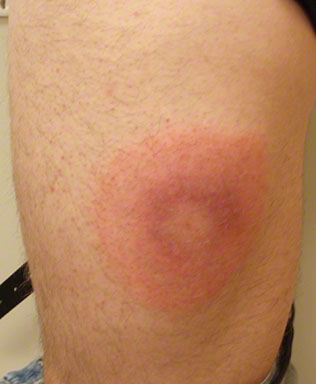
A 23-year-old man who is a landscaper comes to the office because of a 3-month history of lethargy, diffuse muscle aches, and knee pain. He also had a rash on his left knee 3 months ago similar to the one shown in the photograph. One month ago, he had an episode of right knee pain that resolved after 5 days. He now has left knee pain. Temperature is 37.6°C (99.7°F), pulse is 100/min, and respirations are 16/min. Physical examination shows swelling of the left knee; there is no rash. Which of the following is the most appropriate next step in management?
 CorrectIncorrect
 -
Question 46 of 50
46. Question
A 16-year-old girl comes to the office alone for a physical examination required for participation in athletics. The patient immediately states that results of a home urine pregnancy test 2 days ago were positive. Her last menstrual period was 2 months ago. She has had mild nausea but no vomiting or fever. Medical history is noncontributory, and she takes no medications. Family history is remarkable for a congenital heart defect, craniosynostosis, and severe cognitive impairment in her brother caused by an unbalanced chromosomal rearrangement; her father is known to be a carrier of a balanced chromosomal translocation and is asymptomatic. The patient lives with her stepmother and biological father, who has full custody. She is at the 50th percentile for height, weight, and BMI. Vital signs are within normal limits. Physical examination shows no abnormalities. Serum β-hCG testing confirms the pregnancy. The patient reports that she does not want to have a child with the same condition as her brother and requests genetic testing for herself. It is most appropriate to obtain informed consent for the requested genetic testing in this patient from which of the following individuals?
CorrectIncorrect -
Question 47 of 50
47. Question
A 37-year-old man is brought to the emergency department 45 minutes after the sudden onset of severe, sharp pain in his back and chest while he was playing basketball. He rates his pain as an 8 on a 10-point scale. After playing for 2 hours, he had the onset of pain and then had loss of consciousness for 45 seconds. He has Marfan syndrome and long-standing gastroesophageal reflux disease treated with a proton pump inhibitor. On arrival, he is alert and oriented to person, place, and time. He is 198 cm (6 ft 6 in) tall and weighs 77 kg (170 lb); BMI is 20 kg/m2. His temperature is 37.8°C (100°F), pulse is 120/min, respirations are 26/min, and blood pressure is 95/65 mm Hg. Examination shows dry mucous membranes. Breath sounds are distant at the left lung base. There is dullness to percussion on the left. Fluid resuscitation is begun. Which of the following is the most appropriate next step in management?
CorrectIncorrect -
Question 48 of 50
48. Question
A 6-year-old boy is brought to the physician because of a 1-year history of progressive hyperactivity and behavior problems. His teacher reports that he frequently disrupts the class. He has asthma treated with an albuterol inhaler as needed. He occasionally has diffuse headaches. His parents say that he snores loudly, occasionally stops breathing, and moves frequently during sleep. He plays soccer and baseball. His parents and teacher say he is disobedient. His father has dyslexia, and a paternal cousin has autistic disorder. Growth and development are appropriate for age. He breathes through his mouth. His respirations are 20/min. Examination shows moderately enlarged tonsils. He can recall three of three objects after 5 minutes. On digit-span testing, he recalls 7 forward and 5 backward. His abstract reasoning is intact. Which of the following is the most appropriate initial step in diagnosis?
CorrectIncorrect -
Question 49 of 50
49. Question
A 24-year-old woman comes to the emergency department because of a 1-week history of weakness and occasional palpitations. She admits that she uses laxatives daily to purge herself after binge eating baked goods. During the last month, she has had to increase the dose of laxative to achieve the same effect. There is no history of vomiting. She appears well hydrated. She is 160 cm (5 ft 3 in) tall and weighs 54 kg (120 lb); BMI is 21 kg/m2. While supine, her pulse is 80/min, and blood pressure is 120/80 mm Hg. While standing, her pulse is 90/min, and blood pressure is 80/55 mm Hg; she reports light-headedness when she first stands up. Examination shows no other abnormalities. Which of the following sets of laboratory findings is most likely in this patient?
Option
Serum K (mEq/L)
pH
PCO₂ (mm Hg)
PO₂ (mm Hg)
HCO₃⁻ (mEq/L)
A
6.5
7.3
25
92
12
B
2.7
7.5
46
86
34
C
3.0
7.3
30
90
14
D
4.0
7.4
40
90
26
E
3.7
7.5
20
88
24
CorrectIncorrect -
Question 50 of 50
50. Question
A 37-year-old woman comes to the physician for a preoperative examination 2 weeks prior to undergoing a splenectomy. She received the diagnosis of immune thrombocytopenic purpura 3 months ago. Her platelet count has ranged between 5000/mm3 and 20,000/mm3 for the past 2 weeks despite treatment with systemic corticosteroids and intravenous immunoglobulin for 2½ months. Her only current medication is prednisone. She has smoked one-half pack of cigarettes daily for 20 years. Examination shows scattered petechiae and multiple small ecchymoses over the upper and lower extremities. This patient should receive which of the following vaccines preoperatively?
Option
Streptococcus pneumoniae
Haemophilus influenzae type b
Neisseria meningitidis
A
NO
NO
YES
B
NO
YES
NO
C
NO
YES
YES
D
YES
NO
NO
E
YES
NO
YES
F
YES
YES
NO
G
YES
YES
YES
CorrectIncorrect