
CK- NBME 10 – Block 1 (Duplicate 1)
Time limit: 0
Quiz Summary
0 of 20 Questions completed
Questions:
Information
You have already completed the quiz before. Hence you can not start it again.
Quiz is loading…
You must sign in or sign up to start the quiz.
You must first complete the following:
Results
Quiz complete. Results are being recorded.
Results
0 of 20 Questions answered correctly
Your time:
Time has elapsed
You have reached 0 of 0 point(s), (0)
Earned Point(s): 0 of 0, (0)
0 Essay(s) Pending (Possible Point(s): 0)
| Average score |
|
| Your score |
|
Categories
- Not categorized 0%
Would you like to submit your quiz result to the leaderboard?
![captcha]()
Loading
- 1
- 2
- 3
- 4
- 5
- 6
- 7
- 8
- 9
- 10
- 11
- 12
- 13
- 14
- 15
- 16
- 17
- 18
- 19
- 20
- Current
- Review
- Answered
- Correct
- Incorrect
-
Question 1 of 20
1. Question
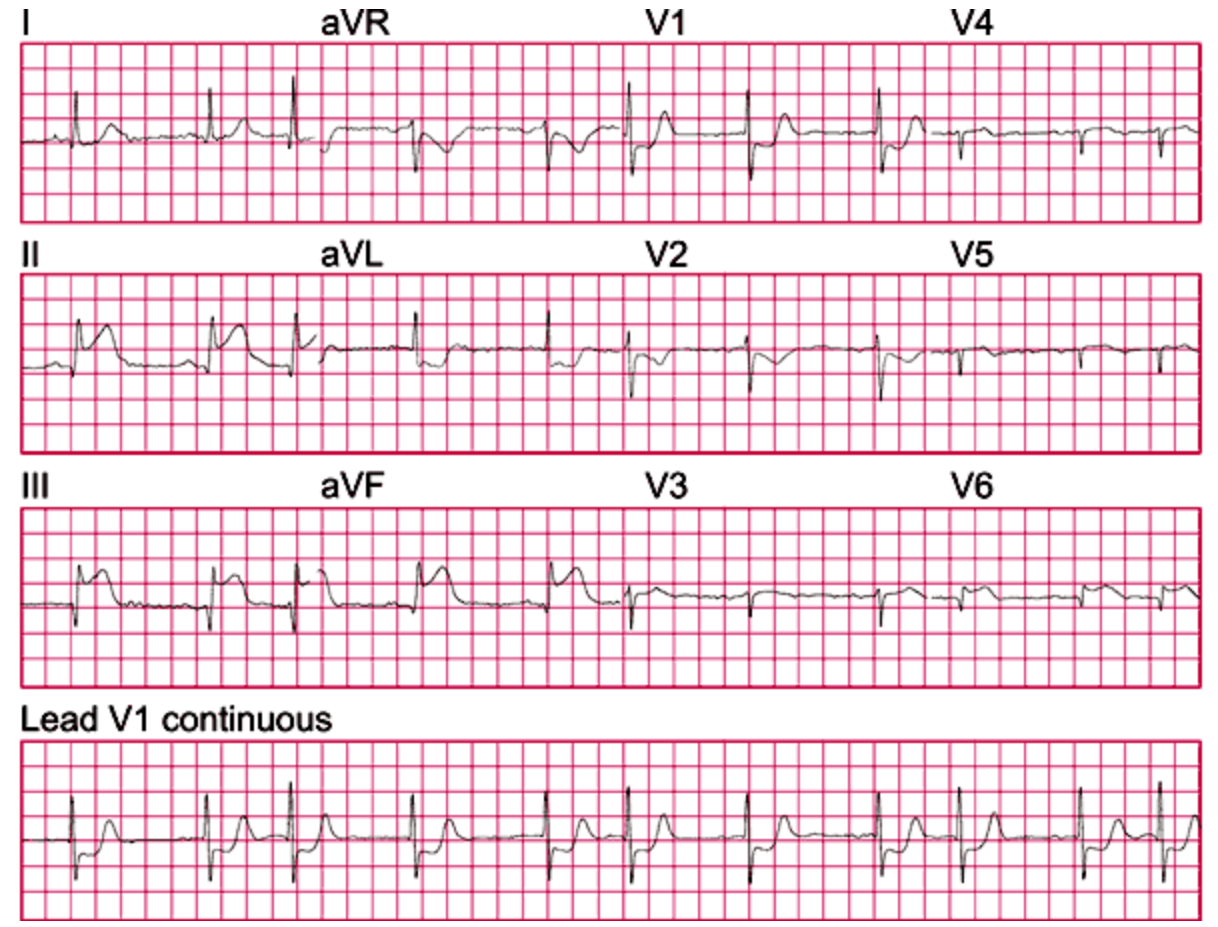
A 64-year-old woman is brought to the emergency department because of a 3-hour history of shortness of breath, nausea, and vomiting. She has not had fever or chest or abdominal pain. She has not had any sick contacts. She has hypertension and type 2 diabetes mellitus. Her medications are lisinopril, insulin, and aspirin. On arrival, she is in acute distress. Her pulse is 64/min with occasional premature beats, respirations are 22/min, and blood pressure is 90/50 mm Hg. The lungs are clear to auscultation. On cardiac examination, S1 and S2 are normal and an S4 is heard; there are no murmurs. The abdomen is soft and nontender. There is no peripheral edema. An ECG is shown. Chest x-ray shows no pulmonary edema. Administration of which of the following is contraindicated in this patient?
CorrectIncorrect -
Question 2 of 20
2. Question
A 57-year-old woman comes to the physician as a new patient. She has type 2 diabetes mellitus that was poorly controlled with glyburide for 10 years; it has been better controlled with the addition of metformin for the past 2 years. She does not smoke cigarettes or drink alcohol. She is 152 cm (5 ft) tall and weighs 63 kg (140 lb); BMI is 27 kg/m2. Her blood pressure is 165/102 mm Hg on three measurements. One year ago, her blood pressure was 144/90 mm Hg. Examination today shows no abnormalities. Serum studies show electrolyte concentrations within the reference ranges and a creatinine concentration of 0.9 mg/dl_. Urinalysis shows 4+ protein. Which of the following is the most likely mechanism of this patient’s increased blood pressure?
CorrectIncorrect -
Question 3 of 20
3. Question
A 25-year-old woman comes to the office for a health maintenance examination. She is on active duty in the US Air Force, and her primary duty is flying drones. She reports no symptoms. Medical history is unremarkable, and she takes no medications. She does not smoke cigarettes or drink alcoholic beverages. Her paternal grandmother had a myocardial infarction at the age of 62 years. Vital signs are within normal limits. Physical examination discloses no abnormalities. Results of fasting serum lipid studies obtained 1 year ago are shown:
Cholesterol:
Total: 205 mg/dL
HDL-cholesterol: 45 mg/dL
LDL-cholesterol: 150 mg/dL
Triglycerides: 50 mg/dL
Which of the following is the most appropriate screening laboratory study at this time?
CorrectIncorrect -
Question 4 of 20
4. Question
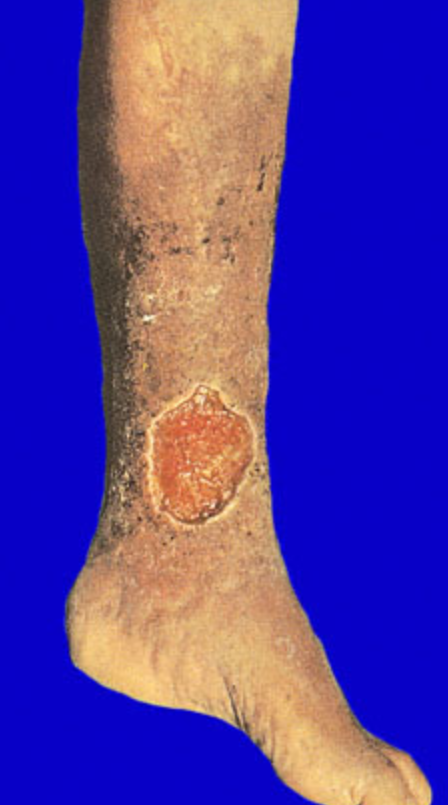
A 57-year-old man comes to the physician because of a 3-month history of an open wound on the left leg; the wound has been increasing in size during this time. He also has had mild pain and the sensation of heaviness in the entire left leg during this time; the pain is worst at the end of the day and improves with leg elevation. His medications are inhaled albuterol as needed for asthma and acetaminophen as needed for the leg pain. He has smoked one pack of cigarettes daily for 40 years. He lives in the southwestern USA and works as a long-distance truck driver. Vital signs are within normal limits. A photograph of the left leg is shown. The left ankle brachial index is 0.75 (N>1). The remainder of the examination shows no abnormalities. Which of the following is the most likely cause of these findings?
 CorrectIncorrect
 -
Question 5 of 20
5. Question
A previously healthy 4-year-old boy is brought to the physician because of a 3-day history of fever, cough, and runny nose. He has not had wheezing, vomiting, or diarrhea. He is at the 75th percentile for height and 10th percentile for weight. His temperature is 37.5°C (99.5°F). The skin is warm and pink. Capillary refill time is 2 seconds. Examination shows clear rhinorrhea. Breath sounds are normal. Cardiac examination is shown. The remainder of the examination shows no abnormalities. Which of the following is the most likely diagnosis?
CorrectIncorrect -
Question 6 of 20
6. Question
An asymptomatic 37-year-old man who has been HIV positive for 1 year comes to the physician for a follow-up examination. His CD4+ T-lymphocyte count is 650/mm3 (Normal>500). A PPD skin test produces 6 mm of induration at 48 hours. An x-ray of the chest shows no abnormalities. Which of the following is the most appropriate next step in management?
CorrectIncorrect -
Question 7 of 20
7. Question
An 18-year-old woman is admitted to the hospital because of a 3-day history of fever, shortness of breath, and cough productive of sputum. She received the diagnosis of asthma at the age of 12 years. She is currently in acute respiratory distress. Her temperature is 37.3°C (99.1°F), pulse is 120/min, respirations are 30/min, and blood pressure is 120/70 mm Hg. Pulse oximetry on 4 L/min of oxygen by nasal cannula shows a decrease in oxygen saturation from 98% on admission to 90%. Examination shows use of accessory muscles of respiration. Breath sounds are decreased bilaterally. Her leukocyte count is 18,000/mm3. A chest x-ray shows hyperinflation, which is consistent with x- ray findings on admission. Which of the following is the most likely cause of this patient’s current condition?
CorrectIncorrect -
Question 8 of 20
8. Question
A 51-year-old man comes to the physician because of a 1-year history of restless sleep and fatigue in the morning. He says that his wife has asked him to sleep in a separate bedroom because of his excessive snoring during this time. The patient has no history of serious illness and takes no medications. He is 191 cm (6 ft 3 in) tall and weighs 124 kg (273 lb); BMI is 34 kg/m2. His pulse is 82/min, respirations are 16/min, and blood pressure is 150/90 mm Hg. Pulmonary examination shows no abnormalities. On cardiac examination, a loud S2 is heard at the second left intercostal space. Which of the following is most likely to be seen on echocardiography?
CorrectIncorrect -
Question 9 of 20
9. Question
A 77-year-old man comes to the office because of a 1-day history of bloody diarrhea and moderate abdominal pain. He has had a decreased appetite and four to five bloody stools daily during this period. He was discharged from the hospital 1 week ago following management of an anterior wall myocardial infarction. He has not had fever, chills, vomiting, or recent exposure to sick contacts since he left the hospital. He has not traveled outside of the USA during the past year. His medications are enalapril, atorvastatin, metoprolol, and daily aspirin. He appears moderately ill. His pulse is 95/min, and blood pressure is 105/72 mm Hg. Cardiac examination shows a grade 2/6 systolic ejection murmur. Abdominal examination shows diffuse tenderness that is most prominent in the left lower quadrant; there is voluntary guarding but no rebound tenderness, and no masses are palpated. Results of laboratory studies are shown:
Hematocrit: 39%
Leukocyte count: 12,000/mm³
Platelet count: 175,000/mm³
Serum:
Na⁺: 139 mEq/L
K⁺: 3.9 mEq/L
Cl⁻: 106 mEq/L
HCO₃⁻: 22 mEq/L
Urea nitrogen: 29 mg/dL
Creatinine: 1.2 mg/dL
Fecal leukocytes: 0/mm³
Which of the following is the most likely diagnosis?
CorrectIncorrect -
Question 10 of 20
10. Question
A 46-year-old woman, gravida 3, para 3, comes to the emergency department because of a 4-day history of “crampy” lower abdominal pain. She voids six times daily and once at night. Her last bowel movement was 3 days ago. She has not had fever, nausea, vomiting, or changes in appetite. She has hypertension, hypothyroidism, chronic back pain, and overactive bladder. Medications are enalapril, levothyroxine, tramadol, mirabegron, and acetaminophen. She is sexually active with her husband. She appears mildly uncomfortable. Temperature is 37.5°C (99.5°F), pulse is 64/min, respirations are 12/min, and blood pressure is 132/86 mm Hg. Pulse oximetry on room air shows an oxygen saturation of 98%. No abdominal tenderness in noted. The remainder of the examination shows no abnormalities. Adverse effect of which of the following is the most likely cause of this patient’s presenting symptom?
CorrectIncorrect -
Question 11 of 20
11. Question
A 69-year-old woman comes to the physician because of a 6-day history of blood in her urine. She has not had pain. She has no history of serious illness and takes no medications. Vital signs are within normal limits. Examination shows no abnormalities. Urinalysis shows many RBCs. Cystoscopy shows a 2-cm mass in the bladder. Which of the following is the most likely diagnosis?
CorrectIncorrect -
Question 12 of 20
12. Question
An 18-year-old man is brought to the emergency department because of severe pelvic and lower abdominal pain 30 minutes after he was involved in a motorcycle collision in which he struck a parked car. He was wearing a helmet and did not have loss of consciousness. He is alert. His pulse is 120/min, respirations are 18/min, and blood pressure is 130/50 mm Hg. The airway is clear and open, and breath sounds are normal. The abdomen is nontender. There are ecchymoses over the pelvis and scrotum. The pelvis is unstable. There is blood at the urethral meatus. Pulses are 2+ in all extremities. An x-ray of the pelvis shows an anteroposterior compression fracture. A pelvic binder is placed. Which of the following is the most appropriate next step in management of this patient’s urinary tract injury?
CorrectIncorrect -
Question 13 of 20
13. Question
A 27-year-old woman, gravida 2, para 1, at 14 weeks’ gestation comes to the physician for her first prenatal visit. She is concerned because 2 years ago, during her first pregnancy, she delivered a stillborn at 38 weeks’ gestation 24 hours after she had noticed decreased fetal movement. She has no history of serious illness. Examination shows no abnormalities. Which of the following is the most appropriate next step in management?
CorrectIncorrect -
Question 14 of 20
14. Question
A 25-year-old woman comes to the physician for a follow-up examination because she continues to have urinary frequency and pain with urination despite a 1-week course of trimethoprim-sulfamethoxazole followed by a 1-week course of nitrofurantoin. A urine culture at the onset of her symptoms 2 weeks ago showed vaginal flora but no specific organism. She is sexually active and uses an oral contraceptive. Examination shows a mildly erythematous, tender urethra. Purulent material can be expressed from the periurethral glands. Vaginal examination shows no abnormalities, and there is no vaginal discharge. Bimanual examination shows a nontender cervix and uterus. The cervix is friable and bleeds easily after a Pap smear. Which of the following is the most likely diagnosis?
CorrectIncorrect -
Question 15 of 20
15. Question
A 37-year-old woman comes to the physician for a routine follow-up examination. She has a 12-year history of type 2 diabetes mellitus treated with glipizide and diet. She has urinary frequency when she does not follow her diet. She is otherwise healthy. There is no family history of diabetes mellitus. Her pulse is 72/min, and blood pressure is 130/80 mm Hg. Funduscopic examination shows scattered microaneurysms. The remainder of the examination shows no abnormalities. Which of the following is most likely to determine this patient’s risk for diabetic nephropathy?
CorrectIncorrect -
Question 16 of 20
16. Question
Two months after successful resection of a benign adrenal pheochromocytoma, a 47-year-old man comes for a follow-up examination. He has had occasional episodes of mild diarrhea over the past 6 weeks but is otherwise well. There is a family history of endocrine tumors. His blood pressure is 100/60 mm Hg. Examination shows a 2-cm, firm nodule in the right lobe of the thyroid gland. Laboratory studies are most likely to show which of the following serum concentrations?
CorrectIncorrect -
Question 17 of 20
17. Question
A 27-year-old man with ulcerative colitis is admitted to the hospital because of a 5-day history of increasingly severe bloody diarrhea and abdominal cramps, fatigue, and generalized weakness. He receives infliximab infusions every 2 weeks. His only other medication is a daily multivitamin. His temperature is 37.2°C (99°F), pulse is 100/min, and blood pressure is 100/70 mm Hg. Examination shows a soft abdomen; there is moderate tenderness to deep palpation of the left lower quadrant. Laboratory studies show a hematocrit of 36% and leukocyte count of 4000/mm3. Colonoscopy shows diffusely erythematous mucosa and superficial ulcers extending contiguously from the rectum to the proximal descending colon. Biopsies of the colonic mucosa show intracellular inclusion bodies. Which of the following is the most appropriate next step in management?
CorrectIncorrect -
Question 18 of 20
18. Question
A 54-year-old woman with hypertension is admitted to the hospital because of a 1 -week history of nausea, vomiting, and diarrhea. She says she has been vomiting four to five times daily and has not been able to keep any food or liquids down. She has had up to 10 nonbloody loose stools daily. She reports no fever or chills. She says she previously had been well, but she noticed that her blood pressure had been higher than usual during the past 2 weeks, and she was planning to see her primary care physician. She is a pediatric nurse and had been caring for several patients with unspecified viral gastroenteritis 1 week before she became ill. She has hyperlipidemia. Medications are hydrochlorothiazide and atorvastatin. The patient is 168 cm (5 ft 6 in) tall and weighs 73 kg (162 lb); BMI is 26 kg/m2. Temperature is 37.3°C (99.2°F), pulse is 110/min, and blood pressure is 126/68 mm Hg. Abdominal examination discloses mild, diffuse tenderness to palpation without rebound or guarding. Results of complete blood count and urinalysis are within the reference ranges. Results of serum chemistry profile and urine electrolyte concentrations are shown:
Serum:
Urea nitrogen: 22 mg/dL
Creatinine: 1.0 mg/dL
Na⁺: 136 mEq/L
K⁺: 3.1 mEq/L
Cl⁻: 95 mEq/L
HCO₃⁻: 34 mEq/L
Urine:
Na⁺: <10 mmol/L
K⁺: 30 mmol/L
Cl⁻: 12 mmol/L
Arterial blood gas analysis on room air:
PO₂: 98 mm Hg
PCO₂: 49 mm Hg
pH: 7.51
Which of the following is the most likely cause of this patient’s laboratory results?
CorrectIncorrect -
Question 19 of 20
19. Question
A case-control study is conducted to assess the relationship between childhood infection with varicella zoster virus and lymphoma. It is most appropriate to use which of the following methods to minimize recall bias in this study?
CorrectIncorrect -
Question 20 of 20
20. Question
A cohort study is conducted to evaluate the impact of fish consumption on the risk for developing cardiovascular disease. Participants complete a questionnaire about dietary habits, including fish consumption; responses are obtained from 2000 participants (80% response rate). The study participants are observed for 20 years, and cases of cardiovascular disease are identified through a data registry. Study results show:
Eating Fish (Frequency)
Cases with Cardiovascular Disease
Cases without Cardiovascular Disease
Total
Never
160
1440
1600
Almost daily
20
380
400
Total
180
1820
2000
Based on these data, which of the following best represents the attributable risk for development of cardiovascular disease caused by lack of fish consumption in this population?
CorrectIncorrect