A 46-year-old woman receives the diagnosis of breast cancer metastatic to the axillary lymph nodes. Which of the following enzymes played the most significant role during the initial stages of metastasis in this patient?
Correct
Incorrect
Question 2 of 50
2. Question
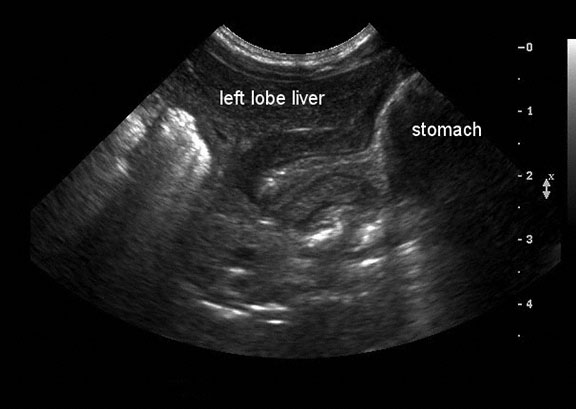
A 5-week-old male infant is brought to the office by his mother because of vomiting after feeding. The mother states that sometimes the vomiting is severe, but the vomitus is not green tinged. The episodes have become increasingly frequent during the past 2 days. The infant otherwise feeds normally. He is 52 cm (20 in; 50th percentile) long and weighs 5 kg (11 lb; 25th percentile); head circumference is 33 cm (13 in; 50th percentile). Vital signs are within normal limits. Palpation of the abdomen discloses a mass in the epigastric region. Ultrasonography of the abdomen is shown. Which of the following is the most likely underlying cause of this patient’s condition?
Correct
Incorrect
Question 3 of 50
3. Question
A 58-year-old man comes to the physician for a follow-up examination 2 days after the diagnosis of metastatic colon cancer was made. Treatment with a humanized monoclonal antibody directed against vascular endothelial growth factor is started. Three months later, the patient develops hypertension. Endothelial dysfunction in which of the following organs is most likely to stimulate the development of hypertension in this patient?
Correct
Incorrect
Question 4 of 50
4. Question
A 25-year-old woman with preeclampsia has just delivered a male newborn at 28 weeks’ gestation. Her blood pressure was difficult to control during delivery. During the next 24 hours, she has oliguria, a decreased platelet count, and markedly increased serum hepatic enzyme activities. Which of the following additional findings indicates intrinsic renal disease rather than dehydration in this patient?
Correct
Incorrect
Question 5 of 50
5. Question
A 53-year-old woman with small cell carcinoma of the lung undergoes plasmapheresis for proximal weakness of the lower extremities. Eight days following the treatment, her muscle strength is increased. The most likely cause of this patient’s improvement is the removal of antibodies against which of the following?
Correct
Incorrect
Question 6 of 50
6. Question
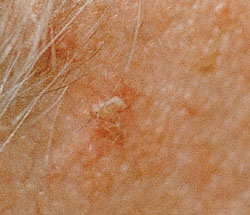
A 75-year-old man comes to the physician because of a 7-month history of several painless lesions on his face. He is a farmer and spends most of his time working outside. Physical examination shows multiple 0.5-cm erythematous, scaly lesions over the forehead; one of the lesions is shown in the photograph. Which of the following changes in this patient’s epidermis is the most likely cause of these findings?
Correct
Incorrect
Question 7 of 50
7. Question
A 35-year-old woman comes to the physician because she is interested in starting a weight-loss program. She has a sedentary lifestyle. She is 168 cm (5 ft 6 in) tall and weighs 82 kg (180 lb); BMI is 29 kg/m2. Physical examination shows no other abnormalities. The physician refers her to a dietician for nutrition assessment and counseling. The dietician determines that the patient is consuming 200 g of carbohydrates, 65 g of protein, 50 g of fat, and 15 g of alcohol daily. This patient’s average daily caloric intake meal is most likely equivalent to which of the following kilocalories?
Correct
Incorrect
Question 8 of 50
8. Question
An 18-year-old man comes to the physician for a physical examination before entering college. He played on his high school football team and received a collegiate athletic scholarship. He says, “I hope to play professionally and must improve my performance any way I can.” Physical examination shows no abnormalities. Laboratory studies show an increased erythrocyte count. Which of the following is the most likely cause of this laboratory finding?
Correct
Incorrect
Question 9 of 50
9. Question
An 85-year-old woman comes to the physician because of a 2-month history of worsening right hip pain. She has a 10-year history of osteitis deformans (Paget disease) that has been symptomatically well controlled with medication. Physical examination shows bowed tibias and a pronounced, painful limp. An x-ray of the proximal femur shows a mixture of “moth-eaten” and sclerotic regions, periosteal elevation, and disruption of the cortical surface. Which of the following is the most likely diagnosis?
Correct
Incorrect
Question 10 of 50
10. Question
One day after lifting heavy boxes, an 82-year-old man has pain when he moves his shoulders. He is being treated with digoxin for congestive heart failure and takes multivitamins. After 3 days of ibuprofen therapy, the patient has fatigue and says he does not feel well. His serum creatinine concentration is 4 mg/dL. Which of the following is the most likely cause of these clinical findings?
Correct
Incorrect
Question 11 of 50
11. Question
A 60-year-old man is brought to the emergency department because of a 2-month history of progressive shortness of breath on exertion, fatigue, and swelling of both legs. He says that he has to lie on two pillows at night to breathe easily, and he sometimes is awakened because of the shortness of breath. His pulse is 90/min, respirations are 16/min, and blood pressure is 118/70 mm Hg. Physical examination shows jugular venous distention and an estimated central venous pressure of 12 cm H2O. Crackles are heard in the lower lung fields. Cardiac examination shows an S3 gallop. There is bilateral pedal edema to the mid calf. Serum brain natriuretic peptide concentration is 2000 ng/mL. An ECG shows normal sinus rhythm with left ventricular hypertrophy with no ischemic changes. Echocardiography shows an enlarged left ventricle and an ejection fraction of 30%. The activity of which of the following enzymes is most likely increased in this patient’s kidneys?
Correct
Incorrect
Question 12 of 50
12. Question
A 35-year-old woman is brought to the physician because of a 6-month history of loss of vision in both eyes. She has a long-standing history of poorly controlled type 1 diabetes mellitus. Ophthalmologic examination is most likely to show an abnormality in which of the following?
Correct
Incorrect
Question 13 of 50
13. Question
A 24-year-old woman is brought to the emergency department 1 hour after she fell and injured her left arm while in-line skating. Examination of the left upper extremity shows ecchymoses, soft-tissue swelling, and tenderness between the biceps and triceps muscles. A displaced fracture of the left humerus in the area of the radial groove is suspected. Which of the following additional neurologic findings in this patient is most likely to confirm the diagnosis?
Correct
Incorrect
Question 14 of 50
14. Question
A female newborn has disproportionate short stature and polydactyly. Her parents were raised in the Old Order Amish community in Lancaster, PA. Mutation analysis identifies two identical mutations in this newborn. Which of the following mechanisms best explains this finding?
Correct
Incorrect
Question 15 of 50
15. Question
A 66-year-old man undergoes operative repair of an infrarenal abdominal aortic aneurysm. On awakening from the procedure, the patient is unable to move his legs. Examination of the lower extremities shows flaccid paralysis. Rectal tone is markedly decreased. Sensation to light touch and vibration and proprioception are intact. Which of the following structures was most likely injured in this patient during the surgical procedure?
Correct
Incorrect
Question 16 of 50
16. Question
A 16-year-old boy is brought to the physician because of a 5-day history of fever, rash on his stomach, and pain of his wrists and knees. Two weeks ago, he was diagnosed with streptococcal pharyngitis, and he was treated with a 10-day course of penicillin. His temperature is 38.8°C (101.8°F), pulse is 92/min, and respirations are 23/min. Physical examination shows a nonpruritic, mildly raised pink abdominal rash with distinct borders. A mitral regurgitation murmur is heard. Palpation of the wrists and knees produces pain. Which of the following pathologic changes is most likely in this patient’s mitral valve at this time?
Correct
Incorrect
Question 17 of 50
17. Question
A 30-year-old woman at 20 weeks’ gestation comes to the physician for a routine prenatal visit. Physical examination shows a uterus consistent in size with a 25-week gestation. Ultrasound examination shows cysts in the uterine cavity and enlargement and cystic changes of the ovaries; no fetus is identified. Which of the following hormones is the most likely cause of these cystic changes of the ovaries?
Correct
Incorrect
Question 18 of 50
18. Question
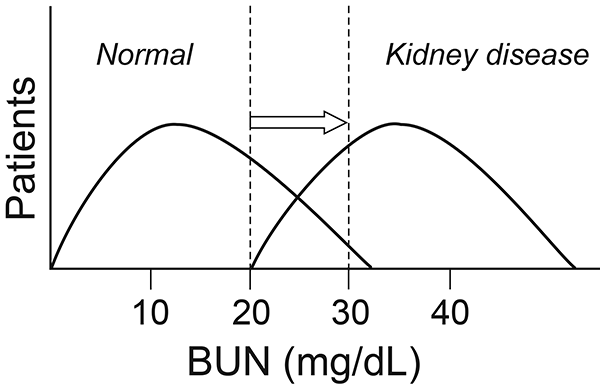
The serum urea nitrogen (BUN) concentrations in a population of randomly chosen healthy volunteers and a group of patients with known kidney disease are depicted in the graph. The cutoff point is chosen to best identify those without disease from patients with disease. Which of the following is the most likely effect of increasing the normal cutoff point from 20 mg/dL to 30 mg/dL on the specificity and sensitivity of BUN testing?
Option
Sensitivity
Specificity
A
↑
↑
B
↑
↓
C
↓
↑
D
↓
↓
Correct
Incorrect
Question 19 of 50
19. Question
A 30-year-old man receives a skeletal muscle relaxant and a general anesthetic prior to an abdominal operation. Fifteen minutes later, his temperature is 40.6°C (105°F), and tachycardia and cyanosis develop. Which of the following is most likely responsible for these adverse effects?
Correct
Incorrect
Question 20 of 50
20. Question
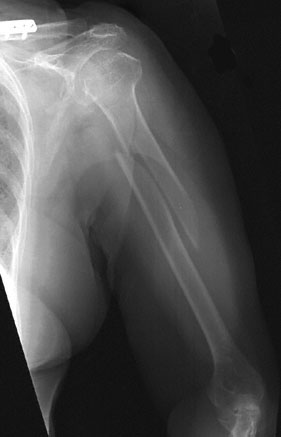
A 57-year-old woman is brought to the emergency department 30 minutes after she fell down the stairs and landed on her left arm. Examination of the left upper extremity shows multiple contusions, edema, and exquisite tenderness. An x-ray of the left upper extremity is shown. Which of the following additional findings is most likely in this patient as a result of this injury?
Correct
Incorrect
Question 21 of 50
21. Question
A 65-year-old man comes to the physician because of a 1-month history of difficulty urinating. He says that he has difficulty initiating urination, and once initiated, the urine tends to “dribble.” Rectal examination shows a diffusely enlarged, firm, nontender prostate. Which of the following findings is most likely to be found on histologic examination of the prostate?
Correct
Incorrect
Question 22 of 50
22. Question
A 7-year-old boy with an 8-month history of splenomegaly is brought to the physician 1 day after the sudden onset of bruising on his arms and legs. There has been no trauma. Physical examination shows numerous ecchymoses over the upper and lower extremities, mild lymphadenopathy, and splenomegaly. Laboratory studies show:
Leukocyte count
15,000/mm3 (N=4500–13,500)
Segmented neutrophils
35%
Bands
6%
Eosinophils
1%
Lymphocytes
55%
Monocytes
3%
Platelet count
20,000/mm3 (N=50,000–400,000)
Serum IgG
1700 mg/dL (N=608–1572)
Flow cytometry shows an increased concentration of T lymphocytes expressing α- and β-antigen receptors but lacking either CD4 or CD8. Genetic testing shows a defect in the FAS gene. Which of the following cellular processes is most likely impaired in this patient’s lymphocytes?
Correct
Incorrect
Question 23 of 50
23. Question
A 55-year-old woman comes to the physician because of a 1-month history of fever, fatigue, shortness of breath, decreased appetite, and easy bruisability. Her temperature is 37°C (98.6°F), pulse is 105/min, respirations are 28/min, and blood pressure is 115/70 mm Hg. Physical examination shows pallor. A complete blood count shows a hemoglobin concentration of 10 g/dL, hematocrit of 30%, and platelet count of 75,000/mm3. A photomicrograph of a peripheral blood smear is shown. A bone marrow biopsy is planned. Which of the following is the most likely diagnosis?
Correct
Incorrect
Question 24 of 50
24. Question
A 28-year-old man is admitted to the hospital because of a 6-month history of progressive fatigue and lethargy. He also has had episodes of diplopia, hallucinations, changes in personality with apathy, speech loss, myoclonus, tremor, gait ataxia, and a 20-kg (44-lb) weight loss during this period. There is a family history of six similar cases dating back four generations. Serum studies and analysis of cerebrospinal fluid obtained via lumbar puncture show no abnormalities. An MRI of the brain shows hyperintense signals in the cortical ribbon, basal ganglia, and thalamus. An EEG shows signs of diffuse, nonspecific parenchymal dysfunction. Which of the following mechanisms is the most likely cause of this patient’s symptoms?
Correct
Incorrect
Question 25 of 50
25. Question
A 67-year-old woman comes to the physician because of a 2-week history of bright red bleeding with defecation. Anoscopy shows a 2-cm rectal polyp 2 cm above the pectinate line. Blood flow to this polyp is most likely supplied by which of the following arteries?
Correct
Incorrect
Question 26 of 50
26. Question
A 52-year-old man recently diagnosed with type 2 diabetes mellitus comes to the physician for a follow-up examination. Physical examination shows no abnormalities. Laboratory studies show an increased hemoglobin A1c despite patient compliance with diet and exercise recommendations. Treatment with a thiazolidinedione is initiated. The beneficial effect of this medicine is most likely due to which of the following?
Correct
Incorrect
Question 27 of 50
27. Question
A 46-year-old man comes to the emergency department because of a 2-hour history of chest pain. He says that the pain began when he was shoveling snow. He appears anxious and is leaning forward in the hospital bed. He is 185 cm (6 ft 1 in) tall and weighs 84 kg (185 lb); BMI is 24 kg/m2. His pulse is 85/min, respirations are 20/min, and blood pressure is 170/85 mm Hg. Which of the following statements or questions by the physician would be most helpful in eliciting a history from this patient?
Correct
Incorrect
Question 28 of 50
28. Question
A 30-year-old woman is brought to the physician because of progressive vision loss in her left eye during the past 2 days. She has hyperextensible joints, and her skin is very stretchable and extremely fragile. Ophthalmologic examination shows retinal detachment, and she undergoes an operation. The most likely cause of this patient’s disease is a defect in the structure of which of the following proteins?
Correct
Incorrect
Question 29 of 50
29. Question
A 75-year-old man comes to the emergency department 30 minutes after the sudden onset of profuse rectal bleeding. His last examination by a physician occurred 10 years ago. Rapid determination of this patient’s blood loss is most likely to be obtained via which of the following measurements?
Correct
Incorrect
Question 30 of 50
30. Question
An investigator is studying an outbreak of severe diarrhea caused by norovirus in a skilled nursing care facility. During the past year, the facility participated in an experimental trial of an oral vaccine containing live, attenuated norovirus. The vaccine was administered to all patients and staff members. Four months after receiving the vaccine, 25% of the immunized patients developed norovirus-related diarrhea. All of the patients who became ill were 75 years of age or older; the illness affected both men and women. The staff members and the younger patients (50 to 55 years of age) of the facility have developed no symptoms. Further study of the affected residents will most likely show which of the following findings?
Correct
Incorrect
Question 31 of 50
31. Question
A 20-year-old man is brought to the emergency department by his girlfriend 30 minutes after he took crystal methamphetamine and became aggressive at a music concert. On arrival, the patient has agitation and euphoria. His pulse is 115/min, and blood pressure is 155/95 mm Hg. Physical examination shows tremulousness. The behavioral effects of the drug used by this patient are achieved through which of the following mechanisms?
Correct
Incorrect
Question 32 of 50
32. Question
A 58-year-old woman comes to the physician because of a 3-month history of numbness and tingling over the bottom of her right foot. Sensation to pinprick is decreased over the shaded area in the diagram of the right foot shown. A branch of which of the following nerves is most likely injured in this patient?
Correct
Incorrect
Question 33 of 50
33. Question
A 13-year-old girl is brought to the physician by her mother because of a 3-month history of heavy menses and nosebleeds. Menarche occurred at the age of 11 years, and menses now occur at regular 26- to 28-day intervals with heavy flow. Physical examination shows a petechial rash over the upper and lower extremities and trunk. Laboratory studies show a decreased platelet count. Immunologic studies show antibodies to platelets but no other abnormalities. Which of the following is the most likely underlying cause of the immunologic study results in this patient?
Correct
Incorrect
Question 34 of 50
34. Question
A 40-year-old woman comes to the physician because of progressive hearing loss of the left ear during the past 4 years. Examination of the external ears and auditory canals shows no abnormalities. Neurologic examination shows moderate loss of hearing on the left. When a vibrating tuning fork is held to the patient’s forehead, she says that it sounds louder in the left ear. Which of the following is the most likely cause of this patient’s hearing loss?
Correct
Incorrect
Question 35 of 50
35. Question
A 42-year-old woman comes to the emergency department because of a 2-day history of intermittent lower abdominal pain and nausea and vomiting. She has not passed flatus or stool during this time. She describes the pain as waxing and waning. Initially, the vomitus was food that she had recently eaten, but it is now bilious; there has been no blood in the vomit. She underwent a hysterectomy 2 years ago for leiomyomata uteri. Vital signs are within normal limits. Examination shows a distended tympanitic abdomen with diffuse tenderness and no rebound. Bowel sounds are high-pitched. Abdominal x-rays show distended loops of bowel with air-fluid levels. Which of the following is the most likely cause of this patient’s symptoms?
Correct
Incorrect
Question 36 of 50
36. Question
A 54-year-old man comes to the physician for a follow-up examination. He has a long-standing history of coronary artery disease, atrial fibrillation, and hypertension. Current medications are lisinopril, metoprolol, and apixaban. He says that about 1 year ago, he began to take an over-the-counter medication to treat what he calls “ulcer pains.” His pulse is 80/min, and blood pressure is 136/82 mm Hg. Physical examination shows gynecomastia. This patient is most likely taking a drug with which of the following mechanisms of action?
Correct
Incorrect
Question 37 of 50
37. Question
A 14-year-old boy is brought to the physician by his mother because of breast development during the past year. He is at the 50th percentile for height and 60th percentile for weight. Physical examination shows bilateral enlarged breast tissue. The patient is concerned that his classmates will tease him, and his mother asks what can be done to resolve his breast enlargement. Which of the following responses by the physician is most appropriate?
Correct
Incorrect
Question 38 of 50
38. Question
A 27-year-old man comes to the physician because of a 2-day history of persistent bleeding after a tooth extraction. He has a history of recurrent severe nosebleeds; his mother has a history of similar bleeding problems. Laboratory studies show:
Platelet count
250,000/mm3
Factor VIII (antihemophilic factor)
25% (N=55%–145%)
Platelet aggregation studies
normal
Prothrombin time
13 sec (INR=1)
Partial thromboplastin time (activated)
40 sec
Which of the following is the most likely diagnosis?
Correct
Incorrect
Question 39 of 50
39. Question
A 52-year-old woman comes to the physician for a health maintenance examination. Physical examination shows no abnormalities. Serum studies show a total cholesterol concentration of 261 mg/dL, HDL-cholesterol concentration of 22 mg/dL, and triglyceride concentration of 189 mg/dL. Treatment with atorvastatin is begun. One month later, her serum total cholesterol concentration is 219 mg/dL, and serum triglyceride concentration is 161 mg/dL. A drug to inhibit cholesterol absorption via enterocytes is added to her medication regimen. One month later, her serum total cholesterol concentration is 199 mg/dL. Which of the following drugs was most likely added to this patient’s medication regimen?
Correct
Incorrect
Question 40 of 50
40. Question
In a study to determine whether preterm delivery (<32 weeks) is associated with attention-deficit/hyperactivity disorder (ADHD), a group of 1000 children delivered prior to 32 weeks’ gestation is compared to a group of 2000 children delivered at term (>36 weeks). The children are followed for 5 years with an assessment made by the child’s physician. Which of the following best describes this study design?
Correct
Incorrect
Question 41 of 50
41. Question
A 64-year-old man is brought to the emergency department 30 minutes after he had a convulsion at home. His wife says he stopped talking, his eyes rolled back, and he had jerking of his arms and legs for 5 seconds. He has no history of seizures. He has hypertension and hepatitis C. His only current medication is lisinopril. He has smoked one-half pack of cigarettes daily for 40 years and drinks six 12-oz beers daily. On arrival, he is alert and fully oriented. His vital signs are within normal limits. Physical and neurologic examinations show no abnormalities. An MRI of the brain is shown. Which of the following is the most likely cause of this patient’s convulsion?
Correct
Incorrect
Question 42 of 50
42. Question
A 20-year-old woman comes to the office because of a 2-month history of persistent fatigue. Her temperature is 37.2°C (99°F), pulse is 80/min, respirations are 25/min, and blood pressure is 140/86 mm Hg. Physical examination shows jaundice and splenomegaly. Results of laboratory studies are shown:
Hemoglobin
7.2 g/dL
Hematocrit
21%
Mean corpuscular volume
74 μm3
Red cell distribution width
13% (N=13–15)
If performed, DNA analysis would show that the sequence located between 32 and 26 base pairs 5′ to the mRNA cap site of the β-globin gene is CGTAAAA. This sequence in a healthy individual is CATAAAA. Which of the following properties of β-globin gene expression is most likely abnormal in this patient?
Correct
Incorrect
Question 43 of 50
43. Question
A 54-year-old woman is brought to the emergency department 30 minutes after injuring her left arm in a fall in her kitchen. She is in severe pain. She has a 4-year history of celiac disease. She is noncompliant with her dietary restrictions, and as a result she has had frequent diarrhea. Menopause occurred 2 years ago. Physical examination shows marked swelling, redness, and tenderness of the left forearm. Serum studies show a calcium concentration of 8 mg/dL, phosphorus concentration of 2.5 mg/dL, and 25-hydroxycholecalciferol concentration of 10 ng/mL (N=14–60). An x-ray of the left upper extremity shows a fracture of the radius accompanied by diffuse osteopenia. An open reduction of the fracture is scheduled. During the procedure, a biopsy specimen of the fracture site is obtained; a photomicrograph of the specimen is shown. This patient most likely has which of the following conditions?
Correct
Incorrect
Question 44 of 50
44. Question
A 59-year-old woman comes to the physician because of a 3-week history of intermittent facial pain, double vision, and transient vision loss. She also has a 6-month history of joint pain and stiffness and pain in her neck, shoulders, and back. She has had a 6.8-kg (15-lb) weight loss during the past 4 months due to decreased appetite. She is 152 cm (5 ft) tall and now weighs 51 kg (112 lb); BMI is 22 kg/m2. Her temperature is 37.9°C (100.3°F), and blood pressure is 142/84 mm Hg. Laboratory studies show:
Hemoglobin
11 g/dL
Hematocrit
33%
Mean corpuscular volume
93 μm3
Erythrocyte sedimentation rate
62 mm/h
Serum
Antinuclear antibodies
weakly positive
Rheumatoid factor
weakly positive
Histologic examination of a biopsy specimen of the temporal artery in this patient will most likely show which of the following types of vasculitis?
Correct
Incorrect
Question 45 of 50
45. Question
An investigator conducts a clinical trial of gene transfer therapy. Twenty boys between the ages of 2 and 5 years with X-linked severe combined immunodeficiency are treated. Autologous hematopoietic stem cells taken from each patient are transduced with a gamma retroviral vector containing a functional copy of the interleukin-2 receptor gamma (IL2RG) gene. Three months later, it is found that the immune systems in the majority of the patients were successfully reconstituted. Three years later, one of the patients develops clonal T-lymphocyte proliferation and four others develop overt T-lymphocytic leukemia. Which of the following characteristics of the vector used in this trial most likely contributed to the development of the T-lymphocyte proliferation in these patients?
Correct
Incorrect
Question 46 of 50
46. Question
A 15-year-old boy is brought to the physician by his mother because of a 6-week history of disinterest in activities that he had previously enjoyed, including sports, music, and the math team at school. He no longer spends time with his friends, choosing to stay in his bedroom with the door shut. His grades at school have dropped, and he is easily frustrated. During the interview, he denies that anything is wrong, answers questions in monosyllables, and does not make eye contact. Which of the following is the most likely diagnosis?
Correct
Incorrect
Question 47 of 50
47. Question
A 4-day-old male newborn is brought to the office by his parents for a follow-up examination because of yellow-tinged skin since birth. He was delivered via spontaneous vaginal delivery at 36 weeks’ gestation after an uncomplicated pregnancy. He was discharged from the hospital after successfully breast-feeding for 24 hours. At the time of discharge, physical examination showed mild jaundice and ecchymoses on the head. Since then, his urine output has been normal in color and volume. Stools appear yellow. He has lost 7% of his birth weight and now weighs 3288 g (7 lb 4 oz). Physical examination shows conjunctival icterus. Neurologic examination shows no abnormalities. A complete blood count is within the reference ranges. Serum studies show a total bilirubin concentration of 13.2 mg/dL (N=0.1–1.0) and direct bilirubin concentration of 0.1 mg/dL (N=0.0–0.3). Which of the following is the most likely underlying cause of the findings in this patient?
Correct
Incorrect
Question 48 of 50
48. Question
A 73-year-old man has had intermittent painless hematuria and a 13.6-kg (30-lb) weight loss during the past 6 months. Physical examination shows a palpable right flank mass. A CT scan shows a solid mass 10 cm in diameter that replaces the upper pole of the right kidney. Which of the following is the most likely cell of origin for this neoplasm?
Correct
Incorrect
Question 49 of 50
49. Question
A 50-year-old woman comes to the office because she would like to quit smoking. She has chronic obstructive pulmonary disease and a long history of bipolar disorder. She has read that quitting smoking is associated with depression relapse in patients with mood disorders. She is concerned about getting depressed again. Which of the following is the most appropriate initial response by the physician?
Correct
Incorrect
Question 50 of 50
50. Question
A 15-year-old boy with Crohn disease that is extensive in the distal small bowel is brought to the office because of a 10-day history of intermittent diarrhea. He appears to be in no distress. Vital signs are within normal limits. Physical examination shows a scaphoid, nondistended abdomen with diffuse, mild tenderness, and hyperactive bowel sounds. The most likely cause of this patient’s current symptom is a decrease in which of the following substances?
Correct
Incorrect
لا تفوّت فرصتك!
احصل على تجربة مجانية لدورة USMLE
محتوى مختار من المحاضرات، الكتب، بنك الأسئلة مع فيديوهات قصيرة لحل الأسئلة، والفلاش كاردز.