
A 2½-year-old girl is brought to the physician for a well-child examination. She was born at term following an uncomplicated pregnancy and has no history of serious illness. She can climb steps, throw a ball overhand, and build a tower of six blocks. She is beginning to dress herself. She uses two-word sentences. She is shy around strangers. She participates in interactive play in day care. Examination shows no abnormalities. Which of the following is the most accurate assessment of this child’s development?
Option
Fine Motor Development
Gross Motor Development
Language Development
Social Development
A
Delayed
Delayed
Delayed
Delayed
B
Delayed
Delayed
Normal
Normal
C
Delayed
Normal
Delayed
Delayed
D
Delayed
Normal
Normal
Normal
E
Normal
Delayed
Normal
Normal
F
Normal
Normal
Delayed
Normal
G
Normal
Normal
Normal
Delayed
H
Normal
Normal
Normal
Normal
Correct
Incorrect
Question 2 of 50
2. Question
A 57-year-old woman comes to the physician because of a 3-month history of intermittent nonproductive cough and shortness of breath with exertion and at night. She has not had fever or weight loss. She immigrated to the USA from Kenya 10 years ago. She has a 5-year history of hypertension controlled with losartan and hydrochlorothiazide. The patient is 168 cm (5 ft 6 in) tall and weighs 82 kg (180 lb); BMI is 29 kg/m2. Her temperature is 37.2°C (99°F), pulse is 72/min and regular, respirations are 12/min, and blood pressure is 138/88 mm Hg. Jugular venous pulsations are present 3 cm above the sternal angle. Low-pitched expiratory wheezes are heard over the lungs posteriorly. A grade 2/6 systolic murmur is heard at the left sternal border and second intercostal space. A chest x-ray shows no abnormalities. Which of the following is the most likely diagnosis?
Correct
Incorrect
Question 3 of 50
3. Question
An asymptomatic 57-year-old man who is HIV positive comes to the physician as a new patient with his medical records. He currently takes no medications. He has a history of sexual activity with male and female partners but has been in a monogamous relationship with a woman for the past 2 years. His partner uses an oral contraceptive, and they do not use condoms. On questioning, he says his partner does not know about his HIV status, but that his previous physician “knew all about this and said it was not a big deal.” Examination today shows no abnormalities. Which of the following is the most appropriate next step?
Correct
Incorrect
Question 4 of 50
4. Question
A 37-year-old woman, gravida 3, para 2, at 24 weeks’ gestation comes to the physician 4 weeks after noticing a lump in her left breast during self-examination. There is no family history of cancer. She currently takes no medications. Examination shows a 1 × 2-cm, unilateral, dominant mass in the left breast. Examination of the right breast shows tissue changes of pregnancy and no evidence of a mass. Which of the following is the most appropriate next step in management?
Correct
Incorrect
Question 5 of 50
5. Question
A previously healthy 47-year-old man is brought to the emergency department by his wife because of a 2-day history of increasing confusion. He thinks it is 1992 and often makes statements that do not make sense. He has not had recent weight loss or other symptoms. He has smoked two packs of cigarettes daily for 30 years. He is oriented to person and place but not to time. His temperature is 37°C (98.6°F), pulse is 80/min, respirations are 20/min, and blood pressure is 110/70 mm Hg. The remainder of the examination shows no abnormalities. Laboratory studies show a serum sodium concentration of 115 mEq/L, urine sodium concentration of 80 mEq/L, and urine osmolality of 600 mOsmol/kg H2O. Which of the following is the most likely underlying cause of this patient’s confusion?
Correct
Incorrect
Question 6 of 50
6. Question
A 32-year-old nulligravid woman comes to the physician with her husband because she has been unable to conceive for 2 years. The couple has sexual intercourse without contraception approximately three times weekly. Menses occur at irregular 25- to 35-day intervals. Her last menstrual period was 3 weeks ago. She is otherwise healthy and takes no medications. Physical examination, including pelvic examination, shows no abnormalities. Serum studies show:
Thyroid-stimulating hormone
1.2 μU/mL
Prolactin
14 ng/mL
Progesterone
0.5 ng/mL (menstrual cycle day 21: follicular N<3; luteal N>3–5)
Semen analysis shows:
Count
36 million/mL (N>20)
Motility
65% (N>60%)
Hysterosalpingography shows bilateral tubal patency. Which of the following is the most likely cause of this patient’s infertility?
Correct
Incorrect
Question 7 of 50
7. Question
A previously healthy 4-month-old boy is brought to the physician because of a 2-day history of fever and episodes of vomiting and crying. He is fussy but consolable. His temperature is 39.1°C (102.4°F), pulse is 142/min, respirations are 28/min, and blood pressure is 88/54 mm Hg. On examination, the left testicle is not palpable in the scrotal sac. Laboratory studies show:
Hematocrit
35%
Leukocyte count
19,500/mm3
Platelet count
250,000/mm3
Urine
RBC
10/hpf
WBC
30/hpf
A Gram stain of a catheterized urine sample shows gram-negative rods. Urine and blood cultures are pending. Which of the following is the most likely underlying cause of these abnormal laboratory findings?
Correct
Incorrect
Question 8 of 50
8. Question
A previously healthy 57-year-old man comes to the physician because of a 2-month history of increasing left foot pain at rest. He has smoked two packs of cigarettes daily for 30 years. Left popliteal and pedal pulses cannot be palpated. The foot is cool, and dependent rubor is noted. Arteriography shows occlusion of the left superficial femoral artery and stenosis of the left profunda femoris artery. Arterial bypass graft is scheduled. The patient is at greatest risk for development of which of the following postoperative complications?
Correct
Incorrect
Question 9 of 50
9. Question
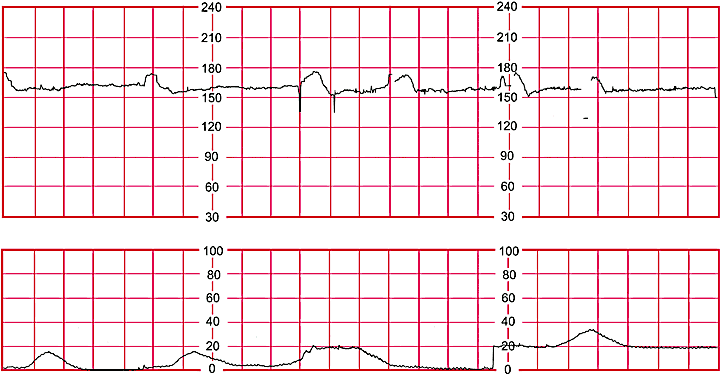
A 17-year-old primigravid patient at 38 weeks’ gestation is admitted to the hospital in labor. Contractions have occurred for 2 hours every 2 to 3 minutes. Her pregnancy has been uncomplicated. A fetal heart tracing is shown. The cervix is 4 cm dilated and 90% effaced; the vertex is at 0 station. In addition to continued fetal monitoring, which of the following is the most appropriate next step in management?
Correct
Incorrect
Question 10 of 50
10. Question
A 77-year-old man comes to the physician 24 hours after the gradual onset of mild shortness of breath. He has alcohol-induced cirrhosis treated with furosemide, spironolactone, and a potassium supplement, but he says that he ran out of his medications last week. Since then, he has noticed progressive swelling of his feet and increased abdominal girth. There is no other history of serious illness. He is uncomfortable and in mild respiratory distress. He appears cachectic. His pulse is 82/min, respirations are 14/min, and blood pressure is 102/74 mm Hg. Cardiopulmonary examination shows no abnormalities. Abdominal examination shows severe distention. The liver is not palpated. There is 2+ pedal edema bilaterally. Serum studies show:
Na+
126 mEq/L
K+
3.9 mEq/L
Cl−
96 mEq/L
HCO3−
26 mEq/L
Urea nitrogen
18 mg/dL
Creatinine
1.3 mg/dL
Albumin
1.6 g/dL
Which of the following is most likely to be decreased in this patient?
Correct
Incorrect
Question 11 of 50
11. Question
An 18-year-old man is brought to the emergency department 10 minutes after sustaining a gunshot wound to the abdomen. On arrival, his pulse is 120/min, respirations are 16/min, and blood pressure is 90/60 mm Hg. Examination shows an entrance wound in the right lower quadrant of the abdomen; no exit wound is identified. The abdomen is diffusely tender with voluntary guarding. Bowel sounds are hypoactive. After fluid resuscitation, which of the following is the most appropriate next step in diagnosis?
Correct
Incorrect
Question 12 of 50
12. Question
A 5-year-old boy is brought to the physician for a well-child examination. His mother says that he plays outside frequently, and she has been having trouble keeping him away from the poison ivy in their backyard. Examination shows no abnormalities. His mother asks what can be done to prevent a rash after exposure to poison ivy. Which of the following is the most appropriate recommendation after exposure?
Correct
Incorrect
Question 13 of 50
13. Question
Six hours after beginning dicloxacillin therapy for cellulitis of the right lower extremity, a 37-year-old woman comes to the emergency department because of a 3-hour history of pruritic rash, dyspnea, and mild cough. She has a history of childhood asthma but no history of adverse reactions to medication. Six months ago, she had streptococcal pharyngitis treated with penicillin. She has been otherwise healthy. Her temperature is 37.1°C (98.8°F), pulse is 110/min, respirations are 22/min, and blood pressure is 86/64 mm Hg. Pulse oximetry on room air shows an oxygen saturation of 92%. Examination of the skin shows 1- to 2-cm areas of pink urticaria over the trunk and upper and lower extremities and a 3-cm, erythematous, mildly tender area over the distal right lower extremity. Air movement is poor, and inspiratory and expiratory wheezes are heard on auscultation. Her hemoglobin concentration is 13.1 g/dL, and leukocyte count is 9500/mm3. A chest x-ray shows no abnormalities. Which of the following is most likely to prevent recurrence of this patient’s symptoms?
Correct
Incorrect
Question 14 of 50
14. Question
A 27-year-old woman is brought to the emergency department by her parents because of a 3-day history of auditory hallucinations. One week ago, her husband was convicted of a drug-dealing charge. At that time, she learned that she and her 16-month-old son may be at risk for violence from former associates of her husband. After leaving the courthouse, she remembers hearing a voice telling her to jump in front of a red car. Since that time, she has heard other voices; they appear more often when she is under stress. She says the voices are telling her that she is in danger and that she should hide. She has no history of psychiatric illness. She does not drink alcohol or use illicit drugs. Physical examination shows no abnormalities. On mental status examination, she is calm and cooperative but seems mildly suspicious of the physician. Her thought process is organized. She becomes tearful when questioned about her husband. She says she does not want to be hospitalized because her baby needs her. She is worried that the hospital may try to take him away. She says that she hears frightening voices but that they have not told her to harm herself again since the first day she experienced them. Her parents are also worried about the patient being separated from her son and say they can plan for someone to be with her at all times. Which of the following is the most appropriate next step in management?
Correct
Incorrect
Question 15 of 50
15. Question
A 62-year-old woman with pancreatic cancer metastatic to the liver comes to the physician because of mild to moderate abdominal pain for 2 days. She currently takes no pain medications. She says that her pain has increased from 0 to 2 on a 10-point scale. Which of the following is the most appropriate initial pharmacotherapy for her pain?
Correct
Incorrect
Question 16 of 50
16. Question
Forty-eight hours after spontaneous rupture of membranes, a 425-g (1-lb) newborn is delivered at 21 weeks’ gestation to a 42-year-old primigravid woman. Her pregnancy had been uncomplicated, and her estimated date of delivery was confirmed by ultrasonography at 12 weeks’ gestation. Chorionic villus sampling at 12 weeks’ gestation showed a karyotype of 46,XY. The newborn’s heart rate is 40/min, and a gasp is noted. On examination, the eyelids are fused, and the skin is transparent. Which of the following is the most appropriate next step in management of the newborn?
Correct
Incorrect
Question 17 of 50
17. Question
A 37-year-old man comes to the physician for a routine examination. He has no history of serious illness, has no known allergies, and takes no medications. His mother died of a brain neoplasm at the age of 60 years. His father is 86 years old and healthy. During the past 4 years, the patient has volunteered at a homeless shelter and has donated blood once every 2 months. He appears healthy. He is 178 cm (5 ft 10 in) tall and weighs 75 kg (165 lb); BMI is 24 kg/m2. Vital signs are within normal limits. Examination shows no abnormalities. Laboratory studies show:
Hemoglobin
14.5 g/dL
Hematocrit
44%
Mean corpuscular hemoglobin
30% Hb/cell
concentration
Mean corpuscular volume
90 μm3
Leukocyte count
2600/mm3
Segmented neutrophils
60%
Eosinophils
1%
Lymphocytes
35%
Monocytes
4%
Platelet count
250,000/mm3
Results of fasting serum lipid studies are within the reference ranges. Which of the following is the most appropriate next step in management?
Correct
Incorrect
Question 18 of 50
18. Question
A 62-year-old man is brought to the emergency department 30 minutes after falling while putting away groceries. The patient reports that he became dizzy before he fell. He has had increasing episodes of dizziness during the past 3 months. He has Parkinson disease. His only medication is carbidopa-levodopa. He appears frail but is not in acute distress. His pulse is 74/min, and blood pressure is 122/70 mm Hg while seated; his pulse is 88/min, and blood pressure is 96/60 mm Hg while standing. When asked to stand, the patient becomes dizzy. Examination shows no other abnormalities. Volume repletion with 0.9% saline is begun. Two hours later, the patient’s blood pressure is 128/80 mm Hg while seated; he continues to have dizziness upon standing. Oral fludrocortisone therapy is begun. Repeat laboratory studies 3 days later are most likely to show which of the following findings?
Correct
Incorrect
Question 19 of 50
19. Question
A 27-year-old woman comes to the physician because of a 2-year history of irregular menstrual periods, acne, and increased facial hair growth. Previously, menses occurred at regular 28- to 35-day intervals and lasted 4 days. Menses now occur at 45- to 90-day intervals and last up to 10 days. She is otherwise asymptomatic. She is 162 cm (5 ft 4 in) tall and weighs 55 kg (122 lb); BMI is 21 kg/m2. Physical examination shows acne vulgaris and mild hirsutism over the upper lip, chin, breasts, and upper back. Pelvic examination shows no abnormalities. Measurement of which of the following is the most appropriate next step in diagnosis?
Correct
Incorrect
Question 20 of 50
20. Question
A 32-year-old woman comes to the emergency department because of a 30-minute history of chest tightness, shortness of breath, and tremulousness that began after she heard of a coworker’s unexpected death. She has no history of serious illness and takes no medications. She does not drink alcohol or use illicit drugs. Her pulse is 110/min, respirations are 24/min, and blood pressure is 132/78 mm Hg. Pulse oximetry on room air shows an oxygen saturation of 99%. Examination shows no abnormalities. An ECG shows sinus tachycardia. The physician orders intravenous administration of lorazepam, but the nurse administers intravenous diazepam. Twenty minutes later, the patient’s symptoms have not improved. The physician notes that diazepam rather than lorazepam was administered. This incident should be reported to the hospital’s quality assurance committee as which of the following?
Correct
Incorrect
Question 21 of 50
21. Question
A 27-year-old woman comes to the emergency department because of a 1-week history of diarrhea. She has bipolar disorder treated with medication, but she cannot remember the name of the drug. Two weeks ago, she was feeling depressed and increased the dose she normally takes. She does not drink alcohol or use illicit drugs. Her temperature is 37°C (98.6°F), pulse is 72/min, respirations are 16/min, and blood pressure is 125/75 mm Hg. Physical examination shows a fine resting tremor of the hands. On mental status examination, she is oriented to person but not to place, date, or time. She makes several errors performing serial sevens and is unable to repeat seven digits forward and five in reverse sequence. Which of the following medications is the most likely cause of this patient’s symptoms?
Correct
Incorrect
Question 22 of 50
22. Question
A 19-year-old man comes to the physician because of an 8-hour history of headache, stiff neck, and fever. His brother and sister died of a “brain infection.” The patient’s temperature is 39.4°C (103°F). He appears lethargic. Examination shows nuchal rigidity. Cerebrospinal fluid analysis shows a leukocyte count of 5000/mm3, a glucose concentration of 10 mg/dL, and a protein concentration of 140 mg/dL. Treatment with ceftriaxone is started, and his symptoms improve. Gram stain shows gram-negative cocci. Which of the following is the most appropriate next step in diagnosis?
Correct
Incorrect
Question 23 of 50
23. Question
A 15-month-old girl is brought to the physician because of a 1-week history of symptoms of an upper respiratory tract infection. Her temperature is 38°C (100.4°F). On examination, she is alert and turns her head appropriately in response to sounds. The left external ear and canal appear normal. The left tympanic membrane is shown. There is minimal movement on pneumatic otoscopy. The right external ear, ear canal, and tympanic membrane appear normal. Which of the following is the most likely diagnosis?
Correct
Incorrect
Question 24 of 50
24. Question
A 42-year-old woman comes to the physician for a follow-up examination 6 weeks after undergoing in vitro fertilization for male factor infertility. She has no history of serious illness. Physical examination shows no abnormalities. Pelvic examination shows vaginal atrophy and a small amount of discharge tinged with blood and mucus in the posterior vaginal vault. Bimanual examination shows no cervical motion tenderness. The uterus is midline, smooth, nontender, and consistent in size with a 10-week gestation. There is fullness and mild tenderness at the left adnexa. Endovaginal ultrasonography shows a twin gestation with one chorion and one amniotic sac; there are two separate embryos, each with a strong heartbeat. This patient’s fetuses are at greatest risk for which of the following?
Correct
Incorrect
Question 25 of 50
25. Question
A 12-year-old girl is brought to the physician because of pain in the right thigh; the pain has been present for 2 months but has become markedly worse during the past 10 days. She also has had a low-grade fever for 1 week. Her temperature is 37.2°C (99°F). Examination of the right lower extremity shows tenderness in the middle of the thigh. The remainder of the examination shows no abnormalities. Her leukocyte count is 10,000/mm3. An x-ray of the right femur is shown. Without treatment, which of the following is most consistent with the natural history of this patient’s disorder?
Correct
Incorrect
Question 26 of 50
26. Question
A 47-year-old man comes to the physician for a follow-up examination. He has a 1-year history of asthma poorly controlled with salmeterol, tiotropium, theophylline, β-adrenergic agonists, and short courses of prednisone. His temperature is 36.9°C (98.4°F), pulse is 84/min, respirations are 18/min, and blood pressure is 132/76 mm Hg. On pulmonary examination, diffuse expiratory wheezes are heard bilaterally. Previous x-rays of the chest have shown patchy infiltrates with a suggestion of central bronchiectasis. Results of laboratory studies show eosinophilia. Which of the following is the most appropriate next step in diagnosis?
Correct
Incorrect
Question 27 of 50
27. Question
A 6-year-old boy is brought to the physician for a routine well-child examination prior to a scheduled dental extraction. He has a ventricular septal defect that has not required operative repair. He has no other history of serious illness. Vital signs are within normal limits. Examination shows multiple dental caries. There are no bruits or heaves on auscultation. A grade 1/6 holosystolic murmur is heard best at the lower left sternal border. Which of the following is the most appropriate pharmacotherapy for this patient prior to his dental procedure?
Correct
Incorrect
Question 28 of 50
28. Question
A 57-year-old man is referred to a surgeon after he is diagnosed with an asymptomatic abdominal aortic aneurysm that is 5 cm in diameter. The average survival of untreated patients with aneurysms larger than 6 cm is 20 months. The mortality of patients with spontaneous out-of-hospital rupture of an aortic aneurysm is greater than 85%. Which of the following additional pieces of information will be most useful in assessing this patient’s need for an operation?
Correct
Incorrect
Question 29 of 50
29. Question
A 27-year-old man with HIV infection comes to the emergency department because of a 10-day history of fever, chills, malaise, and cough productive of yellow sputum. He takes no medications. He appears chronically ill. His temperature is 38.9°C (102°F), pulse is 120/min, respirations are 22/min, and blood pressure is 102/60 mm Hg. Examination shows bitemporal wasting, a dry oropharynx, and white exudate over the oral mucosa. There is diffuse, nontender cervical lymphadenopathy. Coarse breath sounds are heard over the upper lobe of the right lung. The remainder of the examination shows no abnormalities. Laboratory studies 2 months ago showed a CD4+ T-lymphocyte count of 24/mm3 (Normal≥500) and plasma HIV RNA viral load of 350,000 copies/mL. Laboratory studies today show:
Hematocrit
27%
Leukocyte count
3200/mm3
Platelet count
145,000/mm3
CD4+ T-lymphocyte count
20/mm3
HIV RNA viral load
600,000 copies/mL
A chest x-ray and sputum smear are shown. Which of the following is the most likely causal organism?
Correct
Incorrect
Question 30 of 50
30. Question
A 37-year-old man comes to the physician because of a 4-day history of sharp, right-sided chest pain and a 1-week history of cough. He rates his pain as a 7 on a 10-point scale. His cough was initially productive of clear sputum and associated with a runny nose but is now nonproductive. He reports difficulty sleeping and working because of his symptoms. He has no history of serious illness and takes no medications. He does not smoke cigarettes. He recently moved to the Ohio River Valley and has two young children. He works as a biologist studying plant viruses. One week ago, his children had upper respiratory tract infections. The patient appears comfortable but is unable to take deep breaths because of the cough. His temperature is 36.2°C (99.1°F), pulse is 78/min, respirations are 18/min, and blood pressure is 136/78 mm Hg. Pulse oximetry on room air shows an oxygen saturation of 97%. Examination and a chest x-ray show no other abnormalities. Which of the following is the most likely diagnosis?
Correct
Incorrect
Question 31 of 50
31. Question
A 54-year-old woman comes to the physician because of a 2-year history of episodes of nasal congestion and clear discharge, frequent sneezing, itchy eyes, and moderate “sinus pressure.” Her symptoms occur throughout the year. She has no history of asthma, hives, generalized swelling, or known allergies. She uses intermittent diphenhydramine with minimal relief. Her other medications are calcium and vitamin D supplementation. She does not have a pet. She has never smoked cigarettes. She lives on the fourth floor of a large apartment complex. She appears in no distress. Her temperature is 36.7°C (98°F), pulse is 68/min, respirations are 12/min, and blood pressure is 113/67 mm Hg. Examination shows pale, edematous nasal mucosa; no other abnormalities are noted. Which of the following is the most appropriate pharmacotherapy?
Correct
Incorrect
Question 32 of 50
32. Question
A 36-year-old woman comes to the physician because of a 2-week history of sharp anal pain that began when she was exercising. During this time, her pain has decreased in severity but has not resolved; it occurs during bowel movements and is associated with small amounts of blood. She has not had itching or feelings of rectal fullness. She has no history of serious illness and takes no medications. She is sexually active with one male partner; she uses condoms consistently. Eight months ago, she vacationed in Mexico. Vital signs are within normal limits. A photograph of the anus is shown. A rectal examination cannot be performed because of pain. The remainder of the examination shows no abnormalities. Which of the following is the most likely diagnosis?
Correct
Incorrect
Question 33 of 50
33. Question
A 2-year-old boy is brought to the physician by his mother because of a 1-week history of rectal tissue protruding from his anus when he strains vigorously during bowel movements. The tissue retracts spontaneously within 1 hour. His mother notes that his stools are hard. He has no history of serious illness and receives no medications. Immunizations are up-to-date. Growth and development are appropriate for age. The patient’s paternal uncle has a history of intermittent abdominal pain and diarrhea; he recently began a gluten-free diet on the advice of a friend. The patient’s family dog recently was treated for worms. Examination of the patient shows no abnormalities; the anus appears normal. Which of the following is the most appropriate next step in management?
Correct
Incorrect
Question 34 of 50
34. Question
Two days after undergoing elective right hip replacement, a hospitalized 85-year-old woman is confused and agitated and attempts to pull the intravenous line out of her forearm. She does not recognize her visiting family members and thinks she is in the grocery store. She is told repeatedly that she has just had hip surgery and is in the hospital but remains confused and agitated. She has osteoarthritis. Her medications are acetaminophen and morphine. She drank two glasses of wine weekly for 30 years but stopped drinking alcohol 10 years ago. Prior to hospitalization, she performed all activities of daily living independently. Her temperature is 37°C (98.6°F), pulse is 80/min, respirations are 16/min, and blood pressure is 110/70 mm Hg. Pulse oximetry on room air shows an oxygen saturation of 99%. Examination shows a clean, dry surgical incision over the right hip. Cardiopulmonary examination shows no abnormalities. Neurologic examination shows no focal findings. On mental status examination, she is oriented to person but not to place or time. She follows simple commands. Which of the following is the most appropriate next step in management?
Correct
Incorrect
Question 35 of 50
35. Question
A 62-year-old woman with stage 4 chronic kidney disease comes to the physician for a routine examination. She feels well and was last seen by a physician 3 months ago. She also has type 2 diabetes mellitus and hypertension. Her medications are short- and long-acting insulin, simvastatin, enalapril, metoprolol, calcium carbonate, sodium citrate, sevelamer, and aspirin. Her temperature is 36.7°C (98°F), pulse is 58/min, respirations are 16/min, and blood pressure is 135/75 mm Hg. Cardiopulmonary and abdominal examinations show no abnormalities. Dorsalis pedis and posterior tibial pulses are palpable bilaterally. Monofilament testing shows decreased sensation over both feet. Proprioception is intact. Laboratory studies show:
Hemoglobin
8.5 g/dL
Hematocrit
27%
Mean corpuscular volume
85 µm3
Platelet count
165,000/mm3
Serum
Na+
135 mEq/L
K+
4.9 mEq/L
HCO3−
22 mEq/L
Ca2+
8.4 mg/dL
Urea nitrogen
40 mg/dL
Creatinine
3.6 mg/dL
Phosphorus
4.6 mg/dL
Estimated glomerular filtration rate
25 mL/min (N>60)
Before beginning erythropoietin therapy, which of the following is the most appropriate next step in management?
Correct
Incorrect
Question 36 of 50
36. Question
A 25-year-old woman is admitted to the hospital because of a 1-week history of increasing ptosis, diplopia, slurred speech, and difficulty walking up stairs. She has a 3-year history of myasthenia gravis; her symptoms have been well controlled with prednisone during the past year. She has no other history of serious illness and takes no other medications. Examination shows fluctuating bilateral ptosis, disconjugate gaze, nasal speech, mild bilateral facial weakness, soft voice, and difficulty generating a cough. Muscle strength varies from 3/5 to 4/5 in the shoulders and hips. Which of the following is the most appropriate method of measuring this patient’s respiratory status during hospitalization?
Correct
Incorrect
Question 37 of 50
37. Question
Four weeks after undergoing cardiac catheterization because of chest pain, a 60-year-old man comes to the physician because of a 3-day history of a rash over his legs. Six hours before catheterization, administration of 0.9% saline was begun and continued 24 hours postoperatively. He has a 25-year history of type 2 diabetes mellitus complicated by diabetic nephropathy and hepatitis C. His medications are insulin, lisinopril, simvastatin, metoprolol, and aspirin. A photograph of the rash is shown. Examination shows no other abnormalities. His serum creatinine concentration was 1.6 mg/dL before the procedure, 1.5 mg/dL 48 hours after the procedure, and 3.5 mg/dL at today’s visit. Urinalysis today shows numerous WBC/hpf and no casts. Which of the following is the most likely diagnosis?
Correct
Incorrect
Question 38 of 50
38. Question
A 33-year-old woman, gravida 2, para 2, comes to the office for a health maintenance examination. Her pregnancies ended in spontaneous vaginal deliveries of healthy newborns at term. Her second pregnancy 3 years ago was complicated by gestational diabetes, which was controlled with diet. She has no other history of serious illness and takes no medications. She is sexually active and monogamous with her husband. She has no history of abnormal Pap smears; her last Pap smear was 2 years ago. Her mother was diagnosed with breast cancer at the age of 58 years. Her father had a hyperplastic polyp removed from his colon at the age of 51 years. There is no family history of heart disease or diabetes mellitus. Physical examination of the patient, including pelvic examination, shows no abnormalities. Which of the following is the most appropriate next step in management?
Correct
Incorrect
Question 39 of 50
39. Question
A randomized study is conducted to assess the efficacy of two treatment regimens for acne vulgaris in 360 female high school students. The students are randomly assigned to receive an oral antibiotic and topical cream daily (Regimen A) or an oral contraceptive and topical cream daily (Regimen B). Adherence to each regimen is measured by monthly pill counts. After 3 months of therapy, results show adherence to Regimen A is 56% and adherence to Regimen B is 72% (P=0.04). The outcomes are shown:
Regimen A (%)
Regimen B (%)
P-Value
Subjective improvement
40
65
0.02
Erythema
72
82
0.32
Pruritus
14
18
0.45
Nausea
33
18
0.04
Headache
6
12
0.12
Which of the following best represents the number needed to treat with Regimen B for 3 months to create one additional patient benefit of subjective improvement?
Correct
Incorrect
Question 40 of 50
40. Question
A 55-year-old man comes to the office because of a 6-month history of progressive shortness of breath and fatigue with activities of daily living. He now has shortness of breath when walking to the mailbox and when walking up stairs in his home. He smoked one and one-half packs of cigarettes daily for 40 years but quit 1 year ago. He has no history of serious illness and takes no medications. He is 185 cm (6 ft 1 in) tall and weighs 110 kg (242 lb); BMI is 32 kg/m2. His pulse is 100/min, respirations are 18/min, and blood pressure is 150/90 mm Hg. On cardiac examination, S2 is loud and there is an S4. A grade 2/6 holosystolic murmur is heard best at the lower left sternal border. The liver span is 12 cm. There is 2+ pitting edema of the lower extremities. An AP x-ray shows flattened diaphragms and an enlarged cardiac silhouette. A lateral view shows filling of the retrosternal airspace. Which of the following is the most appropriate next step in diagnosis?
Correct
Incorrect
Question 41 of 50
41. Question
A 27-year-old man is brought to the emergency department 15 minutes after he was rescued from being trapped under debris for several hours following an earthquake. His right lower extremity was severely injured, and his urine is dark. His pulse is 120/min, respirations are 18/min, and blood pressure is 110/75 mm Hg. Physical examination shows a crush injury to the right lower extremity. Serum creatine kinase activity is 120,000 U/L. Additional laboratory studies are most likely to show which of the following findings in this patient?
Correct
Incorrect
Question 42 of 50
42. Question
A 28-year-old woman, gravida 2, para 1, at 32 weeks’ gestation is brought to the emergency department because of progressive shortness of breath during the past day. She has had intermittent shortness of breath during the past 2 months that she initially attributed to pregnancy. She has not had fever. Her pregnancy has been otherwise uncomplicated. She has no history of serious illness. Her only medication is a prenatal vitamin. She does not smoke cigarettes. On arrival, she is in respiratory distress but is not using accessory muscles of respiration. She has difficulty speaking full sentences. She is 163 cm (5 ft 4 in) tall. She weighed 57 kg (125 lb) prior to her pregnancy; BMI was 22 kg/m2. She has had a 9-kg (20-lb) weight gain during her pregnancy. Her temperature is 37.5°C (99.5°F), pulse is 120/min and regular, respirations are 30/min, and blood pressure is 120/85 mm Hg. Pulse oximetry on room air shows an oxygen saturation of 90%. Examination shows labored breathing. Diffuse inspiratory and expiratory wheezes are heard. Fundal height is 32 cm. The fetal heart rate is 140/min. In addition to administration of oxygen, which of the following is the most appropriate next step in management?
Correct
Incorrect
Question 43 of 50
43. Question
A 25-year-old man, who is a welder, comes to the office because of difficulty at work since he was transferred to make emergency repairs on a bridge 1 week ago. He says he always has been very fearful of heights and cannot complete his work each day despite all the safety precautions that are in place. Until this project began, he was able to avoid projects that involved working in high places. He has called in sick for the past 2 days. He fears he will lose his job if he continues to stay home or cause an accident if he returns to work. He has no history of serious illness and takes no medications. Examination shows no abnormalities. Which of the following is the most appropriate next step in management?
Correct
Incorrect
Question 44 of 50
44. Question
A 22-year-old man who is in the US Army is brought to the military base hospital because of severe groin pain since he was accidentally struck with the stock of a rifle 2 hours ago as he jumped from a personnel carrier. He has no history of major medical illness and takes no medications. Vital signs are within normal limits. Physical examination shows an ecchymotic, edematous scrotum. Urinalysis shows 3+ blood. Doppler ultrasonography of the scrotum shows decreased blood flow to the left testicle. Which of the following is the most appropriate next step in management?
Correct
Incorrect
Question 45 of 50
45. Question
A 66-year-old woman with rheumatoid arthritis comes to the office because of a 1-year history of daily, slowly progressive, severe pain in her knees. She is now unable to walk more than one block. During the past 5 years, her pain has been controlled with etanercept. She has no other history of serious illness and takes no other medications. Vital signs are within normal limits. Examination of the knees shows nodularity and mild swelling but no warmth. There is mild varus deformity, which is corrected to normal valgus with gentle manipulation. There is moderate tenderness to palpation of the medial and lateral joint lines bilaterally. Range of motion of the knees is to 90 degrees of flexion and produces pain. X-rays of both knees show joint destruction, bony erosions, and 5 degrees of varus malalignment; joint spaces are not visible. Which of the following is the most appropriate recommendation to achieve a good long-term prognosis in this patient?
Correct
Incorrect
Question 46 of 50
46. Question
A 13-month-old girl is brought to the office because of a 1-month history of progressive loss of developmental skills. During this time, she has become increasingly uncoordinated and has lost her ability to pull to a standing position. She also has had difficulty grasping and reaching. Her parents note that she no longer plays with toys and crayons, has been less interactive, and has had increasingly poor eye contact. She used to babble, imitate sounds, and say “mama” and “dada,” but she has stopped using words. She has not had head trauma, fever, vomiting, or diarrhea. She has no history of serious illness and receives no medications. She was born at term following an uncomplicated pregnancy and spontaneous vaginal delivery. At her last examination 4 months ago, growth and development were appropriate for age. Today, her length and weight have decreased from the 50th to the 25th percentile, and her head circumference has decreased from the 30th to below the 5th percentile. Examination shows no dysmorphic features. The patient is minimally interactive and makes poor eye contact. She is not in acute distress. She does not reach for toys presented to her. When pulled to a standing position, she has poorly coordinated truncal movements and gait, even with support. MRI of the brain shows microcephaly; no other abnormalities are noted. Which of the following is the most likely diagnosis?
Correct
Incorrect
Question 47 of 50
47. Question
An 18-year-old man comes to the urgent care center because of painful swelling below his right jaw that he first noticed on awakening this morning 2 hours ago. He also reports a 2-day history of malaise and mild headache, which he had attributed to jet lag after arriving in the United States from England 3 days ago to participate in a soccer tournament. He says that yesterday evening he did not feel like eating and had mild chills. Medical history is unremarkable and he takes no medications. Temperature is 37.9°C (100.2°F); other vital signs are within normal limits. Physical examination discloses an enlarged and painful right parotid gland; palpation of the left parotid gland discloses no abnormalities. There is no rash or discoloration of the skin, no pharyngeal erythema, and no axillary or inguinal lymphadenopathy. This patient is at increased risk for development of which of the following?
Correct
Incorrect
Question 48 of 50
48. Question
A 50-year-old woman is brought to the emergency department because of a 6-day history of confusion, increased thirst, progressive fatigue, and constipation. She also has a 2-month history of moderate low back pain. She has hypertension treated with lisinopril. She is somnolent but easily arousable. She is oriented to person and place but not to time. Temperature is 37.2°C (99.0°F), pulse is 112/min, respirations are 18/min, and blood pressure is 100/60 mm Hg. On examination, the conjunctivae are pale. There is decreased axillary sweat. Cardiopulmonary examination shows no other abnormalities. Results of laboratory studies are shown:
Hemoglobin
9 g/dL
Leukocyte count
4000/mm3
Platelet count
150,000/mm3
Serum
Na+
136 mEq/L
K+
4 mEq/L
Cl−
100 mEq/L
HCO3−
25 mEq/L
Ca2+
13.8 mg/dL
Urea nitrogen
60 mg/dL
Glucose
90 mg/dL
Creatinine
1.4 mg/dL
Protein, total
8.8 g/dL
Albumin
3 g/dL
Intravenous administration of 0.9% saline is begun. Eight hours later, examination findings and laboratory study results are unchanged. In addition to continuing intravenous administration of fluids and beginning furosemide therapy, which of the following is the most appropriate next step in management?
Correct
Incorrect
Question 49 of 50
49. Question
A 33-year-old woman comes to the clinic to discuss results of a recent Pap smear. She feels well. She has no history of serious illness and takes no medications. She does not smoke cigarettes or use illicit drugs. She drinks two cocktails daily. She is sexually active with three male partners; they use condoms inconsistently. The physician informs the patient that the Pap smear results show atypical squamous cells of undetermined significance, and test results are negative for high-risk human papillomavirus infection. The patient says she wants treatment to cure her infection. In addition to expressing empathy toward the patient, which of the following is the most appropriate next step in management?
Correct
Incorrect
Question 50 of 50
50. Question
A 7-year-old boy is brought to the office by his mother because of a 1-week history of hair loss and a 1-month history of an enlarging, itchy lesion on his scalp. He has no history of serious illness. Vaccinations are up-to-date. Physical examination shows the findings in the photograph. Microscopic examination of a scraping of the lesion treated with KOH shows branching hyphae. Which of the following is the most appropriate initial pharmacotherapy for this patient?
Correct
Incorrect
لا تفوّت فرصتك!
احصل على تجربة مجانية لدورة USMLE
محتوى مختار من المحاضرات، الكتب، بنك الأسئلة مع فيديوهات قصيرة لحل الأسئلة، والفلاش كاردز.