
NBME 14 – Block 4
Quiz Summary
0 of 50 Questions completed
Questions:
Information
You have already completed the quiz before. Hence you can not start it again.
Quiz is loading…
You must sign in or sign up to start the quiz.
You must first complete the following:
Results
Results
0 of 50 Questions answered correctly
Your time:
Time has elapsed
You have reached 0 of 0 point(s), (0)
Earned Point(s): 0 of 0, (0)
0 Essay(s) Pending (Possible Point(s): 0)
Categories
- Not categorized 0%
- 1
- 2
- 3
- 4
- 5
- 6
- 7
- 8
- 9
- 10
- 11
- 12
- 13
- 14
- 15
- 16
- 17
- 18
- 19
- 20
- 21
- 22
- 23
- 24
- 25
- 26
- 27
- 28
- 29
- 30
- 31
- 32
- 33
- 34
- 35
- 36
- 37
- 38
- 39
- 40
- 41
- 42
- 43
- 44
- 45
- 46
- 47
- 48
- 49
- 50
- Current
- Review
- Answered
- Correct
- Incorrect
-
Question 1 of 50
1. Question
A 37-year-old woman comes to the emergency department 12 hours after the onset of severe epigastric pain that radiates to her back. Two weeks ago, abdominal ultrasonography showed gallstones, and she began a low-fat diet. She has no other history of serious illness. On arrival, her temperature is 37.9°C (100.2°F), pulse is 130/min, respirations are 28/min and shallow, and blood pressure is 95/60 mm Hg. Abdominal examination shows distention and ecchymoses over the periumbilical area. There is diffuse severe tenderness of all quadrants. Bowel sounds are absent. Serum studies show a total bilirubin concentration of 1 mg/dL, amylase activity of 1400 U/L, and lipase activity of 950 U/L (N=14–280). Which of the following is the most appropriate next step in diagnosis?
CorrectIncorrect -
Question 2 of 50
2. Question
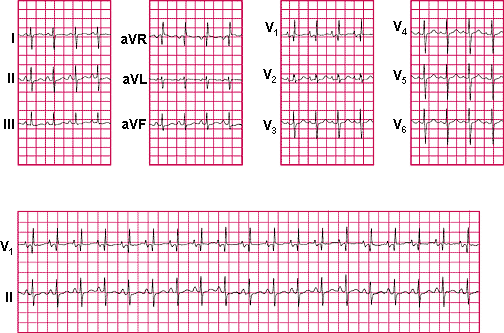
A 72-year-old woman comes to the physician because of a 3-month history of progressive shortness of breath with exertion and nonproductive cough. She has systemic sclerosis (scleroderma) treated with lisinopril and prednisone. Her temperature is 37°C (98.6°F), pulse is 90/min, respirations are 18/min, and blood pressure is 130/80 mm Hg. Examination shows tight facial skin and telangiectasias over the cheeks. There is thick, taut skin over the fingers. Bilateral basilar crackles are heard. On cardiac examination, a right ventricular heave is palpated at the left sternal border where a grade 2/6, systolic ejection murmur is also heard best. A fixed, split S2 and an S3 gallop are heard. An ECG is shown. Which of the following is the most likely diagnosis?
CorrectIncorrect -
Question 3 of 50
3. Question
A 16-year-old girl is brought to the physician by her mother because she has not yet had a menstrual period. She has no history of serious illness and takes no medications. Her immunizations are up-to-date. She does not appear to be in acute distress. She is at the 75th percentile for height, 80th percentile for weight, and 55th percentile for BMI. Breast and pubic hair development are sexual maturity rating stage 1. Pelvic examination shows no abnormalities. Serum studies show a thyroid-stimulating hormone concentration of 2.4 μU/mL, follicle-stimulating hormone concentration of 76 mIU/mL, and prolactin concentration of 13 ng/mL. Which of the following is the most appropriate next step in diagnosis?
CorrectIncorrect -
Question 4 of 50
4. Question
In a recent study of Americans, the following data were presented:
Mortality Rate From Firearms
Group
(per 100,000)
Native
2.2
African
1.2
Caucasian
0.8
Asian
0.1
The authors concluded that, in the USA, a greater number of Native Americans died of injuries sustained from firearms than did Caucasian Americans. Which of the following is the most accurate interpretation of the authors’ conclusion?
CorrectIncorrect -
Question 5 of 50
5. Question
An 8-year-old girl with attention-deficit/hyperactivity disorder is brought to the office by her mother for a well-child examination. The mother says that her daughter has been generally healthy and has been doing well in school since beginning long-acting methylphenidate therapy 2 years ago. The mother is concerned about her daughter having to take the medication for an extended period of time. Medical history is otherwise unremarkable and she takes no other medications. The patient is at the 25th percentile for height and weight. Vital signs are normal. Physical examination discloses no abnormalities. Which of the following is the most appropriate response to the mother regarding this patient’s need for medication?
CorrectIncorrect -
Question 6 of 50
6. Question
A 68-year-old man comes to the emergency department because of a 1-week history of severe low back pain that worsens with movement. He also has a 2-month history of fatigue and decreased appetite resulting in a 7-kg (15-lb) weight loss. He has not had fever, night sweats, bowel incontinence, urinary retention, or weakness. He has hypertension treated with hydrochlorothiazide. He smoked one pack of cigarettes daily for 30 years but quit 20 years ago. He does not drink alcohol or use illicit drugs. He is 178 cm (5 ft 10 in) tall and weighs 77 kg (170 lb); BMI is 24 kg/m2. Vital signs are within normal limits. Pulse oximetry on room air shows an oxygen saturation of 99%. There is tenderness to palpation at L2–4. Muscle strength is 5/5 in the lower extremities. Deep tendon reflexes are normal at the knees and ankles; there is no clonus. Rectal tone is normal. The remainder of the examination shows no abnormalities. Results of laboratory studies are shown:
Hemoglobin
11.2 g/dL
Serum
Urea nitrogen
54 mg/dL
Creatinine
2.1 mg/dL
Protein, total
7.8 g/dL
Albumin
3.2 g/dL
Alkaline phosphatase
67 U/L
Which of the following is the most appropriate next step in evaluation?
CorrectIncorrect -
Question 7 of 50
7. Question
Four days after undergoing uncomplicated left total hip replacement, a hospitalized 75-year-old man has a 1-day history of progressive confusion. He began ambulating on postoperative day 1 and previously had been alert, fully oriented, and cognitively intact. He has been receiving hydrocodone for pain as needed; he has requested one dose during the past 24 hours. He has hypertension well controlled with atenolol. He has no other history of serious illness and takes no other medications. On admission, the patient said he did not drink alcohol; today, his brother says that the patient drinks six to eight 12-oz beers daily. The patient’s temperature is 37°C (98.6°F), pulse is 90/min, respirations are 14/min, and blood pressure is 130/80 mm Hg. Physical examination shows lateral gaze palsy. The surgical incision is clean, dry, and nonerythematous. Neurologic examination shows ataxia. On mental status examination, he is alert but not oriented to person, place, or time. He identifies only one of three objects after six attempts. He recalls zero of three objects after 5 minutes. Results of a complete blood count, measurement of serum electrolyte and glucose concentrations, and liver and renal function tests are within the reference ranges. Urine toxicology screening is negative. An ECG shows no abnormalities. Which of the following is the most appropriate next step in management?
CorrectIncorrect -
Question 8 of 50
8. Question
A 42-year-old man comes to the physician because of a 1-day history of increasingly severe pain of his right knee associated with redness and swelling for the past 6 hours. He has had two episodes of pain in his right great toe over the past 8 months and missed 2 weeks of work in construction during each episode. He has been otherwise healthy. Examination of the right knee shows marked tenderness, swelling, and erythema. Laboratory findings are within the reference range except for a serum uric acid concentration of 7.6 mg/dL. Examination of synovial fluid aspirate shows uric acid crystals. Which of the following is the most appropriate initial pharmacotherapy?
CorrectIncorrect -
Question 9 of 50
9. Question
A 14-month-old girl is brought to the physician by her father because of a 3-week history of cough. One month ago, she had the onset of nasal congestion and runny nose. Two days later, she was noted to have a cough. The nasal congestion and runny nose resolved spontaneously after 7 days; the cough has not improved. Her father describes the cough as a “dry, smoker’s cough.” The patient has had similar symptoms twice during the past 6 months. Each episode resolved spontaneously after 2 weeks. At the age of 3 months, she had bronchiolitis. She has eczema treated with topical hydrocortisone. She was born at term following an uncomplicated pregnancy and spontaneous vaginal delivery. She receives no other medications. Her mother has a childhood history of asthma, and her father has seasonal allergies. The patient attends day care 5 days weekly. She coughs intermittently in the examination room. She is at the 20th percentile for length and 10th percentile for weight. Her temperature is 37°C (98.6°F), pulse is 72/min, respirations are 22/min, and blood pressure is 103/72 mm Hg. The lungs are clear to auscultation. The remainder of the examination shows no abnormalities. Which of the following is the most likely diagnosis?
CorrectIncorrect -
Question 10 of 50
10. Question
A previously healthy 24-year-old nurse is brought to the emergency department because of weakness of the lower extremities for 24 hours. She takes no medications. Her temperature is 37°C (98.6°F), pulse is 100/min, and blood pressure is 112/78 mm Hg. Muscle strength is 4/5 in the upper and lower extremities. Laboratory studies show:
Serum
Na+
134 mEq/L
Cl−
94 mEq/L
K+
2.4 mEq/L
HCO3−
34 mEq/L
Mg2+
2.4 mEq/L
Urea nitrogen
14 mg/dL
Glucose
118 mg/dL
Urine
Na+
46 mEq/L
K+
64 mEq/L
Surreptitious laxative useWhich of the following is the most likely cause of this patient’s hypokalemia?
CorrectIncorrect -
Question 11 of 50
11. Question
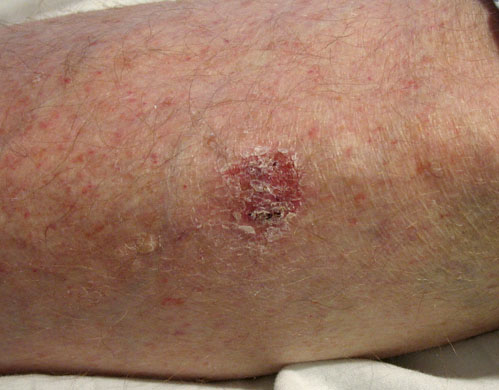
A 47-year-old man comes to the office because of a 6-month history of a nonpainful, nonitchy lesion over his left forearm. Three years ago, he underwent a renal transplant for chronic renal failure secondary to IgA nephropathy. His only medication is tacrolimus. Vital signs are within normal limits. A photograph of the lesion is shown. The remainder of the examination shows no abnormalities. Which of the following is the most likely diagnosis?
CorrectIncorrect -
Question 12 of 50
12. Question
A 62-year-old man with chronic obstructive pulmonary disease comes to the physician because of a 1-month history of leg swelling and progressive shortness of breath. He has not had fever or cough. He smoked one and one-half packs of cigarettes daily for 45 years but quit 1 year ago. His medications are theophylline and albuterol and ipratropium inhalers. His temperature is 36.7°C (98°F), pulse is 96/min, respirations are 22/min, and blood pressure is 150/76 mm Hg. Examination shows jugular venous distention 10 cm above the sternal angle. Breath sounds are markedly decreased throughout all lung fields. Cardiac examination shows decreased heart sounds with no murmurs, gallops, or rubs. The liver edge is palpated 3 cm below the right costal margin. There is 2+ pitting edema to the knees. His FEV1 is 1.05 L (40% of predicted). Arterial blood gas analysis on room air shows:
pH
7.42
Pco2
48 mm Hg
Po2
45 mm Hg
HCO3−
30 mEq/L
An x-ray of the chest shows hyperinflated lungs with apical bullae. Which of the following is the most appropriate next step in management?
CorrectIncorrect -
Question 13 of 50
13. Question
A 21-year-old man is brought to the emergency department because of a 2-hour history of muscle spasms of the face and neck; his eyes appear to be rolling up inside his head. He began treatment with haloperidol 24 hours ago for paranoid ideation. His temperature is 37°C (98.6°F), pulse is 96/min, respirations are 18/min, and blood pressure is 130/82 mm Hg. He is fully oriented and cognitively intact, but he is adamant that he has been poisoned. Which of the following is most appropriate to add to his medication regimen?
CorrectIncorrect -
Question 14 of 50
14. Question
A 60-year-old man with stage 4 chronic kidney disease comes to the office for a follow-up examination. He also has type 2 diabetes mellitus and hypertension. Medications are insulin, lisinopril, furosemide, amlodipine, and aspirin. Vital signs are temperature 37.0°C (98.6°F), pulse 80/min, respirations 15/min, and blood pressure 145/85 mm Hg. Cardiopulmonary examination discloses no abnormalities. There is 1+ lower extremity edema. Laboratory studies show a serum intact parathyroid hormone concentration of 258 pg/mL (N=10–60). Measurement of additional serum laboratory studies is most likely to show which of the following?
Option
Phosphorus
Calcium
Calcitriol
A
Decreased
Decreased
Decreased
B
Decreased
Increased
Decreased
C
Decreased
Increased
Increased
D
Increased
Decreased
Decreased
E
Increased
Decreased
Increased
F
Increased
Increased
Increased
CorrectIncorrect -
Question 15 of 50
15. Question
A 7-year-old boy is brought to the office by his mother for an initial well-child visit to establish care. The patient’s family recently emigrated from Eastern Europe. The mother is concerned about her son’s behavior at home and at school. He has been easily distracted, has difficulty completing his chores at home, has been fidgety during classes, and often disrupts others by talking out of turn. His mother says that as an infant he underwent surgical correction of a cleft palate and a heart defect, but she does not have his medical records with her today. The patient is at the 5th percentile for height and weight and the 10th percentile for BMI. Examination shows an elongated face with narrow palpebral fissures, low-set ears, a broad nasal bridge, micrognathia, downward turned mouth, and small teeth. Results of which of the following laboratory studies are most likely to be abnormal in this patient?
CorrectIncorrect -
Question 16 of 50
16. Question
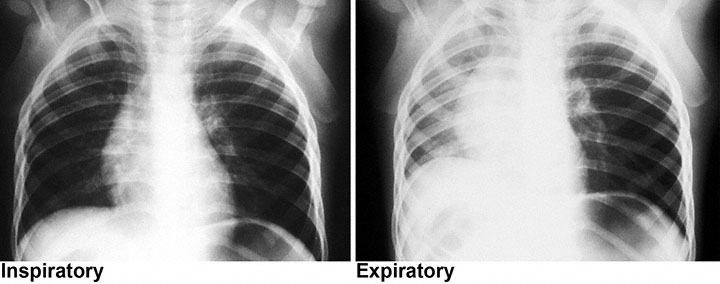
A 4-year-old boy is brought to the emergency department 30 minutes after the sudden onset of shortness of breath and wheezing at a birthday party. Witnesses report that he was acting normally until he was noted to be in distress; they did not see him choke on anything. He has no history of serious illness and receives no medications. His temperature is 37°C (98.6°F), pulse is 100/min, respirations are 24/min, and blood pressure is 90/60 mm Hg. Pulse oximetry on room air shows an oxygen saturation of 95%. Examination shows decreased breath sounds over the left hemithorax. Inspiratory and expiratory chest x-rays are shown. Which of the following is the most likely diagnosis?
CorrectIncorrect -
Question 17 of 50
17. Question
A hospitalized 59-year-old man has undergone three unsuccessful attempts at endoscopic sclerotherapy of esophageal varices during the past 4 days. On admission, he had a 1-week history of recurrent upper gastrointestinal bleeding. He has necrotizing pancreatitis, splenic vein thrombosis, type 2 diabetes mellitus, and hypertension. His medications are insulin, hydrochlorothiazide, lisinopril, and pancrelipase. He has a history of alcohol use disorder but has not consumed alcohol during the past 8 years. He has no other history of psychiatric illness. He is an inmate in a federal prison and has 18 years remaining on his sentence. He asks that no further efforts to control the bleeding be undertaken. His brother, who has not visited the patient in 6 years, says this is the patient’s way of committing suicide; the brother insists that efforts to extend the patient’s life be continued. The patient appears cachectic but alert. His pulse is 104/min, respirations are 18/min, and blood pressure is 88/68 mm Hg. Pulse oximetry on 4 L/min of oxygen by nasal cannula shows an oxygen saturation of 94%. Physical examination shows scattered ecchymoses and petechiae over the upper extremities. On mental status examination, he provides an accurate account of his current condition and the probable outcome, including death, if he continues to bleed. He says he is “down” but then says he means “tired.” He reports no suicidal ideation. Which of the following is the most appropriate next step in management?
CorrectIncorrect -
Question 18 of 50
18. Question
A 12-year-old girl is brought to the emergency department by her parents because of a 2-hour history of severe weakness involving the right side of her face. The weakness has been present since the patient awoke from sleep. She is now drooling from the right side of her mouth. She has had an upper respiratory illness for the past 3 days, with symptoms of nasal congestion, cough, and muffling of sounds and pain in her right ear. Medical history is otherwise unremarkable. She has been taking acetaminophen as needed for the ear pain. Vital signs are normal. The patient is awake and alert. Her speech is dysarthric. The right side of her face is severely weakened, with inability to sustain eye closure against resistance. The remainder of the physical examination discloses no abnormalities. Which of the following is the most likely natural evolution of her condition if left untreated?
CorrectIncorrect -
Question 19 of 50
19. Question
A 56-year-old woman comes to the clinic for examination prior to undergoing a dental procedure. She will be visiting her dentist frequently for multiple procedures to have braces placed on her teeth because of severe temporomandibular joint pain; she is concerned about her risk for infection. She has mitral valve prolapse and intermittent palpitations. She also has hypertension and osteopenia. Her only medication is atenolol. Her blood pressure is 110/60 mm Hg. Examination shows no abnormalities. Antibiotic prophylaxis is indicated for this patient for which of the following procedures?
CorrectIncorrect -
Question 20 of 50
20. Question
A 62-year-old man comes to the physician for a preoperative evaluation before undergoing elective cataract removal. He has a 3-month history of progressive mild shortness of breath with exertion. He takes no medications. He drinks three beers daily. His blood pressure is 150/92 mm Hg. Examination shows no other abnormalities. Laboratory studies show:
Hematocrit
26%
Mean corpuscular volume
75 μm3
Leukocyte count
6000/mm3
Platelet count
700,000/mm3
Prothrombin time
11 sec (INR=1)
Serum
Glucose
89 mg/dL
Creatinine
1.6 mg/dL
Alkaline phosphatase
142 U/L
AST
55 U/L
Urine
Glucose
2+
Protein
1+
Which of the following is most likely to have prevented this patient’s hematologic condition?
CorrectIncorrect -
Question 21 of 50
21. Question
A 27-year-old man with asthma comes to the emergency department because of progressive shortness of breath and wheezing for 24 hours. His symptoms began 1 week ago with increasing wheezing. Treatment with inhaled β-adrenergic agonists and corticosteroids has been ineffective. He appears mildly dehydrated and in moderate to severe respiratory distress with labored breathing and use of accessory muscles. His pulse is 90/min, respirations are 30/min, and blood pressure is 130/80 mm Hg. Arterial blood gas analysis on room air shows:
pH
7.25
Pco2
51 mm Hg
Po2
65 mm Hg
HCO3−
20 mEq/L
Which of the following is the most likely cause of these findings?
CorrectIncorrect -
Question 22 of 50
22. Question
A 16-year-old girl comes to the office because of a 1-month history of green, sticky discharge from the right nipple. She initially noticed the discharge on her bra and was also able to express it manually. She has not had breast pain or skin changes. During the past 3 months, she has had a 4.5-kg (10-lb) weight gain despite no change in appetite. She also has had frequent frontal headaches since beginning oral contraceptive therapy 3 months ago. Six months ago, she was diagnosed with major depressive disorder and was started on fluoxetine therapy. Menses occur at regular 28-day intervals. Her last menstrual period was 2 weeks ago. She is sexually active with one partner and uses condoms inconsistently. On examination, scant greenish discharge can be expressed from the right breast. The remainder of the examination shows no abnormalities. Which of the following is the most likely diagnosis?
CorrectIncorrect -
Question 23 of 50
23. Question
A 14-year-old girl is brought to the physician by her mother because she has never had a menstrual period. The patient has no history of serious illness and takes no medications. Thelarche began 18 months ago. Her mother’s menarche was at the age of 13 years. The patient plays soccer and runs 3 miles weekly. She is at the 50th percentile for height, 10th percentile for weight, and 25th percentile for BMI. Breast and pubic hair development are sexual maturity rating stage 4. Which of the following is the most appropriate next step in management?
CorrectIncorrect -
Question 24 of 50
24. Question
A hospitalized 57-year-old man is confused, agitated, and combative 2 days after undergoing laparoscopic resection for hepatocellular carcinoma. His medications are omeprazole, propranolol, and hydrocodone. He has drunk one gallon of Scotch whiskey weekly for 3 years. He has used heroin once daily for 3 years. His temperature is 38.5°C (101.3°F), pulse is 112/min, respirations are 24/min, and blood pressure is 170/100 mm Hg. Physical examination shows a tremor of the hands. On mental status examination, he is not oriented to person, place, or time and reports seeing cockroaches on the hospital bed. Laboratory studies show:
Platelet count
46,000/mm3
Prothrombin time
15.8 sec (INR=1.4)
Serum
Albumin
2.2 g/dL
Total bilirubin
3.1 mg/dL
AST
66 U/L
ALT
98 U/L
Ammonia
11 μg/dL
Urine toxicology screening is negative. Administration of which of the following is the most appropriate initial step in management?
CorrectIncorrect -
Question 25 of 50
25. Question
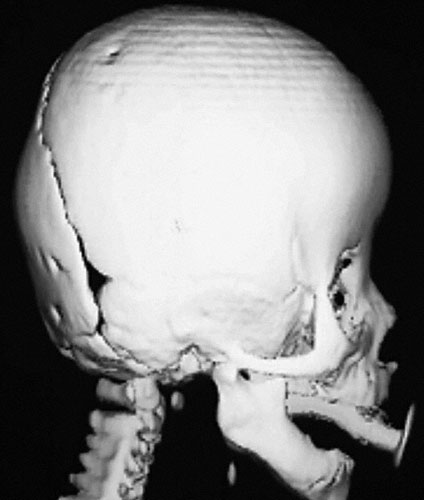
A 4-month-old female infant is brought to the office by her mother for a well-child examination. She was born at term following an uncomplicated pregnancy and vaginal delivery. She is breast-feeding well and gaining weight. She has been smiling and cooing and has begun rolling onto her side. The mother says she noticed an asymmetric appearance to her daughter’s face and head 4 weeks ago that has slightly worsened since that time. The patient otherwise has been well. Family history is noncontributory. The infant is 63 cm (25 in; 50th percentile) long and weighs 6200 g (13 lb 11oz; 50th percentile); head circumference is 40 cm (16 in; 25th percentile). Vital signs are within normal limits. Physical examination shows an open and flat anterior fontanel and a palpable ridge between the right parietal and temporal bones. The right eye and eyebrow appear superiorly displaced compared with the left. The remainder of the physical examination discloses no abnormalities. CT scan of the head is shown. Which of the following is the most likely diagnosis?
CorrectIncorrect -
Question 26 of 50
26. Question
A 57-year-old woman comes to the physician because she has felt sad and tearful and has thought about killing herself for the past 2 weeks. Her symptoms began 1 week after losing $25,000 during a weekend of gambling. She reports that she had boundless energy all week and gambled continuously throughout the weekend without needing to sleep. She says, “I felt great even when I was losing and did not realize what I had done until a week later.” Twice yearly for the past 10 years, she has had similar gambling episodes but has never lost this much money before. Physical examination shows no abnormalities. On mental status examination, she is distraught and tearful. She says that she has not developed a plan to take her own life but admits to wishing for a “convenient car accident.” Which of the following is the most likely diagnosis?
CorrectIncorrect -
Question 27 of 50
27. Question
A previously healthy 57-year-old woman comes to the emergency department because of a 2-week history of fever, nonproductive cough, and increasing shortness of breath. She is no longer able to walk up one flight of stairs without resting. She takes no medications. She does not smoke cigarettes, drink alcohol, or use illicit drugs. She has been sexually active with multiple partners, and they use condoms inconsistently. She appears cachectic and in moderate respiratory distress. Her temperature is 39.1°C (102.4°F), pulse is 120/min, respirations are 32/min, and blood pressure is 104/68 mm Hg. Examination shows submental and cervical lymphadenopathy. There is diffuse white exudate over the buccal mucosa. Pulmonary examination shows good air movement; no crackles or rhonchi are heard. The remainder of the examination shows no abnormalities. Her hemoglobin concentration is 7.8 g/dL, and leukocyte count is 3800/mm3. Arterial blood gas analysis on room air shows:
pH
7.48
Pco2
30 mm Hg
Po2
68 mm Hg
An x-ray of the chest shows no abnormalities. Which of the following is the most likely causal organism?
CorrectIncorrect -
Question 28 of 50
28. Question
A 24-year-old nulligravid woman comes to the physician because of a 3-day history of pain with urination and urinary frequency. She has a 1-year history of frequent bladder infections characterized by similar symptoms. The infections occur after sexual intercourse and resolve with antibiotic therapy. She has no other history of serious illness and takes no medications. She is currently sexually active with one male partner, and they use condoms consistently. Examination shows bladder tenderness and urethral elevation; no other abnormalities are noted. Urine culture grows Escherichia coli. Which of the following is most likely to prevent recurrence of these symptoms?
CorrectIncorrect -
Question 29 of 50
29. Question
An asymptomatic 32-year-old man comes to the physician 2 days after his male sexual partner was diagnosed with gonorrhea. He has not had penile discharge or dysuria. Over the past 4 months, he and his partner have had unprotected sexual intercourse several times weekly. Four months ago, HIV testing of the patient and his partner was negative. Examination shows no abnormalities. A Gram stain of mucus from a urethral swab is negative for diplococci. A urethral culture is ordered. He gives written consent for HIV antibody testing and serologic testing for syphilis. Which of the following is the most appropriate next step in therapy?
CorrectIncorrect -
Question 30 of 50
30. Question
An unconscious 32-year-old woman is found by a nurse outside the emergency department. There is a gunshot wound to her right temple. She does not have an advance directive or an organ donor card among her possessions. On arrival, she is unresponsive and has a Glasgow Coma Scale score of 3. Her pulse is 48/min, respirations are 8/min, and blood pressure is 180/100 mm Hg. Pupils are dilated and nonreactive to light. She is intubated, and mechanical ventilation is started. After fluid resuscitation, her hemodynamic status is stabilized. A CT scan of the head shows a large intracranial hematoma with a massive midline shift. After consulting with a neurosurgeon, the most appropriate next step is to contact which of the following?
CorrectIncorrect -
Question 31 of 50
31. Question
A 45-year-old woman comes to the office because of a wound on her right foot that she first noticed 8 weeks ago. During the past 3 days, it has increased in size and depth and has become moderately painful. She does not recall any injury to her foot. She has type 2 diabetes mellitus and hypertension. Her medications are insulin, atorvastatin, lisinopril, and daily aspirin. She is 163 cm (5 ft 4 in) tall and weighs 95 kg (210 lb); BMI is 36 kg/m2. Temperature is 38.9°C (102.0°F), pulse is 80/min, respirations are 16/min, and blood pressure is 140/95 mm Hg. Examination shows a 3 × 3-cm full-thickness wound over the second and third metatarsal heads of the plantar aspect of the right foot; there is necrotic tissue and eschar but no exposed tendon or bone. The plantar aspect of the right forefoot is tender to palpation. Dorsalis pedis and posterior tibial pulses in the right lower extremity are 1+. Semmes-Weinstein 5.07 monofilament testing shows absent sensation over the right foot. Which of the following is the most appropriate next step in diagnosis?
CorrectIncorrect -
Question 32 of 50
32. Question
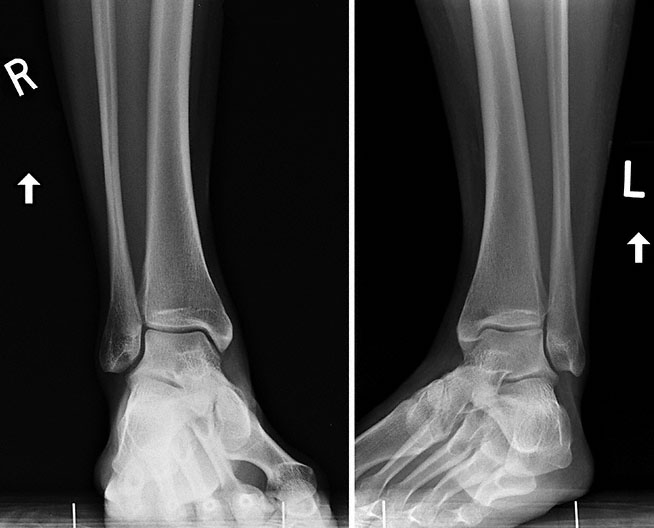
A 27-year-old woman comes to the physician because of a 6-month history of increasing pain and progressive swelling and stiffness of her ankles. Despite nightly application of ice to her ankles, ibuprofen therapy, and decreased activity during the past 3 months, her pain has worsened, she has had swelling of her ankles throughout the day, and she has had morning stiffness of her ankles. She has sustained no recent trauma to her ankles. She had a severe right ankle sprain in college. Her only other medication is an oral contraceptive. She is an avid tennis player and plays twice weekly. Vital signs are within normal limits. Examination shows swelling and moderate effusion of both ankles. Range of motion of both ankles is full but produces mild pain. X-rays of the ankles are shown. Which of the following is the most likely cause of this patient’s symptoms?
CorrectIncorrect -
Question 33 of 50
33. Question
A previously healthy 24-year-old woman comes to the physician because of a 2-week history of fatigue and easy bruising. Her temperature is 37°C (98.6°F), pulse is 100/min, respirations are 20/min, and blood pressure is 100/60 mm Hg. Examination shows ecchymoses over the lower extremities. Laboratory studies show:
Hemoglobin
9.2 g/dL
Leukocyte count
53,000/mm3
Lymphocytes
10%
Myeloblasts
90%
Platelet count
63,000/mm3
Serum
Creatinine
1.9 mg/dL
Lactate dehydrogenase
2233 U/L
A bone marrow biopsy specimen confirms acute myelogenous leukemia. Which of the following is the most appropriate next step?
CorrectIncorrect -
Question 34 of 50
34. Question
A 20-year-old man comes to the physician because of a 3-year history of bruising without any trauma. He has not had bleeding from his nose or mouth. He has no history of serious illness and takes no medications. Vital signs are within normal limits. Examination shows ecchymoses in various stages of healing over the upper extremities. Results of a complete blood count are within the reference range. His prothrombin time is 20 seconds (INR=2), and partial thromboplastin time is 25 seconds. This patient most likely has a deficiency of which of the following?
CorrectIncorrect -
Question 35 of 50
35. Question
A 42-year-old woman comes to the physician because of a 3-year history of ringing in her ears. The sound gradually intensified during the first year and has been unchanged since that time. The ringing is more noticeable when she is in a quiet environment but otherwise does not fluctuate throughout the day. She reports that her hearing is otherwise normal. She has hypertension treated with lisinopril. She has smoked one pack of cigarettes daily for 25 years and drinks one glass of wine daily. Her blood pressure is 130/80 mm Hg; other vital signs are within normal limits. Examination of the external auditory canals shows no abnormalities. Finger-rub testing shows no abnormalities. Audiometry shows mild high-frequency hearing loss bilaterally. Which of the following is the most appropriate next step in diagnosis?
CorrectIncorrect -
Question 36 of 50
36. Question
A 1-year-old boy is brought to the office because his parents are concerned that his birthmarks have been increasing in size and number during the past 6 months. Growth and development are appropriate for age. Immunizations are up-to-date. He has no history of serious illness and receives no medications. Examination shows ten 6- to 10-mm tan-brown maculae over the patient’s trunk, axillae, and all extremities. Which of the following is the most appropriate next step in diagnosis?
CorrectIncorrect -
Question 37 of 50
37. Question
An 18-year-old basketball player is brought to the emergency department 1 hour after collapsing during a game. He was successfully resuscitated at the scene. On arrival, he is awake and alert. His temperature is 37.1°C (98.8°F), pulse is 80/min and regular, respirations are 12/min, and blood pressure is 120/80 mm Hg. Examination shows no abnormalities. An ECG shows left ventricular hypertrophy. Echocardiography shows systolic anterior motion of the anterior leaflet of the mitral valve causing a subaortic obstruction. Which of the following is the most appropriate next step in management?
CorrectIncorrect -
Question 38 of 50
38. Question
Three hours after undergoing placement of an intravenous line using routine universal precautions and beginning intravenous fluid therapy, a hospitalized 2-year-old girl has the onset of a generalized itching rash. She was admitted to the hospital today because of a 3-day history of fever and diarrhea. As a newborn, she underwent surgical repair of a myelomeningocele and creation of a ventriculoperitoneal shunt. She is not currently receiving any medications. Vital signs 3 hours ago and now are:
3 Hours Ago
Now
Temperature
38°C (100.4°F)
37.8°C (100°F)
Pulse (/min)
110
160
Respirations (/min)
24
40
Blood pressure (mm Hg)
105/65
80/50
Examination shows diffuse, raised, erythematous lesions with pale centers. The upper and lower extremities appear mottled. Capillary refill time is 5 to 6 seconds. The remainder of the examination, including funduscopic and neurologic examinations, shows no abnormalities. Which of the following is most likely to have prevented this patient’s current condition?
CorrectIncorrect -
Question 39 of 50
39. Question

A previously healthy 29-year-old man comes to the physician because of a 6-week history of intermittent, increasingly severe upper abdominal pain. He has not had fever, chills, weight loss, or intolerance to fatty food. Over-the-counter famotidine has provided minimal relief. He has smoked one pack of cigarettes daily for 10 years. His temperature is 37°C (98.6°F), pulse is 68/min, respirations are 18/min, and blood pressure is 120/82 mm Hg. Abdominal examination shows epigastric tenderness to palpation. The remainder of the examination shows no abnormalities. Test of the stool for occult blood is positive. Esophagogastroduodenoscopy shows a 1.5-cm ulcer along the lesser curvature of the stomach; there is no active bleeding. Biopsy results are shown. Smoking cessation is recommended. In addition to lansoprazole therapy, which of the following is the most appropriate pharmacotherapy?
CorrectIncorrect -
Question 40 of 50
40. Question
A 2-week-old boy is brought to the physician because of a 5-day history of a progressive rash that began at a site on his scalp where an electrode was attached during labor. Despite application of topical antibiotic ointment, the rash has spread to his trunk and extremities. He was born at term following an uncomplicated vaginal delivery. Apgar scores were 8 and 9 at 1 and 5 minutes, respectively. Initial examination showed no abnormalities. He is currently at the 30th percentile for length, 75th percentile for weight, and 25th percentile for head circumference. Vital signs are within normal limits. Examination shows erythematous patches with overlying vesicles containing clear or cloudy fluid over the entire body. Appropriate treatment of this patient is most likely to prevent which of the following acute manifestations of his condition?
CorrectIncorrect -
Question 41 of 50
41. Question
A 22-year-old man comes to the physician because of a 3-day history of a sore throat and difficulty opening his jaw. He has no history of serious illness, and he takes no medications. He is allergic to penicillin. His temperature is 38.4°C (101°F), pulse is 120/min, respirations are 20/min, and blood pressure is 100/70 mm Hg. There is cervical lymphadenopathy bilaterally. Examination of the throat shows deviation of the uvula to the right, edema of the soft palate on the left and bilateral pharyngeal erythema with exudates. After drainage of the abscess, which of the following is the most appropriate pharmacotherapy?
CorrectIncorrect -
Question 42 of 50
42. Question
A 16-year-old boy who was diagnosed with HIV infection 1 year ago comes for a follow-up examination. He has had no opportunistic infections. Immunizations are up-to-date. His CD4+ T-lymphocyte count is 550/mm3 (Normal≥500), and plasma HIV viral load is less than 1000 copies/mL, a hundredfold decrease since he began triple antiretroviral therapy 1 year ago. He and his girlfriend are sexually active and use condoms consistently. His plans for the summer include traveling to Africa for 2 weeks on a medical missionary trip, buying a cat, joining a swim team, and obtaining a part-time job in a day-care center which involves caring for toilet-trained toddlers. Avoidance of which of the following activities is most likely to minimize his chances of opportunistic infection?
CorrectIncorrect -
Question 43 of 50
43. Question
A 42-year-old woman, gravida 2, para 1, at 12 weeks’ gestation comes to the physician for her first prenatal visit. She conceived a dichorionic-diamniotic twin gestation after in vitro fertilization. She has no history of serious illness, and her only medication is a prenatal vitamin. Two years ago, her first pregnancy ended in cesarean delivery at 39 weeks’ gestation because of breech presentation. She is 165 cm (5 ft 5 in) tall. She weighed 68 kg (150 lb) prior to her pregnancy; BMI was 25 kg/m2. She has had a 2-kg (4-lb) weight gain during her pregnancy. Her blood pressure is 110/70 mm Hg. Examination shows a uterus consistent in size with a 12-week gestation. This patient is at greatest risk for which of the following pregnancy complications?
CorrectIncorrect -
Question 44 of 50
44. Question
On arrival to the postanesthesia care unit 15 minutes after undergoing fourth and fifth metacarpophalangeal arthroplasty, a 32-year-old woman with rheumatoid arthritis has a fingerstick blood glucose concentration of 350 mg/dL. During induction of general anesthesia, endotracheal intubation was complicated by arthritic changes to the cervical spine, and dexamethasone was administered to decrease airway edema. She received lactated Ringer solution during the 60-minute procedure; intraoperative blood loss was minimal. Medications are prednisone and methotrexate. She is awake. Vital signs are within normal limits. Cardiopulmonary examination shows no abnormalities. Neurologic examination shows no focal findings. Which of the following is the most likely cause of this patient’s hyperglycemia?
CorrectIncorrect -
Question 45 of 50
45. Question
Three days after an operation for aortic stenosis, a 67-year-old white man is being evaluated by the surgical team. A medical student takes one of the two patient information charts hanging outside the room. While reading the chart, the student realizes that the ethnicity listed on the chart does not match the ethnicity of the patient. Verification of the name on the chart shows that the student has taken the chart for the other patient in the double room. Both charts are labeled “room 456-1,” instead of the chart for the window bed being labeled “456-2.” Individual members of the team laugh at the mix-up, and a resident states that the charts are often misnumbered due to patients shifting room position. Which of the following is the most appropriate next step by the senior member of the team?
CorrectIncorrect -
Question 46 of 50
46. Question
A 42-year-old woman comes to the physician because of a 1-month history of intermittent mild pain in her right lower abdomen. She has not had fever, chills, changes in bowel habits, or urinary symptoms. Three years ago, she underwent bilateral prophylactic mastectomy because her maternal grandmother, mother, and two older sisters have a history of breast cancer. The patient has no history of serious illness, and her only medication is a calcium supplement containing vitamin D. Her temperature is 37°C (98.6°F), pulse is 80/min, respirations are 18/min, and blood pressure is 116/68 mm Hg. Cardiopulmonary examination shows no abnormalities. The abdomen is soft and nondistended, and the liver is not enlarged. Examination of the right lower quadrant shows tenderness to deep palpation; there are no signs of peritonitis. On pelvic examination, a mass is palpated in the right adnexal region; no other abnormalities are noted. Pelvic ultrasonography shows an 8 × 6-cm complex, multiseptate, right ovarian mass; there is no ascites. Which of the following is the most appropriate next step in diagnosis?
CorrectIncorrect -
Question 47 of 50
47. Question
A 28-year-old man comes to the emergency department because of a 1-week history of increasingly severe right lower abdominal pain. During this time, he also has had fever, nausea, and vomiting. He has not had chills. He has no history of serious illness or operative procedures and takes no medications. Temperature is 38.3°C (101.0°F), pulse is 100/min, and blood pressure is 120/60 mm Hg. Cardiopulmonary examination shows no abnormalities. On abdominal examination, a 6 × 8-cm, tender mass is palpated in the right lower quadrant. There is no overlying erythema or induration. CT scan of the abdomen and pelvis shows a 6 × 8-cm fluid collection with an enhancing rim in the right lower quadrant. In addition to intravenous broad-spectrum antibiotic therapy, which of the following is the most appropriate next step in management?
CorrectIncorrect -
Question 48 of 50
48. Question
A 77-year-old woman comes to the emergency department 1 hour after the sudden onset of pain, numbness, and stiffness of her right forearm and hand. She has hypertension and atrial fibrillation. She had a myocardial infarction 2 years ago. Her medications are metoprolol, lisinopril, and warfarin. Her temperature is 36.8°C (98.2°F), pulse is 60/min and irregularly irregular, respirations are 14/min, and blood pressure is 140/90 mm Hg. Cardiopulmonary examination shows no abnormalities. The right forearm and hand are pale and cool with a capillary refill time of 8 seconds. Pulses are absent in the distal aspect of the right upper extremity. The right axillary pulse and pulses in the left upper extremity are within normal limits. An ECG shows atrial fibrillation with a ventricular rate of 72/min. There are no acute changes. Laboratory studies show:
Hemoglobin
12.3 g/dL
Hematocrit
37%
Leukocyte count
10,500/mm3
Platelet count
354,000/mm3
Prothrombin time
14 sec (INR=1.5)
Partial thromboplastin time
27 sec
She is scheduled for embolectomy in 90 minutes. Which of the following is the most appropriate next step in management?
CorrectIncorrect -
Question 49 of 50
49. Question
A 45-year-old woman comes to the physician requesting a second opinion of a recent diagnosis of multiple sclerosis (MS). She has smoked one pack of cigarettes daily for 25 years and asks if cigarette smoking contributed to her current condition. The physician finds a recently published study evaluating the relationship between cigarette smoking and MS. A total of 100,000 women between the ages of 18 and 40 years were polled about their medical and social histories over a 10-year period. Data show that 205 participants reported developing MS. The rates of cigarette smoking in participants with MS were compared with those of 615 age- and location-matched participants without MS. Which of the following best describes this study design?
CorrectIncorrect -
Question 50 of 50
50. Question
A previously healthy 57-year-old man is admitted to the hospital for evaluation of a 7-hour history of palpitations. He takes no medications. He drinks six beers daily. He does not smoke. He is 168 cm (5 ft 6 in) tall and weighs 70 kg (155 lb); BMI is 25 kg/m2. His temperature is 37°C (98.6°F), pulse is 110/min and irregularly irregular, respirations are 16/min, and blood pressure is 126/70 mm Hg. Pulse oximetry on room air shows an oxygen saturation of 97%. Examination shows no jugular venous distention. Cardiac examination shows no murmurs, rubs, or gallops. There is no pedal edema. Test of the stool for occult blood is negative. An ECG shows atrial fibrillation at a ventricular rate of 114/min with no ischemic changes. The physician decides to administer oral digoxin. Which of the following is the most appropriate way to record an order on this patient’s chart?
CorrectIncorrect