
CK- NBME 10 – Block 4
Quiz Summary
0 of 50 Questions completed
Questions:
Information
You have already completed the quiz before. Hence you can not start it again.
Quiz is loading…
You must sign in or sign up to start the quiz.
You must first complete the following:
Results
Results
0 of 50 Questions answered correctly
Your time:
Time has elapsed
You have reached 0 of 0 point(s), (0)
Earned Point(s): 0 of 0, (0)
0 Essay(s) Pending (Possible Point(s): 0)
| Average score |
|
| Your score |
|
Categories
- Not categorized 0%
- 1
- 2
- 3
- 4
- 5
- 6
- 7
- 8
- 9
- 10
- 11
- 12
- 13
- 14
- 15
- 16
- 17
- 18
- 19
- 20
- 21
- 22
- 23
- 24
- 25
- 26
- 27
- 28
- 29
- 30
- 31
- 32
- 33
- 34
- 35
- 36
- 37
- 38
- 39
- 40
- 41
- 42
- 43
- 44
- 45
- 46
- 47
- 48
- 49
- 50
- Current
- Review
- Answered
- Correct
- Incorrect
-
Question 1 of 50
1. Question
A 37-year-old woman comes to the physician because of a 1-year history of irregular menses. During this time, menses have occurred at irregular 3-month intervals and have lasted for 10 days with moderately heavy flow. She has no history of serious illness and takes no medications. She is 168 cm (5 ft 6 in) tall and weighs 68 kg (150 lb); BMI is 24 kg/m2. Her temperature is 37.1 °C (98.7°F), pulse is 70/min, respirations are 12/min, and blood pressure is 90/50 mm Hg. Visual field testing shows outer field deficits bilaterally. A milky white discharge can be expressed from both breasts. The remainder of the examination, including pelvic examination, shows no abnormalities. Test of the stool for occult blood is negative. Her serum prolactin concentration is 40 ng/mL. An MRI of the brain shows a pituitary microadenoma. Which of the following is the most appropriate next step in management?
CorrectIncorrect -
Question 2 of 50
2. Question
A 24-year-old woman, gravida 2, para 2, comes to the physician requesting advice regarding contraception. She states that she does not want to have any more children, but neither she nor her husband wishes to undergo a permanent sterilization procedure at this time. She requests a contraceptive method that has the lowest failure rate for the first year of use. Her second child was born 6 weeks ago at term after an uncomplicated pregnancy and delivery. Her infant is exclusively breast-fed. The patient has no history of serious illness and takes no medications. She has not had sexual intercourse for 2 months. Examination shows no abnormalities. Which of the following is the most appropriate contraceptive method for this patient at this time?
CorrectIncorrect -
Question 3 of 50
3. Question
A 27-year-old nulligravid woman comes to the physician because of a 3-month history of intermittent abdominal cramps and diarrhea. She has not had blood or mucus in her stool. She reports that the symptoms usually occur after eating, are exacerbated by caffeine and stress, and are relieved by bowel movements. Changing her diet and avoiding dairy products have not improved her symptoms. She has two to three bowel movements daily. Examination shows mild generalized tenderness and increased bowel sounds. Which of the following is the most appropriate initial pharmacotherapy?
CorrectIncorrect -
Question 4 of 50
4. Question
A 16-month-old girl is brought to the emergency department after the sudden onset of difficulty breathing and cough at a birthday party. She has not had fever, vomiting, diarrhea, runny nose, congestion, or a decrease in appetite or activity level. Immunizations are up-to-date. There are no known sick contacts, and there is no family history of serious illness. She appears healthy but is in moderate respiratory distress. She is at the 50th percentile for length and weight. Her respirations are 40/min; other vital signs are within normal limits. Pulse oximetry on room air shows an oxygen saturation of 96%. Pulmonary examination shows minimal subcostal retractions; no wheezes or crackles are heard. Breath sounds are mildly decreased over the right upper lung fields. The remainder of the examination shows no abnormalities. An AP chest x-ray shows normal findings. Which of the following is the most appropriate next step in management?
CorrectIncorrect -
Question 5 of 50
5. Question
A 3-month-old girl has had increased blood pressure measurements since admission to the hospital for pneumonia and bronchiolitis 2 days ago. She was born at 26 weeks’ gestation because of premature labor and weighed 750 g (1 lb 10 oz) at birth. During the first 2 days of life, an umbilical artery catheter was used to monitor her blood pressure. She had several episodes of hypotension that resolved after administration of fluid boluses. She remained in the neonatal intensive care unit for management of respiratory distress and poor weight gain until the age of 10 weeks, when her vital signs had stabilized and condition had improved. At that time, she was discharged home on 0.5 L/min of oxygen. Her current medications are a multivitamin with iron and budesonide. She appears well developed and well nourished but is in respiratory distress. She weighs 3005 g (6 lb 10 oz). Her temperature is 37°C (98.6°F), pulse is 160/min, respirations are 70/min, and blood pressure is 128/86 mm Hg. Pulse oximetry on room air shows an oxygen saturation of 92%. On pulmonary examination, crackles over the left lung base and scattered bilateral expiratory wheezes are heard. On cardiac examination, a grade 1/6, systolic ejection murmur is heard best at the upper left sternal border. The abdomen is soft and nontender. Femoral pulses are 2+ bilaterally. Serum studies are most likely to show which of the following sets of findings?
Option
Renin
Aldosterone
A
Decreased
Decreased
B
Decreased
Increased
C
Increased
Decreased
D
Increased
Increased
E
Normal
Normal
CorrectIncorrect -
Question 6 of 50
6. Question
A 32-year-old woman comes to the physician because of a 4-day history of fever. She has had swelling and redness of her left leg during this period. She has a history of chronic lymphedema in both legs. She is 165 cm (5 ft 5 in) tall and weighs 107 kg (235 lb); BMI is 39 kg/m2. Her temperature is 38.5°C (101.3°F). The left lower extremity is diffusely red and edematous from just below the knee to the ankle, with a sharp demarcation separating the erythematous area from the normal skin at the knee. The erythematous area is painful and hyperesthetic to touch. The left femoral nodes are enlarged and painful. Which of the following is the most likely cause of this patient’s illness?
CorrectIncorrect -
Question 7 of 50
7. Question
A 27-year-old man comes to the physician because of a 3-month history of episodes of palpitations, light-headedness, and tightness in his chest and throat. During the episodes, he feels an impending sense of doom and fears that he might die or “go crazy.” For the past 6 weeks, he has worried constantly that there is something wrong with his heart and that the symptoms will recur. He recently ended a 3-year relationship. He is a high school teacher. Physical examination shows no abnormalities. Mental status examination shows an anxious affect. Which of the following is the most likely diagnosis?
CorrectIncorrect -
Question 8 of 50
8. Question
A 27-year-old man is brought to the emergency department by friends because of fever and chills since beginning treatment with penicillin and azithromycin 4 hours ago for a sexually transmitted disease. He has no history of serious illness and has no known allergies. On arrival, he appears ill. His temperature is 39.4°C (103°F), pulse is 120/min, and blood pressure is 90/52 mm Hg. Examination shows rigors. Which of the following is the most likely explanation for this patient’s current symptoms?
CorrectIncorrect -
Question 9 of 50
9. Question
A 21-year-old college student comes to the physician for a follow-up examination. Seven days ago, a biopsy specimen of a cervical lymph node showed Hodgkin disease, and 2 days ago, an abdominal CT scan showed enlarged para-aortic lymph nodes. Examination today shows no abnormalities except for cervical adenopathy. He asks the physician, “What are my chances?” The physician recalls a recent well-designed study that showed 80% of patients with stage III Hodgkin disease survive more than 5 years. Which of the following is the most appropriate physician response?
CorrectIncorrect -
Question 10 of 50
10. Question
A study is conducted to evaluate the effects of smoking on birth weight at term. Four cohorts of 10 pregnant patients each are identified on the basis of cigarette use. In cohort 1, patients smoke less than one pack of cigarettes daily; in cohort 2, patients smoke one to less than two packs of cigarettes daily; and in cohort 3, patients smoke two or more packs of cigarettes daily during pregnancy. The control group consists of patients who have never smoked cigarettes. Results of the study show the following birth weights:

Which of the following is the most accurate interpretation of these results?
CorrectIncorrect -
Question 11 of 50
11. Question
A 68-year-old woman comes to the physician for an examination prior to undergoing total right hip replacement. Preoperative ECG shows a P wave area greater than 4 milliseconds x mV in lead II, findings consistent with enlargement of the left atrium. A recently published study that compares several ECG criteria for left atrial enlargement (LAE) with a reference standard of cardiac CT scanning shows that this criterion has a sensitivity of 73% and a specificity of 19%. Which of the following conclusions is most appropriate based on these data?
CorrectIncorrect -
Question 12 of 50
12. Question
randomized controlled trial is conducted to examine the benefit of using graduated compression stockings for prevention of deep venous thrombosis (DVT) in patients
hospitalized for conditions other than cerebral infarction. An additional agent, heparin or low-molecular-weight heparin, is used for prophylaxis in some patients. Results show:#
Group Type
Graduated Compression Stockings
Additional Agent
Rate of DVT (%)
1
Study
Yes
No
13
2
Control
No
No
26
3
Study
Yes
Yes
4
4
Control
No
Yes
16
Which of the following best represents the relative risk reduction of DVT using graduated compression stockings as a preventive measure compared with no prophylaxis?
CorrectIncorrect -
Question 13 of 50
13. Question
A 57-year-old man is brought to the emergency department by police 40 minutes after he was found wandering around a train station in a confused state. On arrival, he appears drowsy. His temperature is 37°C (98.6°F), pulse is 72/min, respirations are 14/min, and blood pressure is 135/80 mm Hg. Physical examination shows bilateral nystagmus and a disconjugate lateral gaze. His gait is unsteady and broad based. On mental status examination, he speaks in fragmented sentences and is often incoherent. He can recall zero of three objects after 5 minutes. He is oriented to person but not to place and time. Serum studies show:
Na⁺: 140 mEq/L
K⁺: 4 mEq/L
Cl⁻: 104 mEq/L
HCO₃⁻: 25 mEq/L
AST: 70 U/L
ALT: 64 U/L
γ-Glutamyltransferase: 55 U/L (N = 0–30)
A urine toxicology screening is negative. His blood alcohol concentration is 0 mg/dL. Which of the following is the most appropriate initial step in management?
CorrectIncorrect -
Question 14 of 50
14. Question
A 67-year-old woman comes to the physician because of a 10-day history of left buttock pain that radiates down her left leg. She describes the pain as shooting and burning. She has a 2-year history of multiple myeloma poorly responsive to chemotherapy. Treatment with oxycodone-acetaminophen (two tablets every 6 hours) has not completely relieved her pain; she rates it as a 5 on a 10-point scale. She lives alone and can perform activities of daily living independently. Her temperature is 37°C (98.6°F), pulse is 80/min, respirations are 14/min, and blood pressure is 125/85 mm Hg. Examination shows no tenderness to palpation over the lower spine. There is hyperesthesia to light touch over the left thigh. Muscle strength and sensation are intact. Which of the following is the most appropriate pharmacotherapy?
CorrectIncorrect -
Question 15 of 50
15. Question
A 27-year-old man comes to the physician for a routine follow-up examination. He has a 22-year history of type 1 diabetes mellitus controlled with daily insulin. He measures his blood glucose concentration once weekly. He has not developed diabetic complications. He does not smoke or drink alcohol. He has an active lifestyle. His pulse is 87/min, and blood pressure is 120/78 mm Hg. Cardiac examination shows no abnormalities. Deep tendon reflexes are brisk and symmetric. His hemoglobin A1c is 6.5%. Which of the following is the most appropriate screening recommendation at this time?
CorrectIncorrect -
Question 16 of 50
16. Question
A 27-year-old woman comes to the physician because of a 6-month history of decreased bleeding with menses. She is otherwise asymptomatic. Menses occur at regular 28-day intervals and last for 3 days with light spotting. Her only medication is an oral contraceptive for the past 5 years. Physical examination, including pelvic examination, shows no abnormalities. Which of the following is the most appropriate next step in management?
CorrectIncorrect -
Question 17 of 50
17. Question
A 49-year-old nulligravid woman with type 2 diabetes mellitus comes to the office because of an 18-month history of increasingly heavy irregular menstrual periods. Today, she reports vaginal spotting. Menses occur at 10- to 12-day intervals and last 5 to 7 days; she has to change a regular tampon every 4 to 6 hours. She is 170 cm (5 ft 7 in) tall and weighs 104 kg (230 lb); BMI is 36 kg/m2. Pelvic examination shows a slightly enlarged uterus without adnexal masses. Which of the following is the most appropriate next step in diagnosis?
CorrectIncorrect -
Question 18 of 50
18. Question
A 37-year-old woman, gravida 2, para 1, at 15 weeks’ gestation comes to the physician for her first prenatal visit. She has felt well except for mild nausea for the past 4 weeks. She delivered a healthy newborn 5 years ago; pregnancy and delivery were uncomplicated. She has no history of serious illness or operative procedures. Physical examination shows no abnormalities. The uterus is consistent in size with a 13-week gestation. The patient inquires about amniocentesis but is concerned about any adverse effects. If this patient undergoes amniocentesis, she is at increased risk for which of the following complications?
CorrectIncorrect -
Question 19 of 50
19. Question
A 30-year-old primigravid woman at 26 weeks’ gestation comes to the office for a routine prenatal visit. Her pregnancy has been complicated by first-trimester vaginal bleeding. She is otherwise healthy and takes no medications. Her pulse is 90/min, respirations are 20/min, and blood pressure is 100/72 mm Hg. Examination shows a fundal height of 27 cm. The fetal heart rate is 150/min. Laboratory studies show:
Hematocrit: 33%
Leukocyte count: 9500/mm³
Platelet count: 220,000/mm³
Blood group: O, Rh-negative
1-hour glucose tolerance test: 120 mg/dL (N < 135)
Serum anti-D antibody screening: positive, 1:8
The blood group of the fetus’s father is unknown. Which of the following is the most likely diagnosis?
CorrectIncorrect -
Question 20 of 50
20. Question
A 29-year-old woman, gravida 2, para 1, at 32 weeks’ gestation is brought to the emergency department 30 minutes after cutting her left index finger while cooking. She has been applying pressure, but the bleeding has not stopped. She has no history of serious illness, and her only medication is a prenatal vitamin. Vaccinations were up-to-date at the birth of her first child 14 months ago. The patient’s vital signs, including oxygen saturation, are within normal limits. Examination shows a 2-cm superficial laceration over the left index finger. Fetal heart tones are normal. The remainder of the examination shows no abnormalities. The laceration is sutured. Which of the following is the most appropriate vaccine to administer at this time?
CorrectIncorrect -
Question 21 of 50
21. Question
A 2-year-old girl is brought to the physician by her father because of a 4-day history of vomiting and diarrhea. The patient has not voided urine during the past 24 hours. She has no history of serious illness and receives no medications. Immunizations are up-to-date. She appears tired but not in distress. Her pulse is 120/min, respirations are 24/min, and blood pressure is 110/60 mm Hg. Examination shows dry mucous membranes. No other abnormalities are noted. Laboratory studies are most likely to show which of the following findings?
CorrectIncorrect -
Question 22 of 50
22. Question
A 56-year-old man with claudication is scheduled for angiography of the right femoral artery. He has hypertension and type 2 diabetes mellitus treated with insulin. He smoked two packs of cigarettes daily for 30 years until he stopped 5 years ago. He has no history of allergy to radiopaque contrast agents. He has proteinuria secondary to diabetes. Before angiography, which of the following should be administered to prevent further renal injury?
CorrectIncorrect -
Question 23 of 50
23. Question
A previously healthy 6-year-old boy is brought to the emergency department because of cramping abdominal pain and right-sided scrotal pain for 4 hours. He vomited once on the way to the hospital. Examination shows a distended abdomen. Bowel sounds are decreased, and there is diffuse tenderness to palpation with involuntary guarding. The right hemiscrotum is slightly discolored with swelling and tenderness superiorly. The left hemiscrotum is normal; the testicle is normal. Which of the following is the most appropriate next step in management?
CorrectIncorrect -
Question 24 of 50
24. Question
A 53-year-old man with alcoholism comes to the physician because of a 5-month history of loose stools and persistent swelling of his ankles. He is otherwise asymptomatic. He drinks “at least a pint” of bourbon daily. Vital signs are within normal limits. Cardiopulmonary examination shows no abnormalities. Abdominal examination shows distention and a positive fluid wave. Laboratory studies show:
Mean corpuscular volume (MCV): 108 µm³
Serum:
Urea nitrogen: 7 mg/dL
Creatinine: 0.9 mg/dL
Albumin: 2.9 g/dL
Total bilirubin: 1.6 mg/dL
AST: 64 U/L
ALT: 74 U/L
Additional laboratory studies are most likely to show which of the following serum electrolyte concentrations?
Option
Na⁺ (mEq/L)
K⁺ (mEq/L)
A
132
3.1
B
132
4.9
C
140
4.0
D
148
3.1
E
148
4.9
CorrectIncorrect -
Question 25 of 50
25. Question
A 47-year-old woman comes to the physician for a follow-up examination. Two weeks ago, she underwent laparoscopic Nissen fundoplication for Barrett esophagus secondary to gastroesophageal reflux disease. Since the operation, she has had upper abdominal bloating after eating. She also has had a sensation of meat sticking in her esophagus that resolves spontaneously after 1 hour. She has been unable to burp or vomit to relieve her discomfort. She has been following an unrestricted diet. She has not had any changes in bowel habits. Current medications include oxycodone-acetaminophen. She appears well. Her temperature is 36.8°C (98.2°F), pulse is 76/min, respirations are 14/min, and blood pressure is 116/78 mm Hg. Examination shows well-healing surgical incisions with mild tenderness to palpation. The abdomen is scaphoid with no masses. Which of the following is the most appropriate next step in management?
CorrectIncorrect -
Question 26 of 50
26. Question
A 37-year-old man comes to the physician for a follow-up examination 3 weeks after being diagnosed with hepatitis C. He has a long-standing history of intravenous heroin use. He is currently receiving methadone therapy for heroin addiction. He has smoked one and a half packs of cigarettes daily for 20 years and drinks seven glasses of wine weekly. Examination shows no abnormalities. Serum assays are positive for hepatitis B antibody and negative for hepatitis B antigen. Which of the following is the most appropriate recommendation to minimize the progression of liver disease in this patient?
CorrectIncorrect -
Question 27 of 50
27. Question
A 62-year-old woman comes to the emergency department because of a 3-hour history of right-sided chest pain. The pain is worse with coughing and deep breathing. She was discharged from rehabilitation 1 month ago after an uncomplicated left knee replacement. Her only medication is acetaminophen for pain. She is 165 cm (5 ft 5 in) tall and weighs 114 kg (252 lb); BMI is 42 kg/m2. Her temperature is 37.5°C (99.5°F), pulse is 110/min, respirations are 20/min, and blood pressure is 126/70 mm Hg. Pulse oximetry on room air shows an oxygen saturation of 92%. Cardiac examination shows an accentuated S2. The remainder of the examination shows no abnormalities except for limited range of motion of the left knee. A chest x-ray shows plate-like atelectasis in the right lower lung base. Which of the following is the most appropriate next step in diagnosis?
CorrectIncorrect -
Question 28 of 50
28. Question
A 72-year-old man comes to the office because of a 2-year history of progressive shortness of breath that worsens with exertion. He also has a 1-year history of intermittent cough productive of whitish sputum, primarily in the morning; there is no blood. He has not had chest pain. He has hypertension and hyperlipidemia. His medications are chlorthalidone, felodipine, potassium chloride, and simvastatin. He has smoked one pack of cigarettes daily for 55 years. He is 183 cm (6 ft) tall and weighs 73 kg (160 lb); BMI is 22 kg/m2. His temperature is 37°C (98.6°F), pulse is 76/min, respirations are 18/min, and blood pressure is 128/72 mm Hg. Pulse oximetry on room air shows an oxygen saturation of 91%. Breath sounds are decreased bilaterally; the lungs otherwise are clear to auscultation. On cardiac examination, S1 and S2are normal. A grade 2/6, systolic ejection murmur is heard at the upper right sternal border. There is trace pedal edema bilaterally; there is no cyanosis or clubbing. His hemoglobin concentration is 16 g/dL, and hematocrit is 49%. A chest x-ray shows no infiltrates or effusions. An ECG shows no abnormalities. Which of the following is the most appropriate next step in diagnosis?
CorrectIncorrect -
Question 29 of 50
29. Question
A 25-year-old woman at 32 weeks’ gestation comes to the office because of a 1 -month history of “pressure” under her eyes, persistent stuffy nose, and yellow-green nasal discharge. Her pregnancy has been uncomplicated. Temperature is 37.2°C (99.0°F), pulse is 82/min, and respirations are 16/min. Pulse oximetry on room air shows an oxygen saturation of 99%. Physical examination discloses tenderness to palpation over the cheeks. Which of the following is the most appropriate initial step in management for this patient
CorrectIncorrect -
Question 30 of 50
30. Question
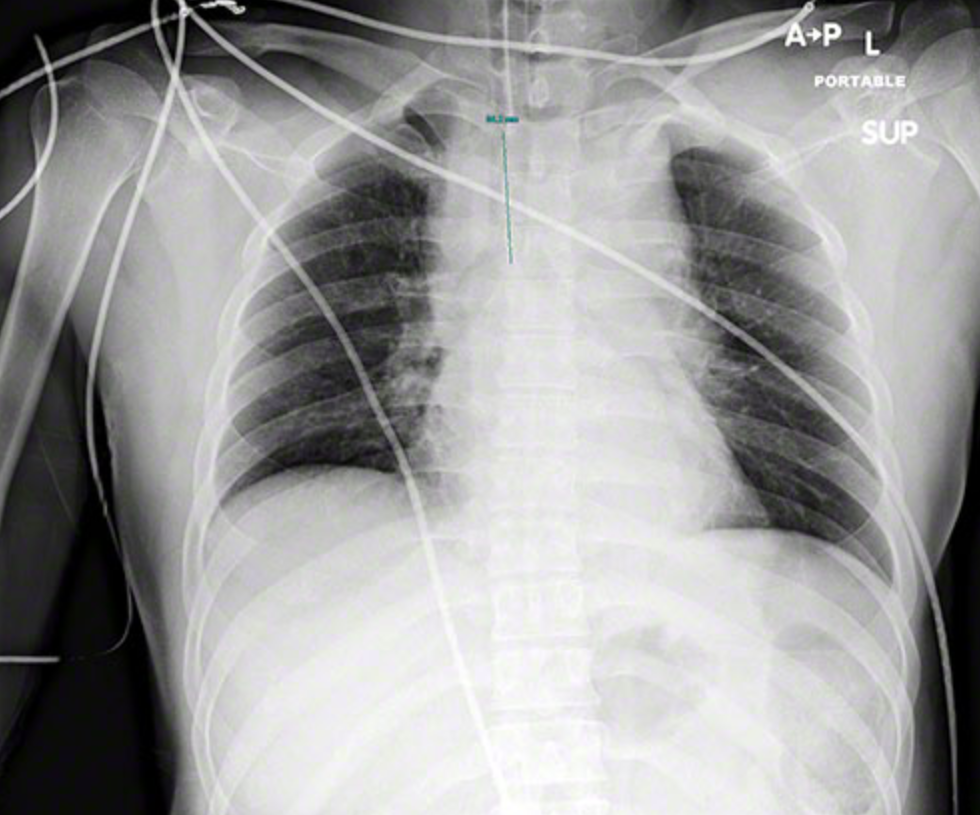
An 18-year-old man is brought to the emergency department (ED) 15 minutes after he was involved in a high-speed motor vehicle collision in which he was the unrestrained driver. The airbags did not deploy on impact. The patient was found unresponsive at the scene by emergency medical technicians, who intubated him prior to transport. On arrival at the ED, he remains unresponsive. Medical history and medications are unknown. Pulse is 100/min, respirations are 16/min, and blood pressure is 105/60 mm Hg. Pulse oximetry on an Fio2of 1.0 shows an oxygen saturation of 100%. Glasgow Coma Scale score is 3. Physical examination shows contusions over the forehead and anterior chest and crepitus of the anterior left chest. Femoral pulses are 1+ bilaterally. Two large-bore intravenous catheters are inserted and 1 L of lactated Ringer solution is administered with no change in hemodynamics. Chest x-ray is shown. Which of the following is the most appropriate diagnostic study at this time?
CorrectIncorrect -
Question 31 of 50
31. Question
A 66-year-old woman comes to the office because of a 6-month history of severe dizziness and a spinning sensation that occurs when she looks up or turns her head quickly. She says she fell 1 week ago during an episode. At that time, she had a brief episode of double vision. She also has a 2-year history of moderate neck pain, which she attributes to “muscle spasms”; since her fall, her pain has become more severe. She has hypertension and type 2 diabetes mellitus. Her medications are lisinopril and metformin. Her mother had a cerebral infarction at the age of 70 years. The patient has smoked one-half pack of cigarettes daily for 40 years. Her pulse is 84/min, and blood pressure is 150/85 mm Hg. Examination shows no nystagmus. Visual field testing shows no abnormalities. There are no cervical bruits. On palpation of the posterior muscles of the neck, there is mild tenderness that increases when the neck is rotated gently. Cardiopulmonary examination shows no abnormalities. Muscle strength is 5/5 in all extremities. Which of the following is the most likely explanation for this patient’s symptoms?
CorrectIncorrect -
Question 32 of 50
32. Question
An 18-year-old man has the sudden onset of rapid, pounding heartbeats. A previous episode occurred while he was drinking coffee and resolved abruptly after 30 minutes. His pulse is 180/min, respirations are 15/min, and blood pressure is 105/85 mm Hg. Examination shows no other abnormalities. Which of the following is the most likely diagnosis?
CorrectIncorrect -
Question 33 of 50
33. Question
A 37-year-old woman comes to the physician for endocarditis prophylaxis prior to undergoing tooth extraction. The patient reports mouth pain but otherwise feels well. Two years ago, echocardiography showed mitral valve prolapse and trace mitral regurgitation. She has no other history of serious illness and takes no medications. Vital signs are within normal limits. Cardiac examination shows a normal S1 and S2; there is no S3or S4, and no murmurs are heard. Which of the following is the most appropriate oral antibiotic prophylaxis prior to this patient’s dental procedure?
CorrectIncorrect -
Question 34 of 50
34. Question
A 5-year-old girl with spastic diplegic cerebral palsy and gastroesophageal reflux disease is brought to the office by her parents for a routine examination. She wears leg braces and occasionally uses a wheelchair for ambulation. Since her last visit 6 months ago, she has had intermittent shortness of breath when walking long distances and has tended to lean toward the right. Her parents say she has had decreased tolerance for sitting in her wheelchair. She was born at 31 weeks’ gestation by cesarean delivery to a 21-year-old woman, gravida 4, para 4; pregnancy was complicated by chorioamnionitis. The patient has undergone soft-tissue release for contractures in her hips and lower extremities. Her medications are baclofen and lansoprazole. She is alert and fully oriented, and she answers questions appropriately. She is at the 40th percentile for height and weight. Vital signs are within normal limits. Mild impingement of the rib cage on the right iliac crest is noted. Cardiopulmonary examination shows no abnormalities. Pelvic obliquity is present. Examination of the upper extremities shows less spasticity and moderate fine motor control when compared with the lower extremities. There is mild tenderness to palpation of the right lower rib cage where it abuts the right iliac crest. Patellar and Achilles deep tendon reflexes are 3+ bilaterally. Which of the following is the most appropriate next step in diagnosis?
CorrectIncorrect -
Question 35 of 50
35. Question
A 54-year-old man comes to the office because of a 4-month history of progressive weakness and numbness of his left leg. He has a 5-year history of type 2 diabetes mellitus treated with metformin. He has worked as a plumber for 34 years; he often crawls into and works in tight spaces, and he frequently moves and lifts heavy objects. On neurologic examination, muscle strength is 5/5 in the thigh adductor, quadriceps, and tibialis anterior muscles on the left and intact on the right. Muscle strength is intact in the iliopsoas, gluteus maximus, thigh abductor, hamstrings, and gastrocnemius muscles bilaterally. Deep tendon reflexes are 1+ in the left knee, 2+ in the right knee, and 2+ in the ankles. Sensation to light touch is mildly decreased over the medial-distal aspect of the left lower extremity and medial aspect of the left foot. Sensation otherwise is intact. Which of the following is the most likely diagnosis?
CorrectIncorrect -
Question 36 of 50
36. Question
A 42-year-old woman with rheumatoid arthritis is admitted to the hospital because of a 3-day history of fever, intermittent severe chest pain, mild abdominal pain, and malaise. She also has a 1-week history of increasing fatigue. The chest pain worsens with inspiration, and she says she now sleeps most comfortably while leaning over her kitchen table. During the past week, she has had increased joint pain and decreased appetite. She has not had vomiting or changes in bowel function. Her medications are methotrexate, prednisone, and acetaminophen with codeine. She does not smoke cigarettes, drink alcohol, or use illicit drugs. She is in moderate distress. She is 165 cm (5 ft 5 in) tall and weighs 59 kg (130 lb); BMI is 22 kg/m2. Her temperature is 38.6°C (101.4°F), pulse is 90/min, respirations are 22/min and shallow, and blood pressure is 140/88 mm Hg. On examination, a pleural friction rub is heard over the lower lobe of the right lung, and a pericardial friction rub is heard over the anterior aspect of the left hemithorax. The spleen tip is palpated 2 cm below the left costal margin. There is no peripheral edema. There is thickening of the synovial membranes and tenderness to palpation of the hands and feet. Laboratory studies show:
Hemoglobin: 11.1 g/dL
Hematocrit: 33%
Mean corpuscular volume (MCV): 88 µm³
Leukocyte count: 1800/mm³
Segmented neutrophils: 65%
Eosinophils: 2%
Basophils: 1%
Lymphocytes: 30%
Monocytes: 2%
Platelet count: 155,000/mm³
Serum:
Urea nitrogen: 24 mg/dL
Creatinine: 1.2 mg/dL
AST: 12 U/L
ALT: 24 U/L
Which of the following is the most likely diagnosis?
CorrectIncorrect -
Question 37 of 50
37. Question
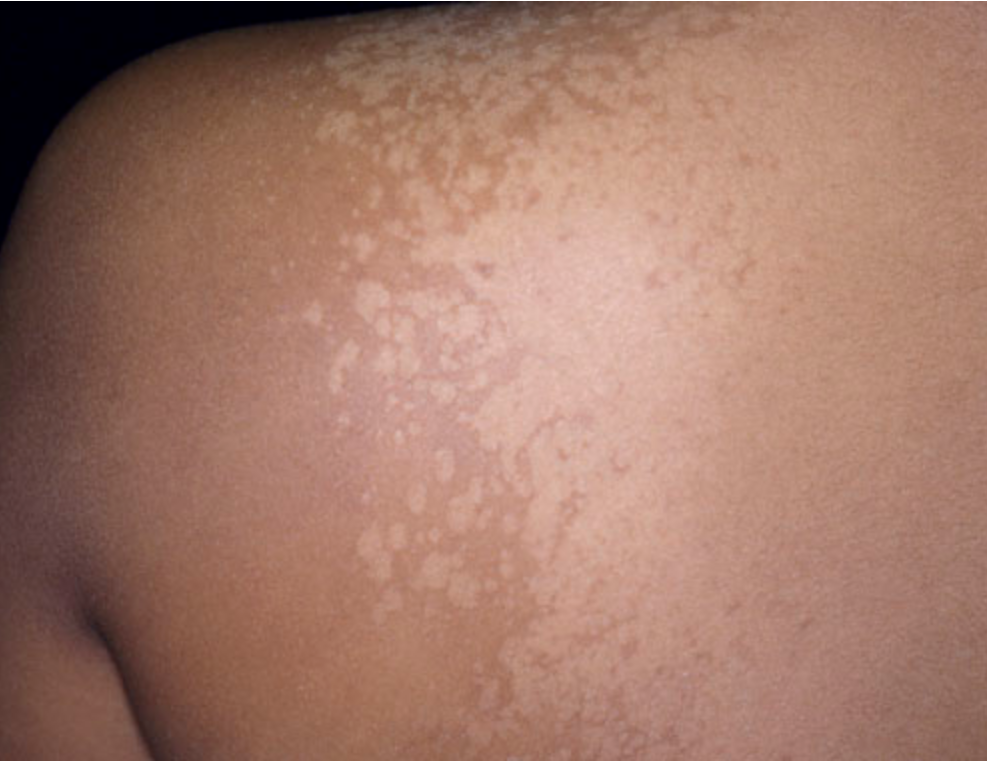
A 15-year-old girl is brought to the physician 2 weeks after noticing multiple areas on her chest and upper back that are lighter than the rest of the skin. She has mild itching over these areas when she plays volleyball. A photograph of the lesions is shown. Which of the following is the most likely diagnosis?
CorrectIncorrect -
Question 38 of 50
38. Question
An 11 -year-old boy is brought to the emergency department because of a 1 -hour history of severe pain and blurred vision in his right eye that began when he was hit in the eye with a tennis ball. He says his eye was closed when he was hit. He has no history of serious illness and takes no medications. He cries and appears anxious but gradually calms down. Vital signs are within normal limits. Ophthalmologic examination of the right eye shows mild periorbital edema; pooling blood in the anterior chamber obscures the lower third of the iris and pupil. Blinking does not increase pain. Gaze is conjugate and symmetric. The right pupil is slightly larger and less reactive to light compared to the left pupil. There are no foreign bodies or visual field defects. The remainder of the neurologic examination shows no focal findings. Which of the following is the most likely diagnosis?
CorrectIncorrect -
Question 39 of 50
39. Question
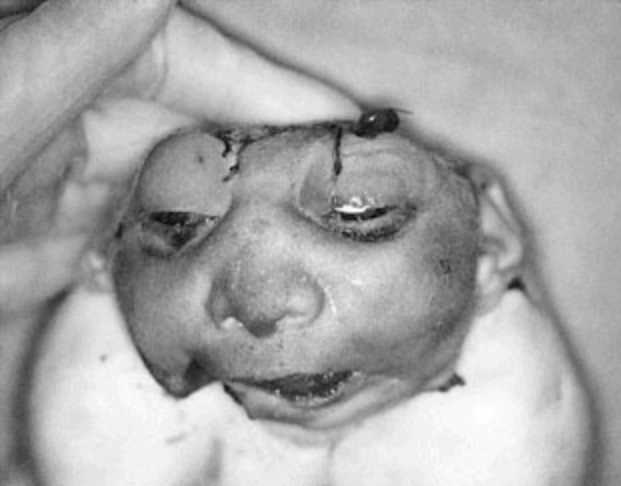
A 25-year-old woman, gravida 1, para 1, delivers a 2268-g (5-lb) male newborn at 38 weeks’ gestation. The mother received no prenatal care. She has no history of serious illness and takes no medications. During pregnancy, she drank four to six glasses of wine daily and used cocaine weekly. A photograph of the newborn is shown. Which of the following during the mother’s pregnancy would have significantly decreased the risk of this fetal outcome?
CorrectIncorrect -
Question 40 of 50
40. Question
A 27-year-old woman comes to the physician because of a 1-year history of daily headaches involving her entire head. The headaches are worse in the afternoon, sometimes throbbing, and are associated with nausea and sensitivity to light. The headaches are worse during menses. She takes four to six tablets of acetaminophen with caffeine daily, which provides partial relief. She takes no other medications. She has smoked one-half pack of cigarettes daily for 10 years and drinks four beers weekly. She works the night shift at an industrial plant. Vital signs are within normal limits. Neurologic examination shows no focal findings. Which of the following is the most appropriate treatment for this patient’s headaches?
CorrectIncorrect -
Question 41 of 50
41. Question
A 52-year-old woman is brought to the emergency department from a homeless shelter 1 hour after she awakened with confusion and agitation. On arrival, she is oriented to person but not to place or time. She is unable to provide any medical history. She had no medications with her at the shelter. She is tremulous and diaphoretic. Her temperature is 38.2°C (100.8°F), pulse is 124/min, and blood pressure is 170/106 mm Hg. Physical examination shows no other abnormalities. Urine toxicology screening is positive for A9-tetrahydrocannabinol and tricyclic antidepressants. Which of the following is the most likely cause of this patient’s current symptoms?
CorrectIncorrect -
Question 42 of 50
42. Question
A 43-year-old woman is brought to the emergency department 30 minutes after the onset of tonic-clonic movements of all extremities at home. Her son says she has a 10-year history of chronic back pain, for which she takes oxycodone and diazepam. She previously worked as a nurse but has not worked during the past 5 years because of the pain. She lives with her two adult sons. On arrival, the patient is observed speaking clearly while the tonic-clonic movements continue. The episode ends 20 minutes after arrival; following the episode, the patient is alert and fully oriented with intact memory. Vital signs are within normal limits. Pulse oximetry on room air shows an oxygen saturation of 99%. Examination shows no evidence of incontinence or tongue biting during the episode. Which of the following is the most appropriate next step in management?
CorrectIncorrect -
Question 43 of 50
43. Question
A 47-year-old woman comes to the physician because of difficulty sleeping for 2 months. During this period, she has been awakening at 3 AM and remaining awake worrying about work, even though she is tired. She has unstable angina pectoris and required placement of one coronary artery stent 6 months ago and a second stent 4 months ago. Her chest pain started to recur 1 month ago, and she now has it almost daily. Evaluation shows no organic cause for her recurring chest pain. She works as an attorney for a large firm and reports that she has been given more responsibility during the past year. For the past month, she has not enjoyed her work as much as she previously did. She forces herself to go to work and has difficulty paying attention while she is there. She is a gourmet cook but no longer prepares meals because she does not enjoy the taste of the food. Physical examination shows no abnormalities. On mental status examination, she has a sad and worried mood and a reactive affect. She is alert and oriented to person, place, and time. She states that she frequently becomes despondent, especially when she thinks about her heart disease. Which of the following is the most likely diagnosis?
CorrectIncorrect -
Question 44 of 50
44. Question
A previously healthy 27-year-old woman comes to the emergency department because of a 2-day history of fever, sore throat, and chills. Eight days ago, she received the diagnosis of Escherichia coli urinary tract infection and began a course of trimethoprim-sulfamethoxazole. During the past 6 years, she has had a total of four urinary tract infections. Her last menstrual period was 14 days ago. She is sexually active with one male partner and uses an oral contraceptive. She exercises regularly. Her temperature is 38.7°C (101.6°F), pulse is 96/min, respirations are 16/min, and blood pressure is 122/78 mm Hg. The sinuses are nontender. There is slight erythema of the oropharynx but no exudates. The remainder of the examination shows no abnormalities. Laboratory studies show:
Leukocyte count: 2200/mm³
Segmented neutrophils: 4%
Lymphocytes: 96%
Serum:
Na⁺: 140 mEq/L
K⁺: 4.6 mEq/L
Cl⁻: 105 mEq/L
HCO₃⁻: 24 mEq/L
Urea nitrogen: 18 mg/dL
Creatinine: 0.9 mg/dL
AST: 34 U/L
ALT: 37 U/L
β-hCG: negative
Urine:
RBC: 0/hpf
WBC: 3–4/hpf
An x-ray of the chest shows no abnormalities. Results of blood and urine cultures are pending. Which of the following is the most likely cause of this patient’s neutropenia?
CorrectIncorrect -
Question 45 of 50
45. Question
A 55-year-old woman comes to the physician because of a 6-week history of easy bruising. Ten years ago, she underwent local resection and chemotherapy for cancer of the right breast. She takes no medications. Examination shows multiple cutaneous ecchymoses over the body, primarily over all the extremities. The spleen is not palpable. Her hemoglobin concentration is 12 g/dL, hematocrit is 34%, and platelet count is 34,000/mm3. Which of the following is the most likely diagnosis?
CorrectIncorrect -
Question 46 of 50
46. Question
A 2-month-old boy is admitted to the hospital because of a 1-day history of coughing, rapid breathing, and poor feeding. He had a temperature of 39°C (102.2°F) 4 hours ago. He has not had a runny nose. One month ago, he was admitted to the hospital for 10 days for treatment of orbital cellulitis. He was born at term after an uncomplicated pregnancy and spontaneous vaginal delivery. Results of maternal prenatal screening, including HIV serologic studies, were negative. On admission, the patient is alert and has grunting respirations and mild intercostal retractions. His temperature is 37.9°C (100.2°F), pulse is 170/min, respirations are 86/min, and blood pressure is 74/48 mm Hg. Pulse oximetry on 40% oxygen via nasal cannula shows an oxygen saturation of 92%. Physical examination shows a supple neck with no adenopathy. Breath sounds are decreased bilaterally. Diffuse crackles are heard in both lungs. Cardiac examination shows a regular rhythm. S1 and S2 are normal. A grade 1/6, systolic ejection murmur is heard at the upper left sternal border. The abdomen is soft and nontender. The liver edge is firm and palpated 4 cm below the right costal margin, and the spleen tip is palpated 2 cm below the left costal margin. Laboratory studies show:
Hemoglobin: 9.6 g/dL
Hematocrit: 29%
Leukocyte count: 9000/mm³
Segmented neutrophils: 70%
Bands: 4%
Eosinophils: 3%
Lymphocytes: 20%
Monocytes: 3%
Platelet count: 220,000/mm³
CD4⁺ T-lymphocyte count: 150/mm³ (Normal ≥ 1750)
Serum:
IgA: <10 mg/dL
IgG: 10 mg/dL
IgM: 10 mg/dL
A chest x-ray shows diffusely hazy lung fields, no cardiomegaly, and a normal mediastinal silhouette. Which of the following is the most likely underlying diagnosis?
CorrectIncorrect -
Question 47 of 50
47. Question
An 87-year-old man comes to the physician because of problems with his memory over the past 6 months. During this period, he has occasionally misplaced his house keys and forgotten to buy certain grocery items unless he has a list. He still enjoys following the stock market daily and visiting his grandchildren monthly. He has a history of benign prostatic hyperplasia and cataracts. His wife has breast cancer, and he is worried that she will suffer. His temperature is 37°C (98.6°F), pulse is 70/min, and blood pressure is 155/90 mm Hg. Physical examination shows an enlarged prostate; no masses are palpated. Neurologic examination shows no focal findings; his speech is fluent, and there is no aphasia. On mental status examination, he is alert and oriented to person, place, and time. His eye contact is good. Range of affect is full. He recalls two of three objects after 5 minutes. Long-term memory is intact. Which of the following is the most likely explanation for these findings?
CorrectIncorrect -
Question 48 of 50
48. Question
A 4-year-old boy is brought to the physician 3 hours after his mother removed a tick from his scalp. She said that he was playing outside this morning. She washes his hair nightly and did not notice the tick last night. He has had no symptoms. He has no history of serious illness. He appears well developed and well nourished and is in no acute distress. Examination shows no abnormalities. Which of the following is the most appropriate next step in management?
CorrectIncorrect -
Question 49 of 50
49. Question
A 3-month-old boy is brought to the physician for evaluation of delayed growth. He was born at term following an uncomplicated pregnancy and delivery. There was no cyanosis at birth. His mother says that he feeds poorly and turns blue around the lips and fingers during feedings. He frequently cries and becomes restless, short of breath, and cyanotic. He is at the 20th percentile for length and 10th percentile for weight. During the examination, he has paroxysms of crying during which he becomes cyanotic; his color is normal at rest. A grade 3/6, systolic ejection murmur is heard at the left sternal border. Which of the following is the most likely diagnosis?
CorrectIncorrect -
Question 50 of 50
50. Question
A 67-year-old woman comes to the physician because she has had a lesion on her right eyelid for 3 months. She has no history of similar lesions. Examination shows a 2 x 1.5 cm lesion on the lower lid of the right eye. A biopsy specimen of the lesion shows basal cell carcinoma. Which of the following is the most appropriate next step in management?
CorrectIncorrect