
CK- NBME 11 – Block 2
Quiz Summary
0 of 50 Questions completed
Questions:
Information
You have already completed the quiz before. Hence you can not start it again.
Quiz is loading…
You must sign in or sign up to start the quiz.
You must first complete the following:
Results
Results
0 of 50 Questions answered correctly
Your time:
Time has elapsed
You have reached 0 of 0 point(s), (0)
Earned Point(s): 0 of 0, (0)
0 Essay(s) Pending (Possible Point(s): 0)
| Average score |
|
| Your score |
|
Categories
- Not categorized 0%
- 1
- 2
- 3
- 4
- 5
- 6
- 7
- 8
- 9
- 10
- 11
- 12
- 13
- 14
- 15
- 16
- 17
- 18
- 19
- 20
- 21
- 22
- 23
- 24
- 25
- 26
- 27
- 28
- 29
- 30
- 31
- 32
- 33
- 34
- 35
- 36
- 37
- 38
- 39
- 40
- 41
- 42
- 43
- 44
- 45
- 46
- 47
- 48
- 49
- 50
- Current
- Review
- Answered
- Correct
- Incorrect
-
Question 1 of 50
1. Question
1 point(s)A 67-year-old man is brought to the emergency department because of a 6-week history of moderate pain in his legs when walking. He says the pain begins after he walks approximately 50 feet; it improves if he stops walking but returns when he tries to move again. He says the pain is worse in his right leg. He has hypertension and hyperlipidemia. His medications are lisinopril, amlodipine, metoprolol, and atorvastatin. He has smoked two packs of cigarettes daily for 40 years. He appears in no acute distress. He is 180 cm (5 ft 11 in) tall and weighs 107 kg (235 lb); BMI is 33 kg/m2. His blood pressure is 150/86 mm Hg. Examination shows sparse hair from 6 cm above the foot to the dorsum of the foot bilaterally. Lower extremity pulses are 1 +. At this time, it is most appropriate to evaluate this patient for which of the following conditions?
CorrectIncorrect -
Question 2 of 50
2. Question
1 point(s)A 52-year-old man comes to the physician 2 weeks after he noted yellowing of his skin, which has since resolved spontaneously. He has hypertension and osteoarthritis. His medications are hydrochlorothiazide and tramadol. He uses intravenous heroin weekly; his last injection was 2 days ago. He is 175 cm (5 ft 9 in) tall and weighs 79 kg (175 lb); BMI is 26 kg/m2. His temperature is 37°C (98.6°F), pulse is 78/min, respirations are 12/min, and blood pressure is 148/92 mm Hg. Examination shows no abnormalities. Serum studies show:
Bilirubin: 2.4 mg/dL
Alkaline phosphatase: 118 U/L
AST: 250 U/L
ALT: 300 U/L
Hepatitis A antibody: negative
HBsAg: negative
HBsAb: negative
Anti-HCV: negative
Which of the following is most likely to confirm the diagnosis?
CorrectIncorrect -
Question 3 of 50
3. Question
1 point(s)A 52-year-old man comes to the physician because of a 3-month history of increasing difficulty with swallowing. He first noted difficulty swallowing solids; during the past 3 weeks, he has had difficulty swallowing fluids. He has had an 18-kg (40-lb) weight loss during this time. He has not had heartburn or nasal regurgitation of fluids. He has no history of serious illness and takes no medications. He has smoked one and one-half packs of cigarettes daily for 34 years and drinks 16 oz of vodka three times weekly. The patient is 180 cm (5 ft 11 in) tall and weighs 68 kg (150 lb); BMI is 21 kg/m2. He appears cachetic. Examination shows no other abnormalities. A percutaneous endoscopic gastrostomy tube is placed, and enteral nutrition is begun. During the next 36 hours, this patient is at increased risk for which of the following laboratory abnormalities?
CorrectIncorrect -
Question 4 of 50
4. Question
1 point(s)A 19-year-old woman with celiac disease comes to the physician because of a 3-month history of daily diffuse aching in her arms and legs. She has not had weakness or numbness. She continues to have diarrhea approximately 3 days weekly. She tries to avoid eating gluten but has found it difficult to maintain an entirely gluten-free diet. Her medications are ferrous sulfate and an oral contraceptive. Her last examination was 2 years ago. She appears tired. She is 170 cm (5 ft 7 in) tall and weighs 54 kg (120 lb); BMI is 19 kg/m2. Her pulse is 67/min, and blood pressure is 105/72 mm Hg. The abdomen is soft, mildly tender, and nondistended; there is no rebound, guarding, or masses. There is mild weakness of the hip flexors and extensors. Serum studies show:
Na⁺ (Sodium): 137 mEq/L
K⁺ (Potassium): 3.9 mEq/L
Cl⁻ (Chloride): 105 mEq/L
HCO₃⁻ (Bicarbonate): 22 mEq/L
Ca²⁺ (Calcium): 8.4 mg/dL
Urea nitrogen (BUN): 20 mg/dL
Creatinine: 0.8 mg/dL
Phosphorus: 2.7 mg/dL
Alkaline phosphatase: 175 U/L
Parathyroid hormone (intact): 870 pg/mL
25-Hydroxyvitamin D: 7 ng/mL (N >20 ng/mL)
Which of the following is the most likely diagnosis?
CorrectIncorrect -
Question 5 of 50
5. Question
1 point(s)A 57-year-old woman comes to the emergency department because of a 6-month history of productive cough that has worsened during the past week. During the past 6 weeks, she also has had progressive shortness of breath, fatigue, and sputum production. She has had four episodes of pneumonia during the past 3 years. She takes no medications. She appears ill. Her temperature is 38.4°C (101°F), pulse is 96/min, and respirations are 22/min. Diffuse crackles and rhonchi are heard bilaterally. The remainder of the examination shows no abnormalities. A chest x-ray shows linear atelectasis and dilated and thickened airways. Which of the following is the most appropriate next step in management?
CorrectIncorrect -
Question 6 of 50
6. Question
1 point(s)A 77-year-old man with hyperlipidemia comes to the physician because of a 3-day history of “turning yellow.” During the past 4 weeks, he also has had a 2.3-kg (5-lb) weight loss despite no change in appetite. He says he feels well. He has not had abdominal pain, nausea, vomiting, or changes in bowel movements. His medications are atorvastatin and daily aspirin. He is 180 cm (5 ft 11 in) tall and weighs 79 kg (175 lb); BMI is 24 kg/m2. His pulse is 80/min and regular, and blood pressure is 130/75 mm Hg. Examination shows jaundice and scleral icterus. There is a palpable, nontender gallbladder; there is no hepatosplenomegaly, and no abdominal masses are noted. Rectal examination shows no masses. Test of the stool for occult blood is negative. Which of the following is the most likely diagnosis?
CorrectIncorrect -
Question 7 of 50
7. Question
1 point(s)A 17-year-old boy comes to the physician for an examination prior to participation in school sports. He feels well. He has no history of concussions or musculoskeletal injuries. He has never fainted with exercise. He has no history of serious illness and takes no medications. There is no family history of unexplained or cardiac death in adults younger than 50 years. The patient appears well. He is 188 cm (6 ft 2 in) tall and weighs 65 kg (143 lb); BMI is 18 kg/m2. His arm span is 200 cm (6 ft 6 in). Vital signs are within normal limits. The upper-to-lower body ratio is decreased. Examination shows a long, thin face and large ears. The sclerae are blue, but the retina can be visualized without difficulty. The upper extremities are thin. Examination of the chest shows pectus carinatum. No murmurs are heard on cardiac examination; S1 and S2are normal. Peripheral pulses are normal. Which of the following is the most appropriate next step in evaluation prior to providing clearance for this patient to participate in sports?
CorrectIncorrect -
Question 8 of 50
8. Question
1 point(s)A previously healthy 1 -year-old boy is brought to the emergency department by his mother because of a 3-day history of fever, fussiness, and poor feeding. He was born at 38 weeks’ gestation and delivered by a midwife at home. His mother received no prenatal care. Immunizations are up-to-date. On arrival, the patient is irritable but consolable and does not appear toxic. His temperature is 40°C (104°F), pulse is 140/min, and respirations are 40/min. Capillary refill time is 2 seconds. The anterior fontanel is open, soft, and flat. The mucous membranes are moist. Examination shows no other abnormalities. Urinalysis shows:
pH: 6.0
Specific gravity: 1.005
Blood: 1+
Protein: 1+
RBC: 10 /hpf
WBC: >100 /hpf
Nitrites: negative
Leukocyte esterase: positive
Results of a complete blood count, serum studies, and blood and urine cultures are pending. Which of the following is the most appropriate next step in diagnosis?
CorrectIncorrect -
Question 9 of 50
9. Question
1 point(s)A 56-year-old man comes to the physician with his wife because of a 2-year history of increasing restlessness while he is asleep. His wife reports that he kicks his legs and swings his arms several times during the night. He appears to be asleep during these episodes, and he typically says that he was dreaming if awakened during an episode. His wife now sleeps in a separate bed after he hit her during one of the episodes 1 year ago. He has a 3-year history of mild depression treated with weekly psychotherapy. He takes no medications. He does not smoke cigarettes, drink alcohol, or use illicit drugs. Examination shows an occasional mild, rhythmic, involuntary shaking of the right hand that is most noticeable when the hand is in his lap. This patient is at greatest risk for developing which of the following conditions?
CorrectIncorrect -
Question 10 of 50
10. Question
1 point(s)A 16-year-old boy is brought to the emergency department 15 minutes after involvement in a motor vehicle collision. He was the restrained driver. His car crashed into the car in front of him, then was hit from behind by a pickup truck. The patient’s car was destroyed, but he was able to walk away from the scene of the collision. On arrival, he is upset and reports moderate chest pain. His pulse is 100/min, respirations are 20/min, and blood pressure is 130/80 mm Hg. Examination shows erythema over the chest in the area where his seat belt had been fastened. No other abnormalities are noted. Serum studies show:
Creatine kinase (CK), total: 221 U/L
CK-MB fraction: 20% (normal <5% of total CK)
Troponin I: 1 ng/mL (normal <0.1)
Troponin T: 0.3 ng/mL (normal <0.1)
Chest x-rays show no abnormalities. An ECG shows a normal sinus rhythm and nonspecific T-wave inversion in leads V3 through V6. Which of the following is the most appropriate next step in management?
CorrectIncorrect -
Question 11 of 50
11. Question
1 point(s)A state health department is alerted to a potential outbreak of hepatitis A during the past 2 weeks involving a restaurant in a city with a population of 350,000. After a preliminary descriptive analysis, including case identification, the health department matches cases with control subjects and examines foods that are potential sources of infection. Which of the following is the most appropriate statistical analysis for the investigators to determine the source of this outbreak?
CorrectIncorrect -
Question 12 of 50
12. Question
1 point(s)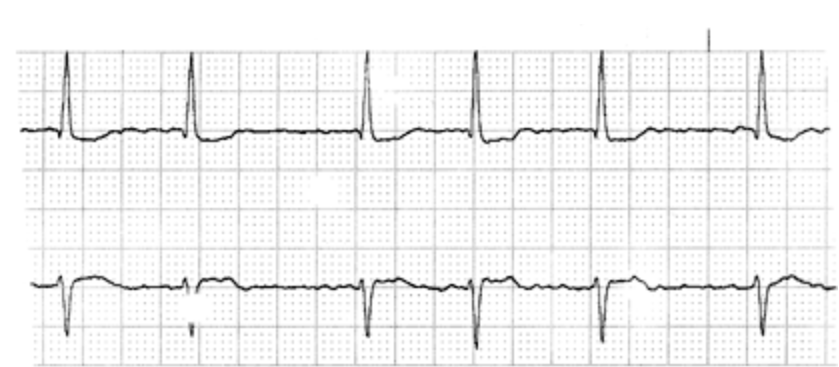
A 52-year-old man is brought to the emergency department because of a 6-hour history of thirst and fatigue and a 2-hour history of light-headedness. He has been working outside during the past 2 days in temperatures reaching 90.0°F. He has no history of serious illness and takes no medications. On arrival, he is lethargic. He is oriented to person but not to place or time. His temperature is 37.2°C (99.0°F), pulse is 74/min and irregular, respirations are 16/min, and blood pressure is 95/64 mm Hg. The lungs are clear to auscultation. No bruits are heard. No murmurs are heard on cardiac examination. The abdomen is nontender. ECG is shown. In addition to intravenous administration of fluids, which of the following is the most appropriate next step in management?
CorrectIncorrect -
Question 13 of 50
13. Question
1 point(s)A previously healthy 19-year-old man comes to the physician because of a 3-day history of an increasingly severe bilateral headache and a 1 -day history of fever and diarrhea. He says he feels sore all over. Use of acetaminophen has not relieved his headache. He is a college student and lives in a dormitory. He is in moderate distress and closes his eyes when lights are turned on. His temperature is 38°C (100.4°F), pulse is 100/min, respirations are 22/min, and blood pressure is 120/70 mm Hg. Examination shows dry mucous membranes and nuchal rigidity. Funduscopic examination shows no abnormalities. Neurologic examination, including mental status examination, shows no abnormalities. His serum glucose concentration is 90 mg/dL. A CT scan of the head without contrast shows no abnormalities. A lumbar puncture is performed. Cerebrospinal fluid analysis shows a glucose concentration of 70 mg/dL, a protein concentration of 35 mg/dL, and a leukocyte count of 50/mm3 (100% monocytes). Which of the following is the most likely diagnosis?
CorrectIncorrect -
Question 14 of 50
14. Question
1 point(s)An 82-year-old man is brought to the emergency department because of a 2-hour history of progressive shortness of breath. He has not had chest pain, fever, chills, or cough. He has coronary artery disease, essential hypertension, and hypercholesterolemia. Three years ago, he underwent uncomplicated coronary artery bypass grafting. His medications are clopidogrel, enalapril, rosuvastatin, and daily aspirin. He smoked one and one-half packs of cigarettes daily for 59 years but quit 3 years ago. He drinks two glasses of wine daily. His temperature is 37°C (98.6°F), pulse is 90/min and regular, respirations are 26/min, and blood pressure is 118/78 mm Hg. Examination shows jugular venous distention. Crackles are heard in the lung bases; scattered expiratory wheezes are heard in all lung fields. On cardiac examination, an S3 gallop is heard. There is 2+ pretibial and 3+ pedal edema bilaterally. A chest x-ray shows bilateral pulmonary infiltrates, prominent hilar vascularity, and cardiomegaly. Which of the following is most likely to be decreased in this patient?
CorrectIncorrect -
Question 15 of 50
15. Question
1 point(s)A 67-year-old woman comes to the office for evaluation 2 weeks before a scheduled right total hip replacement under general anesthesia. She has a 20-year history of rheumatoid arthritis. Current medications are methotrexate, prednisone, and leflunomide. On examination, any movement of the right hip causes pain. Results of laboratory studies are within the reference ranges. In addition to a chest x-ray and posteroanterior and lateral x-rays of the right hip, which of the following is the most appropriate imaging study before the operation?
CorrectIncorrect -
Question 16 of 50
16. Question
1 point(s)A 30-year-old man is brought to the emergency department 30 minutes after a 20-second generalized tonic-clonic seizure. He has a 3-week history of early morning projectile vomiting, headache, and blurred vision. On arrival, he is mildly lethargic. He has no history of serious illness and takes no medications. His father died of brain cancer at the age of 45 years. The patient has no known sick contacts. He does not smoke cigarettes or drink alcohol. His temperature is 37°C (98.6°F), pulse is 92/min, respirations are 18/min, and blood pressure is 138/98 mm Hg. Pulse oximetry on room air shows an oxygen saturation of 98%. Finger-nose testing shows dysmetria. There is decreased rapid alternating movement of the hands. His gait is unsteady. An MRI of the brain shows a vascular tumor in the posterior fossa and ventriculomegaly of the third and lateral ventricles. Which of the following tests is most likely to reveal a second tumor with the same genetic abnormality?
CorrectIncorrect -
Question 17 of 50
17. Question
1 point(s)A 19-year-old woman is admitted to the hospital because of a 6-day history of severe abdominal pain and bloody diarrhea. She has no history of serious illness. Her temperature is 37.8°C (100°F), pulse is 75/min, respirations are 26/min, and blood pressure is 120/70 mm Hg. Abdominal examination shows no distention; there is mild tenderness to palpation. Laboratory studies show:
Hemoglobin: 9.2 g/dL
Reticulocyte count: 5.4%
Platelet count: 17,000/mm³
Serum:
Total bilirubin: 2.5 mg/dL
Haptoglobin: 8.2 mg/dL (normal 40–265)
Lactate dehydrogenase (LDH): 4285 U/L
Which of the following is the most likely infectious agent?
CorrectIncorrect -
Question 18 of 50
18. Question
1 point(s)A 26-year-old nulligravid woman comes to the clinic because of a 6-week history of a mildly painful lump in her right breast. She has no history of serious illness or operative procedures. She takes no medications. Her paternal aunt was diagnosed with invasive breast cancer at the age of 65 years and underwent successful treatment with mastectomy and chemotherapy. A well-circumscribed, mildly tender, 1.5-cm mass is palpated in the upper outer quadrant of the patient’s right breast, approximately 4 cm from the nipple. No other abnormalities are noted. Which of the following is the most appropriate next step in management?
CorrectIncorrect -
Question 19 of 50
19. Question
1 point(s)A 32-year-old man who is in the US Marine Corps is being discharged from the hospital after sustaining injuries 2 weeks ago in Southwest Asia when a rocket exploded a few yards away from him. He sustained fragmentation wounds to the right upper extremity, abdomen, and lower extremities bilaterally. At the time of injury, he received a dose of tetanus toxoid and underwent debridement and irrigation of his soft tissue wounds. Exploratory laparotomy showed a hepatic laceration and splenic laceration requiring splenectomy. He has no other history of major medical illness and takes no medications. He does not smoke. He drinks four 12-oz beers every weekend. Today, he reports no concerns. Vital signs are within normal limits. Physical examination shows a well-healing midline abdominal incision and well-healing wounds over the right upper and lower extremities. Which of the following is the most appropriate vaccination for this patient at this time?
CorrectIncorrect -
Question 20 of 50
20. Question
1 point(s)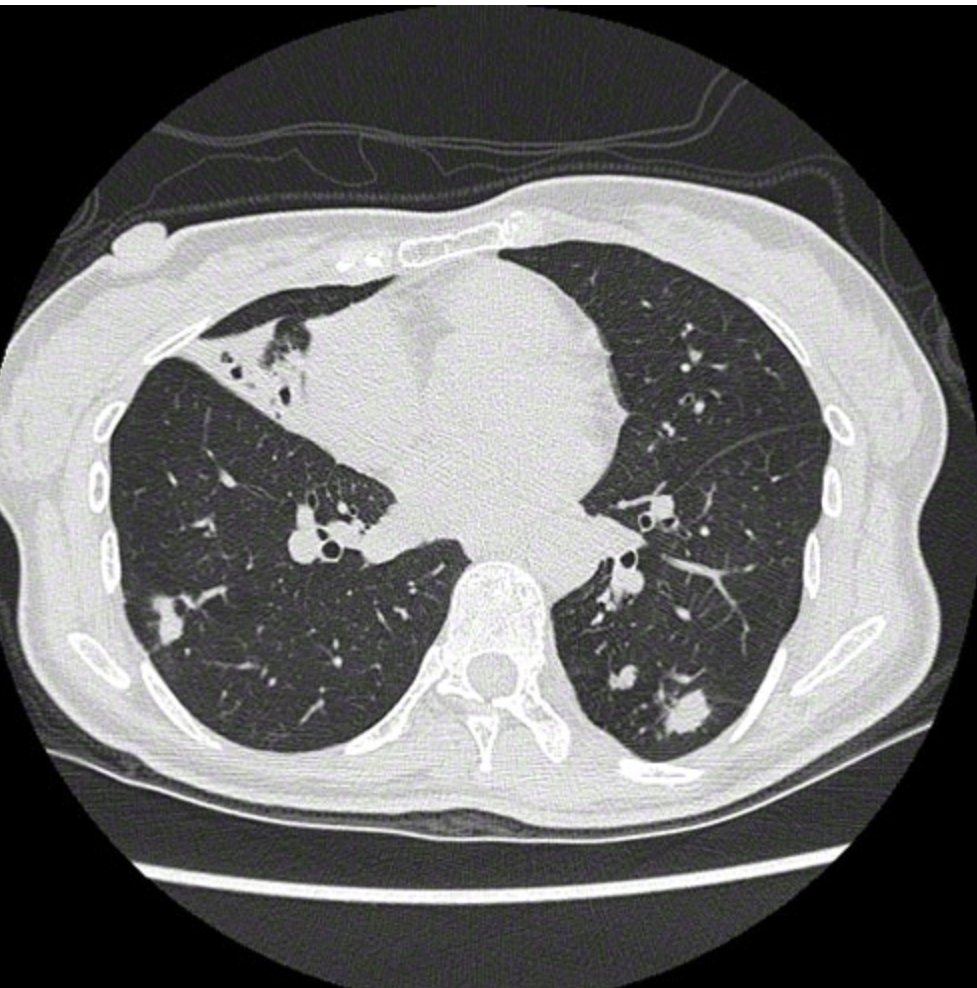 ‘
‘A 55-year-old woman comes to the office because of a 6-month history of cough productive of yellow sputum and a 1-week history of intermittent bloody streaks in her sputum. She also reports occasional night sweats during the past 3 months and an unintentional weight loss of 4.5 kg (10 lb) during the past year. She has not had fever, chills, chest pain, or shortness of breath. Medical history is notable for scoliosis and gastroesophageal reflux disease. Her only medication is omeprazole. She does not smoke cigarettes. She is 155 cm (5 ft 1 in) tall and weighs 40 kg (88 lb); BMI is 17 kg/m2. Temperature is 36.5°C (97.7°F), pulse is 102/min, respirations are 18/min, and blood pressure is 110/61 mm Hg. Pulse oximetry on room air shows an oxygen saturation of 98%. Auscultation of the lungs shows inspiratory crackles in the anterior right mid lung field. Musculoskeletal examination shows marked scoliosis. The remainder of the examination shows no abnormalities. X-ray of the chest shows multiple nodules in the left lower lobe. CT scan of the chest is shown. Which of the following is the most appropriate next step in management?
CorrectIncorrect -
Question 21 of 50
21. Question
1 point(s)A 25-year-old man is in the intensive care unit 2 weeks after he sustained third-degree burns over 55% of his total body surface area. He is sedated with fentanyl and midazolam, orotracheally intubated, and mechanically ventilated. He has undergone five skin grafting procedures since admission. His burns are 45% covered. He has not had any infection. Pulse is 110/min, and blood pressure is 105/62 mm Hg. Examination shows no abnormalities of the head or neck. There are clean, dry bandages over the chest, abdomen, and lower extremities. Which of the following is the most appropriate next step in management of this patient’s airway?
CorrectIncorrect -
Question 22 of 50
22. Question
1 point(s)A 42-year-old woman comes to the office for follow-up of a renal calculus that was diagnosed in the emergency department 2 weeks ago. She passed the calculus in the emergency department after several hours of treatment with intravenous saline and pain medication. Today, she says she has not had any pain since that time. Her only medications are occasional acetaminophen and ibuprofen. She exercises three to four times weekly, follows a low-sodium diet, does not smoke cigarettes, and drinks two glasses of red wine nightly. She works as a physician. She is 170 cm (5 ft 7 in) tall and weighs 63 kg (140 lb); BMI is 22 kg/m2. Temperature is 37.1°C (98.8°F), pulse is 72/min, respirations are 12/min, and blood pressure is 138/86 mm Hg. Physical examination discloses no abnormalities. Results of serum studies are shown:
Calcium: 11.0 mg/dL
Urea nitrogen: 15 mg/dL
Creatinine: 0.8 mg/dL
Phosphorus: 3.8 mg/dL
Results of the remainder of a basic metabolic panel and complete blood count are within the reference ranges. Which of the following is most appropriate to obtain to evaluate this patient’s increased serum calcium concentration?
CorrectIncorrect -
Question 23 of 50
23. Question
1 point(s)An asymptomatic 57-year-old woman comes to the physician to request a new blood test for the early detection of pancreatic cancer that she read about in a newspaper article. She is concerned about her risk because her stepmother died of pancreatic cancer at the age of 61 years. The patient has no history of serious illness and takes no medications. Examination shows no abnormalities. The physician agrees to perform the test, and the results are positive. The prevalence of pancreatic cancer in the community is 1%. The test has a sensitivity of 85% and a specificity of 90%. In a discussion of the test results with the patient, which of the following is the most appropriate explanation for her risk for pancreatic cancer?
CorrectIncorrect -
Question 24 of 50
24. Question
1 point(s)A 37-year-old woman comes to the physician with her husband because she has been unable to conceive for 13 months. They each have one child from previous marriages. The patient reports that menses have been occurring at irregular 4-month intervals during the past year. Her last menstrual period was 3 months ago. She has no history of gynecologic illness or abnormal Pap smears. She takes no medications. She exercises regularly but says that she has had a 4.5-kg (10-lb) weight gain during the past 2 years. She appears well nourished. She is 168 cm (5 ft 6 in) tall and weighs 70 kg (154 lb); BMI is 25 kg/m2. Physical examination shows no hirsutism or galactorrhea. Pelvic examination shows no abnormalities. A urine pregnancy test is negative. Basal body temperature charts show a monophasic pattern. Which of the following is the most appropriate next step in diagnosis?
CorrectIncorrect -
Question 25 of 50
25. Question
1 point(s)A 42-year-old man with anemia comes to the physician for a follow-up examination. Physical examination shows no abnormalities. Laboratory studies show:
Hematocrit: 28%
Mean corpuscular volume: 62 µm³
Leukocyte count: 8000/mm³
Reticulocyte count: 5%
Platelet count: 150,000/mm³
Serum bilirubin: 2.7 mg/dL
Hemoglobin A: 35% (N = 95%–98%)
Hemoglobin A₂: 6% (N = 2%–4%)
Hemoglobin F: 59% (N = 0%–2%)
A blood smear shows numerous nucleated erythrocytes with marked anisopoikilocytosis. Which of the following is the most likely diagnosis?
CorrectIncorrect -
Question 26 of 50
26. Question
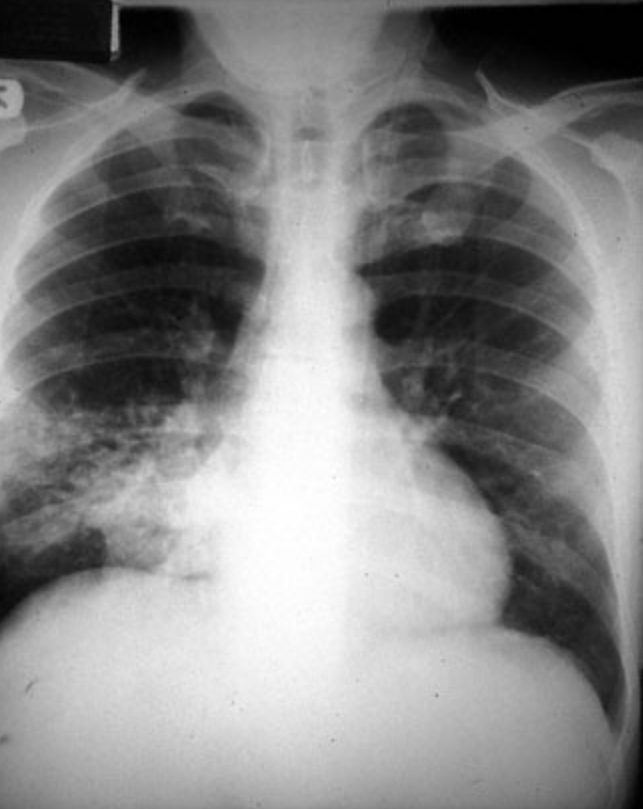
1 point(s)A 24-year-old man comes to the physician because of a 1 -week history of worsening cough productive of scant yellowish sputum. He smokes marijuana daily but does not use tobacco or alcohol. He had asthma in childhood but has not required any medication for more than 10 years. He has sickle cell trait. His temperature is 38°C (100.5°F), pulse is 80/min, respirations are 18/min, and blood pressure is 120/75 mm Hg. Pulse oximetry on room air shows an oxygen saturation of 96%. Examination shows a persistent cough and moist oral mucosa. Crackles are heard in the right middle lung field. Cardiac and abdominal examinations show no abnormalities. His hemoglobin concentration is 14 g/dL, leukocyte count is 12,000/mm3, and platelet count is 580,000/mm3. An x-ray of the chest is shown. Which of the following is the most appropriate pharmacotherapy?
 CorrectIncorrect
 -
Question 27 of 50
27. Question
1 point(s)A 14-year-old boy is brought to the physician because his parents are concerned that he is much shorter than his peers. He feels well. On questioning, he reports that he has not had constipation, dry skin, or urinary frequency. He has no history of serious illness. There is no family history of growth abnormalities. His mother is 160 cm (5 ft 3 in) tall, and his father is 173 cm (5 ft 8 in) tall. The patient is just below the 3rd percentile for height and weight and at the 50th percentile for BMI. Review of his growth chart shows he has been growing parallel to but below the 3rd percentile since the age of 2 years. On examination, the thyroid gland is barely palpable and appears normal. Genital and pubic hair development are Tanner stage 1. The remainder of the examination shows no abnormalities. Which of the following is the most likely diagnosis?
CorrectIncorrect -
Question 28 of 50
28. Question
1 point(s)A 25-year-old primigravid woman at 20 weeks’ gestation comes to the physician because of a 3-week history of feeling flushed and shaking of her hands. She has been crying frequently, and her husband has told her that she seems more irritable. Her pregnancy had been uncomplicated. She has had a 4.5-kg (10-lb) weight loss since her last examination 4 weeks ago. Her temperature is 37.8°C (100°F), pulse is 115/min, and blood pressure is 145/90 mm Hg. Her skin is smooth, moist, and velvety to the touch. Examination shows a small, diffuse, smooth, soft goiter. There is a fine continuous tremor bilaterally. Her serum free thyroxine concentration is 14.2 ng/dL, and serum thyroid-stimulating hormone concentration is less than 0.002 pU/mL. Which of the following is the most appropriate initial step in management?
CorrectIncorrect -
Question 29 of 50
29. Question
1 point(s)A 47-year-old woman with type 2 diabetes mellitus comes to the physician because of a 1-month history of indigestion after large meals and a 2-week history of poor exercise tolerance. She can no longer walk up one flight of stairs without becoming short of breath. She also has hypertension, hyperlipidemia, and osteoarthritis that affects both knees. Her mother had a myocardial infarction at the age of 60 years. The patient’s medications are long-acting insulin, atorvastatin, enalapril, and 81-mg aspirin daily. She has never smoked cigarettes. She is 168 cm (5 ft 6 in) tall and weighs 82 kg (180 lb); BMI is 29 kg/m2. Examination shows no abnormalities. A resting ECG shows no abnormalities. Which of the following is the most appropriate next step in diagnosis?
CorrectIncorrect -
Question 30 of 50
30. Question
1 point(s)Seven days after he had a cerebral infarction, a 72-year-old man remains in the hospital and cannot be weaned from the ventilator. He is unable to eat or drink. He has a signed advance directive that requests withdrawal of all life support if he is unable to survive without it. Examination shows cortical blindness. The gag reflex is poor. There is expressive aphasia. The patient is able to respond to questions using nonverbal techniques. He can correctly identify the voices of family members. The physician asks the patient if he would like a tracheostomy and gastrostomy feeding tube, and the patient indicates “no” by squeezing the physician’s hand twice. The patient’s wife and son support his decision and request intravenous morphine to allow him “to die quickly.” Which of the following is the most appropriate next step in management?
CorrectIncorrect -
Question 31 of 50
31. Question
1 point(s)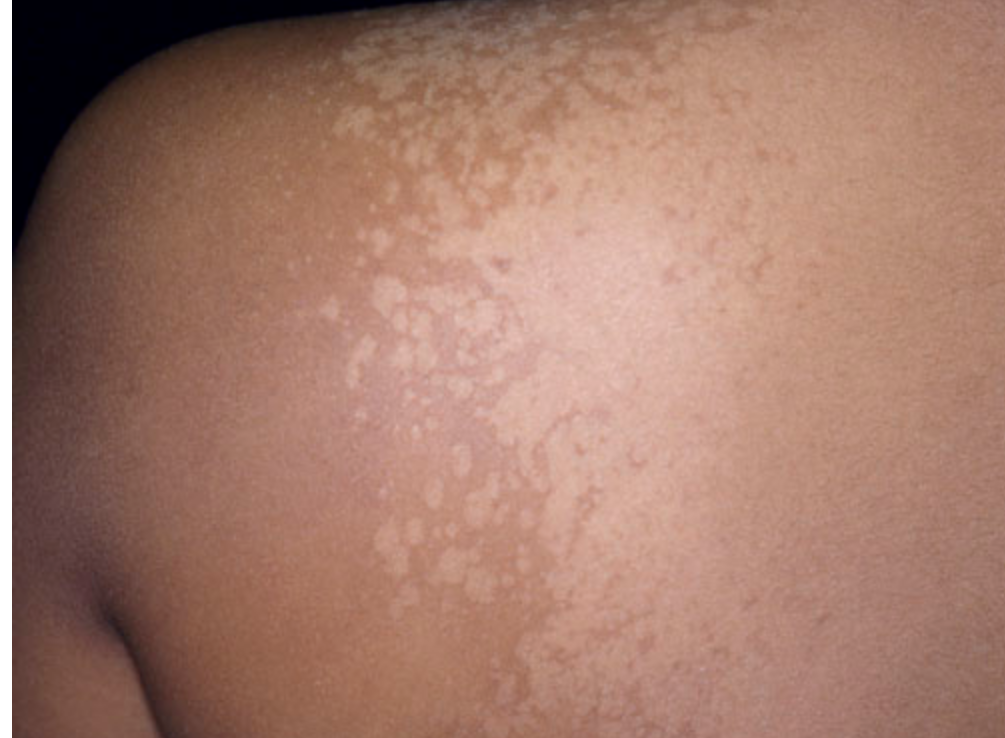
A previously healthy 14-year-old boy is brought to the physician because of a 1-week history of a rash over his neck, back, and chest. It is not itchy or painful. He has had no other symptoms. A photograph of the lesions is shown. Which of the following is the most appropriate pharmacotherapy?
CorrectIncorrect -
Question 32 of 50
32. Question
1 point(s)A 17-year-old boy is brought to the emergency department 1 hour after he sustained a stab wound to his abdomen. He has no history of serious illness and takes no medications. He is alert and communicative and reports severe abdominal pain. His temperature is 37.8°C (100°F), pulse is 130/min, and blood pressure is 110/70 mm Hg. Examination shows a 2-cm, jagged laceration over the anterior abdominal wall in the left lower quadrant. Wound exploration shows penetration of the underlying fascia. Which of the following is the most appropriate next step in management?
CorrectIncorrect -
Question 33 of 50
33. Question
1 point(s)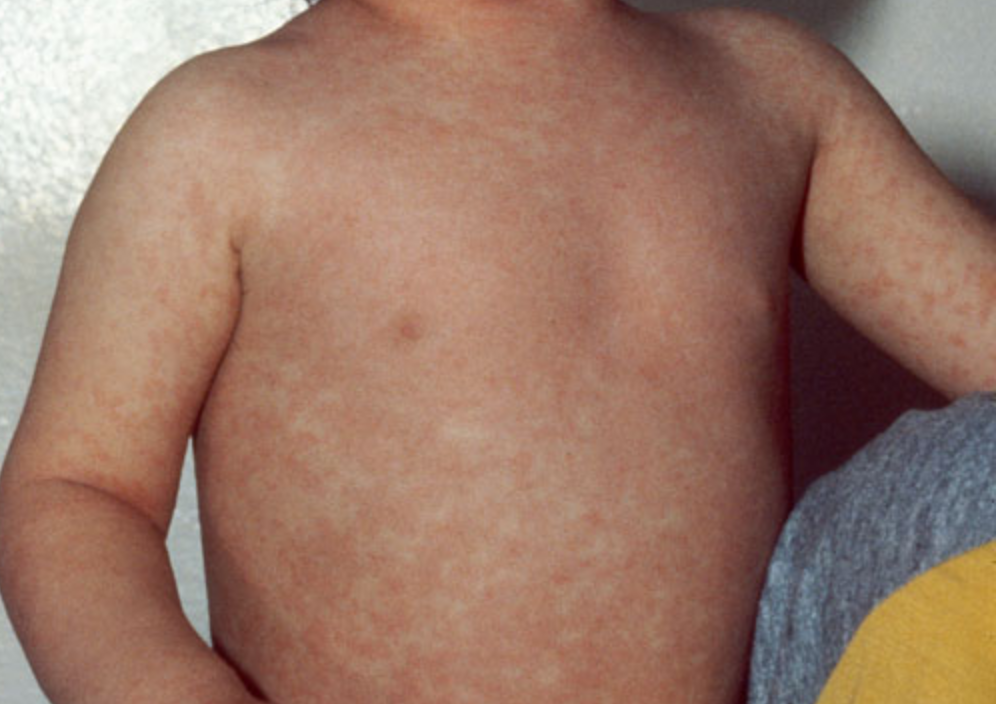
A 16-month-old boy is brought to the physician by his parents because of a 2-day history of rash. He has not been scratching it. He has not had runny nose, watery eyes, cough, or change in appetite. There are no current known cases of measles in the community, and his family has not traveled recently. He was born at 39 weeks’ gestation following an uncomplicated pregnancy and delivery. He was breast-fed for the first 6 months. He received all recommended vaccines for the first 6 months of life. His mother declined to have him receive the varicella vaccine. He received the measles-mumps-rubella vaccine 10 days ago. Growth and development are appropriate for age. On examination, he is playful and alert. His temperature is 37.7°C (99.9°F). A photograph of the rash is shown. The remainder of the examination shows no abnormalities. Which of the following is the most likely cause of this patient’s rash?
CorrectIncorrect -
Question 34 of 50
34. Question
1 point(s)A 12-year-old girl is brought to the office by her mother because of a 3-month history of painless lumps around her knees and ankles. They have not affected her activity. She has not had nausea, vomiting, fever, chills, or malaise. She has no history of serious illness. Immunizations are up-to-date. Growth and development are appropriate for age. Vital signs are within normal limits. Examination shows aligned extremities. There are 10-mm and 5-mm masses palpable over the anterolateral aspect of the knees and ankles, respectively. Range of motion of the knees and ankles is full and painless. Neurovascular examination shows no abnormalities. X-rays of the knees and ankles show bony extensions corresponding to each palpated mass, appearing to originate at or near the physes. The bony extensions are well corticated with no sclerotic or lytic properties. Which of the following is the most likely diagnosis?
CorrectIncorrect -
Question 35 of 50
35. Question
1 point(s)A 32-year-old man with major depressive disorder has had the sensation of insects crawling under his skin for 2 weeks. He was initially treated for scabies in the emergency department. When he went to the dermatology clinic for a follow-up examination, he was told he had herpes zoster. He has continued to use acyclovir and the topical scabies preparation prescribed, but his symptoms have worsened, and he now sees tiny worms crawling out from his skin. He appears anxious but healthy. He has scattered excoriations over his face, head, abdomen, and upper and lower extremities. The lesions are punched-out sores on a clean base. Toxicology screening is most likely to show which of the following?
CorrectIncorrect -
Question 36 of 50
36. Question
1 point(s)A 37-year-old woman, gravida 3, para 3, comes for a routine health maintenance examination. Physical examination shows a 3-cm, nontender, fluctuant mass involving the left posterior vulva underlying the mucosa of the vestibule and external to the hymenal ring. Which of the following is the most likely diagnosis?
CorrectIncorrect -
Question 37 of 50
37. Question
1 point(s)A 72-year-old man comes to the physician because of a 1-month history of difficulty maintaining an erection. He has been married for 50 years, and he and his wife have not had any previous difficulty with sexual intercourse. He has a history of angina pectoris and underwent coronary angioplasty 6 years ago. He takes sublingual nitroglycerin as needed. He drinks two alcoholic beverages daily. Examination shows no abnormalities. Which of the following is the most appropriate recommendation with respect to this patient’s sexual activity?
CorrectIncorrect -
Question 38 of 50
38. Question
1 point(s)A 21-year-old man comes to student health services because of anxiety and an inability to concentrate that began 6 weeks ago after he learned that his parents are getting a divorce. He says that he is not feeling like himself and that his academic performance has deteriorated. He has not had changes in sleep or appetite. He reports that he still enjoys sports and spending time with his girlfriend. Physical examination shows no abnormalities. On mental status examination, he says that he is hopeful about his future and is looking forward to starting a job in a few months. There is no evidence of suicidal ideation or psychosis. Which of the following is the most likely diagnosis?
CorrectIncorrect -
Question 39 of 50
39. Question
1 point(s)A 32-year-old woman, gravida 3, para 1, aborta 1, is brought to the emergency department at 28 weeks’ gestation because of uterine contractions for the past 4 hours. Her first pregnancy ended in a spontaneous abortion at 16 weeks’ gestation, and her second pregnancy resulted in a delivery at 28 weeks’ gestation; the newborn initially had respiratory distress. This pregnancy has been progressing normally. Her temperature is 37°C (98.6°F), pulse is 86/min, respirations are 16/min, and blood pressure is 120/70 mm Hg. Examination shows a uterus consistent in size with a 28-week gestation. The cervix is partially effaced. Uterine contractions occur every 5 minutes. Which of the following is the most appropriate pharmacotherapy at this time?
CorrectIncorrect -
Question 40 of 50
40. Question
1 point(s)A 42-year-old woman comes to the physician because of progressive shortness of breath during the past 6 months. She now has to rest three or four times when climbing one flight of stairs. She has smoked one pack of cigarettes daily for 26 years. She has a chronic nonproductive cough and has wheezing controlled with an albuterol inhaler two to three times weekly. During the past year, her BMI has increased from 45 kg/m2 to 52 kg/m2. Her temperature is 37°C (98.6°F), pulse is 95/min, respirations are 24/min and shallow, and blood pressure is 140/90 mm Hg. The lungs are clear to auscultation. Cardiac examination shows no abnormalities. The abdomen is distended. There is 1 + edema of the ankles. Arterial blood gas analysis on room air shows:
pH: 7.37
PCO₂: 48 mm Hg
PO₂: 62 mm Hg
O₂ saturation: 92%
Her FEV1 is 75% of predicted, and total lung capacity is 50% of predicted. Which of the following is the most likely diagnosis?
CorrectIncorrect -
Question 41 of 50
41. Question
1 point(s)A 6-month-old boy is brought for a follow-up examination because of chronic constipation since the age of 1 week. Current treatment with rectal stimulation, glycerin suppositories, and 4 ounces of prune juice produces one firm string-like stool every 4 days. He was breast-fed until 2 weeks of age and then switched to a cow’s milk-based formula. His current diet also includes cereals, fruits, and pureed vegetables. He has no vomiting but does occasionally spit up after meals. Growth and development are appropriate for age. Immunizations are up-to-date. Abdominal examination shows distention with no tenderness. Rectal examination shows no palpable stool in the ampulla. Which of the following is the most appropriate next step in management?
CorrectIncorrect -
Question 42 of 50
42. Question
1 point(s)A 25-year-old woman comes to the physician because of shortness of breath, marked malaise, weakness, and fatigue for 4 hours. She felt well until 24 hours ago when she developed muscle soreness after an unusually strenuous physical workout; she took ibuprofen for the pain 1 hour before her symptoms began. She has a history of frequent migraines that have been prevented by taking metoprolol (twice daily) over the past month. Her blood pressure is 100/70 mm Hg. Examination shows facial flushing and mild periorbital edema. Multiple wheezes are heard throughout the lung fields. Avoidance of which of the following substances is most likely to prevent recurrence of a similar episode?
CorrectIncorrect -
Question 43 of 50
43. Question
1 point(s)A 3-day-old newborn is brought to the physician because of jaundice. The mother states that he was born at home. His temperature is 37°C (98.6°F), pulse is 130/min, respirations are 40/min, and palpable systolic blood pressure is 55 mm Hg. Examination shows bilateral eyelid swelling with copious purulent secretions. Administration of which of the following is most likely to have prevented this condition?
CorrectIncorrect -
Question 44 of 50
44. Question
1 point(s)A 37-year-old man comes to the physician for a follow-up examination. He was diagnosed with HIV infection 3 weeks ago. He is asymptomatic and takes no medications. His temperature is 37.2°C (99°F), pulse is 100/min, and blood pressure is 100/60 mm Hg. Examination shows no abnormalities except for erythematous scaling at the hairline and the nasolabial folds. His CD4+ T-lymphocyte count is 160/mm3 (Normal>500), and plasma HIV viral load is 25,000 copies/mL. Which of the following is the most appropriate pharmacotherapy?
CorrectIncorrect -
Question 45 of 50
45. Question
1 point(s)Twenty-four hours after admission to the hospital for a head injury sustained in a motor vehicle collision, an unconscious 23-year-old man has increased urine output. His urine output was 40 mL/h to 60 ml/h during the first 10 hours after admission and has been 450 mL/h during the past 3 hours. On admission, CT scan of the head showed multiple fractures of the facial bones and base of the skull with a minor intracranial hemorrhage. He has no history of serious illness. He is receiving 0.9% saline (75 mL/h). His pulse is 96/min, and blood pressure is 103/68 mm Hg. There is no jugular venous distention when supine. The lungs are clear to auscultation. Heart sounds are normal. There is no peripheral edema. Laboratory studies show:
Serum
Na⁺: 148 mEq/L
K⁺: 4.1 mEq/L
Cl⁻: 102 mEq/L
HCO₃⁻: 28 mEq/L
Glucose: 95 mg/dL
Creatinine: 1 mg/dL
Urine osmolality: 105 mOsmol/kg H₂O
Which of the following is the most appropriate next step in management?
CorrectIncorrect -
Question 46 of 50
46. Question
1 point(s)A case-control study is conducted to determine if the relationship between estrogen replacement therapy (ERT) and the risk for breast cancer is affected by estrogen formulation. Cases consist of 705 women with a history of breast cancer; controls consist of 692 randomly selected, age-matched women. All participants range in age from 50 to 74 years. Researchers record the following ERT data from participants: cumulative dosage, type of formulation, and the duration of treatment. Researchers also record patient height and weight, family history of breast cancer, and reproductive history. Results show that the type of estrogen formulation does not affect the risk for breast cancer. Which of the following raises the most concern regarding the validity of this conclusion?
CorrectIncorrect -
Question 47 of 50
47. Question
1 point(s)A 42-year-old woman comes to the physician because of decreased energy, apathy, and difficulty sleeping since being fired from her job 3 weeks ago. Since then, she has awakened at 4 AM daily and has been unable to fall back asleep. She also has crying spells every morning. During the past 6 months, she has had a 3.2-kg (7-lb) weight loss. She has no history of serious illness and takes no medications. Her father committed suicide at the age of 52 years. The patient is 170 cm (5 ft 7 in) tall and weighs 69 kg (152 lb); BMI is 24 kg/m2. Physical examination shows no abnormalities. On mental status examination, she is sad and tearful. Her speech is soft and goal directed. She says that she has not thought about suicide and does not want to die. Laboratory findings, including a complete blood count, serum electrolyte concentrations, and serum thyroid- stimulating hormone concentration, are within the reference range. Which of the following is the most appropriate next step in management?
CorrectIncorrect -
Question 48 of 50
48. Question
1 point(s)A 62-year-old woman is scheduled for discharge 3 days after admission to the hospital for a small infarction in the distribution of the left middle cerebral artery. Her presenting symptom of mild weakness of the right upper and lower extremities has gradually resolved during the past 3 days. On admission, echocardiography and ambulatory ECG monitoring showed no abnormalities. She has a 5-year history of hypertension treated with hydrochlorothiazide and atenolol. She has no other personal history of serious illness. She has never smoked. Vital signs are within normal limits. Cardiac examination shows a regular rhythm and no murmurs. Neurologic examination shows no focal findings. In addition to aspirin therapy, which of the following is the most appropriate pharmacotherapy to prevent recurrent cerebral infarction in this patient?
CorrectIncorrect -
Question 49 of 50
49. Question
1 point(s)A 57-year-old woman with atrial fibrillation comes to the physician because of a 2-week history of pain with urination, urinary frequency, and blood-tinged urine. She underwent hysterectomy for endometriosis at the age of 45 years. Current medications include estrogen replacement, digoxin, and warfarin. Her temperature is 36.7°C (98°F). Examination shows no abnormalities. Which of the following is the most likely diagnosis?
CorrectIncorrect -
Question 50 of 50
50. Question
1 point(s)An asymptomatic 47-year-old woman comes to the physician for a routine health maintenance examination. She has no history of rheumatic fever. She takes no medications. Her pulse is 70/min, and blood pressure is 150/60 mm Hg. A grade 2/6 decrescendo murmur that begins after S2 is heard at the left sternal border. Which of the following is the most likely diagnosis?
CorrectIncorrect