
CK- UWSA 2- Block 3
Time limit: 0
Quiz Summary
0 of 40 Questions completed
Questions:
Information
You have already completed the quiz before. Hence you can not start it again.
Quiz is loading…
You must sign in or sign up to start the quiz.
You must first complete the following:
Results
Quiz complete. Results are being recorded.
Results
0 of 40 Questions answered correctly
Your time:
Time has elapsed
You have reached 0 of 0 point(s), (0)
Earned Point(s): 0 of 0, (0)
0 Essay(s) Pending (Possible Point(s): 0)
| Average score |
|
| Your score |
|
Categories
- Not categorized 0%
- Step 1 UWSA 2 – Block 3 0%
Would you like to submit your quiz result to the leaderboard?
![captcha]()
Loading
| Pos. | Name | Entered on | Points | Result |
|---|---|---|---|---|
| Table is loading | ||||
| No data available | ||||
- 1
- 2
- 3
- 4
- 5
- 6
- 7
- 8
- 9
- 10
- 11
- 12
- 13
- 14
- 15
- 16
- 17
- 18
- 19
- 20
- 21
- 22
- 23
- 24
- 25
- 26
- 27
- 28
- 29
- 30
- 31
- 32
- 33
- 34
- 35
- 36
- 37
- 38
- 39
- 40
- Current
- Review
- Answered
- Correct
- Incorrect
-
Question 1 of 40
1. Question
A 33-year-old woman is evaluated for dyspeptic symptoms. A year ago, the patient started using oral contraceptives and developed nausea and a bloating sensation. She stopped taking them after several months but continues to have episodic postprandial fullness, upper abdominal discomfort, and nausea. The patient has no other medical problems and takes no other medications, including nonsteroidal anti-inflammatory drugs. She does not use tobacco or illicit drugs and drinks alcohol occasionally. The patient is in a monogamous relationship with her husband and has no prior history of sexually transmitted infections. She traveled to Mexico 3 years ago. Blood pressure is 126/81 mm Hg and pulse is 68/min. Physical examination shows a soft and nontender abdomen. Bowel sounds are normal. Stool guaiac is negative. Abdominal ultrasonography reveals a 4-cm solitary lesion in the right hepatic lobe. Contrast-enhanced CT scan demonstrates enhancement of the mass during hepatic arterial phase and a central stellate scar. She is started on a proton pump inhibitor for her dyspepsia, with symptomatic improvement. Which of the following is the best next step in management of this patient’s liver mass?
CorrectIncorrect -
Question 2 of 40
2. Question
A 64-year-old woman is brought to the emergency department due to fever, confusion, and lethargy. The patient travelled to Cape Cod, Massachusetts, for summer vacation yesterday and began having nausea, vomiting, and watery diarrhea. She also has had myalgias, headache, and photophobia. The patient has a history of hypertension and chronic lymphocytic leukemia. Temperature is 38.8 C (101.8 F), blood pressure is 106/64 mm Hg, and pulse is 98/min. She appears ill and disoriented with increased resistance to passive neck flexion. Lumbar puncture is performed, and cerebrospinal fluid shows neutrophilic pleocytosis. Blood culture grows gram-positive bacilli. Which of the following could have prevented this patient’s current condition?
CorrectIncorrect -
Question 3 of 40
3. Question
A 68-year-old woman comes to the office for follow-up for severe chronic obstructive pulmonary disease (COPD) with chronic sputum production. She uses 2 L/min of supplemental home O2 and has had no recent changes in her respiratory symptoms. The patient’s exercise capacity is limited due to shortness of breath, and her appetite has been poor. She has had no heat intolerance, polyuria, fevers, or hemoptysis. The patient was hospitalized with an acute COPD exacerbation 3 months ago, and she received a tapered dose of oral prednisone for 2 weeks. Her current medications include fluticasone/salmeterol, tiotropium, and albuterol, which she uses 4 or 5 times daily. The patient is a former smoker with a 50-pack-year history. She does not use alcohol. Blood pressure is 139/72 mm Hg, pulse is 102/min, and respirations are 18/min. Pulse oximetry shows 92% on 2 L of O2 by nasal cannula. BMI is 18 kg/m2, and the patient has lost 7 kg (15.4 lb) over the last year. Physical examination shows a thin, mildly cachectic woman. There are coarse breath sounds on lung examination. Cardiac examination is notable only for tachycardia. No organ enlargement is indicated on abdominal examination. The extremities are thin, with decreased muscle mass and trace edema. A chest x-ray reveals hyperinflation of the lung fields and a small cardiac silhouette. What is the most likely cause of this patient’s weight loss?
CorrectIncorrect -
Question 4 of 40
4. Question
A 64-year-old man comes to the emergency department due to persistent right groin pain after cardiac catheterization 3 days ago. Coronary angiography was performed to evaluate recurrent chest pains and revealed a left anterior descending artery stenosis; a drug-eluting stent was placed. The patient has had no chest pain since the procedure and no lightheadedness, weakness, or shortness of breath. He experienced mild discomfort at the arterial access site after the procedure, but the pain has since increased and swelling has developed at the right groin. His other medical problems include hypertension and type 2 diabetes mellitus. Temperature is 36.8 C (98.2 F), blood pressure is 120/70 mm Hg, and pulse is 86/min. Physical examination shows a pulsatile mass at the catheter insertion site in the right inguinal region. Auscultation over the mass reveals a systolic bruit. Which of the following is the most likely diagnosis?
CorrectIncorrect -
Question 5 of 40
5. Question
A 55-year-old man comes to the emergency department due to severe, retrosternal chest pain that suddenly started a few hours ago. For the past few days, the patient had some mild chest pain and epigastric burning, but he says that the current pain is different. Other medical history includes nonischemic cardiomyopathy, for which he takes furosemide, carvedilol, spironolactone, lisinopril, and potassium chloride pills. Temperature is 38.9 C (102 F), blood pressure is 110/65 mm Hg, pulse is 110/min, and respirations are 22/min. The patient is in obvious distress due to pain. Lungs are clear to auscultation. ECG shows sinus tachycardia. Chest x-ray reveals a widened mediastinum and some mediastinal air. Which of the following is the most appropriate next step in management of this patient?
CorrectIncorrect -
Question 6 of 40
6. Question
A 14-day-old boy is brought to the emergency department after an episode of generalized tonic-clonic seizure. He has had no fever, runny nose, cough, or emesis but has had extremity muscle spasms. The patient was born at full term after a normal pregnancy and delivery. A cleft palate was identified at birth, and the family was advised to follow up with a specialist after discharge. Physical examination today demonstrates a jittery neonate with jerking of the extremities. The anterior fontanelle is open and flat. Pupils are equal and reactive; the fundi are normal. The ears are low set, but the tympanic membranes are clear. The lower jaw is small and a cleft palate is present; there is no erythema of the pharynx. Cardiac auscultation reveals a harsh holosystolic murmur at the lower left sternal border, which was not present at birth. The lungs fields are clear to auscultation. The abdomen is soft with no organomegaly. This patient is at greatest risk for which of the following?
CorrectIncorrect -
Question 7 of 40
7. Question
A 48-year-old man comes to the office due to discoloration of his right index fingernail. He first noticed black discoloration about 10 months ago and it has progressively enlarged. He has no associated finger pain or swelling and says that he may have injured the finger during his work as a carpenter. The patient has no prior medical problems and takes no medications. He has smoked a pack of cigarettes daily for 25 years. Temperature is 37.1 C (98.8 F), blood pressure is 130/84 mm Hg, and pulse is 78/min. Examination findings of the right index finger are shown below.
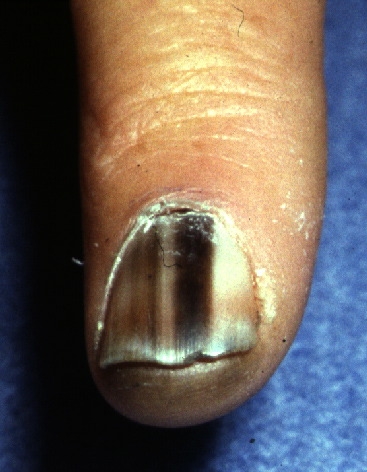
Which of the following is the most likely cause of this patient’s current condition?
CorrectIncorrect -
Question 8 of 40
8. Question
A 40-year-old woman is brought to the office by her daughter for evaluation of irritability. The daughter moved out of her mother’s house a few days ago to live with her boyfriend and says, “She’s been calling me constantly. If I don’t pick up, she’ll leave an angry voicemail or send me texts about how I don’t love her anymore. She did the same thing when I left home for college a few years ago.” The daughter was hesitant to move out and fears that her mother “might do something she regrets” now that she’s living alone. The patient has a history of 3 suicide attempts. She has no chronic medical conditions and takes no medications. A past trial of fluoxetine prescribed for mood symptoms was ineffective. Vital signs are within normal limits. Physical examination shows no abnormalities. On mental status examination, the patient appears dysthymic and says, “I couldn’t cry or yell even if I wanted to. I’m just completely numb.” Which of the following is the best initial treatment for this patient?
CorrectIncorrect -
Question 9 of 40
9. Question
A 52-year-old man comes to the clinic for evaluation of right knee pain. For the past 2 years, he has had pain after prolonged weight-bearing activity, with relief during rest and knee extension. The knee also becomes stiff after prolonged periods of sitting, such as during long-distance travel. The patient sustained an anterior cruciate ligament injury while playing football in college, requiring surgery at that time. He has no other medical history. On examination, the patient has an antalgic gait favoring his right knee and a varus deformity of both knee joints. There is no focal tenderness or palpable joint effusion, but crepitus is felt when the right knee is flexed and extended. When the right knee is held in 30-degree flexion and the thigh stabilized on the examination table, anterior traction on the proximal tibia elicits no significant laxity of the knee joint. Which of the following is the most appropriate treatment for this patient?
CorrectIncorrect -
Question 10 of 40
10. Question
A 44-year-old woman comes to the emergency department due to chest pain. The patient says, “I had a cold a few days ago, which subsided, but then 2 days ago I started having sharp pains under the right breast. It’s hard to breathe or sit up straight, and I also feel pain in the right shoulder area.” The patient has a history of a hiatal hernia and gastroesophageal reflux. She does not use tobacco but drinks alcohol occasionally. Temperature is 37.3 C (99.1 F), blood pressure is 120/74 mm Hg, pulse is 86/min, and respirations are 20/min. The oropharyngeal mucosa is normal. Pulmonary examination reveals a nondisplaced trachea and symmetric but diminished lung excursion. Lung percussion is resonant throughout, and auscultation reveals vesicular breath sounds bilaterally with no added sounds. The abdomen is nondistended, soft, and nontender. The remainder of the examination shows no abnormalities. Chest x-ray is normal. Which of the following is the most likely diagnosis?
CorrectIncorrect -
Question 11 of 40
11. Question
A 54-year-old man comes to the office due to left lower eyelid swelling for the past month. He has had no pain or itching and had a similar lesion several years ago that resolved spontaneously. The patient has a history of hypertension and type 2 diabetes mellitus. He drinks alcohol on social occasions and does not use tobacco or illicit drugs. Temperature is 37 C (98.6 F), blood pressure is 126/70 mm Hg, and pulse is 72/min. Examination of the left eye shows a rubbery swelling, as shown in the image below.
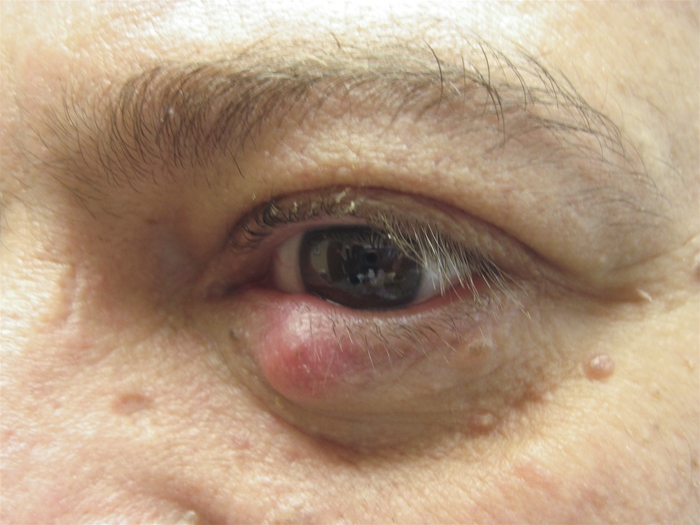
Bilateral visual acuity is 20/20 and extraocular movements are normal in all directions. He has no skin rash and the remainder of the physical examination is normal. Which of the following is the most likely cause of this patient’s current condition?
CorrectIncorrect -
Question 12 of 40
12. Question
The medical director of a large, busy primary care clinic is considering strategies to improve quality of screening for colorectal cancer. Most of the clinic’s patients are insured individuals age >40. The director finds that, among 3,500 patients who underwent annual fecal occult blood testing in the previous year, the clinic providers placed follow-up colonoscopy referrals for only 55% of the patients who returned positive results. The majority of patients who received colonoscopy referrals completed the procedure. Which of the following strategic initiatives has the greatest potential to improve the percentage of follow-up colonoscopy referrals?
CorrectIncorrect -
Question 13 of 40
13. Question
A 74-year-old woman comes to the office due to 6 months of progressive dyspnea on exertion, tiredness, and ankle swelling. The patient lives alone and finds that, recently, it has become very difficult for her to perform routine activities of daily living. She has had no chest pain, cough, light-headedness, or syncope. The patient’s other medical problems include hypertension, hyperlipidemia, and chronic constipation. She also has long-standing right knee pain, for which she takes over-the-counter acetaminophen. The patient is a former smoker with a 25-pack-year smoking history. Blood pressure is 165/70 mm Hg and pulse is 78/min and regular. Oxygen saturation is 95% on room air. S3 is heard on cardiac auscultation. Scattered crackles are present on lung examination; no wheezes are present. There is 1+ bilateral lower extremity edema. Transthoracic echocardiography demonstrates severe left atrial enlargement, concentric left ventricular hypertrophy, and a left ventricular ejection fraction of 65%. The estimated mean pulmonary arterial pressure is 50 mm Hg (normal, <20 mm Hg). Which of the following is the most likely cause of the increased pulmonary arterial pressure in this patient?
CorrectIncorrect -
Question 14 of 40
14. Question
A male infant is born to a 37-year-old woman, gravida 5 para 4, at 39 weeks gestation by a precipitous spontaneous vaginal delivery. The mother did not receive prenatal care during this pregnancy but reports no complications during her previous pregnancies. Apgar scores are 6 and 8 at 1 and 5 minutes, respectively. Weight is 2.35 kg (5 lb 2 oz). The infant has small eye openings, low-set ears, a sunken nasal bridge, and a thin upper lip. The placenta is small and has a thin umbilical cord. Which of the following is the most likely cause of this infant’s condition?
CorrectIncorrect -
Question 15 of 40
15. Question
A 15-year-old boy is brought to the office due to progressive right leg pain and swelling. He first noticed the pain a month ago after scraping his knee on the ground. The patient has used ibuprofen and ice every day, which have not controlled the pain or the swelling. He has no chronic medical conditions or previous surgeries. The patient takes no other daily medications and has no allergies. Temperature is 37.1 C (98.8 F), blood pressure is 110/75 mm Hg, pulse is 80/min, and respirations are 16/min. The right distal thigh is swollen and firm. There are no wounds or erythema of the overlying skin. All extremities exhibit full range of motion. Weight bearing and gait are normal. The remainder of the physical examination is normal. Laboratory studies reveal an elevated serum alkaline phosphatase and a normal leukocyte count. X-ray shows periosteal elevation adjacent to an osteolytic lesion in the distal metaphysis of the right femur. Which of the following is the most likely diagnosis in this patient?
CorrectIncorrect -
Question 16 of 40
16. Question
A 22-year-old woman is brought to the emergency department due to severe nausea and vomiting for the past 2 weeks. The patient has been unable to tolerate any oral intake for the past 12 hours and has become increasingly weak and lightheaded. She has no abdominal pain, hematemesis, diarrhea, or constipation. Her last menstrual period was 8 weeks ago. Temperature is 37.2 C (98.9 F). Blood pressure is 136/86 mm Hg and pulse is 98/min while supine, and 110/70 mm Hg and 115/min while standing. Weight is 56.7 kg (125 lb). BMI is 22 kg/m2. Physical examination shows dry mucous membranes and no thyromegaly. Cardiopulmonary examination is normal. The abdomen is soft and nontender, and there is no hepatosplenomegaly. Capillary refill is approximately 3 seconds. Bimanual examination shows a 12-week-sized uterus. Laboratory results are as follows:
Serum
Sodium
135 mEq/L
Potassium
3.1 mEq/L
Chloride
85 mEq/L
Bicarbonate
34 mEq/L
Blood urea nitrogen
19 mg/dL
Creatinine
0.8 mg/dL
Glucose
65 mg/dL
Aspartate aminotransferase
26 U/L
Alkaline phosphatase
82 (normal: 17-88)
Lipase
52 units/L (normal: 21-76)
Hemoglobin
14 g/dL
Urine
β-hCG
positive
Specific gravity
1.030
Ketones
large
Glucose
negative
Leukocyte esterase
negative
Nitrites
negative
Which of the following is the most appropriate next step in management of this patient?
CorrectIncorrect -
Question 17 of 40
17. Question
A 31-year-old man is brought to the emergency department by his roommate due to unusual behavior. The roommate says, “I’ve lived with him for 3 years. He’s a very private and anxious person who rarely leaves the apartment and often makes comments that people are watching him. Last night, he covered all the windows with newspaper and tried to hit me when I asked him to stop.” The roommate adds that the patient has had similar episodes of paranoia in the past but has never become physically aggressive. Review of medical records indicate a history of 3 psychiatric hospitalizations beginning at age 23. Temperature is 36.6 C (97.9 F), blood pressure is 138/90 mm Hg, pulse is 90/min, and respirations are 14/min. Physical examination is unremarkable. On mental status examination, the patient is hypervigilant, fearful, and physically restless. He declines to answer most questions saying, “I don’t talk to enemy agents.” Which of the following is the most likely diagnosis?
CorrectIncorrect -
Question 18 of 40
18. Question
A 36-year-old woman, gravida 2 aborta 1, at 39 weeks gestation comes to the emergency department due to painful contractions. The patient’s initial anatomy ultrasound at 18 weeks was normal. Her pregnancy was complicated by fetal growth restriction diagnosed at 28 weeks when fundal height was 24 cm and ultrasound revealed fetal weight at the 9th percentile for gestational age. Weekly umbilical artery Doppler ultrasounds were normal, and serial ultrasound fetal growth estimations indicated appropriate interval growth. Maternal blood pressure is 130/80 mm Hg. Current weight is 65 kg (143.3 lb), an increase of 11 kg (24.3 lb) from prepregnancy weight. Height is 155 cm (5 ft 1 in). Fetal heart tracing shows a baseline of 140/min with moderate variability and no decelerations. Contractions occur every 2 minutes. The patient is admitted and quickly delivers a 2.7-kg (6-lb) girl with Apgar scores of 8 and 9 at 1 and 5 minutes, respectively. This newborn is at risk for which of the following long-term outcomes?
CorrectIncorrect -
Question 19 of 40
19. Question
A 43-year-old man comes to the office for a checkup. During review of systems, the patient mentions that he has a decreased libido and struggles to maintain an erection during intercourse. He can’t remember the last time he had an erection on awakening in the morning. The patient went through a difficult divorce 2 years ago and has been dating a woman for the past year. The relationship is going well, but he is very worried about his sexual performance. The patient’s medical problems include hypertension, type 2 diabetes mellitus, depression, and knee pain related to an old athletic injury. He was diagnosed with major depressive disorder in his late 20s. He has had 2 subsequent depressive episodes, the last one following his divorce, that responded well to a combination of psychotherapy and medication. The patient does not smoke. He drinks several beers on weekends and does not use illicit drugs. His medications include metformin, enalapril, and sertraline. Temperature is 37.2 C (99 F), blood pressure is 130/80 mm Hg, pulse is 88/min, and respirations are 14/min. Physical examination is normal. A recent hemoglobin A1c was 6.5%. Which of the following is the most likely cause of this patient’s sexual dysfunction?
CorrectIncorrect -
Question 20 of 40
20. Question
A 34-year-old woman, gravida 4 para 4, who underwent a cesarean delivery a week ago comes to the office due to dark red drainage from her incision. Her symptoms began a few days ago and she has noticed increasing pain around the incision. The patient was discharged on postoperative day 3 after an uncomplicated hospital course. She has a history of deep venous thrombosis during pregnancy that was treated with enoxaparin. The patient restarted enoxaparin on postoperative day 1 and continues to give herself daily injections. Otherwise, she has no other medical conditions and continues to take a daily prenatal vitamin. Temperature is 37.2 C (99 F), blood pressure is 100/70 mm Hg, and pulse is 92/min. BMI is 40 kg/m2. Abdominal examination shows no redness or induration surrounding the incision. Sanguineous discharge is expressed from a 5-mm opening in the Pfannenstiel incision. Exploration of the incisional defect with a sterile swab meets resistance at a depth of 3 cm, consistent with the rectus fascia. Pelvic examination shows a moderate amount of lochia and a firm uterus. Which of the following is the most likely diagnosis in this patient?
CorrectIncorrect -
Question 21 of 40
21. Question
A 56-year-old woman, gravida 2 para 2, comes to the office due to a breast mass that she discovered while being intimate with her partner. The patient had a normal mammogram 6 months ago. She has been menopausal for 2 years and is taking estrogen therapy for vasomotor symptoms. At age 41, the patient had a vaginal hysterectomy with ovarian preservation due to symptomatic uterine fibroids. Family history is negative for breast and ovarian cancer. Vital signs are normal. BMI is 24 kg/m2. Breast examination shows a 2-cm mass in the upper outer quadrant of the left breast approximately 6 cm from the nipple. There is no nipple discharge and examination of the right breast is normal. Which of the following is the best next step in management of this patient?
CorrectIncorrect -
Question 22 of 40
22. Question
A 52-year-old postmenopausal woman comes to the office due to loss of libido for the past year. The patient is concerned because she started dating a new man 3 months ago. Although she is excited about being in a relationship and finds her partner attractive, she makes excuses to avoid sexual activity and intercourse. She says, “This man is wonderful and kind, and I really want this relationship to succeed, but how can we advance if I keep avoiding intimacy? I wish I felt more sexual.” The patient has been divorced for 10 years and enjoyed being sexually active with her husband until they developed marital problems. Medical conditions include hypothyroidism and recurrent major depressive disorder. Medications include bupropion, levothyroxine, and an estrogen vaginal cream that she has taken since menopause at age 50. The patient has no difficulties with sleep, energy, or concentration. She recently lost 2.3 kg (5 lb) from dieting. Physical examination is normal and TSH level is within normal range. Mental status examination shows a neutral mood and full range of affect. Which of the following is the most likely explanation for the patient’s symptom?
CorrectIncorrect -
Question 23 of 40
23. Question
A 78-year-old woman is evaluated in the hospital one day after having an elective right total hip arthroplasty for severe osteoarthritis. She has had no immediate operative complications, and her pain is well controlled by intravenous morphine. She has no chest pain or dyspnea. The patient has a history of hypertension and mild dementia. Her family reports that she had an episode of delirium with agitation several months ago during a previous hospitalization for a urinary tract infection. She has been living with her husband and was fairly active before the hip pain limited her daily activities. Today, she is afebrile. Blood pressure is 130/80 mm Hg, and pulse is 88/min and regular. The patient is awake, alert, and conversant. Cardiopulmonary examination is normal. Right hip incision is clean and dry. She has an indwelling urinary catheter with clear urine. Cardiac monitor shows sinus rhythm. Her hemoglobin is 8.2 g/dL. Which of the following is the most appropriate management of the patient at this time?
CorrectIncorrect -
Question 24 of 40
24. Question
An observational study evaluates the outcomes of patients with diabetes mellitus admitted to the hospital with non-ST elevation myocardial infarctions who are managed either medically or with early percutaneous coronary intervention (PCI). The following initial demographic characteristics were obtained:
Managed medically
Managed with early PCI
P value
Age, mean
64.1
69.5
0.01
White race, %
76
78
0.75
Admission hemoglobin A1c, %
8.1
7.9
0.67
Vasopressors on admission, %
8
15
<0.01
Patients managed with early PCI were 1.6 times more likely to die in the hospital as compared to those managed medically. Which of the following best explains the observed findings?
CorrectIncorrect -
Question 25 of 40
25. Question
A 62-year-old man comes to the office for an annual preventive visit. Two days ago, he had a ground-level fall when walking up the stairs to his front porch. The patient says he did not see a step and tripped but had no major injuries. His wife adds that, lately, he has frequently bumped into objects. There has been no associated headache, focal weakness, numbness, ocular pain, or redness. Medical history is notable for hypertension and type 2 diabetes mellitus. Blood pressure is 140/80 mm Hg and pulse is 78/min and regular. Bilateral visual acuity is normal, but visual field testing reveals loss of peripheral vision in both eyes. Neurologic examination shows normal reflexes, sensation, and muscle strength. Gait is normal. Which of the following funduscopic findings is most likely to be associated with this patient’s vision impairment?
CorrectIncorrect -
Question 26 of 40
26. Question
A 55-year-old woman comes to the office for follow-up of a 3-cm homogeneous right adrenal mass. The mass was recently discovered on a CT scan performed in the emergency department for intermittent epigastric pain. The patient’s medical history is notable for obesity, type 2 diabetes mellitus, and hypertension. Her current medications include metformin, ramipril, and amlodipine. Blood pressure is 148/66 mm Hg, pulse is 78/min, and BMI is 45.4 kg/m2. On examination, the patient appears plethoric with a prominent dorsocervical fat pad. Wide purplish striae are noted on the abdomen. Laboratory results are as follows:
Sodium
140 mEq/L
Potassium
3.5 mEq/L
Chloride
102 mEq/L
Bicarbonate
26 mEq/L
Urea nitrogen
14 mg/dL
Creatinine
0.8 mg/dL
Calcium
9.4 mg/dL
Glucose
188 mg/dL
Which of the following is the most likely hormonal profile in this patient?
Option
Cortisol following low-dose dexamethasone
ACTH
Dehydroepiandrosterone sulfate (DHEA-S)
A
Nonsuppressed
High
High
B
Nonsuppressed
Low
Low
C
Suppressed
Normal
Normal
D
Suppressed
Normal
High
E
Suppressed
Low
Low
CorrectIncorrect -
Question 27 of 40
27. Question
A newborn boy is evaluated in the operating room immediately after delivery. Due to suspected fetal macrosomia on ultrasound, the patient was delivered via uncomplicated, scheduled cesarean delivery at 38 weeks gestation. The mother is a 28-year-old woman, gravida 1, who was diagnosed with gestational diabetes mellitus at 28 weeks gestation. She attempted dietary control of her glucose levels. At 31 weeks gestation, she was prescribed insulin due to persistent fasting blood glucose values of >110 mg/dL. However, the mother was inconsistent with medication administration and gained an additional 11.3 kg (24.9 lb) in the third trimester. The baby’s birth weight is 5.4 kg (11.9 lb). Apgar scores are 8 and 9 at 1 and 5 minutes respectively. Given his mother’s medical condition, this newborn is at greatest risk for which of the following complications?
CorrectIncorrect -
Question 28 of 40
28. Question
A 62-year-old man comes to the emergency department due to painless vision loss in his left eye. The patient states that he was watching television when suddenly everything became dark and he could not see out of his left eye. This resolved spontaneously after approximately 5 minutes and was not associated with headache, slurred speech, numbness, or weakness. He experienced a similar episode several months ago, at which time he did not seek medical attention. His medical history is significant for hypertension, type II diabetes mellitus, and hyperlipidemia; he admits that he is not compliant with his medication regimen. Two years ago, the patient was hospitalized for hyperosmolar hyperglycemic state, and his HbA1c level 4 months ago was 9.5%. He has a 30-pack-year smoking history. Temperature is 36.7 C (98 F), blood pressure is 160/90 mm Hg, and pulse is 80/min and regular. Which of the following is the most likely cause of this patient’s symptoms?
CorrectIncorrect -
Question 29 of 40
29. Question
A 24-year-old primigravida at 26 weeks gestation comes to the office due to right leg pain. Her pregnancy was complicated by nausea and vomiting in the first trimester but has otherwise been normal. Medical history is significant for sickle cell trait. The patient takes daily prenatal multivitamins. She does not use tobacco, alcohol, or illicit drugs. An older sister who had sickle cell anemia died of a severe pulmonary infection at age 34. Blood pressure is 135/80 mm Hg and pulse is 100/min. Chest examination is unremarkable. There is swelling and tenderness of her right ankle and calf. The patient’s hemoglobin level is 10.5 g/dL and platelet count is 190,000/mm3. Duplex ultrasound shows non-compressible right popliteal and distal femoral veins. Which of the following is the best next step in management of this patient?
CorrectIncorrect -
Question 30 of 40
30. Question
A 51-year-old man comes to the office due to a week of rash. The rash began on his face and upper torso and then spread to the rest of his body. There has been no pain or itching, but he has had a low-grade fever, malaise, and facial puffiness. The patient has a history of hypertension and has taken lisinopril for 2 years. He also has had recurrent episodes of gout and started taking allopurinol 6 weeks ago. The patient does not use tobacco or illicit drugs and stopped drinking alcohol recently. He has no known drug allergies. Temperature is 38 C (100.4 F), blood pressure is 110/70 mm Hg, and pulse is 102/min. Cardiopulmonary examination is normal. The abdomen is soft and nontender with no organomegaly. The patient has mild facial edema. Skin examination shows a generalized morbilliform eruption with some areas of confluence. There are no skin blisters or mucosal involvement. Several enlarged, nontender cervical and inguinal lymph nodes are present. Laboratory results are as follows:
Complete blood count
Hemoglobin
13 g/dL
Platelets
280,000/mm3
Leukocytes
11,000/mm3
Neutrophils
60%
Eosinophils
15%
Lymphocytes
20%
Monocytes
5%
Liver function studies
Aspartate aminotransferase
212 U/L
Alanine aminotransferase
224 U/L
Which of the following is the best next step in management of this patient?
CorrectIncorrect -
Question 31 of 40
31. Question
A 75-year-old woman with a history of major depressive disorder comes to the office with her son to discuss the results of a recent abdominal CT scan. The CT scan was ordered due to her loss of appetite, unexplained weight loss, and intermittent abdominal pain over the past 2 months. The patient exclusively speaks Spanish. The patient’s son, who is fluent in English and her durable health care power of attorney, has been actively involved in her care. The physician prepares to connect to the telephone interpreter, which he has used previously to communicate with the patient. The son says, “My mother prefers not to use the interpreter today because she does not want to hear what the report says. She thinks the results will be bad and asks that you share the results with me instead.” What is the most appropriate response to the patient’s son?
CorrectIncorrect -
Question 32 of 40
32. Question
A 26-year-old woman comes to the emergency department due to several days of episodic fever, chills, sweating, headache, malaise, and nausea. The patient developed similar symptoms 4 months ago during a visit to Panama and was diagnosed with malaria. After she took chloroquine for 3 days, her symptoms resolved completely. The patient used mosquito repellents and bed netting during the rest of her travels and has felt healthy since returning to the United States 3 months ago. She lives in Pennsylvania and, aside from the trip to Panama, has not traveled recently. The patient has no other medical conditions and takes no medications. Temperature is 39 C (102.2 F), blood pressure is 105/70 mm Hg, and pulse is 100/min. The tip of the spleen is palpable on inspiration. Laboratory results are as follows:
Hemoglobin
11.4 g/dL
Platelets
105,000/mm3
Leukocytes
4,200/mm3
Plasma glucose
85 mg/dL
Aspartate aminotransferase (SGOT)
58 U/L
Alanine aminotransferase (SGPT)
64 U/L
Total bilirubin
1.8 mg/dL
Peripheral smear shows intraerythrocytic parasites. Which of the following is the most likely cause for recurrence of this patient’s symptoms?
CorrectIncorrect -
Question 33 of 40
33. Question
A 25-year-old woman, gravida 1 para 0, at 28 weeks gestation comes to the office for a follow-up appointment and to review laboratory results from her initial prenatal appointment 2 weeks ago. The patient reports no contractions, vaginal bleeding, or leakage of fluid. There is good fetal movement. She had an upper respiratory infection during the first trimester. She has no medical problems or previous surgeries. The patient does not use tobacco, alcohol, or illicit drugs. She is taking a prenatal vitamin and iron supplementation. Blood pressure is 110/80 mm Hg and pulse is 82/min. BMI is 26 kg/m2. Fundal height is 28 cm and the fetal heart rate is 150/min on Doppler ultrasound. Laboratory results are as follows:
Blood type
O, Rh+
Hemoglobin
11 g/dL
Platelets
240,000/mm3
Hepatitis B surface antigen
negative
Hepatitis B surface antibody
positive
HIV-1/2 antibody
negative
Rapid plasma reagin
not detected
Rubella antibody IgG
not detected
Varicella antibody IgG
not detected
Glucose challenge test
104 mg/dL
Which of the following is indicated at this visit?
CorrectIncorrect -
Question 34 of 40
34. Question
A 39-year-old woman, gravida 1 para 0 aborta 1, comes to the office with 10 days of pelvic pressure and heavy vaginal bleeding. The bleeding has become increasingly heavy and she now saturates 3 pads a day. The patient has a long history of irregular menses and infertility due to anovulation. Six months ago, she had a positive home pregnancy test, but before being able to initiate prenatal care, the patient had a spontaneous abortion. The patient did not seek medical care afterward and has not had a menstrual period since the spontaneous abortion. At age 31, she had a loop electrode excision procedure for a high-grade cervical intraepithelial neoplasia. Blood pressure is 100/70 mm Hg and pulse is 78/min. Bimanual examination shows a symmetrically enlarged, mobile, nontender uterus. Pelvic examination shows a 2×2 cm (0.8×0.8 in), red, vascular nodule in the posterior fornix of the vagina that bleeds when touched with a cotton applicator. Which of the following is the most likely diagnosis in this patient?
CorrectIncorrect -
Question 35 of 40
35. Question
A 60-year-old woman is brought to the emergency department due to lethargy. For the past 3 days, she has had a severe toothache and low-grade fever. According to her son, she is not able to eat and is mostly drinking fluids. The patient’s medical history is significant for hypertension, gout, and type 2 diabetes mellitus. She has not taken her antidiabetic medications for the past 3 days. On examination, the patient is lethargic. Temperature is 37.8 C (100 F), blood pressure is 140/90 mm Hg, pulse is 100/min, and respirations are 20/min. Pulse oximetry shows 99% on room air. BMI is 34 kg/m2. Her neck is supple, pupils are equal and reactive to light, and strength is normal in all extremities. She has occasional myoclonic jerks. Laboratory results are as follows:
Leukocytes 16,000/mm3 (7% bands) Hemoglobin 18.5 g/dL Sodium 125 mEq/L Potassium 5.5 mEq/L Blood urea nitrogen 30 mg/dL Creatinine 1.3 mg/dL Glucose 986 mg/dL Urinalysis shows no protein or blood and 4+ glucose. Urine sodium is 10 mEq/L. Which of the following best explains this patient’s hyponatremia?
CorrectIncorrect -
Question 36 of 40
36. Question
A 54-year-old woman comes to the office due to nightly insomnia for the past 2 months. She also reports frequent tension headaches, neck pain, fatigue, and difficulty concentrating at work. The patient describes feeling anxious and overwhelmed by multiple stressors in her life, including having a high-pressure job, grieving over her father’s death a year ago, caring for her elderly mother, and coping with a teenage son who uses cocaine. At night she lies in bed worrying about her mother, son, and problems at work. She has difficulty falling asleep and often wakes at 4 AM and is up for the rest of the night. The patient has avoided socializing with her friends and says, “Every time I am around them, I feel they must know I am a total failure as a mother.” She has lost 2.3 kg (5 lb) and reports that she now has no interest in cooking and exercising. The patient has no prior psychiatric history. She drinks a glass of wine at night to “help me relax and get a few hours of sleep” but does not use illicit drugs. Physical examination and laboratory evaluation are unremarkable. The patient bursts into tears when speaking about how she misses her father. Which of the following is the most likely diagnosis?
CorrectIncorrect -
Question 37 of 40
37. Question
A 35-year-old woman comes to the office for an initial visit requesting a CT scan of the head. She has had headaches for years and reports that no physician has been able to help her. The patient says, “Maybe I have some kind of brain tumor. I just want to be sure. My insurance has paid for it in the past.” She describes bilateral, nonthrobbing headaches of moderate intensity without any other associated neurologic or systemic features. The headaches, which have not changed in frequency or duration, are more likely when the patient sleeps poorly and is under stress at work. The patient takes over-the-counter ibuprofen as needed because “it works just as well as the expensive prescription medications I’ve tried.” Review of her medical records shows 2 previous normal CT scans of the head. Physical examination is unremarkable. Which of the following is the most appropriate response by the physician?
CorrectIncorrect -
Question 38 of 40
38. Question
A 30-year-old man is brought to the office by his wife for evaluation of behavioral changes. Over the past few months, the patient has become uncharacteristically moody and has lashed out at his family several times. His wife says, “I’ve never seen him like this before—even after his brother died. Sometimes he is very quiet and withdrawn, but other times he is very hyper, nervous, and tense. Yesterday, he broke a few dishes and yelled at the kids because they were making too much noise.” The patient explains that he has been “on edge” and is sleeping poorly due to frequent nightmares. The wife shares that they had planned to attend the annual family reunion at the lake this weekend, but the patient cancelled last-minute because he felt the kids would have more fun hiking instead. He does not use alcohol or recreational substances, saying he always prefers to be alert, “in case something happens.” Family history is significant for a brother with bipolar disorder, who died 6 months ago after drowning in a lake. Vital signs are within normal limits. The patient appears restless and exhausted. Physical examination is unremarkable. Which of the following is the most appropriate pharmacotherapy for this patient?
CorrectIncorrect -
Question 39 of 40
39. Question
A 20-year-old man comes to the office for a routine preemployment examination for a position as a machine operator. He has no symptoms except frequent headaches that he self-treats with acetaminophen. The patient recently immigrated to the United States and reports that an immigration health evaluation identified high blood pressure. He does not use tobacco, alcohol, or illicit drugs. His father has a history of a heart murmur, but the patient does not know further details. Temperature is 36.7 C (98.1 F), blood pressure is 180/98 mm Hg, pulse is 80/min, and respirations are 14/min. Weight is 85 kg (187 lb) and height is 183 cm (6 ft). BMI is 25 kg/m2. Mucous membranes are moist. There is no lymphadenopathy or thyromegaly. Lungs are clear to auscultation. Cardiac examination demonstrates a sustained apical impulse. The carotid upstroke is normal. Peripheral pulses are 2+, but femoral pulses are delayed bilaterally compared to the brachial pulses. The abdomen is soft and nondistended. Neurologic examination is normal. Which of the following is the most appropriate next step in management of this patient?
CorrectIncorrect -
Question 40 of 40
40. Question
An 80-year-old man is evaluated for gradually worsening abdominal discomfort and distension for the past 3 days. He also has nausea and has had several episodes of vomiting, with his last bowel movement being 3 days ago. The patient underwent total hip arthroplasty 10 days ago due to a femoral neck fracture and was transferred to a rehabilitation facility for physical therapy. He has received acetaminophen and opioid analgesics for pain control. The patient also has hypertension, hyperlipidemia, coronary artery disease, and systolic heart failure. Temperature is 37.1 C (98.8 F), blood pressure is 110/70 mm Hg, and pulse is 90/min. The patient appears uncomfortable. The abdomen is distended and tympanitic with mild diffuse tenderness and hypoactive bowel sounds. There is no guarding or rebound tenderness. The rectal vault is empty. Laboratory results are as follows:
Complete blood count
Hemoglobin
12.6 g/dL
Platelets
240,000/mm3
Leukocytes
8,200/mm3
Serum chemistry
Sodium
136 mEq/L
Potassium
3.1 mEq/L
Blood urea nitrogen
18 mg/dL
Creatinine
0.9 mg/dL
Calcium
8.8 mg/dL
Glucose
120 mg/dL
Abdominal CT scan reveals a dilated colon from the cecum to the splenic flexure. Oral contrast is visualized up to the distal colon. Which of the following is the most likely diagnosis for this patient?
CorrectIncorrect