
CK- UWSA 1- Block 3
Quiz Summary
0 of 40 Questions completed
Questions:
Information
You have already completed the quiz before. Hence you can not start it again.
Quiz is loading…
You must sign in or sign up to start the quiz.
You must first complete the following:
Results
Results
0 of 40 Questions answered correctly
Your time:
Time has elapsed
You have reached 0 of 0 point(s), (0)
Earned Point(s): 0 of 0, (0)
0 Essay(s) Pending (Possible Point(s): 0)
| Average score |
|
| Your score |
|
Categories
- Step 1 UWSA 1 – Block 3 0%
| Pos. | Name | Entered on | Points | Result |
|---|---|---|---|---|
| Table is loading | ||||
| No data available | ||||
- 1
- 2
- 3
- 4
- 5
- 6
- 7
- 8
- 9
- 10
- 11
- 12
- 13
- 14
- 15
- 16
- 17
- 18
- 19
- 20
- 21
- 22
- 23
- 24
- 25
- 26
- 27
- 28
- 29
- 30
- 31
- 32
- 33
- 34
- 35
- 36
- 37
- 38
- 39
- 40
- Current
- Review
- Answered
- Correct
- Incorrect
-
Question 1 of 40
1. Question
A 63-year-old woman comes to the office with a one-day history of pain in her right hand. She has a history of rheumatoid arthritis that has been well controlled with methotrexate and occasional ibuprofen. The patient’s medical history is otherwise unremarkable, and she does not use tobacco, alcohol, or illicit drugs. Temperature is 38.2 C (100.8 F), blood pressure is 140/90 mm Hg, and pulse is 90/min. Musculoskeletal examination shows swelling of the right second metacarpophalangeal joint with guarding and exquisite tenderness to palpation. There are also joint deformities involving the wrists and metacarpophalangeal and proximal interphalangeal joints bilaterally. Which of the following is the most likely cause of this patient’s current problem?
CorrectIncorrect -
Question 2 of 40
2. Question
An 18-month-old girl is brought to the emergency department due to bloody stools. Twice this morning, the patient passed large, maroon stools. She has not vomited, has not been fussy, and has been eating normally. The patient has no chronic medical conditions and takes no daily medications. Vital signs are normal. The abdomen is soft and nontender; there is no hepatosplenomegaly. No anal fissures or hemorrhoids are present. This patient’s condition is most likely caused by which of the following?
CorrectIncorrect -
Question 3 of 40
3. Question
A 54-year-old woman comes to the emergency department due to progressive fatigue over the last 3 days. She says that she could not get out of bed today due to weakness. She has had mild shortness of breath, fever, and nausea. She has not had any chest pain, abdominal pain, diarrhea, or urinary symptoms. Three years ago, the patient was diagnosed with undifferentiated ductal breast cancer and underwent a left radical mastectomy. Six months ago, she was found to have lytic lesions in her vertebrae and right femur. In addition, she has a single mass in her liver. Her current medications include an antiestrogen medication and pain killers. Her blood pressure is 110/70 mm Hg and pulse is 120/min. Laboratory findings are as follows:
Hemoglobin
6.3 g/dL
Leukocytes
18,000/mm3
Platelets
42,000/mm3
Mean corpuscular volume
85 fl
Reticulocyte count
7.6%
Total bilirubin
2.4 mg/dL
Direct bilirubin
0.3 mg/dL
Aspartate aminotransferase
50 U/L
Alanine aminotransferase
64 U/L
Alkaline phosphatase
160 U/L
Lactate dehydrogenase
1200 U/L
Sodium
138 mEq/L
Potassium
3.8 mEq/L
Bicarbonate
22 mEq/L
Chloride
110 mEq/L
Blood urea nitrogen
31 mg/dL
Creatinine
1.8 mg/dL
INR
3.2 (normal: 0.8-1.2)
Fibrinogen
125 mg/dL (normal: 200-348 mg/dL)
Her complete blood count a month ago was normal. Which of the following is the most likely cause of this patient’s current anemia?
CorrectIncorrect -
Question 4 of 40
4. Question
A 44-year-old woman comes to the office due to progressive shortness of breath and cough. She can hardly walk a block without having to stop due to dyspnea. The patient recently immigrated to the United States from the Middle East. She has a history of a “heart murmur” and joint pains as an adolescent. She is a lifetime nonsmoker. Blood pressure is 110/70 mm Hg and pulse is 110/min and irregularly irregular. ECG shows atrial fibrillation. An echocardiogram shows thickening of the mitral valve leaflets with commissural fusion and restricted mitral valve opening. Which of the following is the most likely finding on physical examination?
CorrectIncorrect -
Question 5 of 40
5. Question
A 68-year-old woman comes to the office for a routine health maintenance visit- She has no current symptoms. The patient walks 3.2 km (2 miles) per day and has a healthy diet. She is not sexually active and does not use alcohol or tobacco. She takes a daily multivitamin. Her blood pressure is 125/75 mm Hg and pulse is 78/min. Her physical examination is unremarkable. Two years ago, her blood tests showed a normal complete blood count, normal renal and liver function tests, total cholesterol level of 187 mg/dL HDL of 60 mg/dL, and LDL of 127 mg/dL (10-year estimated cardiac risk: 7.0%). A mammogram at that time was also normal. The patient had a normal colonoscopy 5 years ago and a normal Pap smear 3 years ago. Which of the following tests is most appropriate for this patient at the present time?
CorrectIncorrect -
Question 6 of 40
6. Question
A randomized controlled trial is conducted to investigate the effect of a sliding hip screw versus cancellous screws on the risk of reoperation after surgery for hip fractures. One thousand patients age ≥50 with a low-energy hip fracture requiring fracture fixation are randomly assigned to receive a sliding hip screw (n = 500) or multiple cancellous screws (n = 500). The primary outcome is rate of hip reoperation within 24 months after initial surgery. The study has an 80% power to detect a difference in reoperation within 24 months between surgical groups of ≥10% at a 0.05 significance level. Results show no statistically significant difference between groups (p = 0.18), and researchers conclude that the lack of statistical significance may be due to a type II error. If the study has no participants lost to follow-up, which of the following justifies the researchers’ conclusion?
CorrectIncorrect -
Question 7 of 40
7. Question
An 86-year-old nursing home resident is brought to the hospital due to a one day history of progressive lethargy and fever. In the emergency department, the patient is found to have a blood pressure of 75/40 mm Hg, pulse of 120/min, and oxygen saturation of 85% on room air. His leukocyte count is 22,000/mm3 with 7% bands, and his urine contains greater than 100 WBC/hpf. The patient is intubated, resuscitated with intravenous fluids, and started on broad-spectrum intravenous antibiotics. Three days later, examination reveals non-blanching erythema on both heels. Which of the following is the best intervention at this point?
CorrectIncorrect -
Question 8 of 40
8. Question
A 61-year-old smoker is admitted to the hospital for progressive weakness and decreased exercise tolerance. He is found to have a moderate left-sided pleural effusion on chest x-ray. After initial evaluation, a thoracentesis is performed at the 7th intercostal space along the left midaxillary line that drains two liters of yellowish fluid. Two hours after the procedure, the patient complains of dizziness and appears diaphoretic. His systolic blood pressure is 70 mmHg and heart rate is 130/min, regular in rhythm. His oxygen saturation is 91% on 40% oxygen delivered via a Venturi mask. On examination, there is dullness to percussion and absent breath sounds on the left side of his chest. Which of the following is the most likely cause of this patient’s current symptoms?
CorrectIncorrect -
Question 9 of 40
9. Question
A 17-year-old boy comes to the emergency department with scrotal pain. He woke up from sleep 2 hours ago with severe, left-sided scrotal pain that radiates to his left groin. The patient vomited once but has had no fever or diarrhea. There was no recent trauma. He is sexually active with multiple partners and does not use condoms. The patient has no chronic medical conditions and takes no daily medications. Temperature is 37.8 C (100.0 F), blood pressure is 126/88 mm Hg, and pulse is 110/min. Physical examination shows left testicular swelling and tenderness. The abdomen is soft and nontender with normal bowel sounds. There is no percussion tenderness at the costovertebral angle. Which of the following additional examination findings would most likely warrant urgent surgical evaluation?
CorrectIncorrect -
Question 10 of 40
10. Question
A 63-year-old man comes to the office for cancer follow-up. The patient was diagnosed with laryngeal cancer 6 months ago and was treated with radiation therapy and platinum-based chemotherapy. He has been feeling better and his strength is increasing. He is eating well without aspiration and his voice has not changed. He reports that his hearing sounds muffled and a high-pitched noise is present in both ears. He has no earache and no dizziness. Otoscopic examination is normal. Which of the following is the most likely mechanism of this patient’s hearing loss?
CorrectIncorrect -
Question 11 of 40
11. Question
A 42-year-old African American man comes to the clinic with a 6-month history of progressive weakness, fatigue, and lower extremity swelling. He has not been ill recently. Past medical history is unremarkable, but he has a family history of hypertension, obesity, and heart disease. The patient does not use tobacco, alcohol, or illicit drugs. He does not take any medications and has no allergies. Blood pressure is 165/100 mm Hg, heart rate is 100/min, and respirations are 20/min. The patient’s body mass index is 29 kg/m2. Physical examination shows facial puffiness and pitting edema of both lower extremities. A normal S1 and S2 are heard on cardiac examination, and breath sounds are clear. His abdomen is soft and nontender with no palpable masses. Laboratory results are as follows:
Sodium
141 mEq/L
Potassium
4.4 mEq/L
Chloride
102 mEq/L
Bicarbonate
26 mEq/L
Blood urea nitrogen
21 mg/dL
Creatinine
1 mg/dL
Glucose
95 mg/dL
Albumin
2.2 g/dL
Anti-nuclear antibody
Negative
HBsAg
Negative
Hepatitis C virus antibody
Negative
HIV-1 antibody
Negative
HIV-2 antibody
Negative
Urinalysis shows 4+ protein. The 24-hour urine protein excretion is 6.5 g. Which of the following is the most likely cause of this patient’s condition?
CorrectIncorrect -
Question 12 of 40
12. Question
A 52-year-old man is brought to the emergency department after he was hit by a car while crossing the street. Initial trauma workup does not reveal any fractures but shows bruising to the extremities, right chest, and upper abdomen. Eight hours after the accident, the patient develops right-sided chest discomfort and shortness of breath. Blood pressure is 130/80 mm Hg, pulse is 102/min, and respirations are 24/min. Pulse oximetry is 90% on room air. Physical examination shows bronchial breath sounds at the right base and normal S1 and S2 heart sounds. The abdomen is soft and nontender. The patient’s chest x-ray is shown in the image below:
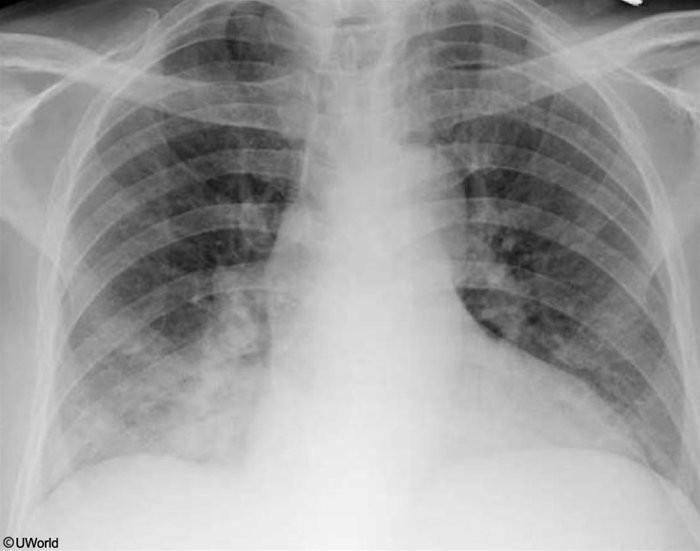
Which of the following is the most likely diagnosis?
CorrectIncorrect -
Question 13 of 40
13. Question
A 15-year-old boy is brought to the emergency department due to an episode of confusion. Early this morning, his parents found him lying on his bed confused and disoriented. By the time they arrived at the hospital 30 minutes later, his symptoms had resolved. The patient cannot recall what happened but says he has had frequent episodes of early morning limb jerking recently. He has also been staying up late preparing for exams. The patient has had no headaches or vision changes. He has no medical conditions and takes no medications. Temperature is 37.1 C (98.8 F). The patient is alert and fully oriented. Cardiac examination is unremarkable. Pupils are equal and reactive to light and accommodation, and the remainder of the neurologic examination is unremarkable. The patient’s clothes are wet and smell of urine. Which of the following is the most likely diagnosis?
CorrectIncorrect -
Question 14 of 40
14. Question
A 39-year-old woman comes to the office due to a 4-month history of progressive muscle weakness. The patient has had difficulty combing her hair because her arms feel weak when she holds them above her head. In addition, she has experienced a 9-kg (20-lb) weight gain as well as irregular menses with vaginal dryness and low libido. Medical history is significant for hypertension, hyperlipidemia, and seasonal allergies. Current medications include hydrochlorothiazide and simvastatin. She smokes a pack of cigarettes daily, drinks 3 or 4 beers every weekend, and does not use illicit drugs. Blood pressure is 150/100 mm Hg and pulse is 90/min. BMI is 37 kg/m2. Physical examination shows oily facial skin with prominent acne and scattered bruises on her arms and lower legs. The lungs are clear to auscultation and the abdomen is obese, soft, and nontender. Deep tendon reflexes are normal and symmetric. Laboratory results are as follows:
Serum chemistry
Sodium
142 mEq/L
Potassium
3.4 mEq/L
Chloride
104 mEq/L
Bicarbonate
29 mEq/L
Blood urea nitrogen
8 mg/dL
Creatinine
0.9 mg/dL
Calcium
8.8 mg/dL
Glucose
166 mg/dL
Creatine kinase, serum
68 U/L
Which of the following is the most likely cause of this patient’s symptoms?
CorrectIncorrect -
Question 15 of 40
15. Question
A 65-year-old male presents to the ER with chest pain. He complains of a retrosternal, burning pain that started two hours ago and is radiating to his left arm. The pain waxes and wanes in intensity, and is accompanied by nausea, sweating, and mild shortness of breath. His past medical history includes hypertension, hypercholesterolemia, diabetes mellitus type 2, and osteoarthritis. He smokes one pack of cigarettes per day and consumes alcohol occasionally. He denies any illegal drug use. His blood pressure is 120/56 mmHg and heart rate is 92/min. Physical exam reveals bibasilar scattered crackles. An ECG done 10 minutes following his arrival to the ER shows ST segment depression in leads V2-V6. Which of the following is the quickest way to decrease this patient’s pain?
CorrectIncorrect -
Question 16 of 40
16. Question
A 3-week-old boy is brought to the emergency department due to sudden-onset, recurrent, forceful bilious vomiting. He was feeding well until 8 hours ago when he developed vomiting, and since then he has refused to feed. The patient was born at term following an uncomplicated pregnancy and vaginal delivery. He was discharged home in stable condition 48 hours after birth. Temperature is 37.2 C (99 F), blood pressure is 84/46 mm Hg, and pulse is 162/min and regular. Cardiopulmonary examination is unremarkable. The abdomen is distended. A 2 × 3 cm, nontender, umbilical hernia is present. Upper gastrointestinal series is shown in the image below:
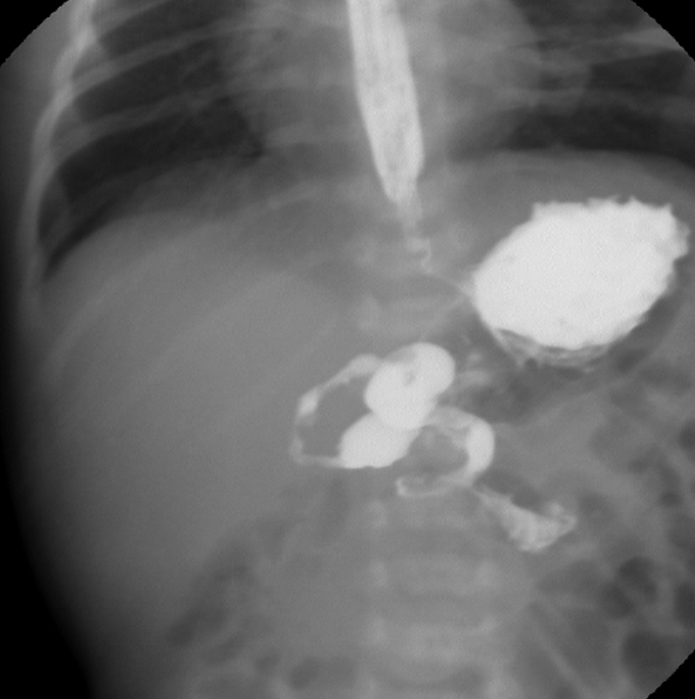
Which of the following is the most likely underlying cause of this patient’s clinical presentation?
CorrectIncorrect -
Question 17 of 40
17. Question
A 58-year-old man comes to the physician for a follow-up visit. The patient was recently discharged from the hospital after treatment for new-onset acute gouty arthritis. He was treated with oral indomethacin and currently has no symptoms. The patient has a history of obesity, type 2 diabetes mellitus, hypercholesterolemia, and hypertension. His current medications include metformin, losartan, and rosuvastatin. The patient does not use tobacco. He has consumed 3-4 cans of beer per day for the past 20 years. Blood pressure is 151/92 mm Hg and pulse is 85/min. Laboratory results are as follows:
Triglycerides
300 mg/dL
Total cholesterol
170 mg/dL
HDL cholesterol
60 mg/dL
Blood urea nitrogen
15 mg/dL
Creatinine
0.8 mg/dL
Uric acid
7.3 mg/dL
HbA1c
7.2%
Which of the following is the best recommendation for this patient?
CorrectIncorrect -
Question 18 of 40
18. Question
A 78-year-old woman is brought to the office due to multiple falls over the last 2 months. According to her family, she has repeatedly tripped and fallen without losing consciousness. The patient has no broken bones but has had multiple bruises. History is significant for progressive dementia and occasional visual hallucinations over the past year. Her family says her hands have been “shaking” for the last several months. Other medical conditions include hypertension and gout. Medications are amlodipine and aspirin. Blood pressure is 140/90 mm Hg while supine and 128/82 mm Hg while standing and pulse is 65/min. Cardiac examination demonstrates a 2/6 systolic murmur at the apex. The lungs are clear to auscultation. The patient walks slowly, taking small steps. She speaks slowly and is oriented to person and place but not time. She has a symmetric resting hand tremor and exhibits resistance on passive wrist flexion bilaterally. What is the best next step in management of this patient?
CorrectIncorrect -
Question 19 of 40
19. Question
A 58-year-old man comes to the office due to progressive right-sided neck and arm pain. The pain started approximately 3 months ago, and the patient saw a chiropractor. Despite neck manipulation, he continues to have pain. Lately, the pain has become constant and is associated with numbness and tingling in his right forearm that extends to the tips of his fourth and fifth fingers. The patient’s symptoms are becoming more severe and awaken him at night. Acetaminophen no longer provides any relief. His chest x-ray is shown below.
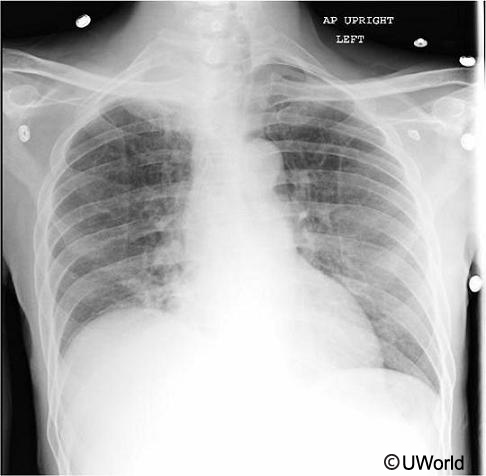
This patient’s current symptoms are most closely related to which of the following?
CorrectIncorrect -
Question 20 of 40
20. Question
A 64-year-old man is brought to the emergency department due to a day of fever, headache, nausea, and lethargy. Four weeks ago, the patient had a temporal artery biopsy to evaluate headaches and blurred vision; he was diagnosed with giant cell arteritis and initiated on glucocorticoid treatment. He also has a history of hypertension and osteoarthritis. Temperature is 38.3 C (101 F), blood pressure is 140/90 mm Hg, and pulse is 100/min. The patient is somnolent. Physical examination shows neck rigidity with passive flexion. Lumbar puncture is performed and he is started on empiric vancomycin and a third-generation cephalosporin. This patient should receive additional antimicrobial coverage against which of the following organisms?
CorrectIncorrect -
Question 21 of 40
21. Question
A 31-year-old man comes to the office due to worsening diarrhea over the past year. He has 3-4 large bowel movements a day associated with abdominal distension and loud bowel sounds that often make him uncomfortable in public. The patient has never noted blood in his stool. His appetite is good, and he consumes a broad variety of foods but has lost 15 pounds over the last year. Medical history is notable for a right wrist fracture 6 months ago when the patient slipped and fell in a bathroom. Family history is significant for colon cancer in his father at age 50. The patient does not use alcohol, tobacco, or illicit drugs. Laboratory results include the following:
Hemoglobin
10.8 g/dL
Mean corpuscular volume
70 μm3
Which of the following diagnoses is most likely?
CorrectIncorrect -
Question 22 of 40
22. Question
A 72-year-old man is undergoing medical evaluation prior to an elective inguinal herniorrhaphy. The patient’s other medical problems include hypertension, hyperlipidemia, diabetes mellitus type 2, and coronary artery disease status post right coronary artery stenting 2 years ago. His surgical history is also significant for transurethral prostate resection 5 years ago. On physical examination, a soft murmur starts after the second heart sound and declines in intensity until disappearing suddenly before the first heart sound. The murmur is heard along the left and right sternal borders and is accentuated when the patient sits up, leans forward, and puts his hands behind his head. Which of the following is the most likely cause of these physical examination findings?
CorrectIncorrect -
Question 23 of 40
23. Question
A 42-year-old man comes to the emergency department due to difficulty walking. He first noticed a tingling sensation in his toes a week ago, but he now has unsteadiness on his feet and has stumbled while walking. The patient recently recovered from a diarrheal illness, during which he recalls seeing frank blood in his stool. Temperature is 37.1 C (98.8 F). Physical examination reveals decreased muscle strength in his lower extremities with diminished reflexes. There is no sensory loss. Cerebrospinal fluid analysis in this patient is most likely to show which of the following?
CorrectIncorrect -
Question 24 of 40
24. Question
A 41-year-old man with type 1 diabetes mellitus comes to the emergency department with pain and redness of the left leg. The patient has been admitted 3 times in the past 6 months due to similar presentations. Temperature is 38.3 C (100.9 F), blood pressure is 110/70 mm Hg, pulse is 96/min, and respirations are 12/min. Physical examination of the left calf shows cellulitis; the remainder of the examination is normal. The patient is admitted to the hospital, and intravenous antibiotics are administered. The infection responds rapidly, and he is afebrile within 24 hours of admission. The patient continues to recover without complications and is transitioned to oral antibiotics. On the day of discharge, he tells the physician that his right leg hurts and that he is worried the medication is not working. Vital signs are within normal limits. A new puncture wound surrounded by mild erythema is visualized on examination of the right lower leg. Which of the following is the most appropriate next step in management of this patient?
CorrectIncorrect -
Question 25 of 40
25. Question
A 36-year-old man is brought to the emergency department due to bilateral lower extremity paralysis. The patient was unable to get out of bed this morning and called his friend for help. He has had low back pain and malaise for several days. The patient has a history of daily injection drug use. He has refused HIV testing in the past. He was recently released from prison after a short incarceration for drug possession. Temperature is 38.3 C (100.9 F), blood pressure is 130/85 mm Hg, and pulse is 100/min. Lung auscultation is normal. No cardiac murmurs are present. Neurologic examination shows loss of sensation and 0/5 strength in the bilateral lower extremities. Upper extremity neurologic assessment is unremarkable. There are no meningeal signs. Which of the following is the best initial pharmacotherapy for this patient?
CorrectIncorrect -
Question 26 of 40
26. Question
A 30-month-old boy is brought to the clinic with a 2-day history of sore throat and decreased appetite. The patient has been crying when swallowing food but is drinking water and milk without difficulty. He has no runny nose, cough, or trouble breathing. The patient was born full term and has no chronic medical conditions. Temperature is 37.8 C (100 F). Tympanic membranes are clear bilaterally. The oropharynx is erythematous with several small vesicles on the uvula, soft palate, and tonsillar pillars. The tonsils are slightly erythematous bilaterally and have no exudates. No cervical lymphadenopathy is present. The skin is without rashes. Which of the following is the best next step in management of this patient?
CorrectIncorrect -
Question 27 of 40
27. Question
A 62-year-old man is brought to the emergency department due to a 2-day history of redness and pain in the right foot. Medical history includes hypertension and rheumatoid arthritis. The patient smokes half a pack of cigarettes daily and drinks alcohol occasionally. Blood pressure is 80/52 mm Hg, pulse is 126/min, and respirations are 24/min. BMI is 28 kg/m2. The patient is drowsy but responds to verbal stimuli. Mucous membranes are moist, and there is no jugular venous distension. The right foot is swollen, erythematous, tender, and warm. Bounding peripheral pulses are palpable in all extremities. Laboratory results are as follows:
Complete blood count
Hemoglobin
10.5 g/dL
Platelets
130,000/mm3
Leukocytes
18,000/mm3
Serum chemistry
Blood urea nitrogen
22 mg/dL
Creatinine
2.0 mg/dL
Lactic acid
2.6 mEq/L (normal: 0.7-2.1)
Which of the following is most likely to be seen on hemodynamic monitoring in this patient?
Option
Pulmonary Capillary Wedge Pressure
Cardiac Index
Systemic Vascular Resistance
Mixed Venous Oxygen Saturation
A
↑
↓
↑
↓
B
↓
↓
↑
↓
C
↓
↓
↑
↑
D
↓
↑
↓
↑
E
↑
↑
↑
↓
F
↑
↑
↓
↓
CorrectIncorrect -
Question 28 of 40
28. Question
A 55-year-old white woman comes to the office for evaluation of a nonhealing, painful leg ulcer. The lesion started 3 weeks ago as a painful nodule and later ulcerated. Two months ago, the patient was evaluated for right ear otalgia and hearing loss. She reports no recent travel history. She underwent hysterectomy for uterine fibroids 10 years ago. Temperature is 38.3 C (101 F), blood pressure is 150/90 mm Hg, and pulse is 80/min. Pulse oxymetry shows 98% on room air. Physical examination shows an ulcer on the right leg. Cardiopulmonary examination is normal. Laboratory results are as follows:
Complete blood count
Hemoglobin
10.4 g/dL
Platelets
380,000/mm3
Leukocytes
11,000/mm3
Serum chemistry
Sodium
140 mEq/L
Potassium
4.6 mEq/L
Bicarbonate
26 mEq/L
Blood urea nitrogen
26 mg/dL
Creatinine
1.9 mg/dL
Calcium
8.8 mg/dL
Glucose
100 mg/dL
Urinalysis
Protein
+2
Blood
trace
Nitrites
negative
Bacteria
none
White blood cells
1-2/hpf
Red blood cells
10-15/hpf
Which of the following is the most likely cause of this patient’s nonhealing ulcer?
CorrectIncorrect -
Question 29 of 40
29. Question
A 76-year-old Caucasian male is found wandering in the street by police and is brought to the emergency department for evaluation. He denies any complaints. His past medical history is significant for hypertension and nephrolithiasis. He states that he lives alone. He does not smoke cigarettes or consume alcohol. His blood pressure is 140/90 mmHg and heart rate is 95/min. Examination reveals bilateral ecchymoses on his extremities and trace pedal edema. His oral mucosa is moist and his gums appear to be inflamed. The lungs are clear to auscultation and his abdomen is soft and non-distended. On mental status examination, he recalls 0/3 objects after 5 minutes. Laboratory studies show:
Hematocrit
30%
Leukocyte count
5,500/mm3
Platelet count
150,000/mm3
Which of the following best explains the physical findings in this patient?
CorrectIncorrect -
Question 30 of 40
30. Question
A 66-year-old man comes to the office due to 6 months of progressive fatigue and decreased exercise tolerance. Over the past week, he has had shortness of breath with minimal tasks such as household chores. The patient has a history of gastroesophageal reflux disease and benign prostatic hyperplasia. He had an episode of chest pain a year ago, but his exercise stress test was normal. The patient has a history of tobacco use and does not drink alcohol. He eats a balanced diet. Blood pressure is 130/80 mm Hg and pulse is 90/min. Conjunctiva are pale. Cardiopulmonary auscultation is normal. The abdomen is soft and nontender with no organomegaly. There is no peripheral edema or sensory loss in the lower extremities. Complete blood count results are as follows:
Hemoglobin
7.5 g/dL
Mean corpuscular volume
106 fL
Platelets
56,000/mm3
Leukocytes
4,000/mm3
Peripheral blood smear shows ovalomacrocytosis and neutrophils with reduced segmentation. Serum electrolytes, renal function, and vitamin B12 levels are normal. Which of the following is the best next step in management of this patient?
CorrectIncorrect -
Question 31 of 40
31. Question
A 46-year-old man with a history of seizure disorder is brought to the hospital after recurrent seizures. In the emergency department, the patient opens his eyes to painful stimuli but does not significantly respond to questions. There is evidence of urinary incontinence. His home medications include phenytoin and valproic acid. Blood pressure is 110/78 mm Hg, and pulse is 100/min. Laboratory results are as follows:
Sodium
146 mEq/L
Potassium
5.4 mEq/L
Chloride
105 mEq/L
Bicarbonate
20 mEq/L
Urea nitrogen
52 mg/dL
Creatinine
2.4 mg/dL
Calcium
8.6 mg/dL
Creatine phosphokinase
7,000 U/L
Total bilirubin
0.2 mg/dL
Alkaline phosphatase
110 U/L
Aspartate aminotransferase (SGOT)
230 U/L
Alanine aminotransferase (SGPT)
400 U/L
The patient’s initial ECG is normal, and his mental status improves over the next hour. However, 4 hours later, he says he is dizzy and feels like he is “going to pass out.” Repeat blood pressure is 92/62 mm Hg, and pulse is 40/min. ECG shows low-amplitude P waves and high-degree atrioventricular block. Which of the following is the most appropriate next step in management?
CorrectIncorrect -
Question 32 of 40
32. Question
A 42-year-old woman comes to the emergency department due to severe headaches and sweating. For the last few months, she has had intermittent migraine headaches that have not responded to a number of abortive medications. The patient was recently started on propranolol in an attempt to prevent her headaches. Additional symptoms include a recent 7-kg (15-lb) weight loss. Medical history is notable for hypertension. The patient drinks alcohol only on social occasions and does not use tobacco or illicit drugs. Temperature is 37 C (98.6 F), blood pressure is 240/140 mm Hg, and pulse is 110/min. She generally appears pale and diaphoretic. Cardiopulmonary examination shows a regular tachycardia but is otherwise normal. Her abdomen is soft and nondistended with no palpable masses. There is no appreciable edema in the extremities. Laboratory results are as follows:
Sodium
144 mEq/L
Potassium
3.8 mEq/L
Glucose (fasting)
127 mg/dL
Urea nitrogen
12 mg/dL
Creatinine
1.2 mg/dL
TSH
2.5 mIU/L
Urinalysis (automated)
1+ protein
Which of the following is the most likely cause of this patient’s condition?
CorrectIncorrect -
Question 33 of 40
33. Question
A 29-year-old woman comes to the office due to progressive abdominal pain, diarrhea, and low-grade fever. The patient has been having 4 or 5 nonbloody bowel movements daily. Her abdominal pain is crampy and intermittent and occasionally wakes her from sleep. For the past few weeks, she has noticed malodorous vaginal discharge and passage of gas from her vagina. The patient has lost 4 kg (8.8 lb) over the past few months. She was previously healthy. The patient works as a flight attendant and travels internationally. She has had a new male sexual partner for 3 months, and her only medication is oral contraceptive pills. The patient does not use tobacco, alcohol, or recreational drugs. Temperature is 38.3 C (100.9 F), blood pressure is 110/70 mm Hg, pulse is 90/min, and respirations are 14/min. Physical examination shows lower abdominal tenderness without guarding or rebound. Which of the following is the most likely diagnosis for this patient?
CorrectIncorrect -
Question 34 of 40
34. Question
A 3-year-old boy is brought to the office by his mother due to a rash. Three days ago the patient developed a few red papules on his chin; they subsequently evolved into pustules and today developed an overlying crust. Several new pustules have appeared at the corner of his nose. He has had no fever. There are several children with a similar rash at his day care facility. The patient has no chronic medical conditions and takes no medications. Vaccinations are up to date. Vital signs are normal. On physical examination, there are 5 erythematous papules covered with a thick, yellow crust on the chin and 2 pustules on the right nasal ala. The remainder of the examination is normal. This patient is at greatest risk of developing which of the following complications?
CorrectIncorrect -
Question 35 of 40
35. Question
A 65-year-old man comes to the emergency department due to increasing shortness of breath for the last 2 days. He also has had a worsening cough with yellowish sputum production. He can walk half a mile without becoming short of breath in his usual state of health. The patient’s regular medications include albuterol and ipratropium inhalers. He has a 40-pack-year smoking history. His blood pressure is 160/90 mm Hg and pulse is 110/min and regular. Physical examination reveals decreased breath sounds bilaterally with prolonged expiration. Heart sounds are distant. The abdomen is scaphoid, soft, and nontender. ECG shows no acute changes. His chest x-ray is shown below.
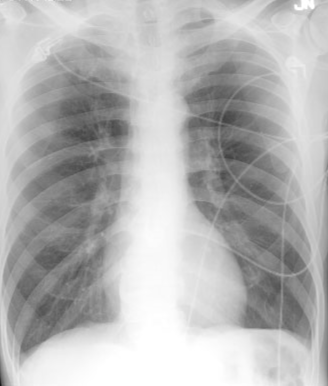
Which of the following would most likely decrease this patient’s length of hospitalization?
CorrectIncorrect -
Question 36 of 40
36. Question
A 55-year-old woman is brought to the emergency department by her husband with a daylong history of decreased oral intake and confusion. The patient was diagnosed with locally advanced cervical cancer a month ago. She had bilateral ureteral stents placed at that time because of obstructive uropathy and also received a packed red blood cell transfusion due to severe anemia. The patient completed the first cycle of combination chemotherapy 10 days ago. She has no other medical conditions. Temperature is 38.9 C (102 F), blood pressure is 100/60 mm Hg, and pulse is 120/min. Laboratory results are as follows:
Hemoglobin
9.1 g/dL
Leukocytes
600/mm3
Platelets
120,000/mm3
Blood urea nitrogen
24 mg/dL
Creatinine
1.4 mg/dL
Which of the following is the most likely cause of this patient’s current condition?
CorrectIncorrect -
Question 37 of 40
37. Question
The response options for the next 2 items are the same. Select one answer for each item in the set.
A 24-year-old woman is brought to the emergency department due to erratic behavior. She is accompanied by her boyfriend, who called the police after the patient became physically aggressive during an argument. He says, “I told her that I didn’t want to move in together and she got really angry. At first, she just locked herself in her bedroom, but after 15 minutes she came running out, screaming about how I was trying to kill her. Then she started hitting me.” The patient’s boyfriend states that they argue daily, and when arguments become especially prolonged, she sometimes “freezes” and he has to repeat her name as many as 30 times before she “snaps out of it.” He says, “In just a few minutes, she can go from calling me the ‘best boyfriend in the world’ to ‘the worst.’” He adds that after an argument with her parents during a family dinner a few months ago, the patient thought her food had been poisoned; however, by the time they returned to her apartment later that night she had let go of this belief. The patient appears angry and declines to answer most questions, although at one point she shouts, “I’m not the one that needs to be on trial here. He’s trying to get rid of me!” Physical examination is unremarkable.
Item 1 of 2
Which of the following is the most likely diagnosis for this patient with psychosis?
CorrectIncorrect -
Question 38 of 40
38. Question
Item 2 of 2
A 69-year-old man is brought to the office by his wife, who is concerned that he might be depressed. She reports that he has had little motivation and poor energy for the last month. The patient has gained weight and sleeps 12 hours a day. His wife says that he has also become very isolated and suspicious, refusing to let anyone into the apartment. The patient has accused the landlord of tampering with the thermostat and purposely making him cold. His wife recently heard him shouting at the landlord even though the landlord was not there. The patient has no recollection of this. He says that his muscles have been more stiff than usual and that he has been constipated recently. Which of the following is the most likely diagnosis for this patient with psychosis?
CorrectIncorrect -
Question 39 of 40
39. Question
The following vignette applies to the next 2 items. The items in the set must be answered in sequential order. Once you click Proceed to Next Item, you will not be able to add or change an answer.
A 13-year-old boy is brought to the emergency department due to nonbloody, nonbilious vomiting that began yesterday. The patient has vomited several times and has abdominal pain. He has had no diarrhea. Review of systems is positive for several weeks of increased thirst and urination. He currently feels weak and dizzy. The patient was previously healthy. Immunizations are up to date. Temperature is 36.7 C (98 F), blood pressure is 100/65 mm Hg, pulse is 124/min, respirations are 28/min, and oxygen saturation is 98% on room air. Examination indicates dry mucous membranes and deep, rapid breathing. The abdomen is soft with diffuse tenderness to palpation but no rebound or guarding. The patient is sleepy, but neurologic examination shows no focal deficits. Laboratory results are as follows:
Serum chemistry
Sodium
133 mEq/L
Potassium
5 mEq/L
Chloride
96 mEq/L
Blood urea nitrogen
20 mg/dL
Creatinine
0.9 mg/dL
Glucose
382 mg/dL
Venous blood gas
pH
7.2
Bicarbonate
10 mEq/L
Item 1 of 2
Which of the following processes is responsible for this patient’s symptoms?
CorrectIncorrect -
Question 40 of 40
40. Question
Item 2 of 2
The boy receives 10 mL/kg of normal saline over 1 hour. Currently, his blood pressure is 108/72 mm Hg, pulse is 100/min, and respirations are 24/min. Point-of-care urinalysis continues to show large ketones. Repeat laboratory results are as follows:
Serum chemistry
Sodium
134 mEq/L
Potassium
4.4 mEq/L
Chloride
96 mEq/L
Blood urea nitrogen
19 mg/dL
Creatinine
0.8 mg/dL
Glucose
360 mg/dL
Venous blood gas
pH
7.2
Bicarbonate
12 mEq/L
Which of the following is the best next step in management of this patient?
CorrectIncorrect