
NBME 13 – Block 2 (Duplicate 1)
Time limit: 0
Quiz Summary
0 of 20 Questions completed
Questions:
Information
You have already completed the quiz before. Hence you can not start it again.
Quiz is loading…
You must sign in or sign up to start the quiz.
You must first complete the following:
Results
Quiz complete. Results are being recorded.
Results
0 of 20 Questions answered correctly
Your time:
Time has elapsed
You have reached 0 of 0 point(s), (0)
Earned Point(s): 0 of 0, (0)
0 Essay(s) Pending (Possible Point(s): 0)
Categories
- Not categorized 0%
- 1
- 2
- 3
- 4
- 5
- 6
- 7
- 8
- 9
- 10
- 11
- 12
- 13
- 14
- 15
- 16
- 17
- 18
- 19
- 20
- Current
- Review
- Answered
- Correct
- Incorrect
-
Question 1 of 20
1. Question
A 67-year-old woman comes to the physician because of a 5-day history of progressive shortness of breath with walking and climbing stairs. She has had fatigue for the past 2 weeks. She has not had any other symptoms. She has chronic obstructive pulmonary disease. Current medications include inhaled albuterol and ipratropium and oral prednisone. She smoked two packs of cigarettes daily for 40 years but stopped 5 years ago. Her pulse is 100/min, respirations are 24/min, and blood pressure is 110/70 mm Hg. Pulse oximetry on room air shows an oxygen saturation of 93%. Examination shows pale conjunctivae. Breath sounds are decreased bilaterally. Heart sounds are distant. The spleen tip is palpated 5 cm below the left costal margin. The remainder of the examination shows no abnormalities. Laboratory studies show:
Hemoglobin
7.2 g/dL
Hematocrit
28%
Leukocyte count
104,000/mm3
Segmented neutrophils
69%
Lymphocytes
15%
Metamyelocytes
12%
Myelocytes
3%
Blasts
1%
Platelet count
93,000/mm3
Which of the following is the most likely explanation for these findings?
CorrectIncorrect -
Question 2 of 20
2. Question
A 57-year-old woman comes to the physician because of substernal chest discomfort since awakening 3 hours ago. She has not had injury or heavy exertion. She ate a greasy meal for dinner last night. She has not had any other symptoms. She has fibromyalgia, hyperlipidemia, and major depressive disorder. Current medications include ibuprofen, atorvastatin, and fluoxetine. She has never smoked and rarely drinks alcohol. She is in mild distress. Her pulse is 80/min and regular. Examination shows mild tenderness to palpation of the chest wall. Serum studies show:
Na+
143 mEq/L
K+
4.3 mEq/L
Cl−
102 mEq/L
HCO3−
28 mEq/L
Urea nitrogen
18 mg/dL
Creatinine
1.2 mg/dL
Creatine kinase
87 U/L
Troponin I
0.1 ng/mL (N≤0.04)
An ECG shows a normal sinus rhythm and 1- to 2-mm ST-segment depression in leads V3 through V5. Which of the following is the most likely explanation for these findings?
CorrectIncorrect -
Question 3 of 20
3. Question
A 27-year-old woman, gravida 2, para 1, at 18 weeks’ gestation comes to the physician for a routine prenatal visit. Her 5-year-old son recently received the diagnosis of erythema infectiosum (fifth disease). Examination shows no abnormalities. Which of the following is the most appropriate next step in management?
CorrectIncorrect -
Question 4 of 20
4. Question
A 17-year-old girl comes to the office for contraceptive counseling. She requests a specific brand-name oral contraceptive because she heard from her friends that it works well and also helps control acne. The physician informs her that this particular drug has a higher co-payment and there are similar oral contraceptives that would provide the same benefits. The patient refuses any other oral contraceptive, and she says that she has a good job and can afford the more expensive one. Which of the following is the most appropriate response by the physician?
CorrectIncorrect -
Question 5 of 20
5. Question
An 18-month-old boy from Afghanistan, who immigrated to the USA with his family 2 days ago, is brought to the emergency department by his mother because of a 6-hour history of fever and difficulty breathing. The mother says he previously was doing well. Medical history is unremarkable, and he has not had contact with anyone known to be ill. He receives no medications, and immunization status is unknown. He is sitting on his mother’s lap, leaning forward, and drooling. He appears to be in significant respiratory distress. Vital signs are temperature 39.0°C (102.2°F), pulse 120/min, respirations 40/min, and blood pressure 80/50 mm Hg. Pulse oximetry on room air shows an oxygen saturation of 95%. Physical examination discloses stridor heard without auscultation. Which of the following is the most appropriate next step in management?
CorrectIncorrect -
Question 6 of 20
6. Question
A 57-year-old man with pancreatic cancer is admitted to the hospital because of a 5-day history of moderate epigastric pain that has not responded to oral hydromorphone therapy. On admission, intravenous hydromorphone is begun. The nurse calls to report that 3 hours ago, she mistakenly administered 5 mg of hydromorphone instead of the prescribed 0.5 mg. The patient is sleeping comfortably and is easily aroused. His respirations are 12/min, and blood pressure is 120/78 mm Hg. Pulse oximetry on room air shows an oxygen saturation of 98%. Examination shows no other abnormalities. In addition to reporting the incident to the patient safety committee, which of the following is the most appropriate next step in management?
CorrectIncorrect -
Question 7 of 20
7. Question
A 16-month-old boy is brought to the physician by his mother for a follow-up examination. One month ago, he completed a course of antibiotic therapy for an ear infection. His mother reports he has a 2-day history of irritability, decreased appetite, and difficulty sleeping. He has been hospitalized for pneumonia twice during the past 9 months. He appears irritable. His temperature is 38.7°C (101.6°F), pulse is 96/min, respirations are 20/min, and blood pressure is 92/54 mm Hg. Skin examination shows no abnormalities. Examination of the right ear shows an erythematous, bulging tympanic membrane. Laboratory studies show a leukocyte count of 16,400/mm3 (74% segmented neutrophils, 17% lymphocytes, and 9% monocytes). Additional serum studies are most likely to show which of the following?
CorrectIncorrect -
Question 8 of 20
8. Question
A 27-year-old man comes to the physician because of a 3-day history of fever and bloody diarrhea; episodes of diarrhea are preceded by abdominal pain. He has had no weight loss or rash. He takes no medications. His temperature is 37.8°C (100°F), pulse is 88/min, and blood pressure is 124/72 mm Hg. Abdominal examination shows diffuse tenderness with no rebound or guarding; bowel sounds are increased. Rectal examination shows no abnormalities; there is no blood or stool in the rectal vault. Which of the following is the most likely causal organism?
CorrectIncorrect -
Question 9 of 20
9. Question
A 15-year-old boy is brought to the emergency department after football practice because of a 45-minute history of bright red blood in his urine. He has no history of serious illness and receives no medications. His pulse is 115/min, and blood pressure is 119/73 mm Hg; other vital signs are within normal limits. Examination shows no ecchymoses, suprapubic tenderness, or abdominal distention; there is moderate tenderness to palpation of the left flank. Which of the following is the most appropriate next step in diagnosis?
CorrectIncorrect -
Question 10 of 20
10. Question
A 67-year-old man with squamous cell carcinoma of the lung comes to the office for follow-up examination 10 days after receiving his first dose of chemotherapy with carboplatin and etoposide followed by radiation therapy. He had nausea and vomiting for 2 to 3 days following the treatment. He now feels weak but well overall. Vital signs are within normal limits. Examination shows no new abnormalities. Results of laboratory studies are shown:
Before Treatment
After Treatment
Hematocrit (%)
39
32
Leukocyte count (/mm3)
4900
300
Segmented neutrophils (%)
50
20
Eosinophils (%)
2
0
Lymphocytes (%)
45
75
Monocytes (%)
3
5
Platelet count (/mm3)
178,000
34,000
Which of the following is the most appropriate next step in management of this patient’s pancytopenia?
CorrectIncorrect -
Question 11 of 20
11. Question
A 47-year-old man comes to the office because of a 6-month history of aching, burning pain in both legs. Initially, he had pain only after he walked for one-half mile, but now the pain occurs after he walks one-half block and resolves only after he rests for at least 1 minute. He says his symptoms interfere with his job as a construction worker on a large work site. He is able to ride an exercise bicycle without pain. He has hypertension, type 2 diabetes mellitus, and hypercholesterolemia. His medications are lisinopril, metformin, and atorvastatin. Two years ago, he underwent orchiectomy and retroperitoneal radiation therapy for testicular cancer. His blood pressure is 130/70 mm Hg; other vital signs are within normal limits. Examination shows absence of the left testis. Ankle brachial indices are 0.9 in both feet. Deep tendon reflexes are moderately decreased at the ankles. Sensation to pinprick is decreased over the feet. The remainder of the examination shows no abnormalities. An MRI of the lumbosacral spine shows narrowing of the spinal canal secondary to congenital stenosis and superimposed degenerative changes. Which of the following is the most appropriate next step in management?
CorrectIncorrect -
Question 12 of 20
12. Question
A 23-year-old woman with epilepsy comes to the clinic because she and her husband would like to conceive during the next year. She began having generalized tonic-clonic seizures and absence seizures at the age of 11 years and has been taking valproic acid and ethosuximide twice daily since the age of 14 years. Her most recent seizure was 2 years ago; at that time, her dosage of valproic acid was increased. Her symptoms have been well controlled since then. She has no other history of serious illness and takes no other medications. She and her husband use condoms consistently. Examination shows no abnormalities. Without prophylaxis, which of the following anticonvulsant-mediated adverse effects is most likely to develop?
CorrectIncorrect -
Question 13 of 20
13. Question
A 32-year-old woman comes to the physician for a follow-up examination to discuss test results regarding HIV infection. Laboratory studies 1 week ago showed:
HIV antibody test
positive
HIV Western blot assay
positive
CD4+ T-lymphocyte count
250/mm3 (Normal≥500)
Plasma HIV RNA viral load
40,000 copies/mL
The patient feels well and is asymptomatic. She is sexually active with multiple male partners; they use condoms inconsistently. Vital signs are within normal limits. Examination shows scattered enlarged lymph nodes in the neck and groin area. The most appropriate next step is prophylaxis against which of the following organisms?
CorrectIncorrect -
Question 14 of 20
14. Question
A 72-year-old woman with hypertension comes to the office because of a 1-day history of episodes of shaking of her arms and legs. She has no other history of serious illness. Her only medication is hydrochlorothiazide. Her pulse is 74/min, and blood pressure is 128/82 mm Hg. Physical examination shows rhythmic, rapid, coarse shaking of all extremities, which the patient is able to suppress when asked to do so by the physician. There is no cogwheel rigidity, bradykinesia, or masked facies. Mental status examination shows a worried mood and constricted affect. She recalls two of three objects after 5 minutes. Which of the following is the most likely clinical course for this patient’s illness?
CorrectIncorrect -
Question 15 of 20
15. Question
A 67-year-old woman comes to the physician because of a 6-month history of generalized itching and facial reddening and flushing. She has hypertension and hyperlipidemia. Medications are benazepril and lovastatin. She does not smoke cigarettes or use illicit drugs. She drinks alcohol only on social occasions. Her temperature is 36.5°C (97.7°F), pulse is 80/min, respirations are 12/min, and blood pressure is 145/90 mm Hg. Examination of the face shows a ruddy complexion and no rash. The lungs are clear to auscultation. Cardiac examination shows no abnormalities. The spleen tip is palpated 4 cm below the left costal margin and is nontender. There is no hepatomegaly. Laboratory studies show:
Hemoglobin
18 g/dL
Hematocrit
56%
Mean corpuscular volume
110 μm3
Leukocyte count
12,000/mm3
Platelet count
550,000/mm3
Serum creatinine
1 mg/dL
Additional studies are most likely to show which of the following?
CorrectIncorrect -
Question 16 of 20
16. Question
A 15-year-old boy is brought to the emergency department 1 hour after the onset of severe abdominal pain. During the past 2 months, he has had several 30-minute episodes of mild abdominal pain after eating fatty foods. There is a family history of anemia. On arrival, the pain is resolving. His temperature is 37°C (98.6°F), pulse is 90/min, and blood pressure is 120/70 mm Hg. The spleen tip is palpated 2 cm below the left costal margin. Laboratory studies show:
Hemoglobin
10.2 g/dL
Leukocyte count
11,000/mm3
Reticulocyte count
12%
Serum
Bilirubin, total
2 mg/dL
Direct
0.5 mg/dL
Alkaline phosphatase
50 U/L
AST
55 U/L
ALT
70 U/L
A blood smear shows fragmented erythrocytes. Osmotic fragility testing is positive. Ultrasonography of the abdomen shows gallstones. Which of the following is the most appropriate next step in management?
CorrectIncorrect -
Question 17 of 20
17. Question
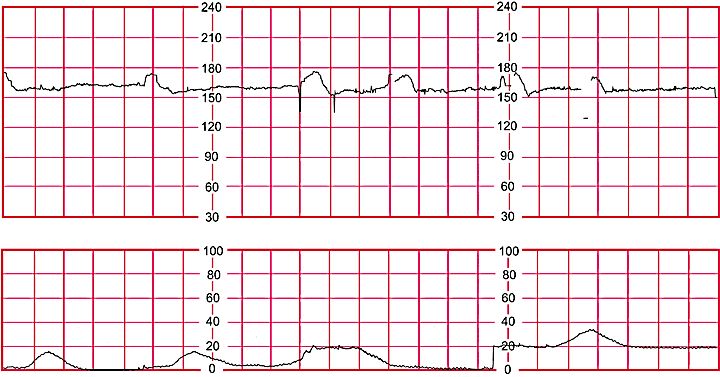
A 17-year-old primigravid patient at 38 weeks’ gestation is admitted to the hospital in labor. Contractions have occurred for 6 hours every 2 to 3 minutes. Her pregnancy has been uncomplicated. A fetal heart tracing is shown. The cervix is 2 cm dilated and 90% effaced; the vertex is at 0 station. Which of the following is most consistent with these heart tracing findings?
CorrectIncorrect -
Question 18 of 20
18. Question
A 3-year-old girl is brought to the office by her mother 2 days after she suddenly stopped talking. The mother says her daughter has not spoken since returning from a weekend visit at her father’s house. Previously, she spoke in short sentences. The patient’s parents are divorced, and her father has a new girlfriend who has a 4-year-old son. The patient has no history of serious illness and receives no medications. In the examination room, she looks at books and plays alone quietly. Vital signs are within normal limits. Physical examination shows no abnormalities. The patient looks in the direction of a dropped object that made a loud sound when it hit the ground. She nods or shakes her head in response to questions but does not answer open-ended questions. Which of the following is the most appropriate initial step in management?
CorrectIncorrect -
Question 19 of 20
19. Question

A 23-year-old man comes to the office because of a 4-week history of an itchy rash on his torso. He is otherwise asymptomatic. He has no history of serious illness and takes no medications. Vital signs are within normal limits. A photograph of the torso is shown. Cardiopulmonary and abdominal examinations show no abnormalities. Which of the following is the most appropriate next step in management?
CorrectIncorrect -
Question 20 of 20
20. Question
An 82-year-old woman is brought to the physician by her daughter because she has not had a bowel movement for 2 weeks and has had loss of appetite for 3 days. There is no history of rectal bleeding or change in stool color or caliber. One year ago, test of the stool for occult blood was negative. Examination shows a large, exophytic, cauliflower-like lesion between the vagina and rectum. Digital rectal examination shows fecal impaction. A biopsy specimen of the lesion is most likely to show which of the following?
CorrectIncorrect