
CK- NBME 12 – Block 4 (Duplicate Quiz)
Time limit: 0
Quiz Summary
0 of 20 Questions completed
Questions:
Information
You have already completed the quiz before. Hence you can not start it again.
Quiz is loading…
You must sign in or sign up to start the quiz.
You must first complete the following:
Results
Quiz complete. Results are being recorded.
Results
0 of 20 Questions answered correctly
Your time:
Time has elapsed
You have reached 0 of 0 point(s), (0)
Earned Point(s): 0 of 0, (0)
0 Essay(s) Pending (Possible Point(s): 0)
Categories
- Not categorized 0%
- 1
- 2
- 3
- 4
- 5
- 6
- 7
- 8
- 9
- 10
- 11
- 12
- 13
- 14
- 15
- 16
- 17
- 18
- 19
- 20
- Current
- Review
- Answered
- Correct
- Incorrect
-
Question 1 of 20
1. Question
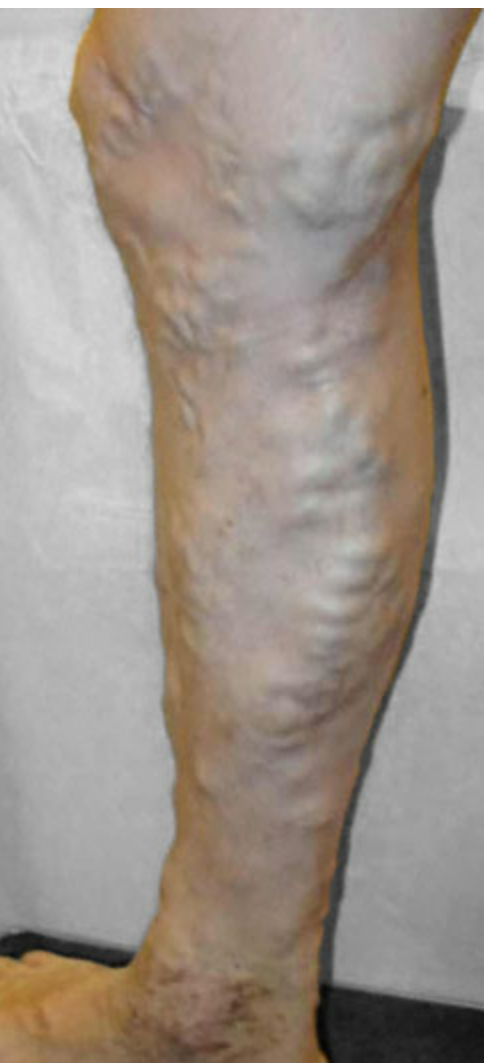
A 67-year-old woman comes to the physician because of a 6-month history of mild pain in her legs with walking and at rest. Her pain is somewhat relieved when she elevates her legs. She has a 3-year history of intermittent swelling of her legs. She has no history of serious illness and takes no medications. She has smoked one-half pack of cigarettes daily for 18 years. She has been able to perform her normal daily activities. Cardiopulmonary examination shows no abnormalities. There is nonpitting edema of the lower extremities. A photograph of the right lower extremity is shown. Which of the following is the most appropriate next step in diagnosis of the lower extremity findings?
 CorrectIncorrect
 -
Question 2 of 20
2. Question
Ten days after undergoing left above-the-knee amputation for severe diabetic soft-tissue infection, a 78-year-old man in the intensive care unit has noisy, labored breathing. His postoperative course has been complicated by sepsis, delirium, and respiratory insufficiency. His temperature is 37.5°C (99.5°F), pulse is 72/min, respirations are 9/min, and blood pressure is 100/50 mm Hg. Pulse oximetry on 3 L of oxygen by nasal cannula shows an oxygen saturation of 92%. He is not oriented to person, place, or time. Breath sounds are coarse and distant bilaterally. The extremities are cool to the touch and mottled. After discussions with the patient’s family, and consistent with the patient’s wishes, the family has chosen to provide comfort care. The family remains concerned about the patient’s current loud breathing and secretions. Which of the following is the most appropriate next step in management?
CorrectIncorrect -
Question 3 of 20
3. Question
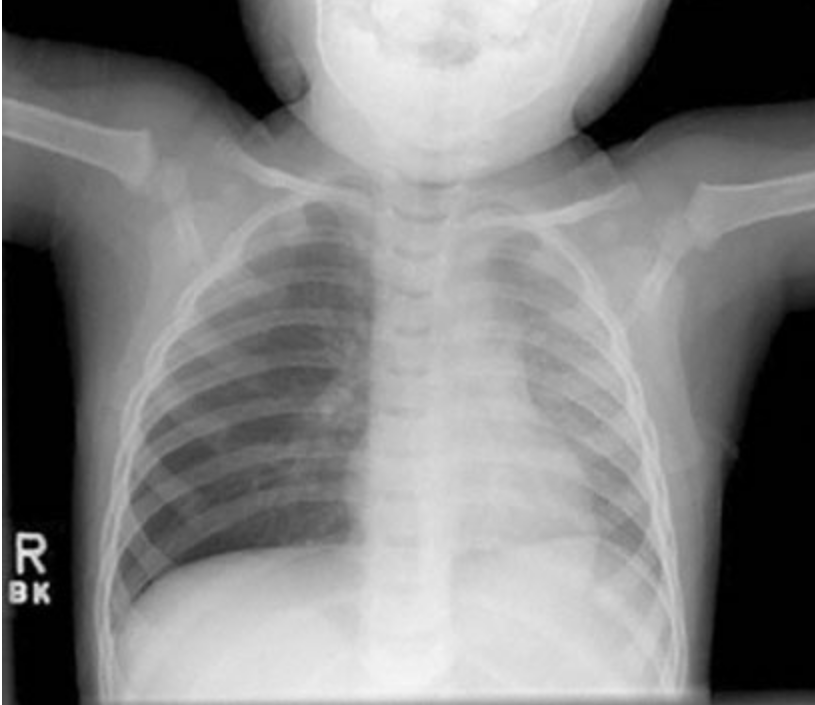
A previously healthy 4-year-old boy is brought to the emergency department by his mother on a winter evening because of the sudden onset of coughing and mild difficulty breathing. His symptoms began late this afternoon when he was playing with other children at a party. His brother has asthma. The patient’s temperature is 37.2°C (99°F), pulse is 92/min, and respirations are 36/min. Physical examination shows intense intermittent coughing and mild intercostal retractions. Wheezes are heard bilaterally but are greater on the right. An x-ray of the chest is shown. Which of the following is the most likely diagnosis?
 CorrectIncorrect
 -
Question 4 of 20
4. Question
A 62-year-old man comes to the office with his wife for a follow-up examination 4 weeks after he was hospitalized for management of an acute myocardial infarction that required cardiac catheterization. He has had a 1.4-kg (3-lb) weight gain since discharge. He has not had shortness of breath or chest pain on exertion. He has been sleeping well. His medications are losartan and atorvastatin; he is intermittently adherent to his regimen. He has had irregular attendance at an outpatient cardiac rehabilitation program; he says he sometimes skips sessions because he is tired. His wife says he is irritable and often talks of his father who died of a heart attack at the age of 65 years. The couple has not resumed sexual activity because of the patient’s fear of having another heart attack. The patient enjoys seeing his grandchildren but is no longer interested in playing poker with his friends. He is 168 cm (5 ft 6 in) tall and weighs 85 kg (187 lb); BMI is 30 kg/m2. His pulse is 90/min, respirations are 16/min, and blood pressure is 130/84 mm Hg. Physical examination shows no pedal edema. On mental status examination, he describes his mood as “blah” and has a constricted affect. He reports no suicidal ideation or suicide plan. Which of the following is the most likely diagnosis?
CorrectIncorrect -
Question 5 of 20
5. Question
A 17-year-old primigravid patient at 22 weeks’ gestation comes to the physician because of a 12-hour history of fever, nausea, and vomiting. She has abdominal tenderness on the right side when she coughs. Her temperature is 38.3°C (101°F). Pelvic and rectal examinations show right-sided tenderness. Fetal heart tones are normal. Her leukocyte count is 18,000/mm3 with a shift to the left. Her serum amylase activity is within the reference range. During the next 8 hours, vomiting, fever, and abdominal pain continue. Ultrasonography of the gallbladder shows no abnormalities. Which of the following is the most appropriate next step in diagnosis?
CorrectIncorrect -
Question 6 of 20
6. Question
An 18-year-old man comes to the clinic because of a 3-hour history of right eye pain with mild light sensitivity and blurry vision that have been present since he awakened this morning. He has had no symptoms in his left eye. He reports being struck in the face by a soccer ball last night but having no symptoms at that time. Medical history is remarkable for admission to the hospital 2 years ago for acute chest syndrome secondary to sickle cell disease; he has taken hydroxyurea since that time. He takes no other medications and does not wear corrective lenses. Family history is remarkable for glaucoma in his maternal grandfather. The patient’s vital signs are within normal limits. Examination of the right eye shows blood filling the lower 20% of the anterior chamber. Pupils are equal and reactive to light and accommodation bilaterally, and visual fields are intact. Visual acuity is 20/60 in the right eye and 20/20 in the left eye. Intraocular pressure is 27 mm Hg in the right eye and 18 mm Hg in the left eye (N=12–22). Which of the following factors in this patient most strongly increases his risk for complications of his current condition?
CorrectIncorrect -
Question 7 of 20
7. Question
A previously healthy 16-year-old boy comes to the physician because of constant right-sided scrotal pain for 36 hours. He had sexual intercourse with a new partner 1 week ago. His temperature is 38°C (100.4°F). Abdominal examination shows no abnormalities. There is a scant penile discharge. The right scrotum is swollen and tender, especially posteriorly. The pain is less severe when the scrotum is elevated. Urinalysis and Gram stain of the urethral discharge show leukocytes. Which of the following is the most appropriate next step in management?
CorrectIncorrect -
Question 8 of 20
8. Question
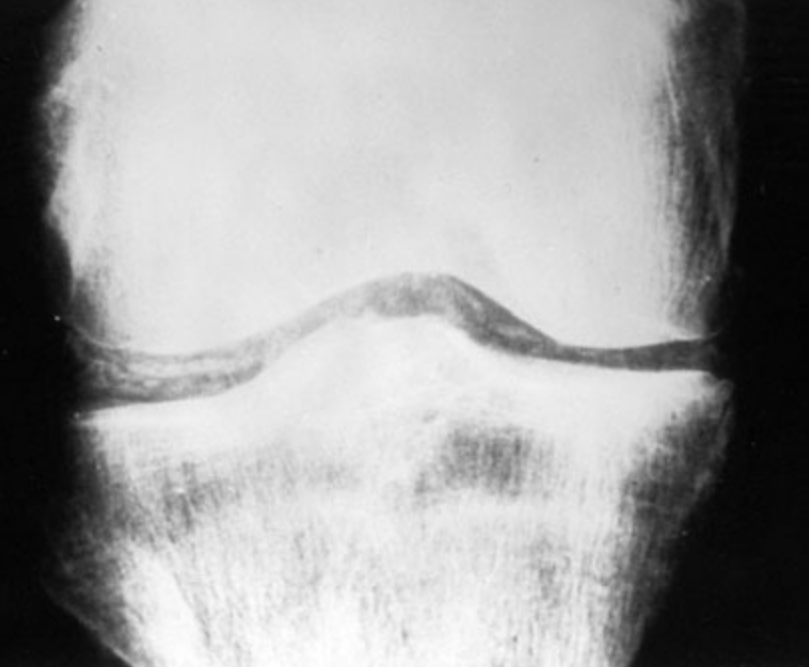
A 52-year-old woman comes to the physician because of a 1-week history of increasingly severe pain and swelling of her right knee. She now is unable to walk because of the symptoms. Five years ago, she fell and hit the knee on the bathroom floor. She has hypertension treated with lisinopril. Her temperature is 36.9°C (98.4°F), pulse is 84/min, respirations are 20/min, and blood pressure is 132/76 mm Hg. The right knee is erythematous, swollen, and warm. There is diffuse tenderness to light touch; passive and active range of motion is limited by pain. There is no crepitus, but ballottement shows moderate knee effusion. Arthrocentesis is performed, and joint fluid analysis shows a leukocyte count of 50,000/mm3. A Gram stain is negative; rhomboid-shaped crystals are present. An x-ray of the knee is shown. Which of the following is the most appropriate pharmacotherapy?
 CorrectIncorrect
 -
Question 9 of 20
9. Question
A 28-year-old woman comes to the office for a follow-up examination 2 weeks after undergoing a total thyroidectomy because of a thyroid nodule. Immediately after the operation, the patient had the onset of marked hypocalcemia and was admitted to the intensive care unit. During her hospital stay, intravenous calcium and calcitriol were administered. Today, she has had recurrent numbness around her mouth and muscle cramping. Current medications are calcium carbonate three times daily with meals and calcitriol twice daily. Vital signs are within normal limits. Physical examination shows spasm of the ipsilateral facial muscles when tapping 2 cm anterior to the ears on the zygomatic arch bilaterally. The remainder of the examination shows no abnormalities. Laboratory studies are most likely to show an increase in which of the following in this patient?
CorrectIncorrect -
Question 10 of 20
10. Question
A previously healthy 27-year-old woman comes to the physician because of a rash over her chest and back for 5 days. She has a 10-day history of pain with urination, urinary frequency, and nocturia two to three times nightly. She took her father’s trimethoprim-sulfamethoxazole for 7 days, and her urinary symptoms improved. She currently takes no medications. She does not smoke cigarettes. Her temperature is 37.5°C (99.5°F), pulse is 110/min, respirations are 16/min, and blood pressure is 110/70 mm Hg. Examination of the skin shows an erythematous, maculopapular rash over the trunk. There are no oral lesions. There is no splenomegaly. Laboratory studies show:
Hemoglobin
12.8 g/dL
Leukocyte count
3000/mm3
Segmented neutrophils
15%
Eosinophils
5%
Basophils
1%
Lymphocytes
54%
Monocytes
25%
Platelet count
200,000/mm3
Which of the following is the most appropriate next step in management?
CorrectIncorrect -
Question 11 of 20
11. Question
A 57-year-old woman who was admitted to the hospital because of pneumonia has had an increase in her serum creatinine concentration from 1 mg/dL to 2.4 mg/dL during the past 3 days. On admission 7 days ago, she had severe shortness of breath and hypotension; she was intubated and mechanically ventilated for 2 days. Six days ago, a CT scan of the chest with contrast showed pneumonia at both lung bases. She also has type 2 diabetes mellitus. Current medications are ceftriaxone, azithromycin, albuterol, insulin, and lisinopril. She is now breathing 3 L/min of oxygen via nasal cannula and has mild shortness of breath. Her blood pressure has been stable for 6 days. Her urine output has been 1 L/24 h during the past 2 days. Her pulse is 70/min, and blood pressure is 150/90 mm Hg. Pulse oximetry on 3 L/min of oxygen via nasal cannula shows an oxygen saturation of 94%. Crackles are heard at both lung bases. Urinalysis shows:
Protein
1+
RBC
10/hpf
WBC
9/hpf
Casts
none
A Wright stain of urine shows eosinophils. Which of the following is the most appropriate next step in management?
CorrectIncorrect -
Question 12 of 20
12. Question
A 40-year-old man comes to the emergency department because of a 1-day history of nausea and vomiting. He has not had fever, chills, abdominal pain, or diarrhea. He says taking a hot shower alleviates his symptoms. He has no history of serious illness and takes no medications. He says he occasionally uses illicit drugs but refuses to provide any additional information. His temperature is 36.7°C (98°F), pulse is 100/min, respirations are 18/min, and blood pressure is 130/90 mm Hg. Examination shows no other abnormalities. Intoxication from which of the following is the most likely cause of this patient’s current condition?
CorrectIncorrect -
Question 13 of 20
13. Question
A 62-year-old woman comes to the physician because of a 4-month history of a painless mass in her left breast; the mass has not changed in size. Ten years ago, she had a total abdominal hysterectomy and bilateral salpingo-oophorectomy. She has hypertension treated with hydrochlorothiazide. Her maternal aunt was diagnosed with breast cancer at the age of 55 years. The patient’s vital signs are within normal limits. Examination shows a 2.5-cm hard, immobile mass in the upper outer quadrant of the left breast. Mammography and fine-needle aspiration biopsy specimen show no abnormalities. Which of the following is the most appropriate next step in management?
CorrectIncorrect -
Question 14 of 20
14. Question
A 2-year-old girl is brought to the office by her mother because of bloody drainage from her right ear that the mother first noticed last night when the patient woke up screaming and holding her right ear. The pain improved after the mother cleaned the ear with a cotton swab and gave the patient ibuprofen, but the mother noted dried, crusted blood on the patient’s right ear lobe and pillow when she awoke this morning. The patient also has a 3-day history of cough, congestion, and runny nose. She has no history of serious illness and receives no routine medications. She is at the 25th percentile for height and weight and 50th percentile for BMI. Vital signs are within normal limits. The right tympanic membrane cannot be visualized because of seropurulent fluid in the right external auditory canal. The remainder of the examination, including examination of the left tympanic membrane, discloses no abnormalities. Which of the following is the most likely cause of this patient’s ear drainage?
CorrectIncorrect -
Question 15 of 20
15. Question
A 20-year-old man comes to the student health services on his college campus because of painful urination and scant urethral discharge for the past week. He says that he has had no fever, chills, or back pain. For the past 6 months, he has engaged in unprotected sexual activity with one partner. He has no history of sexually transmitted diseases or other disorders and takes no medications. He appears well. His temperature is 37°C (98.6°F), pulse is 64/min, respirations are 12/min, and blood pressure is 115/70 mm Hg. Examination shows no costovertebral angle tenderness, penile lesions, or expressible discharge. Urinalysis shows no RBCs, 2–5 WBC/hpf, and no casts; throat cultures are pending. Which of the following is the most appropriate management at this time?
CorrectIncorrect -
Question 16 of 20
16. Question
A 62-year-old woman comes to the physician for PPD skin testing prior to beginning volunteer work in a school. She has hypertension treated with hydrochlorothiazide and osteoarthritis treated with acetaminophen. She was born in the USA. She has had no sick contacts. She does not smoke cigarettes, drink alcohol, or use illicit drugs. Physical examination shows no abnormalities. A PPD skin test produces 6 mm of induration at 48 hours. Results of liver function tests are within the reference ranges. A chest x-ray shows no abnormalities. Which of the following is the most appropriate next step in management?
CorrectIncorrect -
Question 17 of 20
17. Question
A 42-year-old man comes to the emergency department because of a 2-day history of nausea, vomiting, and malaise. He has bipolar disorder, herpes simplex virus 2, and chronic shoulder pain secondary to a torn rotator cuff injury sustained 7 years ago. His medications are valproic acid, sertraline, acyclovir, hydrocodone-acetaminophen, and docusate. He does not drink alcohol or use illicit drugs. His temperature is 37.2°C (99°F), pulse is 102/min, and blood pressure is 122/84 mm Hg. Physical examination shows dry mucous membranes. Abdominal examination shows tenderness to palpation. On mental status examination, he has a dysphoric mood and congruent affect. Laboratory studies show:
Leukocyte count
8000/mm3
Serum
AST
38 U/L
ALT
52 U/L
Amylase
465 U/L
Which of the following medications is the most likely cause of this patient’s current symptoms?
CorrectIncorrect -
Question 18 of 20
18. Question
A 72-year-old woman comes to the office with her son for a follow-up examination. She was diagnosed with Parkinson disease 8 years ago. She says her health has declined substantially during the past 6 months. She feels weaker and has had increasing difficulty walking. She has stopped attending weekly luncheons with her friends. The patient’s son says his mother sleeps poorly at night and naps frequently during the day. He has to encourage her to eat and take her medications. The patient’s medications are carbidopa-levodopa and donepezil. She appears sad and is tearful as she discusses her difficulties. Examination shows a mild resting tremor of the hands and mild bradykinesia. When asked to stand and walk from a seated position, she moves slowly and pushes on the arms of the chair with her hands; she takes steps with no hesitation but walks slowly. Which of the following is the most appropriate next step in pharmacotherapy?
CorrectIncorrect -
Question 19 of 20
19. Question
A 32-year-old primigravid woman at 10 weeks’ gestation comes to the physician for her first prenatal visit. She conceived after in vitro fertilization. Three years ago, a bicornuate uterus was noted on diagnostic laparoscopy for primary infertility. She is otherwise healthy, and her only medication is a prenatal vitamin. She is 163 cm (5 ft 4 in) tall. She weighed 50 kg (110 lb) prior to her pregnancy; BMI was 19 kg/m2. She has had a 1-kg (2-lb) weight gain during her pregnancy. Her blood pressure is 110/70 mm Hg. Examination shows a uterus consistent in size with a 10-week gestation. This patient is at greatest risk for which of the following pregnancy complications?
CorrectIncorrect -
Question 20 of 20
20. Question
A 22-year-old man with alcohol use disorder comes to the physician because of a 3-week history of weakness in his right hand. His symptom began after drinking a bottle of whiskey. He has no history of serious illness and takes no medications. He drinks six cans of beer daily. On examination of the right upper extremity, muscle strength is 2/5 in the supinator, wrist extensors, and finger extensors; strength is 5/5 in all other muscles. Sensation to pinprick is decreased over the dorsum of the right hand from the wrist to the base of the thumb and index finger. Which of the following is the most appropriate next step in diagnosis?
CorrectIncorrect