
CK- NBME 11 – Block 3 (Duplicate 2)
Time limit: 0
Quiz Summary
0 of 20 Questions completed
Questions:
Information
You have already completed the quiz before. Hence you can not start it again.
Quiz is loading…
You must sign in or sign up to start the quiz.
You must first complete the following:
Results
Quiz complete. Results are being recorded.
Results
0 of 20 Questions answered correctly
Your time:
Time has elapsed
You have reached 0 of 0 point(s), (0)
Earned Point(s): 0 of 0, (0)
0 Essay(s) Pending (Possible Point(s): 0)
| Average score |
|
| Your score |
|
Categories
- Not categorized 0%
Would you like to submit your quiz result to the leaderboard?
![captcha]()
Loading
- 1
- 2
- 3
- 4
- 5
- 6
- 7
- 8
- 9
- 10
- 11
- 12
- 13
- 14
- 15
- 16
- 17
- 18
- 19
- 20
- Current
- Review
- Answered
- Correct
- Incorrect
-
Question 1 of 20
1. Question
A 63-year-old woman comes to the emergency department because of a 1-week history of progressive shortness of breath on exertion and swelling of her legs. During this time, she has been using two pillows to sleep. Her pulse is 100/min, respirations are 24/min, and blood pressure is 120/80 mm Hg. Pulse oximetry on room air shows an oxygen saturation of 93%. There is jugular venous distention. Bilateral basilar crackles are heard over the lower lungs. On cardiac examination, a grade 3/6 holosystolic murmur is heard best over the apex; an S3 gallop is heard. There is 3+ pitting edema of the lower extremities. Echocardiography shows an ejection fraction of 30%. In addition to furosemide, which of the following is the most appropriate pharmacotherapy at this time?
CorrectIncorrect -
Question 2 of 20
2. Question
A 52-year-old woman comes to the physician 2 weeks after noticing a painless lump in her right breast. Mammography 6 months ago showed no abnormalities. She has no history of serious illness and takes no medications. A 1,5-cm, firm, irregular, nontender mass is palpated in the lower outer quadrant of the right breast. An ultrasonography- guided core biopsy specimen shows infiltrating ductal carcinoma. The patient is concerned about the accuracy of mammography and wishes to know its failure rate in diagnosing breast cancer. Which of the following is the most appropriate test characteristic to determine this answer?
CorrectIncorrect -
Question 3 of 20
3. Question
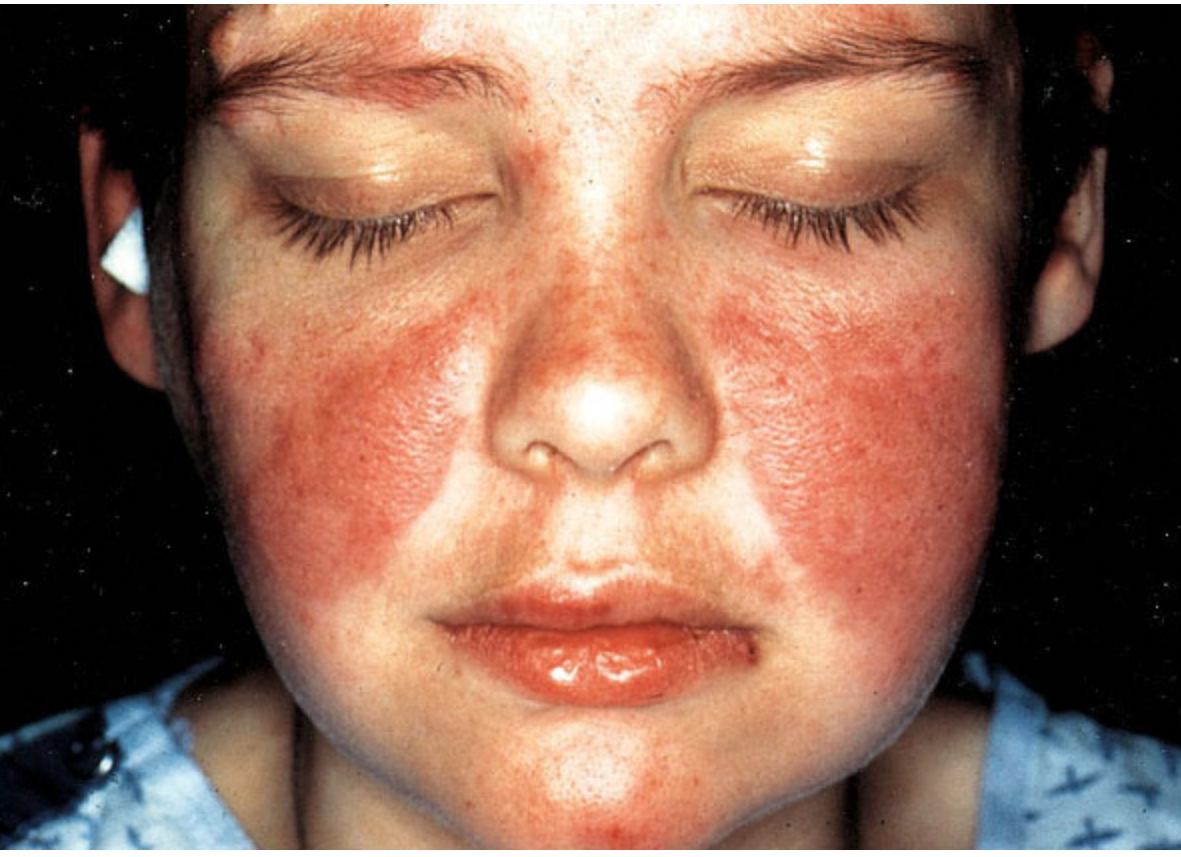
A 22-year-old woman comes to the emergency department because of a 3-hour history of right-sided chest pain. During the past 3 months, she has had temperatures to 38.1°C (100.5°F), marked fatigue, easy bruising, and photosensitivity of the skin, especially over her cheeks. She has had a 7-kg (15-lb) weight loss during this time. She has a 6-month history of aching of her hands and knees. This past winter, she noticed that her fingers became blue on exposure to cold weather and then would become painful and red when she returned indoors. She has no history of serious illness and takes no medications. She has not traveled outside the USA. She is alert and fully oriented. Her temperature is 37.2°C (99°F), pulse is 92/min, respirations are 20/min, and blood pressure is 110/60 mm Hg. A photograph of the face is shown. A low-pitched grating sound is heard over the right lateral lung field. The sound is louder on inspiration but is present during expiration. The sound stops when the patient holds her breath. Cardiac and abdominal examinations show no abnormalities. There is no peripheral edema, clubbing, or cyanosis. A chest x-ray shows no abnormalities. Which of the following is the most appropriate next step in management?
CorrectIncorrect -
Question 4 of 20
4. Question
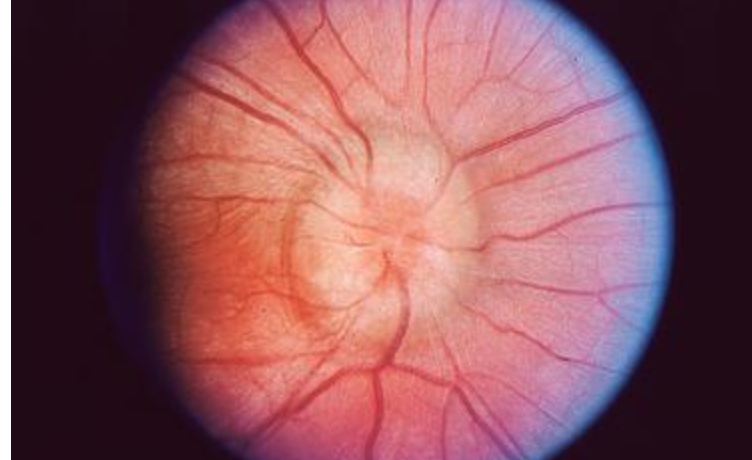
A 27-year-old woman comes to the physician because of a 2-week history of recurring bifrontal headaches and vomiting. The headaches are not relieved by over-the-counter analgesics. She has not had visual changes or other neurologic symptoms. She has no history of serious illness and takes no medications. She is alert and fully oriented. She is 157 cm (5 ft 2 in) tall and weighs 104 kg (230 lb); BMI is 42 kg/m2. Her pulse is 78/min, and blood pressure is 114/72 mm Hg. Funduscopic examination findings are shown. Visual acuity is 20/20 bilaterally. Neurologic examination shows no focal findings. A CT scan of the head shows no abnormalities. Which of the following is the most appropriate next step in management?
 CorrectIncorrect
 -
Question 5 of 20
5. Question
A study is conducted to compare the efficacy of cholesterol-lowering medications X and Y. A total of 500 patients with a serum cholesterol concentration greater than 200 mg/dL are enrolled in the study. Three hundred patients are randomly assigned to receive medication X, and 200 patients are randomly assigned to receive medication Y. Serum cholesterol concentrations are measured for both groups after 6 months of therapy. Which of the following statistical tests will be most helpful in comparing mean serum cholesterol concentrations of both groups?
CorrectIncorrect -
Question 6 of 20
6. Question
A 92-year-old man is admitted to the hospital because of a 24-hour history of severe abdominal pain and distention, nausea, and vomiting. One week ago, he was discharged from the hospital after repair of a left hip fracture. His postoperative course had been uncomplicated. He has hypertension and cataracts. Medications are hydrochlorothiazide, hydrocodone with acetaminophen, aspirin, and multivitamins. His temperature is 37.7°C (99.9°F), pulse is 100/min, respirations are 14/min, and blood pressure is 146/80 mm Hg. The abdomen is distended and diffusely tender. Bowel sounds are decreased. Rectal examination shows mucus, scant stool, and no masses. Test of the stool for occult blood is negative. An x-ray of the abdomen shows no free air under the diaphragm; there is marked colonic dilation from the cecum to the anus with stool and air-fluid levels. Which of the following is the most likely diagnosis?
CorrectIncorrect -
Question 7 of 20
7. Question
An 18-year-old primigravid woman at 39 weeks’ gestation is admitted to the hospital in labor. Contractions occur every 5 minutes and last 1 minute. Her first prenatal visit was 1 week ago. She was treated for syphilis 1 year ago. Her only current medication is a prenatal vitamin, which she started 1 week ago. She uses cocaine and heroin. She has had sexual intercourse with multiple male partners. They use condoms inconsistently. The patient appears well. Vital signs are within normal limits. On pelvic examination, the cervix is 4 cm dilated and 50% effaced. The uterus is consistent in size with a 39-week gestation. No abnormalities are noted. Laboratory studies show:
HBsAg: positive
Anti-HBs: negative
Rapid plasma reagin: negative
Fluorescent treponemal antibody assay: positive
Herpes simplex virus antibody assay: positive IgG at 1:640
HIV ELISA: positive
Vaginal testing for group B streptococcus and cervical testing for Chlamydia trachomatis and Neisseria gonorrhoeae are negative. Intrapartum pharmacotherapy should be administered to prevent which of the following in the newborn?
CorrectIncorrect -
Question 8 of 20
8. Question
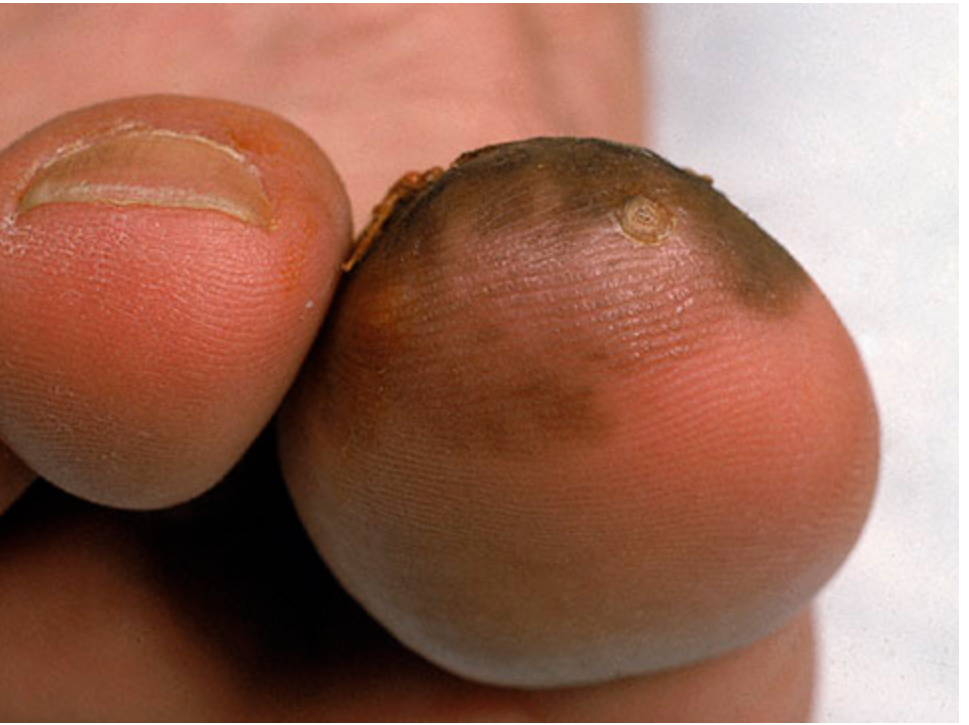
A 62-year-old Asian man comes to the physician because of a 10-month history of a dark lesion on the nail of his right big toe. One year ago, he dropped something on the toe, but he is unsure if this accident caused the lesion. Initially, the lesion was a 0.5-cm, longitudinal, black streak near the side of the toenail. During the past 2 months, the lesion has enlarged and has spread to the nail fold. He has no history of serious illness and takes no medications. A photograph of the right big toe is shown. Examination shows no other abnormalities. Which of the following is the most likely diagnosis?
CorrectIncorrect -
Question 9 of 20
9. Question
A 22-year-old man has a temperature of 39.5°C (103.1°F) 1 hour after initiation of a transfusion of packed red blood cells for a hemoglobin concentration of 7 g/dL. Yesterday, he underwent open reduction and internal fixation of a fractured femur sustained in a motor vehicle collision. He received prophylactic cefazolin prior to the operation and is now receiving enoxaparin. He is otherwise healthy and has no known allergies. The remainder of the vital signs are within normal limits. Examination shows no abnormalities. Which of the following is the most appropriate next step in management?
CorrectIncorrect -
Question 10 of 20
10. Question
A study is conducted to assess the impact of obesity on the risk for cerebral infarction. The investigator enrolls 100 participants with a history of cerebral infarction and 100 healthy participants. The investigator determines each participant’s weight. The results show:
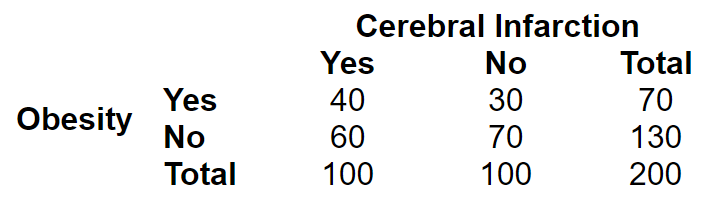
Which of the following represents the odds ratio for the relationship between obesity and cerebral infarction?
CorrectIncorrect -
Question 11 of 20
11. Question
A 62-year-old woman, gravida 2, para 2, comes to the physician because of loss of urine that has become progressively worse during the past 3 months. She has a 5-year history of occasional incontinence after feeling a strong urge to void; treatment with oxybutynin has provided no relief of her symptoms. She has type 2 diabetes mellitus and hypertension. Current medications include metformin, insulin, and metoprolol. Vital signs are within normal limits. Abdominal examination shows no abnormalities. The external genitalia, vagina, and cervix appear normal. The uterus and adnexa are normal to palpation. There is loss of a large amount of urine with mild pressure on Valsalva maneuver. Her postvoid residual volume is 500 ml_. Urinalysis shows no abnormalities. Which of the following is the most likely diagnosis?
CorrectIncorrect -
Question 12 of 20
12. Question
A 62-year-old man comes to the physician because of a 1-year history of progressive shortness of breath. He has moderate difficulty breathing at rest and has wheezing after walking 20 feet. He has a chronic cough productive of white sputum that occurred intermittently for 10 years and then started to occur daily 1 year ago. He has not had any other symptoms. He has no other history of serious medical conditions and takes no medications. He has smoked one pack of cigarettes daily for 47 years. His temperature is 37.1°C (98.7°F), pulse is 76/min, respirations are 28/min, and blood pressure is 130/70 mm Hg while sitting. Pulse oximetry on room air shows an oxygen saturation of 92%. Examination shows no jugular venous distention. Expiratory wheezes are heard bilaterally. Cardiac examination shows no abnormalities. Carotid and femoral pulses are 2+. There is no peripheral edema. Spirometry shows a decreased FEV1 and FEV1/FVC ratio. An ECG shows no abnormalities. A chest x-ray shows an increased anteroposterior diameter. The physician counsels the patient about beginning a smoking cessation program. Which of the following is the most appropriate next step in management?
CorrectIncorrect -
Question 13 of 20
13. Question
A previously healthy 2-year-old girl is brought to the emergency department by her parents 60 minutes after she had a 2-minute episode of generalized shaking. During the episode, she was unresponsive, and her eyes were rolled back in her head. On arrival, she is awake and cooperative. Her temperature is 39.8°C (103.6°F), pulse is 130/min, respirations are 12/min, and blood pressure is 90/70 mm Hg. Examination shows an erythematous, bulging right tympanic membrane. The neck is supple. Neurologic examination shows no focal findings. Serum electrolyte concentrations are within normal limits. Which of the following is the most appropriate next step in management?
CorrectIncorrect -
Question 14 of 20
14. Question
A 27-year-old man is brought to the emergency department by police after being found somnolent in an alley. On arrival, he is agitated and confused. When staff approach him, he shouts and tries to get off the stretcher. He appears disheveled. He is malodorous and diaphoretic. He rambles unintelligibly on questioning and persistently picks at his clothes. His pulse is 110/min, and blood pressure is 160/90 mm Hg. Pupils are equal and reactive. He has a mild tremor of both hands. Urine toxicology screening is negative. Which of the following is the most likely cause of this patient’s symptoms?
CorrectIncorrect -
Question 15 of 20
15. Question
A 16-year-old boy comes to the physician for a routine follow-up examination. He has a 10-year history of type 1 diabetes mellitus. During the past 9 months, he has not been compliant with his treatment; he has been missing insulin injections and has not been monitoring his blood glucose concentrations. He has been admitted to the hospital four times during the past 3 years for diabetic ketoacidosis; his hemoglobin A1c during each hospital stay was greater than 10%. His pulse is 68/min, and blood pressure is 122/85 mm Hg. Examination shows lipoatrophy at the abdominal injection sites. Funduscopic examination shows no abnormalities. Which of the following is the most appropriate next step?
CorrectIncorrect -
Question 16 of 20
16. Question
A 5-year-old boy is brought to the emergency department 20 minutes after being stung by a bee on his right arm at summer camp. The site immediately became red, swollen, and hot, and an itchy rash developed and quickly spread to his chest. He has not had shortness of breath, rapid breathing, wheezing, or swelling of his other extremities. On arrival, he appears slightly anxious but is not in acute distress. His temperature is 37°C (98.6°F), pulse is 98/min, respirations are 28/min, and blood pressure is 90/65 mm Hg. Examination shows moist mucous membranes. A 3-cm area of erythematous induration surrounds the site of the sting, and the right upper arm is diffusely edematous. There is an urticarial rash on the right upper arm and chest. The lungs are clear to auscultation. Which of the following measures is most likely to decrease this patient’s risk for similar reactions in the future?
CorrectIncorrect -
Question 17 of 20
17. Question
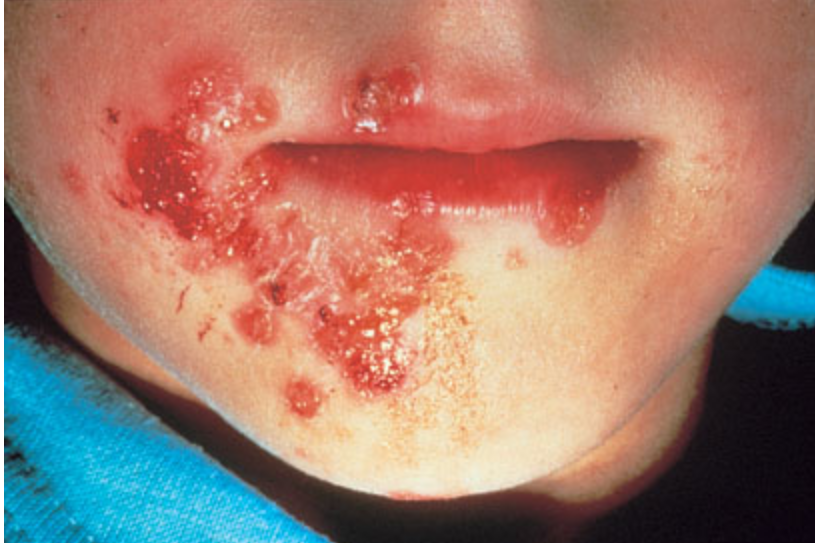
A 7-year-old girl is brought to the physician 3 days after her mother noticed a rash on her face. The patient has no other symptoms and has no history of similar skin lesions or recent trauma to the face. She feels well. Her temperature is 37°C (98.6°F). A photograph of the rash is shown. Examination shows no other abnormalities. Which of the following is the most appropriate initial treatment?
 CorrectIncorrect
 -
Question 18 of 20
18. Question
Four weeks after a flu-like illness, a 40-year-old man develops progressive dyspnea on exertion. Examination shows jugular venous distention, bilateral pulmonary crackles, a diffuse apical impulse, an apical S3, and bilateral pedal edema. Which of the following is the most likely cause?
CorrectIncorrect -
Question 19 of 20
19. Question
A 52-year-old woman comes to the physician for a routine health maintenance examination. One year ago, she was started on daily hormone replacement therapy (estradiol and medroxyprogesterone) to treat severe vasomotor symptoms. But she has been taking the medroxyprogesterone intermittently because of severe depression and mood changes when taking it. Menses had stopped for the first 6 months on the original regimen, but since she changed her regimen, she has had vaginal spotting two to three times monthly. Which of the following is the most appropriate next step in management?
CorrectIncorrect -
Question 20 of 20
20. Question
A 77-year-old man is brought to the physician by his family because of a 10-week history of decreased appetite that has resulted in a 10.4-kg (23-lb) weight loss. During this time, he also has had a persistent, nonproductive cough, intermittent nausea, and constipation. He reports that he has been sleeping 10 hours daily but does not feel rested. His family states that he had an upper respiratory tract infection prior to the weight loss and that he never “bounced back” from the infection. He had smoked one to two packs of cigarettes daily for 60 years but has recently cut back to one to two cigarettes daily because he no longer enjoys the taste. He appears tired and cachectic. He is 175 cm (5 ft 9 in) tall and weighs 58 kg (129 lb); BMI is 19 kg/m2. His temperature is 36°C (96.8°F), pulse is 86/min, and blood pressure is 120/78 mm Hg. The lungs are clear to auscultation. Abdominal examination shows no tenderness and mild distention. There is trace pedal edema. On mental status examination, he has a sad mood and constricted affect. His speech is slow. He is oriented to person, place, and time. He cannot perform serial sevens. An x-ray of the chest shows no abnormalities. An x-ray of the abdomen shows copious stool. Which of the following is the most appropriate next step in management?
CorrectIncorrect