
CK- NBME 11 – Block 2 (Duplicate Quiz)
Time limit: 0
Quiz Summary
0 of 20 Questions completed
Questions:
Information
You have already completed the quiz before. Hence you can not start it again.
Quiz is loading…
You must sign in or sign up to start the quiz.
You must first complete the following:
Results
Quiz complete. Results are being recorded.
Results
0 of 20 Questions answered correctly
Your time:
Time has elapsed
You have reached 0 of 0 point(s), (0)
Earned Point(s): 0 of 0, (0)
0 Essay(s) Pending (Possible Point(s): 0)
| Average score |
|
| Your score |
|
Categories
- Not categorized 0%
Would you like to submit your quiz result to the leaderboard?
![captcha]()
Loading
- 1
- 2
- 3
- 4
- 5
- 6
- 7
- 8
- 9
- 10
- 11
- 12
- 13
- 14
- 15
- 16
- 17
- 18
- 19
- 20
- Current
- Review
- Answered
- Correct
- Incorrect
-
Question 1 of 20
1. Question
1 point(s)A 25-year-old man is in the intensive care unit 2 weeks after he sustained third-degree burns over 55% of his total body surface area. He is sedated with fentanyl and midazolam, orotracheally intubated, and mechanically ventilated. He has undergone five skin grafting procedures since admission. His burns are 45% covered. He has not had any infection. Pulse is 110/min, and blood pressure is 105/62 mm Hg. Examination shows no abnormalities of the head or neck. There are clean, dry bandages over the chest, abdomen, and lower extremities. Which of the following is the most appropriate next step in management of this patient’s airway?
CorrectIncorrect -
Question 2 of 20
2. Question
1 point(s)A 42-year-old woman comes to the office for follow-up of a renal calculus that was diagnosed in the emergency department 2 weeks ago. She passed the calculus in the emergency department after several hours of treatment with intravenous saline and pain medication. Today, she says she has not had any pain since that time. Her only medications are occasional acetaminophen and ibuprofen. She exercises three to four times weekly, follows a low-sodium diet, does not smoke cigarettes, and drinks two glasses of red wine nightly. She works as a physician. She is 170 cm (5 ft 7 in) tall and weighs 63 kg (140 lb); BMI is 22 kg/m2. Temperature is 37.1°C (98.8°F), pulse is 72/min, respirations are 12/min, and blood pressure is 138/86 mm Hg. Physical examination discloses no abnormalities. Results of serum studies are shown:
Calcium: 11.0 mg/dL
Urea nitrogen: 15 mg/dL
Creatinine: 0.8 mg/dL
Phosphorus: 3.8 mg/dL
Results of the remainder of a basic metabolic panel and complete blood count are within the reference ranges. Which of the following is most appropriate to obtain to evaluate this patient’s increased serum calcium concentration?
CorrectIncorrect -
Question 3 of 20
3. Question
1 point(s)An asymptomatic 57-year-old woman comes to the physician to request a new blood test for the early detection of pancreatic cancer that she read about in a newspaper article. She is concerned about her risk because her stepmother died of pancreatic cancer at the age of 61 years. The patient has no history of serious illness and takes no medications. Examination shows no abnormalities. The physician agrees to perform the test, and the results are positive. The prevalence of pancreatic cancer in the community is 1%. The test has a sensitivity of 85% and a specificity of 90%. In a discussion of the test results with the patient, which of the following is the most appropriate explanation for her risk for pancreatic cancer?
CorrectIncorrect -
Question 4 of 20
4. Question
1 point(s)A 37-year-old woman comes to the physician with her husband because she has been unable to conceive for 13 months. They each have one child from previous marriages. The patient reports that menses have been occurring at irregular 4-month intervals during the past year. Her last menstrual period was 3 months ago. She has no history of gynecologic illness or abnormal Pap smears. She takes no medications. She exercises regularly but says that she has had a 4.5-kg (10-lb) weight gain during the past 2 years. She appears well nourished. She is 168 cm (5 ft 6 in) tall and weighs 70 kg (154 lb); BMI is 25 kg/m2. Physical examination shows no hirsutism or galactorrhea. Pelvic examination shows no abnormalities. A urine pregnancy test is negative. Basal body temperature charts show a monophasic pattern. Which of the following is the most appropriate next step in diagnosis?
CorrectIncorrect -
Question 5 of 20
5. Question
1 point(s)A 42-year-old man with anemia comes to the physician for a follow-up examination. Physical examination shows no abnormalities. Laboratory studies show:
Hematocrit: 28%
Mean corpuscular volume: 62 µm³
Leukocyte count: 8000/mm³
Reticulocyte count: 5%
Platelet count: 150,000/mm³
Serum bilirubin: 2.7 mg/dL
Hemoglobin A: 35% (N = 95%–98%)
Hemoglobin A₂: 6% (N = 2%–4%)
Hemoglobin F: 59% (N = 0%–2%)
A blood smear shows numerous nucleated erythrocytes with marked anisopoikilocytosis. Which of the following is the most likely diagnosis?
CorrectIncorrect -
Question 6 of 20
6. Question
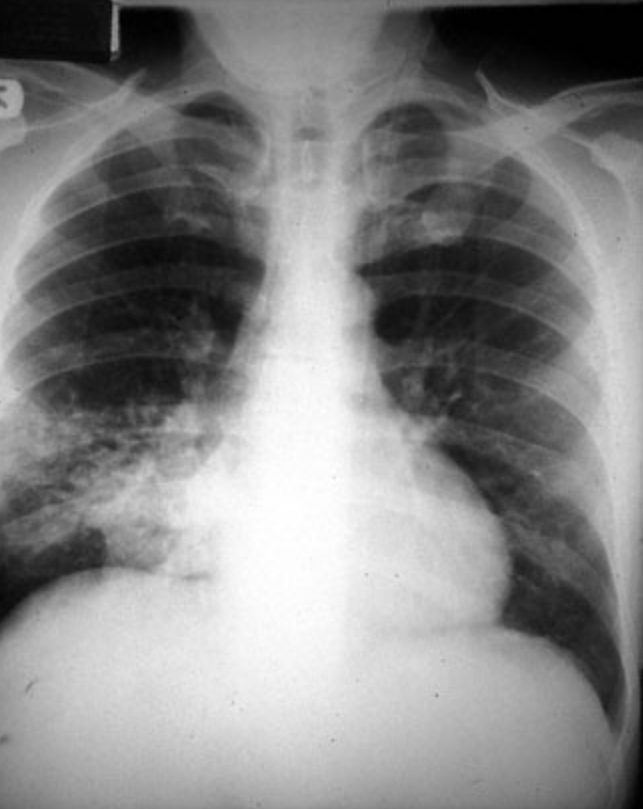
1 point(s)A 24-year-old man comes to the physician because of a 1 -week history of worsening cough productive of scant yellowish sputum. He smokes marijuana daily but does not use tobacco or alcohol. He had asthma in childhood but has not required any medication for more than 10 years. He has sickle cell trait. His temperature is 38°C (100.5°F), pulse is 80/min, respirations are 18/min, and blood pressure is 120/75 mm Hg. Pulse oximetry on room air shows an oxygen saturation of 96%. Examination shows a persistent cough and moist oral mucosa. Crackles are heard in the right middle lung field. Cardiac and abdominal examinations show no abnormalities. His hemoglobin concentration is 14 g/dL, leukocyte count is 12,000/mm3, and platelet count is 580,000/mm3. An x-ray of the chest is shown. Which of the following is the most appropriate pharmacotherapy?
 CorrectIncorrect
 -
Question 7 of 20
7. Question
1 point(s)A 14-year-old boy is brought to the physician because his parents are concerned that he is much shorter than his peers. He feels well. On questioning, he reports that he has not had constipation, dry skin, or urinary frequency. He has no history of serious illness. There is no family history of growth abnormalities. His mother is 160 cm (5 ft 3 in) tall, and his father is 173 cm (5 ft 8 in) tall. The patient is just below the 3rd percentile for height and weight and at the 50th percentile for BMI. Review of his growth chart shows he has been growing parallel to but below the 3rd percentile since the age of 2 years. On examination, the thyroid gland is barely palpable and appears normal. Genital and pubic hair development are Tanner stage 1. The remainder of the examination shows no abnormalities. Which of the following is the most likely diagnosis?
CorrectIncorrect -
Question 8 of 20
8. Question
1 point(s)A 25-year-old primigravid woman at 20 weeks’ gestation comes to the physician because of a 3-week history of feeling flushed and shaking of her hands. She has been crying frequently, and her husband has told her that she seems more irritable. Her pregnancy had been uncomplicated. She has had a 4.5-kg (10-lb) weight loss since her last examination 4 weeks ago. Her temperature is 37.8°C (100°F), pulse is 115/min, and blood pressure is 145/90 mm Hg. Her skin is smooth, moist, and velvety to the touch. Examination shows a small, diffuse, smooth, soft goiter. There is a fine continuous tremor bilaterally. Her serum free thyroxine concentration is 14.2 ng/dL, and serum thyroid-stimulating hormone concentration is less than 0.002 pU/mL. Which of the following is the most appropriate initial step in management?
CorrectIncorrect -
Question 9 of 20
9. Question
1 point(s)A 47-year-old woman with type 2 diabetes mellitus comes to the physician because of a 1-month history of indigestion after large meals and a 2-week history of poor exercise tolerance. She can no longer walk up one flight of stairs without becoming short of breath. She also has hypertension, hyperlipidemia, and osteoarthritis that affects both knees. Her mother had a myocardial infarction at the age of 60 years. The patient’s medications are long-acting insulin, atorvastatin, enalapril, and 81-mg aspirin daily. She has never smoked cigarettes. She is 168 cm (5 ft 6 in) tall and weighs 82 kg (180 lb); BMI is 29 kg/m2. Examination shows no abnormalities. A resting ECG shows no abnormalities. Which of the following is the most appropriate next step in diagnosis?
CorrectIncorrect -
Question 10 of 20
10. Question
1 point(s)Seven days after he had a cerebral infarction, a 72-year-old man remains in the hospital and cannot be weaned from the ventilator. He is unable to eat or drink. He has a signed advance directive that requests withdrawal of all life support if he is unable to survive without it. Examination shows cortical blindness. The gag reflex is poor. There is expressive aphasia. The patient is able to respond to questions using nonverbal techniques. He can correctly identify the voices of family members. The physician asks the patient if he would like a tracheostomy and gastrostomy feeding tube, and the patient indicates “no” by squeezing the physician’s hand twice. The patient’s wife and son support his decision and request intravenous morphine to allow him “to die quickly.” Which of the following is the most appropriate next step in management?
CorrectIncorrect -
Question 11 of 20
11. Question
1 point(s)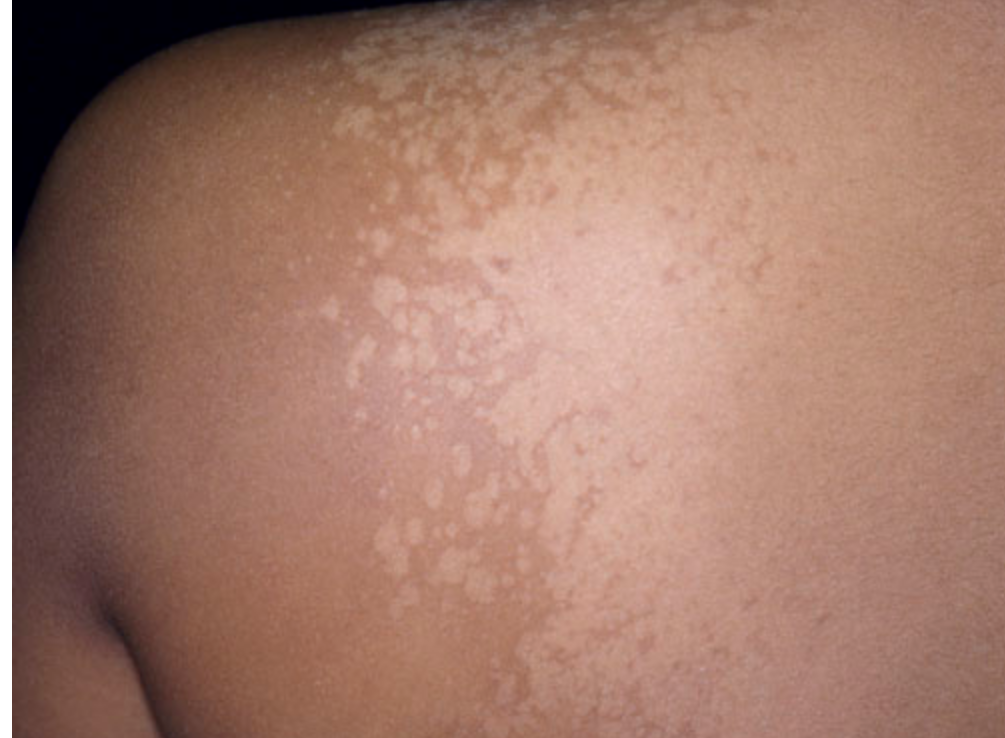
A previously healthy 14-year-old boy is brought to the physician because of a 1-week history of a rash over his neck, back, and chest. It is not itchy or painful. He has had no other symptoms. A photograph of the lesions is shown. Which of the following is the most appropriate pharmacotherapy?
CorrectIncorrect -
Question 12 of 20
12. Question
1 point(s)A 17-year-old boy is brought to the emergency department 1 hour after he sustained a stab wound to his abdomen. He has no history of serious illness and takes no medications. He is alert and communicative and reports severe abdominal pain. His temperature is 37.8°C (100°F), pulse is 130/min, and blood pressure is 110/70 mm Hg. Examination shows a 2-cm, jagged laceration over the anterior abdominal wall in the left lower quadrant. Wound exploration shows penetration of the underlying fascia. Which of the following is the most appropriate next step in management?
CorrectIncorrect -
Question 13 of 20
13. Question
1 point(s)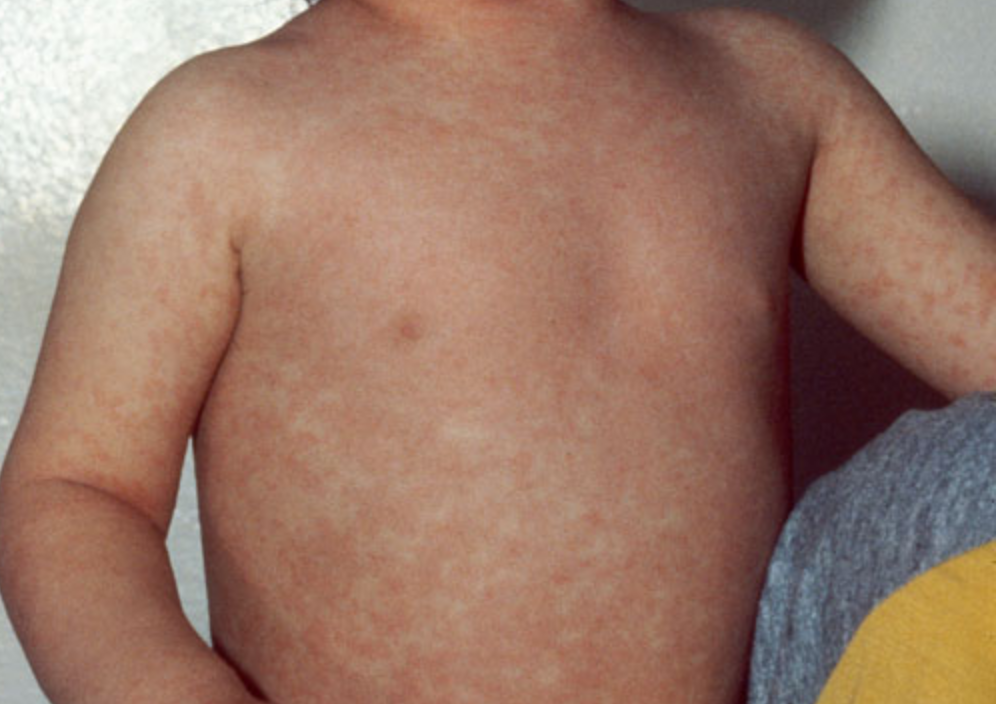
A 16-month-old boy is brought to the physician by his parents because of a 2-day history of rash. He has not been scratching it. He has not had runny nose, watery eyes, cough, or change in appetite. There are no current known cases of measles in the community, and his family has not traveled recently. He was born at 39 weeks’ gestation following an uncomplicated pregnancy and delivery. He was breast-fed for the first 6 months. He received all recommended vaccines for the first 6 months of life. His mother declined to have him receive the varicella vaccine. He received the measles-mumps-rubella vaccine 10 days ago. Growth and development are appropriate for age. On examination, he is playful and alert. His temperature is 37.7°C (99.9°F). A photograph of the rash is shown. The remainder of the examination shows no abnormalities. Which of the following is the most likely cause of this patient’s rash?
CorrectIncorrect -
Question 14 of 20
14. Question
1 point(s)A 12-year-old girl is brought to the office by her mother because of a 3-month history of painless lumps around her knees and ankles. They have not affected her activity. She has not had nausea, vomiting, fever, chills, or malaise. She has no history of serious illness. Immunizations are up-to-date. Growth and development are appropriate for age. Vital signs are within normal limits. Examination shows aligned extremities. There are 10-mm and 5-mm masses palpable over the anterolateral aspect of the knees and ankles, respectively. Range of motion of the knees and ankles is full and painless. Neurovascular examination shows no abnormalities. X-rays of the knees and ankles show bony extensions corresponding to each palpated mass, appearing to originate at or near the physes. The bony extensions are well corticated with no sclerotic or lytic properties. Which of the following is the most likely diagnosis?
CorrectIncorrect -
Question 15 of 20
15. Question
1 point(s)A 32-year-old man with major depressive disorder has had the sensation of insects crawling under his skin for 2 weeks. He was initially treated for scabies in the emergency department. When he went to the dermatology clinic for a follow-up examination, he was told he had herpes zoster. He has continued to use acyclovir and the topical scabies preparation prescribed, but his symptoms have worsened, and he now sees tiny worms crawling out from his skin. He appears anxious but healthy. He has scattered excoriations over his face, head, abdomen, and upper and lower extremities. The lesions are punched-out sores on a clean base. Toxicology screening is most likely to show which of the following?
CorrectIncorrect -
Question 16 of 20
16. Question
1 point(s)A 37-year-old woman, gravida 3, para 3, comes for a routine health maintenance examination. Physical examination shows a 3-cm, nontender, fluctuant mass involving the left posterior vulva underlying the mucosa of the vestibule and external to the hymenal ring. Which of the following is the most likely diagnosis?
CorrectIncorrect -
Question 17 of 20
17. Question
1 point(s)A 72-year-old man comes to the physician because of a 1-month history of difficulty maintaining an erection. He has been married for 50 years, and he and his wife have not had any previous difficulty with sexual intercourse. He has a history of angina pectoris and underwent coronary angioplasty 6 years ago. He takes sublingual nitroglycerin as needed. He drinks two alcoholic beverages daily. Examination shows no abnormalities. Which of the following is the most appropriate recommendation with respect to this patient’s sexual activity?
CorrectIncorrect -
Question 18 of 20
18. Question
1 point(s)A 21-year-old man comes to student health services because of anxiety and an inability to concentrate that began 6 weeks ago after he learned that his parents are getting a divorce. He says that he is not feeling like himself and that his academic performance has deteriorated. He has not had changes in sleep or appetite. He reports that he still enjoys sports and spending time with his girlfriend. Physical examination shows no abnormalities. On mental status examination, he says that he is hopeful about his future and is looking forward to starting a job in a few months. There is no evidence of suicidal ideation or psychosis. Which of the following is the most likely diagnosis?
CorrectIncorrect -
Question 19 of 20
19. Question
1 point(s)A 32-year-old woman, gravida 3, para 1, aborta 1, is brought to the emergency department at 28 weeks’ gestation because of uterine contractions for the past 4 hours. Her first pregnancy ended in a spontaneous abortion at 16 weeks’ gestation, and her second pregnancy resulted in a delivery at 28 weeks’ gestation; the newborn initially had respiratory distress. This pregnancy has been progressing normally. Her temperature is 37°C (98.6°F), pulse is 86/min, respirations are 16/min, and blood pressure is 120/70 mm Hg. Examination shows a uterus consistent in size with a 28-week gestation. The cervix is partially effaced. Uterine contractions occur every 5 minutes. Which of the following is the most appropriate pharmacotherapy at this time?
CorrectIncorrect -
Question 20 of 20
20. Question
1 point(s)A 42-year-old woman comes to the physician because of progressive shortness of breath during the past 6 months. She now has to rest three or four times when climbing one flight of stairs. She has smoked one pack of cigarettes daily for 26 years. She has a chronic nonproductive cough and has wheezing controlled with an albuterol inhaler two to three times weekly. During the past year, her BMI has increased from 45 kg/m2 to 52 kg/m2. Her temperature is 37°C (98.6°F), pulse is 95/min, respirations are 24/min and shallow, and blood pressure is 140/90 mm Hg. The lungs are clear to auscultation. Cardiac examination shows no abnormalities. The abdomen is distended. There is 1 + edema of the ankles. Arterial blood gas analysis on room air shows:
pH: 7.37
PCO₂: 48 mm Hg
PO₂: 62 mm Hg
O₂ saturation: 92%
Her FEV1 is 75% of predicted, and total lung capacity is 50% of predicted. Which of the following is the most likely diagnosis?
CorrectIncorrect