
CK- NBME 10 – Block 3 (Duplicate 2)
Time limit: 0
Quiz Summary
0 of 20 Questions completed
Questions:
Information
You have already completed the quiz before. Hence you can not start it again.
Quiz is loading…
You must sign in or sign up to start the quiz.
You must first complete the following:
Results
Quiz complete. Results are being recorded.
Results
0 of 20 Questions answered correctly
Your time:
Time has elapsed
You have reached 0 of 0 point(s), (0)
Earned Point(s): 0 of 0, (0)
0 Essay(s) Pending (Possible Point(s): 0)
| Average score |
|
| Your score |
|
Categories
- Not categorized 0%
Would you like to submit your quiz result to the leaderboard?
![captcha]()
Loading
- 1
- 2
- 3
- 4
- 5
- 6
- 7
- 8
- 9
- 10
- 11
- 12
- 13
- 14
- 15
- 16
- 17
- 18
- 19
- 20
- Current
- Review
- Answered
- Correct
- Incorrect
-
Question 1 of 20
1. Question
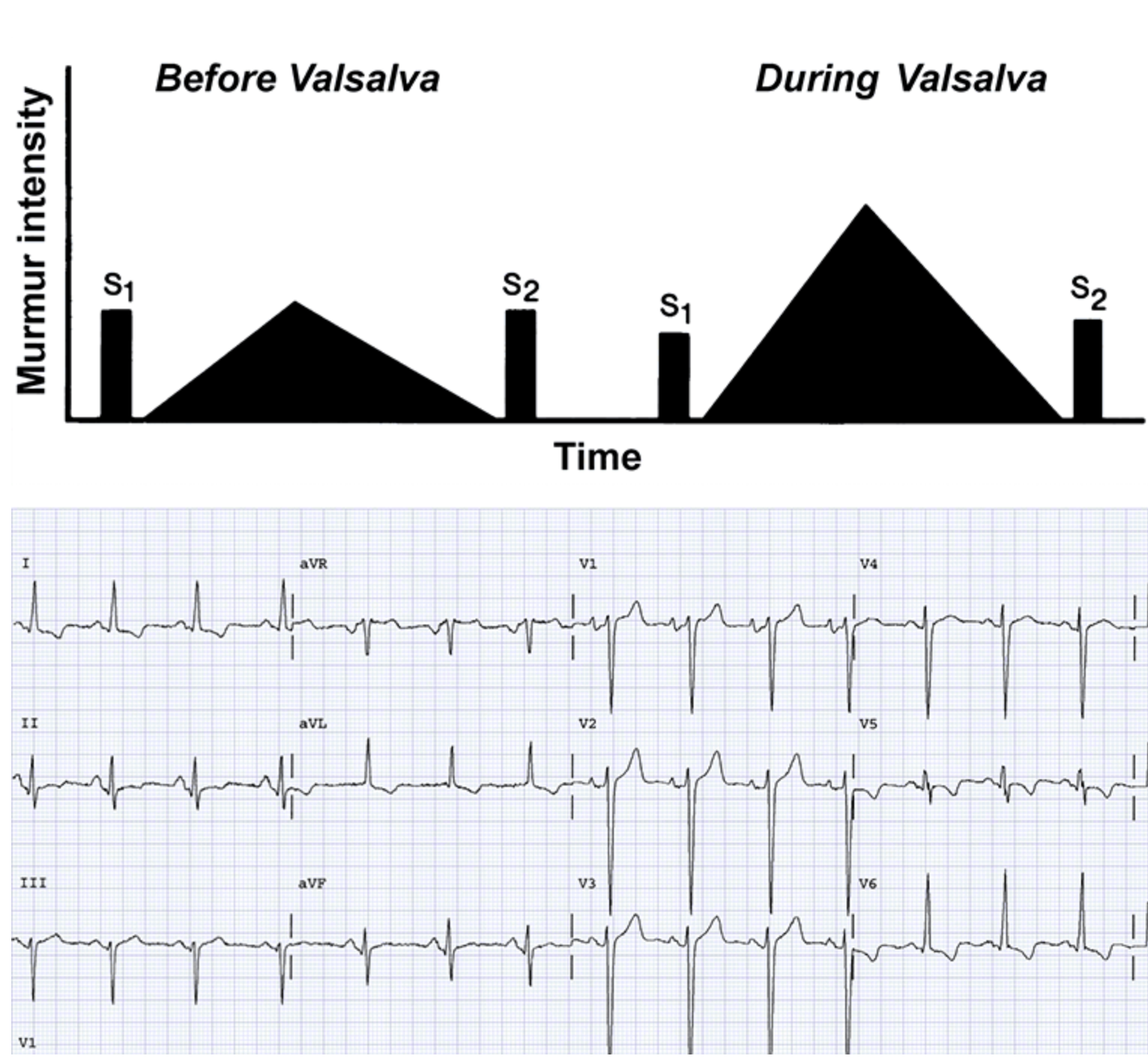

A previously healthy 32-year-old man comes to the office because of a 6-month history of palpitations, fatigue, and shortness of breath on exertion. He also has had occasional chest pain after eating large meals. He appears healthy and is not in acute distress. His pulse is 88/min, respirations are 12/min, and blood pressure is 138/86 mm Hg. Carotid pulses are forceful. Cardiac examination shows a left ventricular lift. An S4 gallop and grade 3/6, harsh, systolic crescendo-decrescendo murmur are heard best at the lower left sternal border and apex. Results of Valsalva maneuver and ECG are shown. Which of the following is the most likely diagnosis?
CorrectIncorrect -
Question 2 of 20
2. Question
A 23-year-old man comes to the emergency department 45 minutes after the sudden onset of palpitations and mild shortness of breath that began while he was drinking beer with friends. He has not had chest pain or loss of consciousness. He has no history of serious illness and takes no medications. On arrival, he appears anxious. He is alert and fully oriented. His pulse is 138/min and regular, and blood pressure is 100/65 mm Hg; other vital signs are within normal limits. Pulse oximetry on room air shows an oxygen saturation of 99%. The patient’s tachycardia ends abruptly during the examination. The remainder of the examination shows no abnormalities. Which of the following is the most likely diagnosis?
CorrectIncorrect -
Question 3 of 20
3. Question
A 66-year-old man comes to the office because of worsening pain in his right shoulder that began 1 day after installing overhead tile in his house 9 months ago. Initially, the pain only affected his muscle strength but during the past month he has been unable to raise his arm higher than 90 degrees, even when the pain is mild. The pain is worse at night and improves moderately an hour or two after he wakes up in the morning. Medical history is noncontributory; the patient takes ibuprofen for the shoulder pain. Vital signs are within normal limits. Examination of the right shoulder shows mild muscular atrophy with no tenderness to palpation. Passive range of motion in the shoulder is full, except that the patient reports a “twinge” of discomfort during testing. Drop-arm testing is positive. Which of the following is the most likely diagnosis?
CorrectIncorrect -
Question 4 of 20
4. Question
A 42-year-old woman comes to the physician because of a 1-day history of severe pain, swelling, and warmth in her left knee. She notes that she awoke with the pain 1 day after she did an aerobic kickboxing workout. Her temperature is 37.2°C (99°F), pulse is 86/min, and blood pressure is 120/70 mm Hg. The upper aspect of the left knee is erythematous and warm to the touch with an effusion. Range of motion is limited by pain. The remainder of the examination shows no abnormalities. Arthrocentesis is performed. Joint fluid analysis shows a leukocyte count of 17,000/mm3 with 90% segmented neutrophils and intracellular calcium pyrophosphate crystals. Which of the following is the most appropriate pharmacotherapy at this time?
CorrectIncorrect -
Question 5 of 20
5. Question
A previously healthy nulligravid 18-year-old woman comes to the physician because of a 2-day history of increasingly severe pain in her left wrist and left knee. She first had diffuse joint stiffness 5 days ago during a flu-like illness. Her symptoms, except for the joint pain, resolved spontaneously without treatment. She now has difficulty holding heavy items in her left hand and has pain with weight bearing on her left side. She is sexually active with multiple partners. Her only medication is an oral contraceptive. Her temperature is 37.4°C (99.3°F), pulse is 75/min, and blood pressure is 134/82 mm Hg. There is no rash. Pelvic examination shows mucoid cervical discharge but no other abnormalities. Examination of the left wrist shows tenderness and no effusions; active and passive range of motion is limited by pain. The left knee is warm and markedly tender with a large effusion. The remainder of the examination shows no abnormalities. Analysis of left knee aspirate shows a leukocyte count of 85,000/mm3 with 85% neutrophils, 10% monocytes, and 5% lymphocytes; a Gram stain of the fluid is negative. Cultures of the aspirate are pending, as are blood, pharyngeal, cervical, and rectal cultures. The patient is admitted to the hospital, and intravenous ceftriaxone and oral azithromycin are begun. After 2 days, all cultures show no growth. Which of the following is the most appropriate next step in management?
CorrectIncorrect -
Question 6 of 20
6. Question
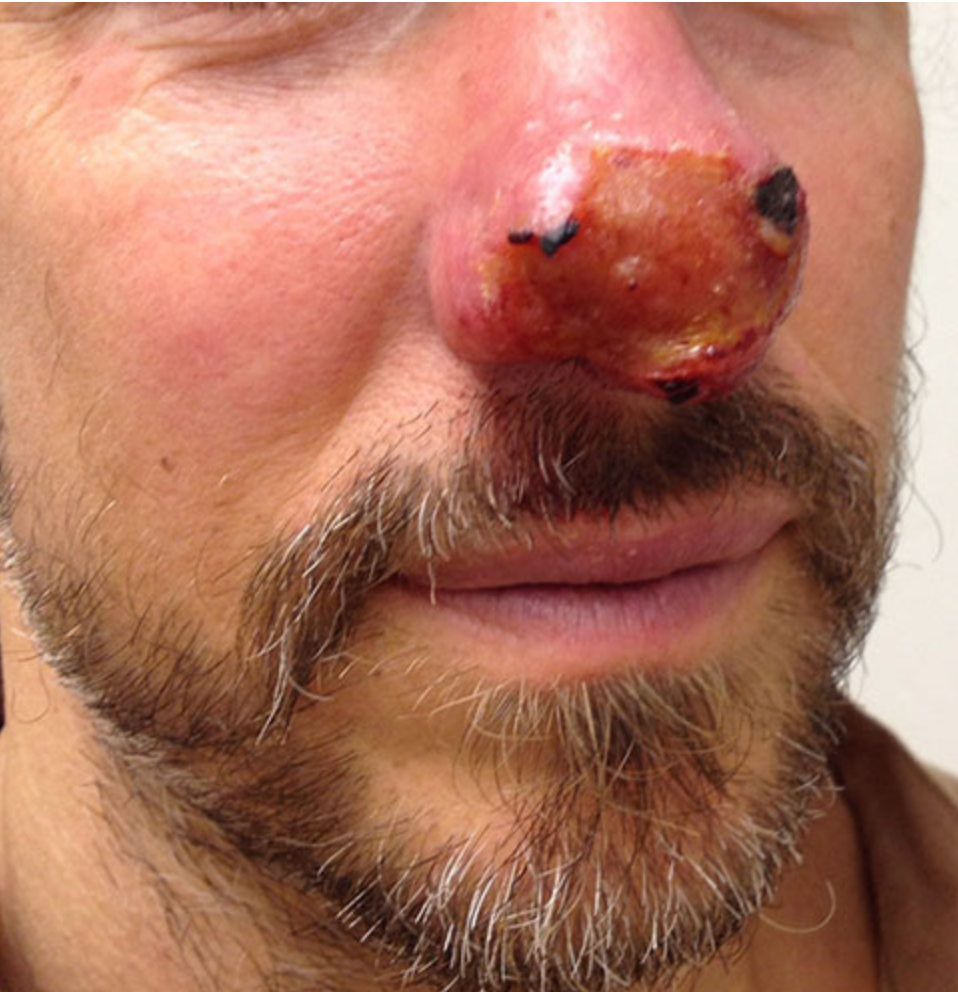
A 32-year-old man comes to the clinic because of a slow-healing lesion on his nose that has been present for the past year. The patient is a member of the US National Guard and says he first noticed the lesion 2 months after he returned home from deployment to Southwest Asia. The lesion initially appeared as two small pimples but gradually enlarged to form a single open sore, eventually developing a scaly crust. The lesion has not been painful or itchy. Aside from several insect bites and itching at various times during his deployment, he had no skin trauma or infections and did not have any significant contact with the local population or animals. He received all required vaccines, including smallpox, anthrax, and typhoid, prior to his deployment. He has no history of serious illness and takes no medications. Vital signs are within normal limits. A photograph of the lesion is shown. The lesion is not tender. Which of the following is the most likely diagnosis?
CorrectIncorrect -
Question 7 of 20
7. Question
A 52-year-old man comes to the physician because of a 2-year history of progressive hearing loss in his right ear. He says he initially only noticed gradual changes in his hearing but has had severe hearing loss during the past 6 months. He also has had ringing in his right ear for 12 months and episodes of light-headedness and numbness and tingling on the right side of his face during the past month. He has a history of mild hypertension. Current medications include hydrochlorothiazide and 81-mg aspirin. He has been employed operating heavy equipment on construction sites for 30 years. He is not in distress. Vital signs are within normal limits. The external ear canals and tympanic membranes appear normal. He cannot hear whispered voice in the right ear. Air conduction is greater than bone conduction on the right. A tuning fork held over the forehead at midline is heard better on the left. Results of laboratory studies are within the reference range. Which of the following is the most likely diagnosis?
CorrectIncorrect -
Question 8 of 20
8. Question
A 67-year-old woman is brought to the emergency department by her husband after having a generalized tonic-clonic seizure at home. Her husband reports that shortly after awakening this morning, she had involuntary twitching of the right side of her face and right arm, lost consciousness, stiffened, and had generalized shaking for 2 minutes. She has type 2 diabetes mellitus and hypertension. Four months ago, she received the diagnosis of adenocarcinoma of the breast, metastatic to the lungs and bone. Current medications include metformin, atenolol, and letrozole. She is drowsy but able to follow simple commands with all extremities. Her temperature is 37°C (98.6°F), pulse is 90/min, and blood pressure is 160/90 mm Hg. She has a right lower facial droop. There is no meningismus. The pupils are 3 mm and reactive to light. The fundi are normal. There is conjugate gaze deviation to the patient’s left. Muscle strength is 4/5 in the right upper extremity. Deep tendon reflexes are 3+ in the right upper extremity and 2+ elsewhere. Babinski sign is absent bilaterally. Laboratory studies show:
Hemoglobin: 12 g/dL
Leukocyte count: 3,000/mm³
Platelet count: 80,000/mm³
Serum:
Na⁺: 128 mEq/L
Glucose: 70 mg/dL
Which of the following is the most likely cause of this patient’s seizure?
CorrectIncorrect -
Question 9 of 20
9. Question
A 10-year-old boy is brought to the office by his mother because of a 7-day history of fever and nasal congestion. He has allergic rhinitis. He has had multiple episodes of otitis media and sinusitis and two episodes of pneumonia. His only routine medication is cetirizine. He appears ill but is in no distress. He is at the 30th percentile for height, 40th percentile for weight, and 35th percentile for BMI. His temperature is 37.8°C (100.0°F), pulse is 80/min, respirations are 14/min, and blood pressure is 110/70 mm Hg. Examination discloses an erythematous posterior pharynx and green nasal secretions. The left tympanic membrane is bulging and immobile with insufflation. No other abnormalities are noted. This patient most likely has a deficiency of which of the following immunoglobulins (lg)?
CorrectIncorrect -
Question 10 of 20
10. Question
A 12-year-old boy is brought to the physician because he is concerned about his growth. He says he is the shortest boy in his class. He is an avid soccer player. He is 140 cm (4 ft 7 in) tall and weighs 35 kg (78 lb); BMI is 18 kg/m2. He is at the 10th percentile for height and 5th percentile for weight. His father is 175 cm (5 ft 9 in) tall, and his mother is 157 cm (5 ft 2 in) tall. The patient’s genital and pubic hair development is Tanner stage 1. X-rays show a bone age of 10 years 6 months (±2 months). Which of the following is the most likely explanation for these findings?
CorrectIncorrect -
Question 11 of 20
11. Question
A 52-year-old woman is brought to the emergency department from a homeless shelter 1 hour after she awakened with confusion and agitation. On arrival, she is oriented to person but not to place or time. She is unable to provide any medical history. She had no medications with her at the shelter. She is tremulous and diaphoretic. Her temperature is 38.2°C (100.8°F), pulse is 124/min, and blood pressure is 170/106 mm Hg. Physical examination shows no other abnormalities. Urine toxicology screening is positive for A9-tetrahydrocannabinol and tricyclic antidepressants. Which of the following is the most likely cause of this patient’s current symptoms?
CorrectIncorrect -
Question 12 of 20
12. Question
A 43-year-old woman is brought to the emergency department 30 minutes after the onset of tonic-clonic movements of all extremities at home. Her son says she has a 10-year history of chronic back pain, for which she takes oxycodone and diazepam. She previously worked as a nurse but has not worked during the past 5 years because of the pain. She lives with her two adult sons. On arrival, the patient is observed speaking clearly while the tonic-clonic movements continue. The episode ends 20 minutes after arrival; following the episode, the patient is alert and fully oriented with intact memory. Vital signs are within normal limits. Pulse oximetry on room air shows an oxygen saturation of 99%. Examination shows no evidence of incontinence or tongue biting during the episode. Which of the following is the most appropriate next step in management?
CorrectIncorrect -
Question 13 of 20
13. Question
A 47-year-old woman comes to the physician because of difficulty sleeping for 2 months. During this period, she has been awakening at 3 AM and remaining awake worrying about work, even though she is tired. She has unstable angina pectoris and required placement of one coronary artery stent 6 months ago and a second stent 4 months ago. Her chest pain started to recur 1 month ago, and she now has it almost daily. Evaluation shows no organic cause for her recurring chest pain. She works as an attorney for a large firm and reports that she has been given more responsibility during the past year. For the past month, she has not enjoyed her work as much as she previously did. She forces herself to go to work and has difficulty paying attention while she is there. She is a gourmet cook but no longer prepares meals because she does not enjoy the taste of the food. Physical examination shows no abnormalities. On mental status examination, she has a sad and worried mood and a reactive affect. She is alert and oriented to person, place, and time. She states that she frequently becomes despondent, especially when she thinks about her heart disease. Which of the following is the most likely diagnosis?
CorrectIncorrect -
Question 14 of 20
14. Question
A previously healthy 27-year-old woman comes to the emergency department because of a 2-day history of fever, sore throat, and chills. Eight days ago, she received the diagnosis of Escherichia coli urinary tract infection and began a course of trimethoprim-sulfamethoxazole. During the past 6 years, she has had a total of four urinary tract infections. Her last menstrual period was 14 days ago. She is sexually active with one male partner and uses an oral contraceptive. She exercises regularly. Her temperature is 38.7°C (101.6°F), pulse is 96/min, respirations are 16/min, and blood pressure is 122/78 mm Hg. The sinuses are nontender. There is slight erythema of the oropharynx but no exudates. The remainder of the examination shows no abnormalities. Laboratory studies show:
Leukocyte count: 2200/mm³
Segmented neutrophils: 4%
Lymphocytes: 96%
Serum:
Na⁺: 140 mEq/L
K⁺: 4.6 mEq/L
Cl⁻: 105 mEq/L
HCO₃⁻: 24 mEq/L
Urea nitrogen: 18 mg/dL
Creatinine: 0.9 mg/dL
AST: 34 U/L
ALT: 37 U/L
β-hCG: negative
Urine:
RBC: 0/hpf
WBC: 3–4/hpf
An x-ray of the chest shows no abnormalities. Results of blood and urine cultures are pending. Which of the following is the most likely cause of this patient’s neutropenia?
CorrectIncorrect -
Question 15 of 20
15. Question
A 55-year-old woman comes to the physician because of a 6-week history of easy bruising. Ten years ago, she underwent local resection and chemotherapy for cancer of the right breast. She takes no medications. Examination shows multiple cutaneous ecchymoses over the body, primarily over all the extremities. The spleen is not palpable. Her hemoglobin concentration is 12 g/dL, hematocrit is 34%, and platelet count is 34,000/mm3. Which of the following is the most likely diagnosis?
CorrectIncorrect -
Question 16 of 20
16. Question
A 2-month-old boy is admitted to the hospital because of a 1-day history of coughing, rapid breathing, and poor feeding. He had a temperature of 39°C (102.2°F) 4 hours ago. He has not had a runny nose. One month ago, he was admitted to the hospital for 10 days for treatment of orbital cellulitis. He was born at term after an uncomplicated pregnancy and spontaneous vaginal delivery. Results of maternal prenatal screening, including HIV serologic studies, were negative. On admission, the patient is alert and has grunting respirations and mild intercostal retractions. His temperature is 37.9°C (100.2°F), pulse is 170/min, respirations are 86/min, and blood pressure is 74/48 mm Hg. Pulse oximetry on 40% oxygen via nasal cannula shows an oxygen saturation of 92%. Physical examination shows a supple neck with no adenopathy. Breath sounds are decreased bilaterally. Diffuse crackles are heard in both lungs. Cardiac examination shows a regular rhythm. S1 and S2 are normal. A grade 1/6, systolic ejection murmur is heard at the upper left sternal border. The abdomen is soft and nontender. The liver edge is firm and palpated 4 cm below the right costal margin, and the spleen tip is palpated 2 cm below the left costal margin. Laboratory studies show:
Hemoglobin: 9.6 g/dL
Hematocrit: 29%
Leukocyte count: 9000/mm³
Segmented neutrophils: 70%
Bands: 4%
Eosinophils: 3%
Lymphocytes: 20%
Monocytes: 3%
Platelet count: 220,000/mm³
CD4⁺ T-lymphocyte count: 150/mm³ (Normal ≥ 1750)
Serum:
IgA: <10 mg/dL
IgG: 10 mg/dL
IgM: 10 mg/dL
A chest x-ray shows diffusely hazy lung fields, no cardiomegaly, and a normal mediastinal silhouette. Which of the following is the most likely underlying diagnosis?
CorrectIncorrect -
Question 17 of 20
17. Question
An 87-year-old man comes to the physician because of problems with his memory over the past 6 months. During this period, he has occasionally misplaced his house keys and forgotten to buy certain grocery items unless he has a list. He still enjoys following the stock market daily and visiting his grandchildren monthly. He has a history of benign prostatic hyperplasia and cataracts. His wife has breast cancer, and he is worried that she will suffer. His temperature is 37°C (98.6°F), pulse is 70/min, and blood pressure is 155/90 mm Hg. Physical examination shows an enlarged prostate; no masses are palpated. Neurologic examination shows no focal findings; his speech is fluent, and there is no aphasia. On mental status examination, he is alert and oriented to person, place, and time. His eye contact is good. Range of affect is full. He recalls two of three objects after 5 minutes. Long-term memory is intact. Which of the following is the most likely explanation for these findings?
CorrectIncorrect -
Question 18 of 20
18. Question
A 4-year-old boy is brought to the physician 3 hours after his mother removed a tick from his scalp. She said that he was playing outside this morning. She washes his hair nightly and did not notice the tick last night. He has had no symptoms. He has no history of serious illness. He appears well developed and well nourished and is in no acute distress. Examination shows no abnormalities. Which of the following is the most appropriate next step in management?
CorrectIncorrect -
Question 19 of 20
19. Question
A 3-month-old boy is brought to the physician for evaluation of delayed growth. He was born at term following an uncomplicated pregnancy and delivery. There was no cyanosis at birth. His mother says that he feeds poorly and turns blue around the lips and fingers during feedings. He frequently cries and becomes restless, short of breath, and cyanotic. He is at the 20th percentile for length and 10th percentile for weight. During the examination, he has paroxysms of crying during which he becomes cyanotic; his color is normal at rest. A grade 3/6, systolic ejection murmur is heard at the left sternal border. Which of the following is the most likely diagnosis?
CorrectIncorrect -
Question 20 of 20
20. Question
A 67-year-old woman comes to the physician because she has had a lesion on her right eyelid for 3 months. She has no history of similar lesions. Examination shows a 2 x 1.5 cm lesion on the lower lid of the right eye. A biopsy specimen of the lesion shows basal cell carcinoma. Which of the following is the most appropriate next step in management?
CorrectIncorrect