
CK- NBME 9 – Block 1 (Duplicate 2)
Time limit: 0
Quiz Summary
0 of 20 Questions completed
Questions:
Information
You have already completed the quiz before. Hence you can not start it again.
Quiz is loading…
You must sign in or sign up to start the quiz.
You must first complete the following:
Results
Quiz complete. Results are being recorded.
Results
0 of 20 Questions answered correctly
Your time:
Time has elapsed
You have reached 0 of 0 point(s), (0)
Earned Point(s): 0 of 0, (0)
0 Essay(s) Pending (Possible Point(s): 0)
| Average score |
|
| Your score |
|
Categories
- Not categorized 0%
Would you like to submit your quiz result to the leaderboard?
![captcha]()
Loading
- 1
- 2
- 3
- 4
- 5
- 6
- 7
- 8
- 9
- 10
- 11
- 12
- 13
- 14
- 15
- 16
- 17
- 18
- 19
- 20
- Current
- Review
- Answered
- Correct
- Incorrect
-
Question 1 of 20
1. Question
A 22-year-old primigravid woman at 22 weeks’ gestation is admitted to the hospital because of a 24-hour history of increasing abdominal pain, fever, nausea, and vomiting. Pregnancy has been uncomplicated, and she notes good fetal movement. She has not had pain with urination and had a bowel movement 2 days ago. Her temperature is 38.8°C (101.8°F), pulse is 100/min, and blood pressure is 100/60 mm Hg. Physical examination shows a tense abdomen with guarding and peritoneal signs; there is diffuse tenderness, more severe on the right, at the level of the umbilicus. The fetal heart rate is 150/min with no decelerations. There are no contractions. Her hematocrit is 33%, and leukocyte count is 16,000/mm3. Serum electrolyte concentrations are within the reference ranges, and urinalysis shows no abnormalities. Ultrasonography shows a normal gallbladder and no stones; the appendix cannot be seen. Which of the following is the most appropriate next step in management?
CorrectIncorrect -
Question 2 of 20
2. Question
A 67-year-old woman, who is receiving hospice care for emphysema, has a 3-month history of progressive urinary incontinence with laughing and coughing. She is now afraid and embarrassed to laugh. She has not had pain with urination, urinary urgency, or nocturia. Current treatment includes inhaled bronchodilators, theophylline, and oxygen supplementation. She appears older than her age. Abdominal examination shows a soft, nontender abdomen; the bladder is not palpable. Pelvic examination shows a normal¬appearing vagina, nontender cervix, and a small, anteverted uterus. Which of the following is the most likely cause of this patient’s incontinence?
CorrectIncorrect -
Question 3 of 20
3. Question
A 77-year-old woman is admitted to the hospital because of a 1 -day history of nausea, vomiting, and confusion. She has hypertension, coronary artery disease, and hyperlipidemia. Her medications are atorvastatin, diltiazem, and 81-mg aspirin. She is 168 cm (5 ft 4 in) tall and weighs 50 kg (110 lb); BMI is 18 kg/m2. Her temperature is 36.9°C (98.4°F), pulse is 92/min and regular, and blood pressure is 160/70 mm Hg. Pulse oximetry on room air shows an oxygen saturation of 84%. Examination shows a jugular venous pressure of 9 cm H20 (N=5-9). Crackles are heard over the midlung fields. On cardiac examination, a three-component friction rub is heard. There is 2+ pretibial edema. On mental status examination, she is oriented to person but not to place or time. Laboratory studies show:
Serum
Sodium (Na⁺): 132 mEq/L
Potassium (K⁺): 5.2 mEq/L
Chloride (Cl⁻): 100 mEq/L
Bicarbonate (HCO₃⁻): 19 mEq/L
Urea nitrogen: 80 mg/dL
Creatinine: 3.5 mg/dL
Urine
Blood: 3+
Protein: 1+
Red blood cells (RBC): 1/hpf
White blood cells (WBC): 0/hpf
Which of the following is the most appropriate next step in management?
CorrectIncorrect -
Question 4 of 20
4. Question
A 43-year-old man is brought to the emergency department by his wife because of a 1-week history of persistent fever, moderate abdominal pain, nausea, and vomiting. Medical history is unremarkable, and he takes no medications. He usually drinks at least one pint of whiskey daily but stopped 1 week ago because of his symptoms. He has had limited food intake during the past week; he has been able to keep down some water and a nutritional supplement shake that his wife convinced him to drink. The patient appears jaundiced and weak. He is 183 cm (6 ft) tall and weighs 72 kg (158 lb); BMI is 21 kg/m2. Temperature is 38.4°C (101.1 °F), pulse is 111 /min, respirations are 14/min, and blood pressure is 103/66 mm Hg. Physical examination shows conjunctival icterus, thin extremities, numerous spider angiomata over the upper chest, and mild gynecomastia. Abdominal examination discloses moderate distention; no fluid wave is present. The liver edge is palpated 2 cm below the costal margin; there is marked tenderness to palpation over the liver. Muscle strength is 4/5 in the proximal aspects of all extremities. Hyperreflexia and asterixis is noted. The patient is slow to answer questions. He is oriented to person and place but not to time. Results of laboratory studies are shown:
Serum
Alkaline phosphatase: 120 U/L
ALT: 134 U/L
AST: 277 U/L
Bilirubin: 13.4 mg/dL
Calcium: 7.6 mg/dL
Urea nitrogen: 3 mg/dL
Creatinine: 2.2 mg/dL
Sodium (Na⁺): 133 mEq/L
Potassium (K⁺): 3.6 mEq/L
Chloride (Cl⁻): 97 mEq/L
Bicarbonate (HCO₃⁻): 21 mEq/L
Magnesium: 1.5 mg/dL
Phosphorus: 3.0 mg/dL
Albumin: 2.3 g/dL
Blood
Hematocrit: 30%
Hemoglobin: 10.1 g/dL
White blood cell count (WBC): 17,200/mm³
Platelet count: 104,000/mm³
Prothrombin time: 22 seconds
INR: 1.8
Results of which of the following are most likely to be abnormal in this patient?
CorrectIncorrect -
Question 5 of 20
5. Question
A 27-year-old woman comes to the physician for a follow-up examination. Six months ago, she began treatment with a proton pump inhibitor for heartburn. Despite increasing the dosage to the maximum amount, her heartburn has not been relieved. She otherwise feels well and has had no weight loss. Examination today shows no abnormalities. Test of the stool for occult blood is negative. Which of the following is the most appropriate next step in management?
CorrectIncorrect -
Question 6 of 20
6. Question
A 62-year-old man comes to the physician because of a 4-week history of intermittent epigastric pain, nausea, and fatigue. He has not had any other symptoms. He has no history of serious illness and takes no medications. Vital signs are within normal limits. The abdomen is flat and nontender. Test of the stool for occult blood is positive. His hemoglobin concentration is 10 g/dL, and hematocrit is 30%. Esophagogastroduodenoscopy shows nonspecific gastritis with a few gastric ulcerations. Biopsy specimens of the gastric mucosa show mucosa-associated lymphoid tissue (MALT) lymphoma. Which of the following is the most appropriate initial step in management?
CorrectIncorrect -
Question 7 of 20
7. Question
A 57-year-old woman with mixed connective tissue disease comes to the physician for a follow-up examination. She has a 6-month history of fatigue and progressive shortness of breath on exertion that improves within a few minutes of rest. She occasionally has a nonproductive cough when lying down. She has not noticed any wheezing. Her medications include prednisone and azathioprine. She works in an office as a secretary. She has never smoked cigarettes. She is 158 cm (5 ft 2 in) tall and weighs 70 kg (155 lb); BMI is 28 kg/m2. Her temperature is 37°C (98.6°F), pulse is 68/min, respirations are 16/min, and blood pressure is 120/72 mm Hg. Pulse oximetry on room air shows an oxygen saturation of 97% at rest. Dry crackles are heard at both lung bases; they do not clear completely with coughing. Pedal pulses are 2+, and there is trace ankle edema bilaterally. Which of the following is the most appropriate next step in diagnosis?
CorrectIncorrect -
Question 8 of 20
8. Question
A 92-year-old woman comes to the physician because of a 2-month history of an enlarging lump in her neck. She has congestive heart failure and type 2 diabetes mellitus. Her medications are digoxin, hydrochlorothiazide, and metformin. She had smoked one pack of cigarettes daily for 55 years but quit 17 years ago. She appears well developed and well nourished. Her temperature is 37°C (98.6°F), pulse is 72/min and irregular, respirations are 20/min, and blood pressure is 150/80 mm Hg. Examination of the ears, nose, mouth, and posterior pharynx shows no abnormalities. A 3-cm, firm mass is palpated at the left mandibular angle. The remainder of the examination, including chest x-ray, shows no abnormalities. Which of the following is the most appropriate next step in diagnosis?
CorrectIncorrect -
Question 9 of 20
9. Question
A 32-year-old woman comes to the physician for a routine examination. She feels well. Two years ago, she underwent hysterectomy because of leiomyomata uteri. Her only medications are a multivitamin and calcium and vitamin D supplementation. She received the bCG vaccine as a child. Her mother was diagnosed with breast cancer at the age of 61 years. The patient emigrated from China 3 years ago. She does not smoke cigarettes or drink alcohol. She eats a “prudent” diet. She does not exercise. She works as a biologist studying obesity with murine models. She is sexually active and monogamous with her husband of 6 years. Vital signs are within normal limits. Examination shows no abnormalities. A PPD skin test shows 12 mm of induration at 48 hours. A chest x-ray shows no abnormalities. Which of the following is the most appropriate next step in management?
CorrectIncorrect -
Question 10 of 20
10. Question
A 72-year-old man comes to the physician because of a 3-month history of swelling and discoloration of his right leg. He describes his symptoms as mildly uncomfortable but not painful. He received the diagnosis of deep venous thrombosis 8 months ago after undergoing total knee replacement; he received warfarin therapy for 6 months, and his INR remained at 2 to 3 during this period. He has hyperlipidemia treated with atorvastatin. Vital signs are within normal limits. Examination of the right lower extremity shows reddish-brown hyperpigmentation below the knee; there is edema and tenderness to palpation below the knee. There are well-healed arthroscopic scars over the knee. Distal pulses are intact. Venous duplex ultrasonography shows no abnormalities. Which of the following is the most likely diagnosis?
CorrectIncorrect -
Question 11 of 20
11. Question
A 25-year-old woman comes to the physician because of a 2-week history of episodes of dizziness. She says that during the episodes, she feels as though the room is spinning. She also has had ringing in her ears, hearing loss, and a sensation of fullness in her right ear during this time. The episodes occur suddenly, last 30 minutes, and resolve spontaneously. Four months ago, she had a 2-week period of similar episodes that did not involve hearing loss; those episodes resolved spontaneously. She has no history of serious illness and takes no medications. On examination, Weber test lateralizes to the left. Rinne test shows that air conduction is greater than bone conduction bilaterally. Hallpike maneuver is negative. Audiometry shows low-frequency, sensorineural hearing loss on the right. Vestibular testing shows no abnormalities. Rapid plasma reagin is negative. An MRI of the brain shows no abnormalities. Which of the following is the most appropriate next step in management?
CorrectIncorrect -
Question 12 of 20
12. Question
A 37-year-old woman is hospitalized because of a 1-year history of recurrent abdominal pain and diarrhea; exploratory laparoscopy on two occasions showed no abnormalities. A stool chart shows more than 10 painful bowel movements daily for 2 weeks; the pain was relieved with defecation. Physical examination and rectosigmoidoscopy with biopsy show no abnormalities. Her erythrocyte sedimentation rate is within the reference range. Test of the stool is negative for occult blood, ova, and parasites and positive for phenolphthalein. Which of the following is the most likely diagnosis?
CorrectIncorrect -
Question 13 of 20
13. Question
A 16-year-old girl is brought to the office by her parents because of a 3-month history of depressed mood, decreased energy, and decreased confidence. Her parents say they are perplexed by their daughter’s recent lack of motivation. The patient’s grades have declined from A’s and B’s to mostly C’s during this time. She says she no longer cares about being admitted to a competitive college and feels hopeless about the future. She aspires to be a writer and has been upset that she was not chosen to be the editor of her school newspaper when the position was filled 4 months ago. She and her parents immigrated to the USA from Korea 9 years ago. The patient has no history of serious medical or psychiatric illness and takes no medications. Her maternal aunt and grandmother have anxiety disorders. The patient does not drink alcohol or use illicit drugs. Physical examination shows no abnormalities. On mental status examination, she has a depressed mood and restricted affect. She reports passive suicidal ideation but no active suicide plans or attempts. She reports no hallucinations. There is no evidence of delusions. Which of the following is the most likely underlying cause of this patient’s symptoms?
CorrectIncorrect -
Question 14 of 20
14. Question
A 52-year-old man, who remains in the hospital 1 week after undergoing cadaveric renal transplantation, has been crying and feeling hopeless during the past 3 days. He says he worries that he will never get better. Two years ago, he was involved in a motor vehicle collision and required splenectomy. After the procedure, rapid-onset sepsis and end- stage renal disease developed. He had been receiving dialysis since then. The transplant has not been functioning well, and he has required emergency dialysis for the past 6 days. His current medications include prednisone, mycophenolate mofetil, and thyroglobulin. His temperature is 36.9°C (98.4°F), pulse is 74/min, respirations are 18/min, and blood pressure is 126/84 mm Hg. Physical examination shows a well-healing surgical incision over the abdomen. On mental status examination, he is sad and frequently crying, although he says he looks forward to visits from his family. He is fully oriented. Which of the following is the most appropriate next step in management?
CorrectIncorrect -
Question 15 of 20
15. Question
A 24-year-old man is brought to the emergency department 20 minutes after being involved in a motor vehicle collision. He was the unrestrained driver. On arrival, he is agitated and incoherent. His pulse is 120/min, respirations are 10/min and labored, and palpable systolic blood pressure is 60 mm Hg. After endotracheal intubation and resuscitation with 2 L of lactated Ringer solution, his pulse and blood pressure remain unchanged; the ventilatory rate is 8/min. Examination shows a 4 x 6-cm ecchymosis over the left sixth and seventh intercostal spaces at the midaxillary line. He groans on palpation of the left chest. Breath sounds are equal bilaterally. There is abdominal distention. Which of the following is the most appropriate next step in diagnosis?
CorrectIncorrect -
Question 16 of 20
16. Question
A previously healthy 32-year-old woman comes to the physician because of a 2-day history of fever and an area of swelling and redness on her right forearm. Six hours ago, she noticed red streaks extending from her forearm to her elbow. She has not traveled, and there is no history of trauma. Her temperature is 37.8°C (100°F). Epitrochlear lymph nodes are enlarged. Examination of the distal radial aspect of the right upper extremity shows an 8 x 13-cm warm, erythematous area of edema that is tender to palpation; there is a warm, tender red streak extending from this area to the elbow. There is no wound, ulcer, fluctuance, or palpable cord. Which of the following is the most likely diagnosis?
CorrectIncorrect -
Question 17 of 20
17. Question
A 25-year-old woman comes to the emergency department 45 minutes after the onset of shortness of breath, marked malaise, weakness, and fatigue. She felt well until 24 hours ago when she developed muscle soreness after an unusually strenuous physical workout; she took ibuprofen for pain 1 hour before the dyspnea began. She has a history of frequent migraines that have been prevented by taking metoprolol during the past month. Her blood pressure is 100/70 mm Hg. Examination shows facial flushing and mild periorbital edema. Multiple wheezes are heard throughout the lung fields. During the examination, the patient’s dyspnea becomes more severe. Her respirations are 30/min, and blood pressure is now 90/50 mm Hg. Her inspiratory ratio is approximately 1:1. There is circumoral cyanosis. Which of the following is the most appropriate pharmacotherapy?
CorrectIncorrect -
Question 18 of 20
18. Question
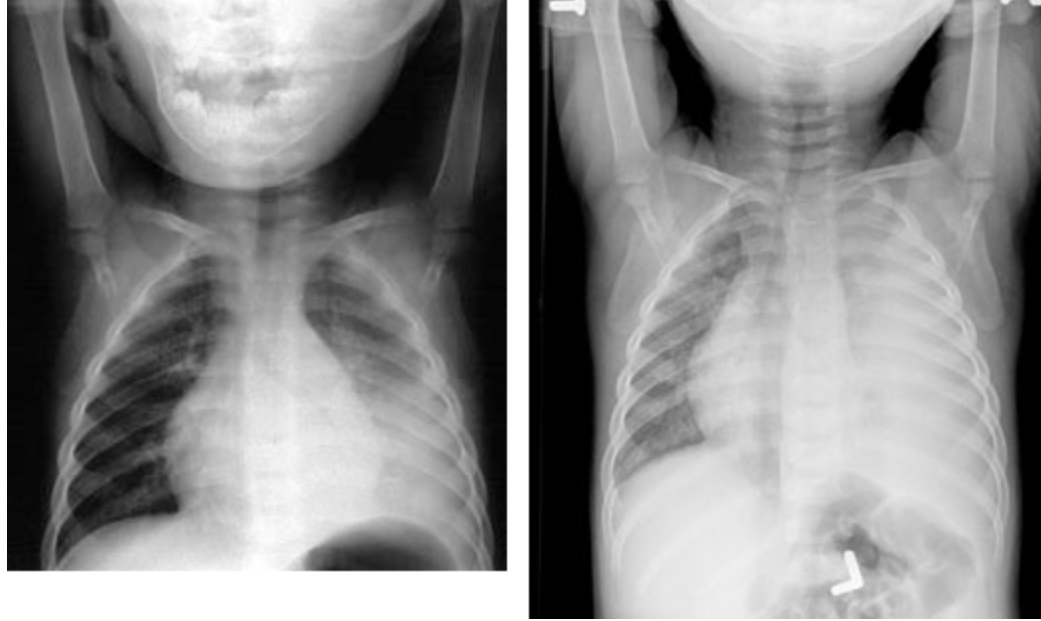
A 3-year-old boy is admitted to the hospital because of a 5-day history of fever and cough. Since the age of 6 months, he has been treated for recurrent episodes of acute otitis media and has been hospitalized twice for treatment of pneumonia and once for treatment of viral meningitis. He was born at term following an uncomplicated pregnancy and delivery. His immunizations are up-to-date. He has no known drug allergies. He currently receives no medications or herbal or vitamin supplements. His maternal uncle died of sepsis at the age of 6 years. The patient has two healthy sisters and a 3-month-old brother who has no history of infection. The patient is at the 10th percentile for height, weight, and head circumference. His temperature is 39°C (102.2°F). Examination shows no lymphadenopathy and absence of tonsils. Crackles are heard over the left lung base. Laboratory studies show:
Total B lymphocytes: 1%
Total T lymphocytes: 91%
Serum
IgA: 8 mg/dL
IgG: 60 mg/dL
IgM: 10 mg/dL
A PPD skin test and HIV antibody test are negative. X-rays of the chest are shown. In addition to intravenous antibiotic therapy for treatment of this patient’s current symptoms, which of the following is the most appropriate next step in management?
CorrectIncorrect -
Question 19 of 20
19. Question
An asymptomatic 72-year-old woman comes to the physician for an annual health maintenance examination in the fall. She takes no medications. At the age of 65 years, bone densitometry showed normal findings. At her last visit 1 year ago, a Pap smear, mammography, and sigmoidoscopy showed no abnormalities; her serum cholesterol concentration was 190 mg/dL, and serum glucose concentration was 80 mg/dl_. She has been married for 50 years and remains sexually active. She does not smoke and drinks one to two glasses of wine three times weekly. She is 165 cm (5 ft 5 in) tall and weighs 63 kg (140 lb); BMI is 23 kg/m2. Her blood pressure is 140/85 mm Hg. Physical examination, including pelvic examination, shows no abnormalities. Which of the following is the most appropriate next step in management?
CorrectIncorrect -
Question 20 of 20
20. Question
A 14-year-old girl is brought to the office by her parents because of a 4-month history of “antisocial behavior.” During this period, she has spent less time with her girlfriends and has spent most of her time with her 16-year-old boyfriend. Three months ago, she quit the school volleyball team and will not tell her parents why. Her parents say she has become unwilling to discuss many aspects of her life with them, including her boyfriend and her sexual activity. She receives grades of B’s and C’s in school, but her parents worry that her grades will worsen. They report that she eats and sleeps well. During the examination, the patient is silent but polite. When her parents ask her to look at them, she refuses. When interviewed alone, the patient says she finds her parents “overbearing” and “intrusive.” She says she quit the volleyball team because she would rather devote that time to her boyfriend and her increasingly challenging studies. She says she is “madly in love” with her boyfriend; with the exception of class and study time, she wants to spend as much time with him as possible. She reports that they have been intimate but that she will not have sexual intercourse until the age of 17 years. She keeps in touch with her friends through texting and social media. Which of the following is the most likely diagnosis?
CorrectIncorrect