
NBME 32 – Block 3 (Duplicate 1)
Time limit: 0
Quiz Summary
0 of 20 Questions completed
Questions:
Information
You have already completed the quiz before. Hence you can not start it again.
Quiz is loading…
You must sign in or sign up to start the quiz.
You must first complete the following:
Results
Quiz complete. Results are being recorded.
Results
0 of 20 Questions answered correctly
Your time:
Time has elapsed
You have reached 0 of 0 point(s), (0)
Earned Point(s): 0 of 0, (0)
0 Essay(s) Pending (Possible Point(s): 0)
Categories
- Not categorized 0%
- 1
- 2
- 3
- 4
- 5
- 6
- 7
- 8
- 9
- 10
- 11
- 12
- 13
- 14
- 15
- 16
- 17
- 18
- 19
- 20
- Current
- Review
- Answered
- Correct
- Incorrect
-
Question 1 of 20
1. Question
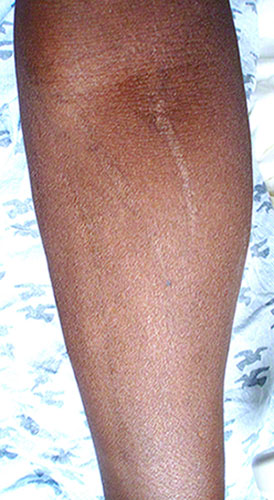
A 3-day-old male newborn in the hospital is not feeding or sleeping well. He also has a high-pitched cry and has been difficult to console. He is 46 cm (18 in) long and weighs 2892 g (6 lb 6 oz). He was delivered at 35 weeks’ gestation to a 21-year-old woman. Delivery was uncomplicated. The pregnancy was complicated by a lack of prenatal care. His mother has asthma. She uses oxycodone intermittently and has smoked one-half pack of cigarettes daily for 3 years. Examination of the mother’s left upper extremity shows the findings in the photograph. Examination of the newborn shows hyperreflexia and exaggerated startle response. The most appropriate pharmacotherapy for the newborn has which of the following mechanisms of action?
CorrectIncorrect -
Question 2 of 20
2. Question
A 28-year-old woman comes to the physician because of a 1-week history of painful, red skin spots. Physical examination shows multiple tender petechial hemorrhages. A biopsy specimen of one of the lesions shows leuko-cytoclastic vasculitis. The physician plans to prescribe a new anti-inflammatory drug. Which of the following mechanisms of action of this drug is most likely to relieve this patient’s disease progress?
CorrectIncorrect -
Question 3 of 20
3. Question
An 84-year-old woman comes to the physician because of a 5-day history of pain in her buttocks. Physical examination shows a 2-cm abscess lateral to the anus. Which of the following lymph nodes is most likely affected by the infection in this patient?
CorrectIncorrect -
Question 4 of 20
4. Question
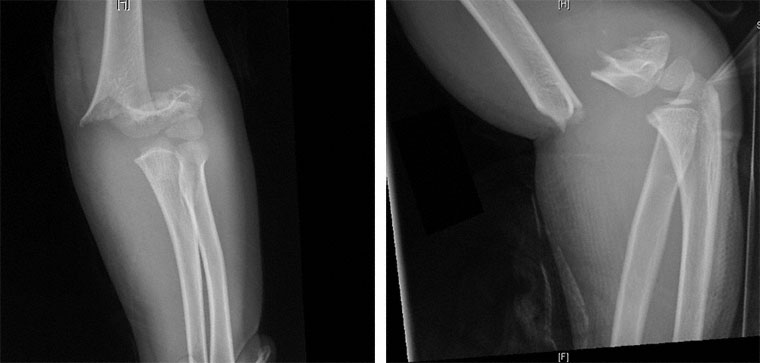
A 5-year-old boy is brought to the emergency department 1 hour after he fell off of a piece of playground equipment onto his outstretched left arm. He is in severe pain. His pulse is 128/min, and blood pressure is 80/60 mm Hg. Neurologic examination shows diminished hand grasp and numbness of the palmar side of the index, middle, and ring fingers. AP and lateral x-rays of the left upper extremity are shown. Which of the following nerves is most likely injured in this patient?
CorrectIncorrect -
Question 5 of 20
5. Question
Hemoglobin concentrations are measured in blood samples collected from 400 pregnant women. The data follow a normal (gaussian) distribution. Mean hemoglobin concentration is 12 g/dL (standard deviation is 1.0 g/dL). Based on this information, which of the following is the probability that a normal pregnant woman will have a hemoglobin concentration below 10 g/dL or above 14 g/dL?
CorrectIncorrect -
Question 6 of 20
6. Question
A 17-year-old girl is brought to the physician by her parents because of a 4-day history of insomnia, severe irritability, and irrational behavior. She sleeps only 2 to 3 hours nightly. Her mother says, “She has been arguing with me all the time and speaking very fast. Yesterday she even stole my credit card and bought $200 worth of clothes! She has never acted this way before.” Five days ago, she began amitriptyline therapy for migraines. Physical examination shows no abnormalities. Which of the following is the most likely diagnosis?
CorrectIncorrect -
Question 7 of 20
7. Question
A 21-year-old woman comes to the office for removal of sutures 10 days after she sustained a laceration to her right upper extremity when she fell through a glass door. Examination of the right upper extremity shows a 4-cm, healing wound. The patient asks when her skin at the wound site will be restored to its original strength. Which of the following is the best estimate of when this will occur?
CorrectIncorrect -
Question 8 of 20
8. Question
A 1-month-old male newborn is brought to the office for a follow-up examination. He was noted to have multiple craniofacial abnormalities at birth. Physical examination shows microcephaly, a high forehead, hypertelorism, epicanthal folds, hepatomegaly, and hypotonia. Laboratory studies show decreased plasmalogen concentrations in erythrocyte membranes and increased concentration of serum very-long-chain fatty acids. The most likely cause of these findings is a defect of which of the following?
CorrectIncorrect -
Question 9 of 20
9. Question
A 52-year-old man comes to the physician 12 hours after the abrupt onset of violent involuntary movements of his right arm. Physical examination shows large-amplitude flinging and flailing movements of the proximal muscles of the right upper extremity. An MRI of the brain shows infarction of the left subthalamic nucleus. This lesion is most likely causing which of the following effects in this patient?
CorrectIncorrect -
Question 10 of 20
10. Question
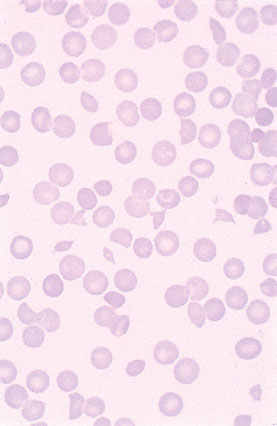
A 27-year-old woman has a headache, blurred vision, and petechiae. Laboratory studies show:
Hemoglobin
9 g/dL
Hematocrit
28%
Leukocyte count
5500/mm3
Platelet count
15,000/mm3
Prothrombin time (INR)
14 sec (1.2)
Activated partial thromboplastin time
45 sec
Fibrin degradation products
normal
A peripheral blood smear is shown. Which of the following is the most likely diagnosis?
CorrectIncorrect -
Question 11 of 20
11. Question
A male newborn is delivered at term by spontaneous vaginal delivery. Physical examination shows six fingers on each hand, resulting from duplication of the fourth finger, which is fused together with the third finger. There are no other congenital abnormalities. Mutation of which of the following genes is most likely in this patient?
CorrectIncorrect -
Question 12 of 20
12. Question
A 16-year-old girl comes to the physician for an examination prior to starting a new school. She is 168 cm (5 ft 6 in) tall and weighs 87 kg (192 lb); BMI is 31 kg/m2. Her blood pressure is 1 40/88 mm Hg. Physical examination shows hyperpigmented, thickened areas on the back of the neck and in the axilla. Serum studies show:
HDL-cholesterol
decreased
VLDL-cholesterol
increased
Triglycerides
increased
Insulin
increased
The result of a glucose tolerance test is abnormal. Which of the following is the most likely diagnosis?
CorrectIncorrect -
Question 13 of 20
13. Question
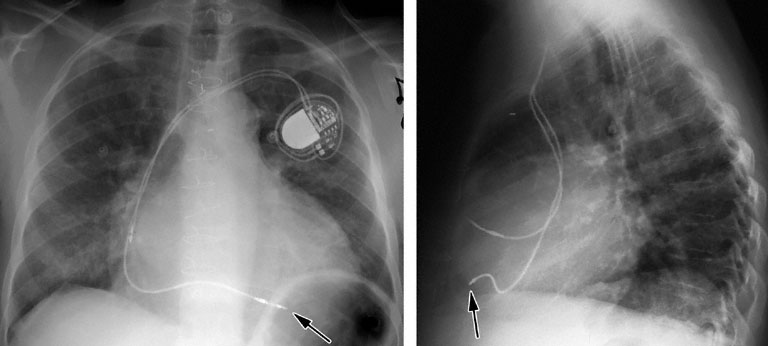
A 75-year-old man is brought to the physician because of a 3-day history of intermittent dizziness, light-headedness, and shortness of breath with exertion. His pulse is 30/min, respirations are 25/min, and blood pressure is 100/60 mm Hg. Physical examination shows no other abnormalities. A diagnosis of sinus node dysfunction is made, and the patient undergoes implantation of a dual-chamber pacemaker using radiographic guidance. Chest x-rays are shown. The tip of the lead, indicated by the arrows, has most likely been placed in which of the following chambers of the heart?
CorrectIncorrect -
Question 14 of 20
14. Question
A 55-year-old woman is admitted to the intensive care unit because of heart failure after she had a myocardial infarction. After she is stabilized, she begins working from her laptop computer. She tells the physician that she is anxious to get back to work because her employees would “run the place into the ground.” She states, “I need to leave now.” The physician believes that the patient needs to stay longer for further treatment and evaluation. After empathizing with the patient, which of the following is the most appropriate initial response by the physician?
CorrectIncorrect -
Question 15 of 20
15. Question
A 20-year-old man with a recent diagnosis of type 1 diabetes mellitus comes to the physician for a follow-up examination. He lives alone in a log cabin and is 15 miles from the nearest neighbor. He says that he is having difficulty self-administering insulin by the subcutaneous route. He asks, “Can’t I just take a pill?” The physician responds that insulin cannot be administered orally because its structure will not allow it to be absorbed via this route. Which of the following best describes this structure?
CorrectIncorrect -
Question 16 of 20
16. Question
A 58-year-old man is brought to the emergency department 2 hours after having a generalized tonic-clonic seizure. He has been treated numerous times in the past for seizures caused by alcohol withdrawal. On arrival, he is awake but confused and tremulous. His pulse is 110/min, and blood pressure is 160/90 mm Hg. Physical examination shows bilateral asterixis. Laboratory studies show:
Hemoglobin
11 g/dL
Hematocrit
32%
Mean corpuscular volume
110 μm3
Leukocyte count
3800/mm3
Reticulocyte count
1%
Platelet count
160,000/mm3
Which of the following is the most likely cause of this patient’s anemia?
CorrectIncorrect -
Question 17 of 20
17. Question
A 5-year-old girl is brought to the physician because of a 4-week history of cough and hoarseness. Physical examination shows a temperature of 36.7°C (98.1°F) and mild stridor at rest. There is no rash. No crackles, rhonchi, or wheezes are heard on auscultation of the chest. An x-ray of the chest shows no abnormalities. Direct laryngoscopy shows nodular lesions on the true vocal cords. The most likely cause of her condition is infection with which of the following viruses?
CorrectIncorrect -
Question 18 of 20
18. Question
A 33-year-old man comes to the physician because of weakness, weight gain, and depressed mood during the past year. His blood pressure is 160/90 mm Hg. Physical examination shows central obesity, enlarged supraclavicular fat pads, and red-purple striae over the abdomen. Serum studies show a cortisol concentration within the reference range at 9 am and increased at 9 pm. A 24-hour urine free cortisol concentration is increased. Following the administration of low-dose of dexamethasone, the urine free cortisol concentration remains increased; it decreases significantly after high-dose dexamethasone is administered. Which of the following is the most likely cause of the findings in this patient?
CorrectIncorrect -
Question 19 of 20
19. Question
A 22-year-old woman is brought to the emergency department 30 minutes after she was struck by an oncoming motor vehicle while bicycling. On arrival, she is alert but appears anxious. Her pulse is 140/min, respirations are 22/min, and blood pressure is 88/46 mm Hg. Physical examination shows numerous abrasions over the trunk and upper extremities, and a 10-cm laceration of the right thigh. Which of the following is most likely occurring in the adrenal medulla of this patient?
CorrectIncorrect -
Question 20 of 20
20. Question
A 35-year-old woman comes to the office because of a 3-day history of urinary urgency and frequency, urine that is occasionally blood-tinged, and right-sided flank pain. She has a 10-year history of recurrent cystitis and is worried she is having another episode. She has two young children via uncomplicated vaginal deliveries. Past medical history is otherwise unremarkable. She currently takes no medications. Temperature is 38.0°C (100.4°F), pulse is 104/min, respirations are 18/min, and blood pressure is 124/82 mm Hg. Pulse oximetry on room air shows an oxygen saturation of 97%. Physical examination shows right flank and suprapubic tenderness; the remainder of the examination shows no abnormalities. Which of the following current signs or symptoms in this patient best indicates that she would receive a different diagnosis than cystitis at this time?
CorrectIncorrect