
Would you like to submit your quiz result to the leaderboard?
Loading
1
2
3
4
5
6
7
8
9
10
11
12
13
14
15
16
17
18
19
20
21
22
23
24
25
26
27
28
29
30
31
32
33
34
35
36
37
38
39
40
41
42
43
44
45
46
47
48
49
50
Current
Review
Answered
Correct
Incorrect
Question 1 of 50
1. Question
A 67-year-old man comes to the physician because of a 2-month history of progressive shortness of breath on exertion, muscle pain, fatigue, generalized weakness, and constipation. He also has had a decreased appetite, resulting in a 7-kg (15-lb) weight loss during this period. His current medications are hydrochlorothiazide for hypertension and laxatives. He smoked one pack of cigarettes daily for 40 years but quit 5 years ago. His temperature is 37.5°C (99.5°F), pulse is 85/min, respirations are 22/min, and blood pressure is 164/92 mm Hg. There is no jugular venous distention. Breath sounds are decreased, and scattered rhonchi are heard over the right upper lung field. Cardiac examination shows no abnormalities. Laboratory studies show:
Hemoglobin: 14.2 g/dL
Leukocyte count: 11,500/mm³ (with a normal differential)
Serum:
Na⁺: 140 mEq/L
K⁺: 3.5 mEq/L
Cl⁻: 100 mEq/L
HCO₃⁻: 25 mEq/L
Ca²⁺: 13.3 mg/dL
Urea nitrogen: 22 mg/dL
Glucose: 72 mg/dL
Creatinine: 0.8 mg/dL
Alkaline phosphatase: 100 U/L
A chest x-ray shows a mass in the upper lobe of the right lung that extends into the hilum. Which of the following is the most likely cause of these laboratory findings?
Correct
Incorrect
Question 2 of 50
2. Question
A 23-year-old woman comes to the physician for a follow-up examination. Six months ago, she underwent splenectomy because of injuries sustained in a motor vehicle collision. Her postoperative course has been uncomplicated. She has a headache once monthly and takes acetaminophen as needed. Immunizations are up-to-date. Vital signs are within normal limits. Examination shows no abnormalities except for a well-healed scar. She asks if any precautions are required before her dental appointment in 1 week. Which of the following is the most appropriate recommendation?
Correct
Incorrect
Question 3 of 50
3. Question
Two days before undergoing removal of four molar teeth, a 27-year-old man comes to the physician for therapy to prevent excessive bleeding. He has a lifelong history of mild mucosal bleeding. His sister has a history of similar bleeding. Examination shows no abnormalities. Laboratory studies show:
Platelet count: 225,000/mm³
Bleeding time: 11 min
Prothrombin time (PT): 11 sec (INR = 1)
Partial thromboplastin time (PTT): 47 sec
Factor VIII: 15% of normal (reference range: 50%–150% of normal)
Which of the following is the most likely explanation for these findings?
Correct
Incorrect
Question 4 of 50
4. Question
An 87-year-old woman with metastatic ovarian cancer has poorly controlled pain. Her cancer has been unresponsive to chemotherapy. Current medications include long-acting oral morphine, short-acting morphine as needed, and docusate. Her family is having difficulty caring for her at home. The patient’s oldest daughter calls the physician to discuss her mother’s care. She says, “We want my mother to receive hospice care at home, but no one wants her to die at home. Can she still have hospice services?” Which of the following is the most appropriate response?
Correct
Incorrect
Question 5 of 50
5. Question
A 3-year-old girl is admitted to the hospital because of a 7-day history of fever and irritability. Treatment with acetaminophen has not resolved her symptoms. During the past 2 days, she has had a decreased appetite but a normal fluid intake. She appears irritable. Her temperature is 38.7°C (101.7°F). Examination shows nontender, bilateral, cervical lymphadenopathy. The sclerae are injected without exudates. There is an erythematous papular rash over the perineum. Examination of the hands and feet shows erythema and tenderness. Her hemoglobin concentration is 10.2 g/dL, and platelet count is 285,000/mm3. Urinalysis shows 50 WBC/hpf and no bacteria. Which of the following is the most appropriate pharmacotherapy?
Correct
Incorrect
Question 6 of 50
6. Question
A 33-year-old woman, gravida 2, para 1, at 35 weeks’ gestation is admitted to the hospital because of a 1-hour history of moderate, bright red vaginal bleeding. During this time, she has saturated two sanitary pads. She has not felt contractions or loss of amniotic fluid and reports good fetal movement. She has received no prenatal care. Her first pregnancy ended in cesarean delivery at term because of fetal bradycardia. She is unemployed and lives in a local homeless shelter. She has a history of cocaine use but has not used cocaine during the past 2 months. Her temperature is 37°C (98.6°F), pulse is 100/min and regular, and blood pressure is 90/60 mm Hg. The abdomen is nontender and consistent in size with a 35-week gestation. External fetal monitoring shows a heart rate of 150/min with moderate variability, several spontaneous accelerations, and occasional variable decelerations. An external tocometer shows irregular uterine contractions. Examination shows a small amount of bright red blood at the perineum. Which of the following is the most appropriate next step in management?
Correct
Incorrect
Question 7 of 50
7. Question
A 27-year-old man is brought to the emergency department 50 minutes after he sustained a gunshot wound to his right leg. He was injured while attempting to flee a crime scene. Paramedics report significant bright red bleeding that was controlled with pressure dressings at the scene. On arrival, the patient is conscious and responsive. His pulse is 100/min and regular, respirations are 18/min, and blood pressure is 100/85 mm Hg. Examination shows a single gunshot entry and exit wound in the right thigh with moderate oozing of bright red and dark blood but no pulsatile bleeding. The mid thigh is edematous. The right femoral pulse is palpable; no popliteal or pedal pulses are palpable. The right ankle brachial index is 0.5 (ISM) at the dorsalis pedis. The remainder of the examination shows no abnormalities. In addition to intravenous fluid administration, which of the following is the most appropriate next step in management?
Correct
Incorrect
Question 8 of 50
8. Question
A 67-year-old man comes to the physician 1 hour after a 5-minute episode of moderate left-sided chest pain that began while he was unloading groceries. The pain radiated to the left jaw. During the past 3 months, he also has had progressive shortness of breath when lying down. He has a 1-year history of decreasing stamina; he now often has to stop and rest while taking out the trash. He has well-controlled hypertension, well-controlled type 2 diabetes mellitus, and chronic bronchitis. His medications are hydrochlorothiazide, metoprolol, glipizide, and a nebulized albuterol inhaler as needed. He smoked one and one-half packs of cigarettes daily for 40 years but quit 10 years ago. His temperature is 37.2°C (99°F), pulse is 100/min, respirations are 16/min, and blood pressure is 100/58 mm Hg. Pulse oximetry on room air shows an oxygen saturation of 90%. Examination shows jugular venous distention. Crackles are heard at both lung bases. On cardiac examination, there is an S3 and a grade 2/6 harsh, late-peaking, systolic murmur heard best at the upper right sternal border. There is 2+ pitting edema of the lower legs. Which of the following is the most appropriate next step in diagnosis?
Correct
Incorrect
Question 9 of 50
9. Question
A 57-year-old man comes to the physician because of a 10-year history of an intermittent rash on his face. The rash worsens with cold weather and stress. Examination shows a scaly, erythematous rash in several areas around the nose and eyebrows. There is dandruff from the scalp. Which of the following is the most likely diagnosis?
Correct
Incorrect
Question 10 of 50
10. Question
A 77-year-old man with hypertension comes to the physician for a routine examination. His medications are metoprolol and simvastatin. His father died of a cerebral infarction. The patient smoked one pack of cigarettes daily for 25 years but quit 10 years ago. He walks 2 miles daily. He is 180 cm (5 ft 11 in) tall and weighs 82 kg (180 lb); BMI is 25 kg/m2. His pulse is 70/min, and blood pressure is 140/90 mm Hg. Examination shows no abnormalities. Serum studies show a cholesterol concentration of 210 mg/dL. Results of a recent cardiac stress test are negative. Which of the following is the strongest predisposing factor for cerebral infarction in this patient during the next 5 years?
Correct
Incorrect
Question 11 of 50
11. Question
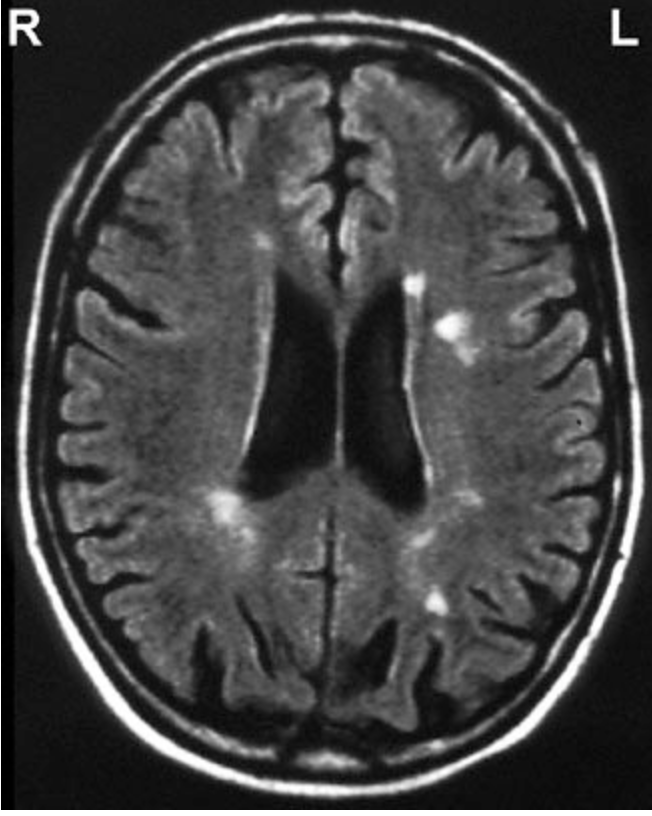
A 32-year-old woman comes to the physician because of weakness in her right leg that began 1 week ago and has resolved over the past 24 hours. She is currently asymptomatic. Two years ago, she had tingling in both hands and an “electric-like” sensation down her spine when she flexed her neck; her symptoms resolved after 3 weeks. Six months ago, she had visual loss in her right eye and pain with eye movement. Examination at that time showed a right central scotoma that resolved after 2 weeks. She has a history of mitral valve prolapse. She takes no medications. Her pulse is 64/min and regular, and blood pressure is 100/60 mm Hg. Cardiac examination shows a systolic click. Funduscopic examination shows mild pallor of the right optic disc; there is no afferent pupillary defect. Muscle strength is normal. Deep tendon reflexes are 2 in the upper extremities and 3 in the lower extremities. Babinski sign is present on the right. An MRI of the brain is shown. Which of the following is the most appropriate treatment for this patient?
Correct
Incorrect
Question 12 of 50
12. Question
A 27-year-old man is brought to the emergency department by police 1 hour after they found him lying in the street and proclaiming himself to be invulnerable to death because he is “the Antichrist.” He is not able to give a coherent history, but imipramine and thioridazine bottles are found in his pocket. He appears somnolent. His pulse is 88/min, respirations are 20/min, and blood pressure is 110/70 mm Hg. Physical examination shows red, dry skin and dilated pupils. Serum electrolyte concentrations are within the reference ranges. An ECG shows a prolonged QT interval. The patient is admitted to the intensive care unit. Which of the following is the most appropriate next step in diagnosis?
Correct
Incorrect
Question 13 of 50
13. Question
A 62-year-old man comes to the physician because of sadness and difficulty sleeping since his wife of 35 years died of breast cancer 7 months ago. He began grieving for her before she died, but the grief has become more intense since her death. During this period, he has had loss of appetite and is no longer interested in golfing and having dinner with friends. He has started to believe that he will never feel better and sees himself as worthless. Physical examination shows no abnormalities. Mental status examination shows a depressed mood and sad affect. He says that life is no longer tolerable, but he has not thought about killing himself. Which of the following is the most likely diagnosis?
Correct
Incorrect
Question 14 of 50
14. Question
A 20-year-old man is brought to the physician by his parents because of auditory hallucinations and bizarre behavior over the past year. He recently dropped out of college and moved back home with his parents. He has not attempted to find a job. He says that he has been feeling strange, “like being in a dream,” and talks to his great-great-grandfather who died 50 years ago. He was diagnosed with hepatitis A 2 years ago after an episode of jaundice, and he has been treated with thyroxine for hypothyroidism for the past 6 months. His pulse is 68/min, respirations are 10/min, and blood pressure is 100/70 mm Hg. Physical examination shows hyperreflexia of the lower extremities and mild resting tremor of the upper extremities. On mental status examination, his voice is monotonous, his face is immobile, and he seems very anxious. He stares at the physician and barely answers questions. Serum studies show:
Total bilirubin: 1 mg/dL
Thyroid-stimulating hormone (TSH): 1 µU/mL
AST: 21 U/L
ALT: 20 U/L
Urine toxicology screening is negative. Which of the following is the most likely diagnosis?
Correct
Incorrect
Question 15 of 50
15. Question
A 37-year-old man comes to the physician because of a 1-week history of pain with swallowing. He received the diagnosis of AIDS 4 years ago, but he has not been able to tolerate highly active antiretroviral therapy. He currently takes trimethoprim-sulfamethoxazole. Vital signs are within normal limits. Examination shows a few white plaques over the pharynx. No other abnormalities are noted. Laboratory studies show a CD4 T-lymphocyte count of 50/mm3 (Normal>500) and a plasma HIV viral load of 50,000 copies/mL. Which of the following is the most appropriate pharmacotherapy?
Correct
Incorrect
Question 16 of 50
16. Question
A randomized placebo-controlled trial is initiated to investigate the use of a new medication for the treatment of hypertension. The trial enrolled 1000 men and women ages 40 years and older; these patients are equally randomized to either the new medication or a placebo. The primary outcome was established as cardiovascular death or morbidity. After 1 year, 4.2% of patients taking the new medication experienced the primary outcome as determined by hospital records, compared with 3.4% of patients taking placebo (P=.52). The investigators then reanalyze the outcomes for only African American study patients. Of the 250 African American patients in the study, 2.4% of those taking the new medication experienced the primary outcome, compared with 6.0% in the placebo group (P=.03). The investigators conclude that the medication is effective only for African American patients. Which of the following is the primary threat to the validity of this conclusion?
Correct
Incorrect
Question 17 of 50
17. Question
A2608-g (5-lb 12-oz) newborn is delivered at term to a 32-year-old primigravid woman who received no prenatal care. Examination of the newborn shows generalized hypertonia. Meconium testing for cocaine metabolites is positive. A review of the literature shows that this screening test has a sensitivity of 100% and a true-negative rate of 90%. Which of the following is necessary to calculate the positive predictive value of the test?
Correct
Incorrect
Question 18 of 50
18. Question
A study is being conducted to investigate the association between childhood exposure to secondhand cigarette smoke and risk for developing lung disease as an adult in individuals who have never smoked. A total of 500 adults with lung disease and 500 adults with no history of lung disease are enrolled in the study; participants in both groups are interviewed about exposure to secondhand cigarette smoke during childhood. Which of the following is the most appropriate measure of association for the investigators to report?
Correct
Incorrect
Question 19 of 50
19. Question
A study is conducted to assess the incidence of mortality in children with idiopathic seizure disorder and children without seizure disorder. A total of 1283 age-matched patients without significant comorbidities are enrolled in the study and observed for 20 years. Results show that the mortality rate among the 692 children with seizure disorder for the 20-year period following diagnosis is 6.2%, whereas the mortality rate among the 591 children without seizure disorder for the same 20-year period is 0.8%. Which of the following is the most accurate conclusion based on this study population?
Correct
Incorrect
Question 20 of 50
20. Question
A 67-year-old woman is brought to the emergency department by her daughter because of a 2-day history of progressive fatigue, confusion, shortness of breath with exertion, and difficulty breathing when she lies flat. At night, she has had the sudden need to run to an open window for air. She had a myocardial infarction 2 years ago but has had no recent chest pain. Her medications are metoprolol, lisinopril, spironolactone, and furosemide. The daughter says that she does not know if her mother has taken her medications during the past 2 days. On arrival, the patient appears ill and in mild respiratory distress; she is ashen. Her temperature is 36.4°C (97.6°F), pulse is 102/min and regular, respirations are 24/min, and blood pressure is 82/46 mm Hg. Pulse oximetry on room air shows an oxygen saturation of 89%. Examination shows jugular venous distention. Crackles are heard throughout the lower lung fields. On cardiac examination, an S3 gallop is heard. There is 2+ pitting edema at the ankles. Intravenous administration of which of the following is the most appropriate next step in pharmacotherapy?
Correct
Incorrect
Question 21 of 50
21. Question
A 54-year-old woman comes to the office because of a 1 -day history of intermittent episodes of severe, sharp pain in the right side of her back that occur every 30 minutes. The episodes are associated with nausea; the patient has had two episodes of nonbloody vomiting since her symptoms began. During the past month she has had fatigue, generalized aches, and difficulty concentrating on simple tasks. She has had painful urination during the past 2 days. She has osteoarthritis treated with ibuprofen as needed. Her temperature is 37°C (98.6°F), pulse is 100/min, respirations are 20/min, and blood pressure is 146/90 mm Hg. The patient is in moderate distress and shifts around on the examination table. No murmurs are heard. Bowel sounds are normal. Abdominal examination shows tenderness to percussion at the right flank. There is no X-ray of the abdomen shows a 4-mm calcified calculus in the right ureteropelvic junction. There is no hydronephrosis. Which of the following is the most appropriate additional study at this time?
Blood / CBC:
Hemoglobin: 12 g/dL
Hematocrit: 38%
Leukocyte count: 5100/mm³
Platelet count: 204,000/mm³
Serum:
Na⁺: 142 mEq/L
K⁺: 5 mEq/L
Cl⁻: 100 mEq/L
HCO₃⁻: 25 mEq/L
Ca²⁺: 12 mg/dL
Urea nitrogen: 14 mg/dL
Glucose: 92 mg/dL
Creatinine: 0.9 mg/dL
Urine analysis:
Color: clear yellow
pH: 7.0 (N = 4.5–7.8)
Specific gravity: 1.018 (N = 1.003–1.029)
Blood: grossly positive
Glucose: negative
Bilirubin: negative
Protein: trace
Ketones: negative
Nitrites: negative
Leukocyte esterase: negative
Urobilinogen: 0.2 mg/2 hr (N = 0.1–1.1)
Correct
Incorrect
Question 22 of 50
22. Question
A 47-year-old woman comes to the physician for a routine examination. Two years ago, she underwent total thyroidectomy for medullary cancer; her postoperative course was uncomplicated, but she did not keep her appointments for follow-up examinations. She says she feels well. She has never had radiation therapy. There is no family history of thyroid disease. Her only current medication is levothyroxine. Vital signs are within normal limits. Examination of the neck shows a well-healed surgical scar; there are no masses or cervical lymphadenopathy. The remainder of the examination shows no abnormalities. Which of the following serum measurements is most appropriate to order to determine if this patient’s cancer is in remission?
Correct
Incorrect
Question 23 of 50
23. Question
A 32-year-old woman, gravida 2, para 2, comes to the physician for a routine health maintenance examination. At her last examination 1 year ago, a Pap smear and screening test results for sexually transmitted diseases were negative. Her two children, ages 6 and 4 years, were delivered by cesarean section. Her first child weighed 4394 g (9 lb 11 oz) at birth, and her second child weighed 4593 g (10 lb 2 oz) at birth. The patient is sexually active with her husband and uses an oral contraceptive. She is 157 cm (5 ft 2 in) tall and weighs 72 kg (158 lb); BMI is 29 kg/m2. Her temperature is 37°C (98.6°F), pulse is 84/min, respirations are 18/min, and blood pressure is 130/75 mm Hg. Physical examination shows no other abnormalities. Which of the following is the most appropriate screening test at this visit?
Correct
Incorrect
Question 24 of 50
24. Question
A 37-year-old nulligravid woman comes to the physician because she has been unable to conceive for 6 months. She has been married for 18 years and discontinued her oral contraceptive 6 months ago. She is an attorney, and she and her husband have sexual intercourse twice monthly. Menses occur at regular 28-day intervals. She feels well and has no history of serious illness. Physical examination shows no abnormalities. Which of the following is the most appropriate next step in management?
Correct
Incorrect
Question 25 of 50
25. Question
A 47-year-old woman comes to the physician because of heavy menstrual flow for 7 days. Menses usually occur at regular 28-day intervals and last 4 to 5 days. She has not had intermenstrual or postcoital bleeding. She has no history of serious illness and takes no medications. Bimanual examination shows a uterus consistent in size with a 20-week gestation. A Pap smear shows no abnormalities. Ultrasonography of the pelvis shows an enlarged uterus with three solid, well-circumscribed masses within the myometrium that are homogeneous in appearance. The largest mass is 7 cm in diameter. Results of an endometrial biopsy specimen show proliferative endometrium. Which of the following is the most likely diagnosis?
Correct
Incorrect
Question 26 of 50
26. Question
A 42-year-old woman comes to the office 2 months after noticing a mass in her left breast. There is no personal or family history of serious illness. Her last Pap smear 2 years ago and mammography 1 year ago showed no abnormalities. Menses occur at regular 28-day intervals and last 3 days. Her last menstrual period was 2 weeks ago. She is sexually active with one male partner and uses an oral contraceptive. She drinks four cups of coffee daily. Examination shows a 3-cm, firm, irregular mass in the upper outer quadrant of the left breast. Examination of the right breast shows no abnormalities. In addition to mammography, which of the following is the most appropriate next step in management?
Correct
Incorrect
Question 27 of 50
27. Question
A previously healthy 27-year-old woman, gravida 1, para 1, comes to the physician because of a 2-week history of anxiety, irritability, and difficulty sleeping. During this time, she has noticed a mild tremor of her hands. Two months ago, she gave birth to a healthy male newborn at term. Delivery was uncomplicated. She is not breast-feeding. She initially attributed her symptoms to giving birth. Her only medication is a prenatal vitamin. She appears slightly anxious. Her temperature is 37.1°C (98.8°F), pulse is 108/min, respirations are 16/min, and blood pressure is 122/74 mm Hg. Examination shows a normal-sized thyroid that is slightly tender to palpation. There is a fine tremor of the outstretched hands. Laboratory studies show:
Hemoglobin: 11.5 g/dL
Hematocrit: 35%
Mean corpuscular volume (MCV): 82 µm³
Leukocyte count: 9800/mm³
Platelet count: 410,000/mm³
Serum:
Thyroid-stimulating hormone (TSH): 0.3 µU/mL
Thyroxine (T₄): 12 µg/dL
Antithyroid peroxidase antibody: negative
Thyroid 123l scintigraphy shows decreased uptake of radioactive iodine. Which of the following is the most appropriate next step in management?
Correct
Incorrect
Question 28 of 50
28. Question
A 37-year-old woman, gravida 4, para 4, has continued to have vaginal bleeding 2 hours after forceps delivery of a 4300-g (9-lb 8-oz) newborn at term. Pregnancy was complicated by gestational diabetes. During delivery, shoulder dystocia required hyperflexion of the maternal hips, suprapubic pressure, and manual rotation of the fetal shoulders. The patient’s pulse is 115/min, and blood pressure is 90/55 mm Hg. The uterine fundus is firm and palpable at the umbilicus, and the placenta appears to have been delivered intact. Which of the following is the most likely cause of the vaginal bleeding?
Correct
Incorrect
Question 29 of 50
29. Question
An 18-year-old man who is a college student comes to the office for a follow-up examination 3 days after routine dipstick urinalysis during a sports physical examination showed proteinuria. Repeat dipstick urinalysis 2 days later was negative for protein. He has no history of serious illness and takes no medications. Today, vital signs are within normal limits. Examination shows no abnormalities. Microscopic examination of urine sediment shows no abnormalities. Which of the following is the most appropriate next step in management regarding the change in urine findings?
Correct
Incorrect
Question 30 of 50
30. Question
A previously healthy 27-year-old woman comes to the physician because of frequent urination and dysuria for 2 days. She has had no fever, chills, or back pain. She has had two similar episodes over the past 12 months treated with trimethoprim-sulfamethoxazole. Examination shows suprapubic tenderness to palpation. There is no costovertebral angle tenderness. Urinalysis shows 20-30 WBC/hpf and is positive for nitrites. Which of the following is the most appropriate measure to prevent recurrent symptoms?
Correct
Incorrect
Question 31 of 50
31. Question
A 16-day-old girl is brought to the physician for a well-child examination. She has a 1-week history of increasingly yellow skin. She was born at term following an uncomplicated pregnancy and delivery. Her birth weight was 3005 g (6 lb 10 oz). Newborn screening showed no abnormalities. She receives no medications. She is breast-feeding well. Today, she weighs 3062 g (6 lb 12 oz). Vital signs are within normal limits. Examination shows generalized jaundice and scleral icterus. Laboratory studies show a serum bilirubin concentration of 15 mg/dL, with a direct component of 10 mg/dL and an indirect component of 5 mg/dL. Urinalysis shows no reducing substances or pus. Which of the following is the most appropriate next step in management?
Correct
Incorrect
Question 32 of 50
32. Question
A 72-year-old woman is hospitalized because of a 3-day history of increasingly severe central abdominal pain and bilious vomiting. Her only medications are
hydrochlorothiazide and atorvastatin for hypertension and hyperlipidemia, respectively. She does not smoke cigarettes and drinks one glass of wine daily. Temperature is 38.2°C (100.8°F), pulse is 95/min, respirations are 18/min, and blood pressure is 120/75 mm Hg. Abdominal examination shows moderate epigastric and periumbilical tenderness without rebound. Results of laboratory studies are shown:
Total bilirubin: 1.1 mg/dL
Alkaline phosphatase: 180 U/L
AST: 40 U/L
ALT: 30 U/L
Amylase: 350 U/L
Lipase: 500 U/L (N = 14–280)
Which of the following is the most likely cause of these findings?
Correct
Incorrect
Question 33 of 50
33. Question
A 35-year-old woman comes to the office because of a 4-month history of progressive fatigue, generalized itching, and dry eyes and mouth. She has no history of serious illness and takes no medications. Her pulse is 80/min, and blood pressure is 123/77 mm Hg. Examination shows excoriations over the extremities. The liver span is 20 cm. The remainder of the examination shows no abnormalities. Laboratory studies show:
Serum
Glucose: 88 mg/dL
Creatinine: 0.8 mg/dL
Total bilirubin: 1.5 mg/dL
Alkaline phosphatase: 300 U/L
AST: 30 U/L
ALT: 35 U/L
Antimitochondrial antibodies: positive
Liver biopsy shows lymphocytic infiltrates in portal tracts with loss of medium-sized interlobar bile ducts. Which of the following is the most appropriate pharmacotherapy?
Correct
Incorrect
Question 34 of 50
34. Question
A 47-year-old woman comes to the physician because of a 1-year history of difficulty swallowing liquids and solids. She says she often feels food and drink stick in the middle of her chest. For 8 weeks, she has been awakening at night after regurgitating partially digested food. After meals, she has mild heartburn that is occasionally associated with a mild sensation of fullness and discomfort in her chest. The heartburn is not relieved by over-the-counter antacids. She has had a 3.2-kg (7-lb) weight loss during the past 6 months. She has no history of serious illness. She does not smoke cigarettes or drink alcohol. She takes a daily multivitamin. Examination shows no abnormalities. Which of the following is the most likely diagnosis?
Correct
Incorrect
Question 35 of 50
35. Question
A 49-year-old man is admitted to the hospital because of a 2-year history of progressive, oily, foul-smelling diarrhea and an unintentional 18-kg (40-lb) weight loss. He has not had nausea, vomiting, melena, or rectal bleeding. He also has a 5-year history of intermittent joint pain and swelling of the wrists, hips, and knees. His wife reports that his memory has declined during the past month. He has no other history of serious illness and takes no medications. He is a farmer. He is 178 cm (5 ft 10 in) tall and weighs 57 kg (125 lb); BMI is 18 kg/m2. His temperature is 36.3°C (97.3°F), pulse is 88/min, respirations are 16/min, and blood pressure is 124/82 mm Hg. Examination shows cervical, axillary, and inguinal lymphadenopathy. The abdomen is nontender to palpation; no masses are palpated. There is no hepatosplenomegaly. Bowel sounds are normal. Test of the stool for occult blood is positive. Endoscopic biopsy specimen of the small intestine shows numerous periodic acid-Schiff-positive macrophages in the lamina propria. Which of the following is the most appropriate next step in management?
Correct
Incorrect
Question 36 of 50
36. Question
An 82-year-old man comes to the physician for a follow-up examination 1 week after discharge from the hospital, where he received treatment for streptococcal pneumonia. He received a 7-day course of intravenous ceftriaxone in the hospital, then completed a 4-day course of oral doxycycline at home. His fever, shortness of breath, cough, and chills resolved by the time of hospital discharge. He has hypertension and hyperlipidemia. His current medications are metoprolol, lisinopril, and atorvastatin. He smoked one pack of cigarettes daily for 50 years but quit 10 years ago. His blood pressure is 128/84 mm Hg. Breath sounds are decreased at the right lung base; no crackles, rhonchi, or rubs are heard. The remainder of the examination shows no abnormalities. Laboratory studies show:
Hemoglobin: 13.8 g/dL
Hematocrit: 41%
Leukocyte count: 5,200/mm³
A sputum culture shows no leukocytes or organisms. A chest x-ray is shown. Which of the following is the most appropriate next step in diagnosis?
Correct
Incorrect
Question 37 of 50
37. Question
A 32-year-old woman with Crohn disease is being placed on total parenteral nutritional support. During insertion of a central venous catheter into the left subclavian vein, she has the sudden onset of severe chest pain, dyspnea, and agitation. She is supine, and a sterile drape is placed over her. Her medications are infliximab and prednisone. She appears malnourished and anxious. She is 157 cm (5 ft 2 in) tall and weighs 45 kg (100 lb); BMI is 18 kg/m2. Examination shows diaphoresis. Which of the following is the most appropriate next step in management?
Correct
Incorrect
Question 38 of 50
38. Question
Five days after discharge from the hospital following treatment of ischemic left hemispheric cerebral infarction, an 82-year-old man is brought to the physician because of repeated coughing after drinking liquids. Recovery in the hospital was complicated by right lower lobe pneumonia that resolved after treatment with antibiotics. The patient has lived in a skilled nursing care facility since discharge. He has no known allergies. His medications are lisinopril and aspirin. He is currently not in respiratory distress. Vital signs are within normal limits. Muscle strength is 3/5 in the right extremities and 5/5 in the left extremities. On mental status examination, he is alert and fully oriented. His speech is dysarthric, and he has occasional difficulty finding words. Which of the following is most likely to decrease this patient’s risk for pulmonary complications?
Correct
Incorrect
Question 39 of 50
39. Question
A 25-year-old man comes to the physician because of a 2-day history of right calf pain that began after he played in a soccer match. The pain is worse with walking and resolves with rest or acetaminophen therapy. He is otherwise healthy and takes no other medications. There is no family history of serious illness. The patient traveled outside the USA by plane 4 months ago. He drinks 48 oz of beer weekly. He does not smoke cigarettes or use illicit drugs. His pulse is 85/min, respirations are 14/min, and blood pressure is 120/80 mm Hg. Pulse oximetry on room air shows an oxygen saturation of 98%. Skin examination shows ecchymoses over the anterior and lateral aspects of the right calf. There are no cords. The calves are symmetric in size, and there is no warmth. The right lower extremity is diffusely tender to deep palpation below the knee. Cardiopulmonary and neurologic examinations show no abnormalities. Gait is normal. Serum D-dimer concentration is less than 0.2 pg/mL (N<0.5) by ELISA. Which of the following is the most appropriate next step in diagnosis?
Correct
Incorrect
Question 40 of 50
40. Question
A 57-year-old woman comes to the emergency department because of a 1 -day history of constant sharp chest pain and shortness of breath. The pain is located to the left of her sternum, increases when she lies on her back, and decreases when she sits and leans forward. She has had no cough, sputum production, recent trauma, or recent respiratory tract infection. She has hypertension and reactive airway disease. Medications are inhaled tiotropium, inhaled salmeterol-fluticasone, montelukast, amlodipine, and 81-mg aspirin. Her temperature is 37.6°C (99.6°F), pulse is 62/min, respirations are 24/min, and blood pressure is 87/55 mm Hg. Pulse oximetry on room air shows an oxygen saturation of 88%. Jugular venous pressure is 9 cm H20. The remainder of the examination shows no abnormalities. Her hematocrit is 39%, leukocyte count is 15,800/mm3, and platelet count is 252,000/mm3. Serum electrolyte concentrations are within the reference ranges. An ECG shows diffuse ST- segment elevation. ACT scan of the chest with contrast is shown. Which of the following is the most appropriate next step in diagnosis?
Correct
Incorrect
Question 41 of 50
41. Question
A previously healthy 32-year-old man comes to the office because of a 6-month history of palpitations, fatigue, and shortness of breath on exertion. He also has had occasional chest pain after eating large meals. He appears healthy and is not in acute distress. His pulse is 88/min, respirations are 12/min, and blood pressure is 138/86 mm Hg. Carotid pulses are forceful. Cardiac examination shows a left ventricular lift. An S4 gallop and grade 3/6, harsh, systolic crescendo-decrescendo murmur are heard best at the lower left sternal border and apex. Results of Valsalva maneuver and ECG are shown. Which of the following is the most likely diagnosis?
Correct
Incorrect
Question 42 of 50
42. Question
A 23-year-old man comes to the emergency department 45 minutes after the sudden onset of palpitations and mild shortness of breath that began while he was drinking beer with friends. He has not had chest pain or loss of consciousness. He has no history of serious illness and takes no medications. On arrival, he appears anxious. He is alert and fully oriented. His pulse is 138/min and regular, and blood pressure is 100/65 mm Hg; other vital signs are within normal limits. Pulse oximetry on room air shows an oxygen saturation of 99%. The patient’s tachycardia ends abruptly during the examination. The remainder of the examination shows no abnormalities. Which of the following is the most likely diagnosis?
Correct
Incorrect
Question 43 of 50
43. Question
A 66-year-old man comes to the office because of worsening pain in his right shoulder that began 1 day after installing overhead tile in his house 9 months ago. Initially, the pain only affected his muscle strength but during the past month he has been unable to raise his arm higher than 90 degrees, even when the pain is mild. The pain is worse at night and improves moderately an hour or two after he wakes up in the morning. Medical history is noncontributory; the patient takes ibuprofen for the shoulder pain. Vital signs are within normal limits. Examination of the right shoulder shows mild muscular atrophy with no tenderness to palpation. Passive range of motion in the shoulder is full, except that the patient reports a “twinge” of discomfort during testing. Drop-arm testing is positive. Which of the following is the most likely diagnosis?
Correct
Incorrect
Question 44 of 50
44. Question
A 42-year-old woman comes to the physician because of a 1-day history of severe pain, swelling, and warmth in her left knee. She notes that she awoke with the pain 1 day after she did an aerobic kickboxing workout. Her temperature is 37.2°C (99°F), pulse is 86/min, and blood pressure is 120/70 mm Hg. The upper aspect of the left knee is erythematous and warm to the touch with an effusion. Range of motion is limited by pain. The remainder of the examination shows no abnormalities. Arthrocentesis is performed. Joint fluid analysis shows a leukocyte count of 17,000/mm3 with 90% segmented neutrophils and intracellular calcium pyrophosphate crystals. Which of the following is the most appropriate pharmacotherapy at this time?
Correct
Incorrect
Question 45 of 50
45. Question
A previously healthy nulligravid 18-year-old woman comes to the physician because of a 2-day history of increasingly severe pain in her left wrist and left knee. She first had diffuse joint stiffness 5 days ago during a flu-like illness. Her symptoms, except for the joint pain, resolved spontaneously without treatment. She now has difficulty holding heavy items in her left hand and has pain with weight bearing on her left side. She is sexually active with multiple partners. Her only medication is an oral contraceptive. Her temperature is 37.4°C (99.3°F), pulse is 75/min, and blood pressure is 134/82 mm Hg. There is no rash. Pelvic examination shows mucoid cervical discharge but no other abnormalities. Examination of the left wrist shows tenderness and no effusions; active and passive range of motion is limited by pain. The left knee is warm and markedly tender with a large effusion. The remainder of the examination shows no abnormalities. Analysis of left knee aspirate shows a leukocyte count of 85,000/mm3 with 85% neutrophils, 10% monocytes, and 5% lymphocytes; a Gram stain of the fluid is negative. Cultures of the aspirate are pending, as are blood, pharyngeal, cervical, and rectal cultures. The patient is admitted to the hospital, and intravenous ceftriaxone and oral azithromycin are begun. After 2 days, all cultures show no growth. Which of the following is the most appropriate next step in management?
Correct
Incorrect
Question 46 of 50
46. Question
A 32-year-old man comes to the clinic because of a slow-healing lesion on his nose that has been present for the past year. The patient is a member of the US National Guard and says he first noticed the lesion 2 months after he returned home from deployment to Southwest Asia. The lesion initially appeared as two small pimples but gradually enlarged to form a single open sore, eventually developing a scaly crust. The lesion has not been painful or itchy. Aside from several insect bites and itching at various times during his deployment, he had no skin trauma or infections and did not have any significant contact with the local population or animals. He received all required vaccines, including smallpox, anthrax, and typhoid, prior to his deployment. He has no history of serious illness and takes no medications. Vital signs are within normal limits. A photograph of the lesion is shown. The lesion is not tender. Which of the following is the most likely diagnosis?
Correct
Incorrect
Question 47 of 50
47. Question
A 52-year-old man comes to the physician because of a 2-year history of progressive hearing loss in his right ear. He says he initially only noticed gradual changes in his hearing but has had severe hearing loss during the past 6 months. He also has had ringing in his right ear for 12 months and episodes of light-headedness and numbness and tingling on the right side of his face during the past month. He has a history of mild hypertension. Current medications include hydrochlorothiazide and 81-mg aspirin. He has been employed operating heavy equipment on construction sites for 30 years. He is not in distress. Vital signs are within normal limits. The external ear canals and tympanic membranes appear normal. He cannot hear whispered voice in the right ear. Air conduction is greater than bone conduction on the right. A tuning fork held over the forehead at midline is heard better on the left. Results of laboratory studies are within the reference range. Which of the following is the most likely diagnosis?
Correct
Incorrect
Question 48 of 50
48. Question
A 67-year-old woman is brought to the emergency department by her husband after having a generalized tonic-clonic seizure at home. Her husband reports that shortly after awakening this morning, she had involuntary twitching of the right side of her face and right arm, lost consciousness, stiffened, and had generalized shaking for 2 minutes. She has type 2 diabetes mellitus and hypertension. Four months ago, she received the diagnosis of adenocarcinoma of the breast, metastatic to the lungs and bone. Current medications include metformin, atenolol, and letrozole. She is drowsy but able to follow simple commands with all extremities. Her temperature is 37°C (98.6°F), pulse is 90/min, and blood pressure is 160/90 mm Hg. She has a right lower facial droop. There is no meningismus. The pupils are 3 mm and reactive to light. The fundi are normal. There is conjugate gaze deviation to the patient’s left. Muscle strength is 4/5 in the right upper extremity. Deep tendon reflexes are 3+ in the right upper extremity and 2+ elsewhere. Babinski sign is absent bilaterally. Laboratory studies show:
Hemoglobin: 12 g/dL
Leukocyte count: 3,000/mm³
Platelet count: 80,000/mm³
Serum:
Na⁺: 128 mEq/L
Glucose: 70 mg/dL
Which of the following is the most likely cause of this patient’s seizure?
Correct
Incorrect
Question 49 of 50
49. Question
A 10-year-old boy is brought to the office by his mother because of a 7-day history of fever and nasal congestion. He has allergic rhinitis. He has had multiple episodes of otitis media and sinusitis and two episodes of pneumonia. His only routine medication is cetirizine. He appears ill but is in no distress. He is at the 30th percentile for height, 40th percentile for weight, and 35th percentile for BMI. His temperature is 37.8°C (100.0°F), pulse is 80/min, respirations are 14/min, and blood pressure is 110/70 mm Hg. Examination discloses an erythematous posterior pharynx and green nasal secretions. The left tympanic membrane is bulging and immobile with insufflation. No other abnormalities are noted. This patient most likely has a deficiency of which of the following immunoglobulins (lg)?
Correct
Incorrect
Question 50 of 50
50. Question
A 12-year-old boy is brought to the physician because he is concerned about his growth. He says he is the shortest boy in his class. He is an avid soccer player. He is 140 cm (4 ft 7 in) tall and weighs 35 kg (78 lb); BMI is 18 kg/m2. He is at the 10th percentile for height and 5th percentile for weight. His father is 175 cm (5 ft 9 in) tall, and his mother is 157 cm (5 ft 2 in) tall. The patient’s genital and pubic hair development is Tanner stage 1. X-rays show a bone age of 10 years 6 months (±2 months). Which of the following is the most likely explanation for these findings?
Correct
Incorrect
لا تفوّت فرصتك!
احصل على تجربة مجانية لدورة USMLE
محتوى مختار من المحاضرات، الكتب، بنك الأسئلة مع فيديوهات قصيرة لحل الأسئلة، والفلاش كاردز.