
CK- UWSA 1- Block 1
Quiz Summary
0 of 40 Questions completed
Questions:
Information
You have already completed the quiz before. Hence you can not start it again.
Quiz is loading…
You must sign in or sign up to start the quiz.
You must first complete the following:
Results
Results
0 of 40 Questions answered correctly
Your time:
Time has elapsed
You have reached 0 of 0 point(s), (0)
Earned Point(s): 0 of 0, (0)
0 Essay(s) Pending (Possible Point(s): 0)
| Average score |
|
| Your score |
|
Categories
- Step 1 UWSA 1 – Block 1 0%
| Pos. | Name | Entered on | Points | Result |
|---|---|---|---|---|
| Table is loading | ||||
| No data available | ||||
- 1
- 2
- 3
- 4
- 5
- 6
- 7
- 8
- 9
- 10
- 11
- 12
- 13
- 14
- 15
- 16
- 17
- 18
- 19
- 20
- 21
- 22
- 23
- 24
- 25
- 26
- 27
- 28
- 29
- 30
- 31
- 32
- 33
- 34
- 35
- 36
- 37
- 38
- 39
- 40
- Current
- Review
- Answered
- Correct
- Incorrect
-
Question 1 of 40
1. Question
A 57-year-old previously healthy man has a positive fecal occult blood test result and mild iron deficiency anemia. Colonoscopy reveals a mass in the ascending colon. Histopathology is consistent with adenocarcinoma. Imaging studies reveal no metastatic disease. The patient undergoes right hemicolectomy with ileocolonic anastomosis. The postoperative course is complicated by prolonged ileus, but recovery of bowel function is expected in 7-10 days. Parenteral nutrition is started through a central venous catheter. BMI is 26 kg/m2. This patient is at greatest risk of developing which of the following complications of nutritional therapy?
CorrectIncorrect -
Question 2 of 40
2. Question
A 32-year-old man is brought to the emergency department due to progressive confusion and lethargy over the past several hours. The patient has no significant medical history but he has been depressed since a recent breakup with his girlfriend. He works at an automotive repair shop, and one of his coworkers reported seeing the patient consume antifreeze prior to symptom onset. Blood pressure is 110/66 mm Hg and pulse is 88/min. The patient is somnolent and responds only to painful stimuli. Pupils are equal and reactive bilaterally. Funduscopy is normal. Lung fields are clear to auscultation and heart sounds are normal. Bilateral costovertebral angles are tender to percussion. Bladder catheterization yields a small amount of bloody urine. Which of the following is most likely to be seen on this patient’s arterial blood gas analysis?
Option
pH
PaO₂
PaCO₂
HCO₃⁻
Serum Osmolality
A
7.27
96
27
12
315
B
7.32
98
26
10
289
C
7.36
95
53
29
315
D
7.42
97
41
23
289
E
7.50
97
48
36
315
CorrectIncorrect -
Question 3 of 40
3. Question
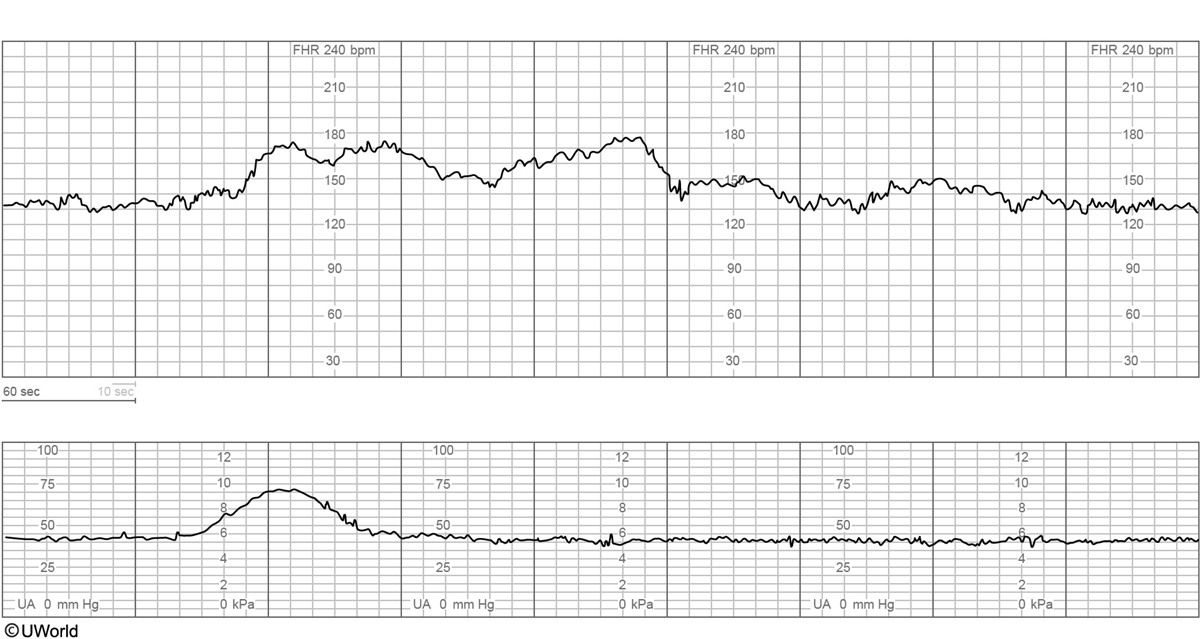
A 32-year-old primigravida at 36 weeks gestation comes to the emergency department due to irregular contractions for the past 3 hours. The contractions began after the patient went for a walk this afternoon and have not stopped even after resting. They are not painful and occur every 7-15 minutes. She has had no vaginal bleeding or leakage of fluid. Fetal movement is normal. The patient’s pregnancy has been uncomplicated. Group B Streptococcus screening earlier this week was positive. Blood pressure is 124/78 mm Hg and pulse is 80/min. BMI is 28 kg/m2. The abdomen is soft, nontender, and has no palpable contractions. Fundal height is at 36 cm. The cervix is closed on digital cervical examination. Nonstress test monitoring is shown in the exhibit. Which of the following is the best next step in management of this patient?
 CorrectIncorrect
 -
Question 4 of 40
4. Question
A 43-year-old man comes to the emergency department due to 2 days of fevers and a lesion on his right foot. The initial lesion was erythematous and edematous, but it quickly developed into a bulla surrounded by erythema. Eventually, the bulla ruptured, leaving a painless ulcer with a black center. The patient has a history of non-Hodgkin lymphoma and recently underwent chemotherapy. Which of the following is the best treatment for this patient’s foot lesion?
CorrectIncorrect -
Question 5 of 40
5. Question
A 68-year-old man comes to the emergency department 2 hours after a syncopal episode at home. The patient woke up during the night to use the restroom but felt weak and dizzy while walking to it. According to his wife, he passed out just as he reached the restroom and was unconscious for about a minute. The patient states he wakes up 1-2 times every night to urinate, for which he recently began taking a new medication. He has had no prior syncope, and medical history includes hypertension and gout. Supine blood pressure is 126/72 mm Hg and pulse is 82/min. Physical examination shows brisk carotid pulses with no bruit. Jugular venous pulsations are present 2 cm above the sternal angle. Cardiac impulse is sustained but nondisplaced, and there is an S4. No murmurs are present. Lungs are clear to auscultation. Extremities are without edema and pulses are normal. ECG reveals sinus rhythm with findings of left ventricular hypertrophy. Which of the following is the most likely cause of this patient’s syncope?
CorrectIncorrect -
Question 6 of 40
6. Question
A 37-year-old man presents to the emergency department with severe weakness and dizziness. He has had 2 episodes of syncope over the last 8 hours. For the past week, he has been having vague mid-chest discomfort and left-sided neck pain. He returned from a hiking trip to Connecticut 2 weeks ago, where he had a sore throat and dry cough. He does not recall any tick bites. His father died of a heart attack at age 54. Lungs are clear to auscultation bilaterally. He has thready pulses over both radial arteries that disappear with deep inspiration. Which of the following is the most likely diagnosis?
CorrectIncorrect -
Question 7 of 40
7. Question
A 36-year-old woman is brought to the emergency department by her husband due to 2 days of confusion and agitation. He reports that last night she did not sleep at all and was constantly wandering around the house. He also noticed twitching of her right arm this morning. On physical examination, temperature is 38.1 C (100.7 F), blood pressure is 120/80 mm Hg, pulse is 90/min, and respirations are 16/min. She is not oriented to time or place. Her neck is supple. There are no skin or joint abnormalities. Electroencephalogram shows prominent high-amplitude slow waves over the left temporal and frontal lobes. Which of the following patterns is most likely on cerebrospinal fluid analysis?
Option
WBC count
% Neutrophils
Glucose (mg/dL)
RBC count
Protein (mg/dL)
A
125
5
65
700
90
B
1,100
80
12
200
300
C
70
50
160
5
70
D
120
10
7
100
380
E
5
60
80
3
128
CorrectIncorrect -
Question 8 of 40
8. Question
A 56-year-old man comes to the office due to progressive dyspnea on exertion for 6 months. In the past, he was able to walk several blocks to work, but now he becomes breathless even with daily activities such as shopping for groceries or walking his dog. He also has a nonproductive cough but no fever, chest pain, or orthopnea. The patient has a history of hypertension and his brother died of liver cirrhosis. He has smoked a pack of cigarettes daily for 30 years but is trying to quit. He does not use alcohol or illicit drugs. The patient used to teach in a primary school but stopped 2 months ago due to shortness of breath. Blood pressure is 130/80 mm Hg, pulse is 82/min and regular, and respirations are 18/min. Pulse oximetry shows 92% on room air. BMI is 34 kg/m2. Estimated jugular venous pressure is normal. Lung auscultation reveals bibasilar fine crackles, and heart sounds are normal with no murmurs. There is no lower extremity edema or skin rash. ECG shows no abnormalities. Spirometry findings are as follows.
FEV1
65% of predicted
FVC
58% of predicted
FEV1/FVC
85%
Which of the following is the most likely pathophysiology of this patient’s condition?
CorrectIncorrect -
Question 9 of 40
9. Question
A 70-year-old man comes to the office with pain in his lower extremities. It is most severe in the right posterior thigh, although both legs are affected. He first noticed the pain 2 years ago. Initially, the patient would feel the pain after walking 6 or 7 holes of golf. However, he now has to stop walking after 1 or 2 holes. The pain is much worse when the patient walks downhill but does not occur when he walks uphill. It improves with rest, especially when he sits in a recliner with his legs up. Medical history is notable for diet-controlled type 2 diabetes mellitus, hypertension, and hypercholesterolemia. Current medications include aspirin, lisinopril, amlodipine, and atorvastatin. The patient has a 25-pack-year smoking history but quit 20 years ago. Blood pressure is 130/78 mm Hg, pulse is 78/min, and respirations are 16/min. BMI is 32 kg/m2. Lower extremity pulses are full and symmetric, and there are no trophic changes of the hair or nails. Neurologic examination shows absent ankle reflexes and 2+ knee reflexes. Plantar reflexes are downgoing bilaterally. Tuning fork testing shows decreased vibration sensation at both ankles. Muscle strength is normal bilaterally. Which of the following is most likely to establish the cause of this patient’s pain?
CorrectIncorrect -
Question 10 of 40
10. Question
A 63-year-old man comes to the office due to fatigue, headaches, and easy bruising. His medical history is significant for chronic obstructive pulmonary disease and stable coronary artery disease. The patient’s blood pressure is 180/120 mm Hg and pulse is 80/min. Examination shows increased pigmentation in the palmar creases and in a periumbilical scar from a hernia repair surgery. The patient also has scattered lower extremity ecchymoses. Neuromuscular examination shows symmetric proximal muscle weakness. Laboratory results are as follows:
Complete blood count
Hemoglobin
14.5 g/dL
Leukocytes
6,000/mm3
Platelets
360,000/mm3
Serum chemistry
Sodium
143 mEq/L
Potassium
3.0 mEq/L
Chloride
98 mEq/L
Bicarbonate
29 mEq/L
Blood urea nitrogen
8 mg/dL
Creatinine
0.6 mg/dL
CT scan of the chest reveals a 3-cm mediastinal mass. Which of the following is most likely being overproduced by the mass in this patient?
CorrectIncorrect -
Question 11 of 40
11. Question
A 27-year-old woman, gravida 1 para 0, at 40 weeks gestation comes to the hospital due to painful contractions for the past few hours. The patient has had no leakage of fluid or vaginal bleeding. Fetal movement has been normal. The patient has had an uncomplicated pregnancy. BMI is 42 kg/m2. Vital signs are normal. On admission, the cervix is 5 cm dilated and 90% effaced with the fetal head at −1 station. She received epidural analgesia; on repeat cervical examination, the cervix is 6 cm dilated and 100% effaced with the fetal head at −1 station. Two hours later, the cervix is unchanged. Fetal heart rate monitoring shows a baseline of 130/min, moderate variability, accelerations, and occasional early decelerations. The tocodynamometer shows contractions every 5-7 minutes. Which of the following is the best next step in management of this patient?
CorrectIncorrect -
Question 12 of 40
12. Question
A 64-year-old man comes to the emergency department after he had an episode of right hand weakness and slurred speech that lasted 15-20 minutes. He has no chest pain, shortness of breath, lightheadedness, syncope, or palpitations. The patient has a long history of hypertension and type 2 diabetes mellitus. A year ago, he had an episode of atrial fibrillation requiring hospitalization, but it resolved spontaneously. Currently, he is comfortable and has no complaints. His blood pressure is 150/100 mm Hg and pulse is irregularly irregular at 110/min. BMI is 34 kg/m2. There are no carotid bruits. Neurologic examination is unremarkable. His serum creatinine is 0.8 mg/dL. Echocardiogram shows left atrial dilation, normal left ventricular ejection fraction, and no major valvular abnormalities. Carotid ultrasound is unremarkable. Which of the following would be most effective in preventing similar neurologic episodes in this patient?
CorrectIncorrect -
Question 13 of 40
13. Question
A 79-year-old woman comes to the office due to fatigue, poor appetite, and an unintentional 4-kg (8.8-lb) weight loss. The patient has had 4 weeks of nonproductive cough and shortness of breath. Her other medical problems include mild Alzheimer dementia, polymyalgia rheumatica, hypertension, and heart failure with preserved ejection fraction. Temperature is 37.4 C (99.3 F), blood pressure is 148/72 mm Hg, and pulse is 88/min. Pulse oximetry is 95% on room air. The patient is thin. There is dullness to percussion and decreased breath sounds in the right lower and middle chest. A bedside portable ultrasound reveals a right-sided pleural effusion. A thoracentesis removes 1.5 L of yellow pleural fluid. The pleural fluid results are as follows:
Protein
4.9 g/dL
Glucose
40 mg/dL
Nucleated cell count
1200/mm3
Lymphocytes
90%
Neutrophils
4%
Monocytes
6%
Which of the following is the most likely cause of this patient’s pleural effusion?
CorrectIncorrect -
Question 14 of 40
14. Question
A 38-year-old man comes to the office for follow-up. After recently learning that one of his sexual partners tested positive for HIV, the patient is concerned that he may have acquired the virus. He has been fatigued lately but otherwise feels well. Vital signs are normal. Scattered, nontender lymphadenopathy is present in the cervical and inguinal chains. The rest of the examination is normal. Rapid HIV test result is positive. Subsequent laboratory results are as follows:
Hepatitis panel
Hepatitis A antibody
positive
Hepatitis B surface antibody
positive
Hepatitis B core antibody
positive
Hepatitis B surface antigen
negative
Hepatitis C antibody
negative
CD4 lymphocytes
380/mm3
HIV-1 RNA quantification (viral load)
42,000 copies/mL
Varicella-zoster antibody, IgG
positive
Interferon gamma release assay
negative
In addition to starting antiretroviral therapy, which of the following vaccines should be administered?
Option
Hepatitis B
Live attenuated influenza
Pneumococcal conjugate
Varicella
A
Yes
Yes
Yes
Yes
B
Yes
Yes
No
Yes
C
Yes
No
Yes
Yes
D
No
No
Yes
Yes
E
No
Yes
Yes
No
F
No
No
Yes
No
CorrectIncorrect -
Question 15 of 40
15. Question
This item has associated media that may require the use of headphones. Please ensure your system/speaker volume is set to an audible level.
A 59-year-old man comes to the office due to headaches. He describes the headaches as diffuse and says that they get worse when he leans forward. He has not had any fever, vomiting, or chest pain but has a chronic cough. The patient was recently diagnosed with small cell lung cancer. He has an extensive smoking history and quit smoking 4 years ago. Blood pressure is 100/60 mm Hg and pulse is 100/min. Physical examination of the neck is shown below. Abdomen is soft and nondistended. There is no peripheral edema. Which of the following would most likely relieve this patient’s symptoms?
Play Media
CorrectIncorrect -
Question 16 of 40
16. Question
An 81-year-old man hospitalized 5 days ago for acute-onset, right-sided hemiparesis is being evaluated for increasing lethargy. Over the course of his hospital stay, the patient’s right-sided weakness has slightly improved, and his speech has become more intelligible. He recently began a soft diet. Temperature is 38.9 C (102 F), blood pressure is 100/60 mm Hg, and pulse is 120/min. On chest auscultation, coarse rhonchi are heard over the right lung fields. Heart sounds are normal. The abdomen is soft and nontender. There is no cyanosis or edema in the extremities. Leukocyte count is 18,500/mm3, hemoglobin is 9.8 g/dL, and platelet count is 490,000/mm3. Chest x-ray reveals an infiltrate in the posterior segment of the right upper lobe. Which of the following would have been most helpful in preventing this patient’s current condition?
CorrectIncorrect -
Question 17 of 40
17. Question
A 43-year-old woman is brought to the emergency department due to 2 days of confusion and lethargy. The patient was diagnosed with hepatitis C infection 10 years ago during an evaluation of elevated liver aminotransferase levels but did not follow up afterward. She drinks a pint of liquor daily and in her 20s used injection drugs. Temperature is 38.2 C (100.8 F), blood pressure is 120/70 mm Hg, pulse is 110/min, and respirations are 20/min. The patient has scleral icterus and scattered spider angiomas. The abdomen is distended with shifting dullness on percussion. There is diffuse abdominal tenderness but no guarding or rebound tenderness. She also has bilateral ankle edema. Laboratory results are as follows:
Complete blood count
Hemoglobin
10.8 g/dL
Platelets
90,000/mm3
Leukocytes
11,000/mm3
Serum chemistry
Sodium
130 mEq/L
Blood urea nitrogen
26 mg/dL
Creatinine
1.5 mg/dL
Liver function studies
Albumin
2.8 g/dL
Total bilirubin
4.3 mg/dL
Alkaline phosphatase
120 U/L
Aspartate aminotransferase
87 U/L
Alanine aminotransferase
49 U/L
Coagulation studies
INR
1.6 (normal 0.8-1.1)
Activated partial thromboplastin time
25 sec
Which of the following is the most likely reason for this patient’s current condition?
CorrectIncorrect -
Question 18 of 40
18. Question
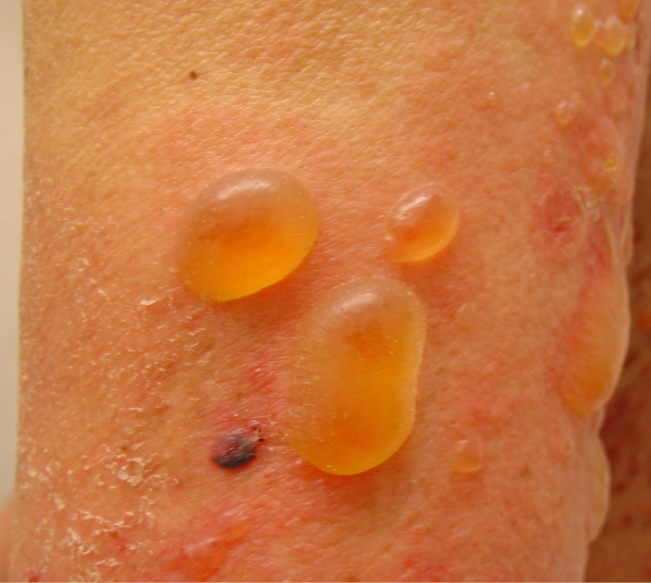
A 69-year-old woman comes to the office due to a rash. The patient has experienced diffuse skin itching for 2 months, starting when she moved into an assisted living facility due to Alzheimer dementia. In the past 5 days, pruritic lesions have developed on her body. There has been no skin pain, fever, or changes in appetite. Other medical problems include hypertension and type 2 diabetes mellitus. Vital signs are normal. Physical examination reveals multiple lesions on the legs, as seen in the exhibit, with similar lesions on the back, axillae, and inguinal folds. The conjunctivae and oral mucosa are normal. Which of the following is the most likely diagnosis of this patient’s skin condition?
 CorrectIncorrect
 -
Question 19 of 40
19. Question
A 62-year-old man comes to the emergency department due to 3 weeks of difficulty walking. Over the past 2 days, he has also had difficulty speaking. His past medical history is notable only for osteoarthritis, for which he takes acetaminophen as needed. Temperature is 37.8 C (100 F). His brain MRI findings are shown below.
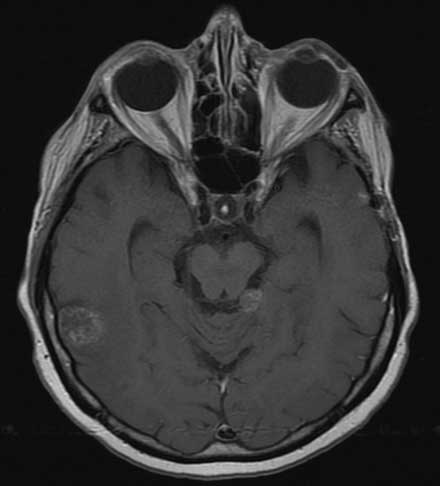
Which of the following is most likely responsible for this patient’s symptoms?
CorrectIncorrect -
Question 20 of 40
20. Question
A 29-year-old woman, gravida 1 para 0 aborta 1, comes to the office to establish care and to receive preconception counseling. Three years ago, the patient had an elective termination at 16 weeks gestation for fetal anencephaly. Menarche occurred at age 11; menses are regular and last for 4-5 days. She has no history of sexually transmitted infections or abnormal Pap tests. The patient has a history of hypothyroidism and depression for which she takes levothyroxine and sertraline. She has no family history of genetic disorders. The patient swims or takes a spinning class 5 times a week. She does not use tobacco, alcohol, or illicit drugs. She takes a prenatal vitamin daily. Blood pressure is 120/80 mm Hg. BMI is 24 kg/m2. Pelvic examination reveals a small, mobile, retroverted uterus and no adnexal masses. Which of the following should be recommended to decrease the patient’s risk of pregnancy complications?
CorrectIncorrect -
Question 21 of 40
21. Question
A 56-year-old man comes to the office due to increasing weakness for the past 6 weeks. The patient first noticed difficulty climbing stairs and then developed trouble rising from a chair. Recently, he becomes very tired when using his arms to do housework. Medical history is notable for intermittent joint pains, for which he takes naproxen as needed. The patient works in international finance and traveled to Brazil 2 months ago for business. Temperature is 37.2 C (99 F), blood pressure is 124/76 mm Hg, pulse is 75/min, and respiratory rate is 14/min. Bilateral proximal upper and lower extremity weakness is noted. Distal muscle strength is normal. The remainder of the physical examination shows no abnormalities. Laboratory results are as follows:
Total bilirubin
0.2 mg/dL
Aspartate aminotransferase
250 U/L
Alanine aminotransferase
140 U/L
Alkaline phosphatase
90 U/L
Lactate dehydrogenase
665 U/L
Creatine kinase
3700 U/L
Which of the following is the most likely diagnosis?
CorrectIncorrect -
Question 22 of 40
22. Question
A 34-year-old woman is brought to the emergency department after being involved in a motor vehicle collision. She was driving home from work when another car hit her on the driver’s side at an intersection. The patient was wearing a seat belt, but the air bags did not deploy. She appears restless and diaphoretic and reports chest pain and shortness of breath. Blood pressure is 90/50 mm Hg and pulse is 118/min. Pulse oximetry is 88% on room air. The neck veins are distended and the trachea is deviated to the right. Breath sounds are absent on the left side. An immediate intervention, directed at the patient’s condition, is performed and leads to improvement in her clinical status. The intervention most likely increased which of the following?
CorrectIncorrect -
Question 23 of 40
23. Question
A 68-year-old man in the recovery unit is being evaluated due to sudden-onset shortness of breath. He has a history of ischemic cardiomyopathy with reduced ejection fraction and underwent implantation of a cardioverter-defibrillator. The patient had no complications during the procedure, but in the recovery unit, he began to experience worsening dyspnea. Other medical conditions include chronic obstructive pulmonary disease, hypertension, hyperlipidemia, and myocardial infarction. The patient is a former smoker with a 35-pack-year history. Blood pressure is 100/60 mm Hg and pulse is 110/min and regular. Pulse oximetry is 92% on 10 L/min of oxygen. The cardiac monitor shows sinus tachycardia. A focused physical examination is performed, followed by a chest x-ray, which is shown in the image below:
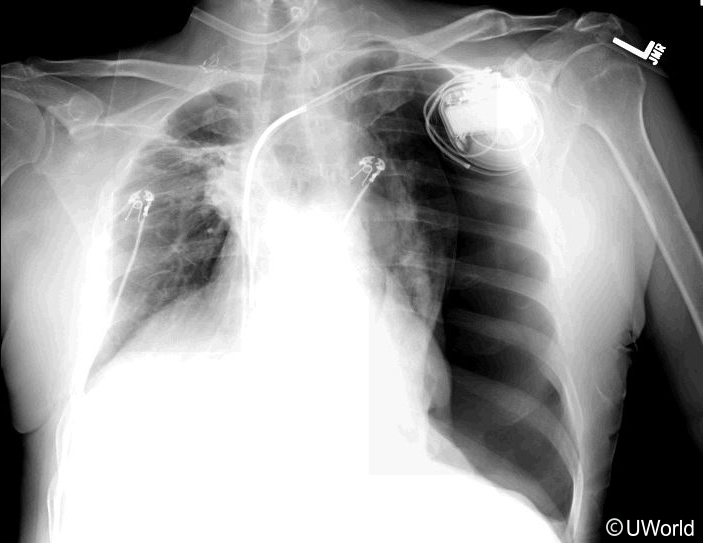
Which of the following is the most likely cause of this patient’s current symptoms?
CorrectIncorrect -
Question 24 of 40
24. Question
A 54-year-old man comes to the office due to “feeling weak” for the past 3 months. The patient has had difficulty picking up small objects such as coins and has noted fatigue while typing. His wife reports that he has also had periods of gait instability, including 2 episodes when he nearly fell. There is no bowel or bladder dysfunction. On physical examination, blood pressure is 160/90 mm Hg and pulse is 76/min. Oxygen saturation is 96% on room air. There is atrophy of the hand muscles bilaterally. Babinski reflex is upgoing on the right with a hyperactive knee jerk. There is no sensory loss. Laboratory studies reveal a creatine kinase level of 450 U/L. Which of the following is the most likely diagnosis?
CorrectIncorrect -
Question 25 of 40
25. Question
A 41-year-old man comes to the office with his wife for evaluation of “odd behavior.” According to his wife, over the past several months the patient has had multiple episodes in which he would not answer when spoken to; instead, he would stare directly at her with fumbling hand movements. He becomes responsive after about a minute but appears confused and insists that he has not heard her talk. These episodes are becoming more frequent, and other family members have also noticed him being “forgetful.” The patient has no significant medical or psychiatric history and takes no medications. He has a history of injection drug use. The patient does not use tobacco but drinks 2-3 alcoholic beverages daily. Which of the following is the most likely cause of this patient’s symptoms?
CorrectIncorrect -
Question 26 of 40
26. Question
A 35-year-old primigravid woman is admitted to the labor and delivery unit at 36 weeks gestation with abdominal pain and blood-tinged vaginal discharge. The patient had a normal HbA1c level at her initial prenatal visit at 10 weeks gestation and later developed gestational diabetes mellitus, which was diagnosed at 28 weeks gestation. She has had poor glycemic control with diet and insulin therapy. Family history is significant for type 2 diabetes mellitus. Fetal monitoring shows regular uterine contractions and a normal fetal heart rate. Blood pressure is 134/86 mm Hg and pulse is 100/min. BMI is 40 kg/m2. The cervix is 6 cm dilated and 100% effaced. Laboratory results are as follows:
Hemoglobin
9.8 g/dL
Sodium
140 mEq/L
Potassium
3.6 mEq/L
Chloride
112 mEq/L
Bicarbonate
18 mEq/L
Blood urea nitrogen
14 mg/dL
Creatinine
0.6 mg/dL
Glucose
190 mg/dL
The patient rapidly progresses to complete dilation and has a spontaneous vaginal delivery. Which of the following examination findings would most likely be present in the neonate?
CorrectIncorrect -
Question 27 of 40
27. Question
A 27-year-old African American woman comes to the office due to left-sided chest pain, nonproductive cough, and dyspnea on exertion for 7 days. The chest pain increases with deep breaths and cough. The patient also has had 3 months of bilateral knee pain that is relieved by occasional naproxen use. She reports fatigue and subjective fever on review of systems. She lives in Ohio and has not traveled outside of the United States. She is sexually active. The patient has no other medical problems and takes no other medications. She does not use tobacco, alcohol, or illicit drugs. Her temperature is 38.1 C (100.5 F), blood pressure is 140/90 mm Hg, and pulse is 90/min. Pulse oximetry is 95% on room air. BMI is 24 kg/m2. There is no jugular venous distension. Pulmonary examination reveals decreased breath sounds in the left lower lung field. Heart sounds are muffled. The abdomen is soft and nontender. There is no peripheral edema. Both knees appear swollen, but there is no erythema. Knee range of motion is not restricted. Laboratory results are as follows:
Complete blood count
Hemoglobin
9.6 g/dL
Platelets
90,000/mm3
Leukocytes
3,800/mm3
Serum chemistry
Blood urea nitrogen
24 mg/dL
Creatinine
1.9 mg/dL
Chest x-ray reveals left-sided pleural effusion and enlarged cardiac silhouette. Which of the following is the most likely diagnosis in this patient?
CorrectIncorrect -
Question 28 of 40
28. Question
An 83-year-old man is brought to the emergency department from a local restaurant after he had sudden-onset dizziness. There is no associated chest pain. The patient has a history of 3-vessel atherosclerotic coronary artery disease and prior myocardial infarction for which he underwent coronary artery bypass surgery. He has no medication allergies. On physical examination, the patient appears uncomfortable but is interactive and speaking in full sentences with no respiratory distress. Blood pressure is 100/60 mm Hg and pulse is 140/min. Pulse oximetry is 95% on room air. Cardiac examination is notable for tachycardia with no audible murmurs. The lungs are clear to auscultation. ECG rhythm strip is shown in the exhibit. Which of the following medications is most likely to improve this patient’s condition?
 CorrectIncorrect
 -
Question 29 of 40
29. Question
A 6-year-old boy is brought to the urgent care clinic by his mother. The patient appears restless and flushed and coughs frequently. Other than a temperature of 38.3 C (101 F), vital signs are stable. The family recently immigrated from China. The mother speaks Mandarin and a few words of English. The boy speaks some English. Due to technical difficulties, the clinic’s telephone interpretation service is inoperable. The physician is a native English speaker but can speak several words of Mandarin. The clinic’s medical assistant is a native, fluent Mandarin speaker. Which of the following represents the physician’s most appropriate action in caring for this patient?
CorrectIncorrect -
Question 30 of 40
30. Question
A 61-year-old man comes to the office due to episodic abdominal pain, bloating, and chronic diarrhea. The patient has bulky, foul-smelling bowel movements 3 to 4 times a day. He also reports a 7-kg (15-lb) weight loss over the past 2 months. His vital signs are within normal limits. On physical examination, there is mild epigastric tenderness with no guarding or rebound tenderness and normal bowel sounds. Laboratory studies show normal leukocyte count, fasting glucose, liver aminotransferases, and serum lipase. CT scan of the abdomen without contrast is shown below.
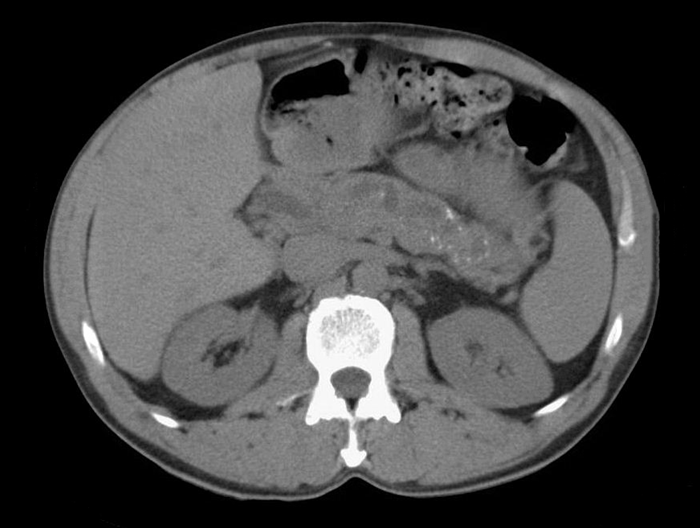
Which of the following additional history or findings is most likely to be present in this patient?
CorrectIncorrect -
Question 31 of 40
31. Question
A 53-year-old man comes to the office due to frequent discomfort in his right foot that limits his daily activities. His medical history is significant for obesity, type 2 diabetes mellitus, hypertension, gout, and obstructive sleep apnea. The patient has a history of cocaine abuse but has not used any illicit drugs in the past 6 months. However, he does acknowledge poor adherence with his prescribed medication regimen. Temperature is 37.1 C (98.8 F), blood pressure is 128/76 mm Hg, pulse is 82/min, and respirations are 16/min. On physical examination, the skin on the right foot is thin, shiny, and devoid of hair. There is a small, shallow ulcer on the medial aspect of the right great toe that is without purulent drainage. Which of the following is most likely to diagnose the cause of this patient’s foot discomfort?
CorrectIncorrect -
Question 32 of 40
32. Question
A 46-year-old woman comes to the office to follow up hypertension. For the last year, her blood pressure has been steadily rising despite dietary modification and exercise. The patient has occasional headaches but otherwise feels well. Blood pressure in the office is 154/94 mm Hg. She is started on chlorthalidone. Two weeks later, the patient is seen in the emergency department due to repeated falls and severe leg cramps. On examination, she has 4/5 muscle strength in her lower extremities, symmetric deep tendon reflexes, and a flexor plantar response bilaterally. There is no sensory loss. After initial stabilization, this patient’s symptoms are most likely to improve with which of the following long-term therapies?
CorrectIncorrect -
Question 33 of 40
33. Question
A 72-year-old man is brought to the emergency department with a 2-day history of progressive lethargy. According to his wife, he has not been eating much recently and has had 2 episodes of vomiting over the last 12 hours. His wife also reports that in the last 3 weeks he has been experiencing pain in his right shoulder radiating to the medial aspect of the right upper arm and axilla. Medical history is significant for chronic obstructive pulmonary disease, hypertension, and peptic ulcer disease. The patient’s current medications include inhaled fluticasone, inhaled albuterol/ipratropium, candesartan, and hydrochlorothiazide. Blood pressure is 110/80 mm Hg and pulse is 120/min and regular. On physical examination, he is severely lethargic and responds only to strong, painful stimuli. Laboratory results are as follows:
Complete blood count
Hemoglobin
14.5 g/dL
Serum chemistry
Sodium
142 mEq/L
Potassium
4.4 mEq/L
Blood urea nitrogen
31 mg/dL
Creatinine
1.6 mg/dL
Calcium
14.1 mg/dL
Glucose
105 mg/dL
Blood, plasma, and serum
Phosphorus, inorganic, serum
2.8 mg/dL
Which of the following is the most likely cause of this patient’s current condition?
CorrectIncorrect -
Question 34 of 40
34. Question
A 45-year-old woman comes to the emergency department due to sudden onset of abdominal pain. The patient had just finished dinner when she started to experience severe upper abdominal pain associated with nausea and vomiting. The pain radiates to her right shoulder. The patient recently had 2 similar episodes with less intense pain that resolved spontaneously within several hours. She has a history of hyperlipidemia and type 2 diabetes mellitus. The patient lost 15 kg (33.1 lb) after undergoing Roux-en-Y gastric bypass surgery 5 months ago. She does not use tobacco, alcohol, or illicit drugs. Temperature is 37.8 C (100 F), blood pressure is 140/92 mm Hg, pulse is 112/min, and respirations are 18/min. Heart sounds are normal without murmurs and lungs are clear to auscultation. Abdominal examination shows a well-healed midline surgical scar. Right upper quadrant tenderness is present. Bowel sounds are active. Stool is guaiac negative. Which of the following is the most likely cause of this patient’s current condition?
CorrectIncorrect -
Question 35 of 40
35. Question
A 34-year-old man comes to the office due to reddish-brown urine for the past 2 days. The patient says the urine is uniformly discolored throughout micturition, and he has had no blood clots. He has no chronic medical conditions and takes no medications. Blood pressure is 130/80 mm Hg and pulse is 80/min. BMI is 32 kg/m2. Oropharyngeal mucosa and tonsils are normal. The lungs are clear to auscultation, and heart sounds are normal. The abdomen is soft with no organomegaly. No costovertebral angle tenderness is present. External genitalia are normal, and the prostate is not enlarged. Serum creatinine is normal. Urine dipstick is positive for blood and protein. Urine microscopy reveals numerous dysmorphic red blood cells and 1-2/hpf white blood cells. Which of the following is the most appropriate next step in management of this patient?
CorrectIncorrect -
Question 36 of 40
36. Question
A 35-year-old woman comes to the office due to moderately severe, achy pain in her lower back, hips, and knees for the past several weeks. She has no associated morning stiffness. The patient has end-stage renal disease due to diabetic nephropathy and has been on hemodialysis for the past 2 years. Her other medical problems include type 1 diabetes mellitus diagnosed 20 years ago and sarcoidosis diagnosed 8 years ago. Physical examination shows no obvious bone or joint deformity, and she has full range of motion in all joints. Laboratory results are as follows:
Sodium
136 mEq/L
Potassium
3.9 mEq/L
Bicarbonate
23 mEq/L
Creatinine
3.1 mg/dL
Calcium
7.9 mg/dL
Phosphorus
6.1 mg/dL
Albumin
4.1 g/dL
Which of the following is the most likely histopathological abnormality underlying this patient’s current symptoms?
CorrectIncorrect -
Question 37 of 40
37. Question
A 52-year-old woman comes to the office due to urinary leakage. Over the past several months, she has had frequent urinary dribbling and the leakage is worse at night. The patient has no dysuria, fever, or constipation. Her medical history is significant for longstanding type 1 diabetes mellitus and recurrent urinary tract infections. She takes multiple daily injections of insulin. Her blood pressure is 140/90 mm Hg and pulse is 90/min. Abdominal examination shows some fullness on palpation and increased dullness to percussion in the suprapubic region. She also has symmetrically decreased vibratory sensation over both ankles. Bladder catheterization produces a postvoid residual volume of 300 mL. Urinalysis shows no leukocyte esterase or nitrites. Which of the following is the most appropriate recommendation for this patient?
CorrectIncorrect -
Question 38 of 40
38. Question
This item has associated media that may require the use of headphones. Please ensure your system/speaker volume is set to an audible level.
A 72-year-old man comes to the office for a routine health maintenance visit. He reports that he feels well overall. The patient walks 2-3 miles/day without shortness of breath or chest pain. He takes no medications aside from a multivitamin daily. Blood pressure is 142/80 mm Hg and pulse is 75/min. Cardiac auscultation findings at the right upper sternal border are heard in the exhibit. Which of the following is the most likely cause of this physical examination finding?
CorrectIncorrect -
Question 39 of 40
39. Question
A 54-year-old man comes to the emergency department due to 2 episodes of coffee-ground emesis since yesterday. The patient has had episodic nausea and abdominal discomfort for the past several months. He consumes a pint of vodka daily. Upper endoscopy reveals nonbleeding esophageal varices, diffuse gastric erythema, and a small duodenal ulcer. The patient is treated with intravenous fluids and a proton pump inhibitor. He has no further episodes of hematemesis in the hospital, but the next day he becomes lethargic. Blood pressure is 108/66 mm Hg and pulse is 98/min. The patient requires repeated physical stimuli to remain awake. Physical examination shows muscle wasting, gynecomastia, and several spider angiomas. The abdomen is distended with a protruding umbilicus. He has mild pitting edema of the bilateral lower extremities. Laboratory results are as follows:
Complete blood count
Hematocrit
32%
Mean corpuscular volume
102 µm3
Leukocytes
8,000/mm3
Serum chemistry
Sodium
136 mEq/L
Potassium
3.8 mEq/L
Creatinine
0.8 mg/dL
Liver function studies
Albumin
3.1 g/dL
Total bilirubin
2.0 mg/dL
Alkaline phosphatase
120 U/L
Aspartate aminotransferase
62 U/L
Alanine aminotransferase
24 U/L
Coagulation studies
INR
1.4
Diagnostic paracentesis shows a peritoneal fluid leukocyte count of 400/mm3 with 90% neutrophils and an albumin of 1.1 g/dL. Which of the following is the best next step in management of this patient?
CorrectIncorrect -
Question 40 of 40
40. Question
A randomized controlled single-blind study is conducted to evaluate the effectiveness of 2 different massage interventions, classic soft tissue mobilization and dynamic soft tissue mobilization, compared to no intervention. Forty-five healthy men age 18-35 are randomized (ratio 1:1:1) to classic intervention, dynamic intervention, or no intervention (ie, control) groups. An analysis of variance (ANOVA) is used to determine whether the change in hip flexion angle (HFA) differs between groups. Change in HFA is defined as the difference between preintervention and postintervention HFA measurements. Pairwise post hoc comparisons are conducted to determine whether change in HFA differs between groups at a 5% significance level. Study results reveal an overall significant difference between the groups (F = 5.03, p < 0.01). Results from the pairwise comparisons are shown below.
Hip flexion angle measurements
Comparison
Difference
in HFA
change95% confidence interval
Dynamic intervention vs No intervention (control)
4.74
1.15 to 8.33
Classic intervention vs No intervention (control)
1.34
−1.90 to 4.58
Dynamic intervention vs Classic intervention
3.40
0.16 to 6.64
Based on these findings, which of the following conclusions is justified?
CorrectIncorrect